Israel Secretly Deployed Iron Dome to UAE During Iran War — World First as IDF Troops Operated System in Abu Dhabi
FIRST
Iron Dome Sent Abroad in History
550+
Ballistic and Cruise Missiles Fired at UAE
2,200+
Iranian Drones Fired at UAE (War Total)

Map showing Iranian missile and drone attack routes against the UAE, Israel’s Iron Dome deployment route, and Israeli Air Force pre-emptive strike operations against Iranian short-range ballistic missile launch sites in southern Iran. Source: Axios, Newsweek, Emirati Ministry of Defence / StrategyBattles.net.
✅ The Disclosure
The Iron Dome Reached the UAE Before the Public Knew
Israel secretly dispatched an Iron Dome air defence battery to the United Arab Emirates in the early stages of the war with Iran, deploying IDF troops alongside the system to operate it. The disclosure, first published by Axios on April 26, 2026, marks a significant milestone: it was the first time Israel had ever sent an Iron Dome battery to another country, and the UAE was the first nation outside the United States and Israel in which the system was operationally used.
Two Israeli officials and one U.S. official confirmed the deployment to Axios, underscoring the sensitivity of the operation. The decision was taken after a direct call between Israeli Prime Minister Benjamin Netanyahu and UAE President Mohammed bin Zayed, following which Netanyahu ordered the IDF to prepare and dispatch the battery, including interceptors and several dozen operators.
The system intercepted dozens of Iranian missiles during the conflict, according to a second Israeli official. The deployment was not publicly announced at the time, a choice that reflects both the political sensitivity of stationing Israeli military personnel on Gulf soil and the operational advantages of keeping adversaries uncertain about defensive capabilities.
🔴 Iranian Bombardment
The UAE Was Iran’s Most Heavily Targeted Nation in the Region
The scale of Iran’s assault on the UAE drove Abu Dhabi to seek urgent assistance from its allies. According to figures released by the Emirati Ministry of Defence, Iran fired approximately 550 ballistic and cruise missiles along with more than 2,200 drones at the country since the beginning of the war. This made the UAE the most heavily targeted country in the region, exceeding even the volume of ordnance directed at Israel.
Most of the projectiles were intercepted, but a number reached their targets. Strikes damaged critical energy infrastructure, including the Habshan gas complex in Abu Dhabi and oil terminal facilities in Fujairah. A drone struck close to the Fairmont The Palm Hotel on Palm Jumeirah, causing an explosion and fire. The Al Minhad Air Base, jointly operated by UAE, British, and Australian forces, also came under attack.
The pressure on Emirati air defences was severe. The Jewish Institute for National Security of America estimated that UAE THAAD and Patriot systems burned through approximately 75 percent of available interceptor stock during the conflict. Israel’s Iron Dome contribution came as a reinforcement to a national defence posture under sustained stress.
Senior Israeli Official — Cited by Axios, April 26, 2026
“That was the first time Israel had sent an Iron Dome battery to another country, and the UAE was the first country outside of the U.S. and Israel in which the system was used.”
🔵 IAF Pre-emptive Operations
Israeli Jets Also Struck Iranian Short-Range Missiles Before Launch
The Iron Dome deployment was not Israel’s only contribution to UAE air defence. Israeli officials also confirmed that the Israeli Air Force conducted numerous strikes against short-range ballistic missile systems positioned in southern Iran before they could be launched toward the UAE and other Gulf states. This represents a proactive rather than reactive defensive posture, targeting the threat before it becomes airborne.
The combination of ground-based interception via Iron Dome and pre-emptive air strikes on launch infrastructure reflects a layered Israeli approach to Gulf partner defence. It also demonstrates that Israeli Air Force reach extended deep into Iranian territory throughout the war, enabling strike operations in support of a third-party ally.
🟡 Political Dimension
Israeli Troops on UAE Soil Was Sensitive — Until the Missiles Started Falling
The deployment of Israeli military personnel to Emirati territory would, under ordinary circumstances, have been regarded as politically fraught for a Gulf state navigating complex relationships across the Arab and Islamic world. Emirati officials acknowledged this but noted that the war with Iran fundamentally changed the calculus. One official said that anyone seen as helping protect the country against Iranian attacks would be viewed positively by the public.
A second Emirati official named other countries that stepped up in support: the United States, France, the United Kingdom, Italy, and Australia. Israel and the United States were separately identified as having provided the most substantive assistance, in the form of direct military aid, intelligence sharing, and diplomatic backing.
Tareq Alotaiba — Former UAE National Security Council Official, Arab Gulf States Institute
“The United States and Israel proved themselves to be true allies by offering support through extensive military assistance, intelligence sharing and diplomatic backing. We will not forget this.”
✅ Strategic Context
The Abraham Accords Proved Their Value Under Fire
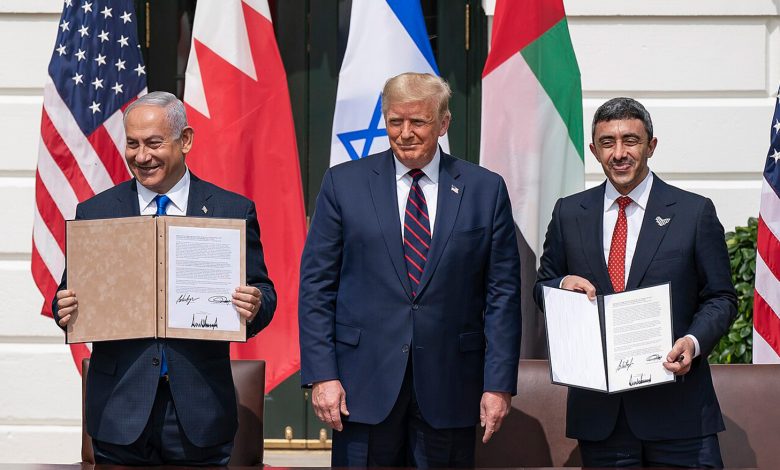
Relations between Israel and the UAE were formalised in 2020 under the Abraham Accords, which opened the door to diplomatic, economic, and security cooperation. Before the Iran war, the relationship had expanded substantially, with the UAE procuring Israeli-made SPYDER air defence systems and deploying Barak surface-to-air missiles built by the Israeli defence industry.
The war represented the first major test of that relationship under conditions of active armed conflict. Israeli and Emirati officials confirmed that coordination between the two countries intensified across military, intelligence, and political channels throughout the fighting. The deployment of an Iron Dome battery, with IDF operators, represents the most operationally significant step in that cooperation to date.
The UAE had also maintained economic ties with Iran prior to the war, including through Dubai’s role as a regional trade hub. Those relationships created a diplomatic balancing act that collapsed under the weight of direct Iranian bombardment. Officials from both sides said the partnership between Israel and the UAE has reached its closest point since the Abraham Accords were signed.
⚪ Strategy Battles Assessment
The Iron Dome deployment to the UAE is one of the most consequential and least publicised defence events of the Iran war. Its significance goes beyond the missiles intercepted. It marks the first time Israel has used one of its most politically sensitive military assets to directly defend an Arab partner state in active combat conditions.
The decision to deploy was rapid, quiet, and effective. Netanyahu did not seek multilateral approval or public endorsement. He called MBZ, assessed the threat, and ordered the IDF to move. That decisiveness reflects a level of strategic trust that formal treaties alone cannot manufacture. It required years of intelligence-sharing, mil-to-mil exchanges, and the quiet groundwork of the Abraham Accords to make such a deployment politically possible within days of a war beginning.
The operational lesson is also striking. The UAE’s own THAAD and Patriot inventory was being depleted at a rate that threatened to leave it exposed. Iron Dome, designed for shorter-range threats including rockets and low-altitude missiles, filled a specific gap in the layered Emirati defence architecture. Combined with IAF pre-emptive strikes on Iranian SRBM launch sites in the south of Iran, this suggests Israel ran a de facto air defence campaign on behalf of the Gulf state from multiple angles simultaneously. For planners assessing future Middle Eastern security frameworks, the Iran war has established a precedent: Abraham Accords partners will extend active military protection to each other under fire, not merely words of solidarity.
Strategy Battles — Related Coverage
Sources
- Axios — Barak Ravid: “Scoop: Israel sent Iron Dome system and troops to UAE during Iran war” — April 26, 2026
- Haaretz — “Report: Israel Sent Iron Dome Battery, Troops to UAE During Iran War” — April 26, 2026
- Newsweek — Peter Aitken: “Did Israel Give the United Arab Emirates an Iron Dome? What to Know” — April 26, 2026
- Ynet News — “Report: Israel sent Iron Dome system, troops to UAE during war with Iran” — April 26, 2026
- Israel Hayom — “Report: Israel sent Iron Dome battery to defend UAE” — April 26, 2026
- Kurdistan 24 — “Israel Deployed Iron Dome to UAE During Iran War: AXIOS” — April 26, 2026
Editorial Verification
Core facts — the deployment of Iron Dome, the presence of IDF operators, the Netanyahu-MBZ call, and the system intercepting dozens of missiles — are confirmed by two Israeli officials and one U.S. official across multiple outlets (Axios, Haaretz, Ynet, Newsweek, Israel Hayom). Iranian strike totals (550 ballistic/cruise missiles, 2,200+ drones) are sourced from the Emirati Ministry of Defence. IAF pre-emptive strike operations in southern Iran confirmed by Israeli officials via Axios. Specific battery location within UAE and exact IDF troop numbers have not been publicly confirmed and are noted as single-source or undisclosed information. Emirati official comment attributed to unnamed Emirati government figures as reported by Axios. Alotaiba quote sourced from his published article in the Arab Gulf States Institute, a public record.
Approved for Publication
Marcus V. Thorne
Lead Editor, Strategy Battles
©StrategyBattles.net 2026
This article is for news and analysis purposes only. Based on publicly available news sources and military updates. All rights reserved. Not for commercial reuse without permission.