Pakistan Strikes Kunar University — 4 Killed, 70 Wounded in Afghan Border War
4+
Civilians Killed — Kunar
70+
Wounded — incl. 30 students
9 weeks
Border War Duration
📍 Afghanistan-Pakistan Border — Kunar Strikes and Spin Boldak Clash, April 27, 2026

Red markers indicate Pakistani strike locations. Amber marker indicates Taliban-Pakistan border clash at Spin Boldak. Dashed line indicates the Durand Line — the disputed Afghanistan-Pakistan border. Map: Strategy Battles / OSINT. Sources: Amu TV, Khaama Press, Pajhwok Afghan News.
🔴 The Strikes
Pakistan Hits Asadabad — University Faculty Building Among Sites Struck
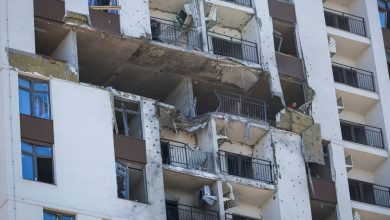
Pakistani forces launched missile strikes and drone attacks on Asadabad, the provincial capital of Kunar in eastern Afghanistan, on Monday afternoon, killing at least four civilians and wounding approximately 70 others. The attacks began around 2 p.m. local time and extended across multiple areas including Manogai district. Afghan provincial officials cited a death toll of three with 45 wounded, while Taliban deputy spokesman Hamtullah Fitrat placed the figures higher at four killed and more than 70 injured.
Among those wounded were around 30 students from Sayed Jamaluddin Afghan University. The Faculty of Education building at the university sustained direct damage in the attack. Residential homes in surrounding neighborhoods were also struck. Neither Pakistani military officials nor the Pakistani government issued any public comment on the strikes.
Local Afghan officials told Pajhwok Afghan News that Pakistani forces used a combination of drone strikes and artillery fire. Taliban military positions are known to exist in the hills surrounding Asadabad, but no confirmed reports indicated those positions were directly targeted in this incident.
🟡 Taliban Response
Kabul Calls It a War Crime — Vows to Defend Sovereignty
The Taliban condemned the Kunar strikes as a war crime in a formal statement, accusing Pakistan of deliberately targeting civilians and educational institutions. Deputy spokesman Fitrat listed the casualties and named the university faculty building and residential homes as confirmed strike locations. The Taliban stopped short of announcing immediate retaliatory action but maintained their standing position that Afghan forces are acting defensively in this conflict.
Taliban chief spokesman Zabihullah Mujahid previously stated in an audio message that Taliban forces had not initiated the conflict. His line remains consistent across all recent statements: Afghan forces are defending the population, not seeking escalation.
Hamtullah Fitrat — Taliban Deputy Spokesman, April 27, 2026
“About 30 students were among the wounded, and civilians, including women and children, were also affected.”
🔴 Spin Boldak — Ground Clash
Six Pakistani Soldiers Reported Killed in Kandahar Border Clash — CLAIM UNVERIFIED
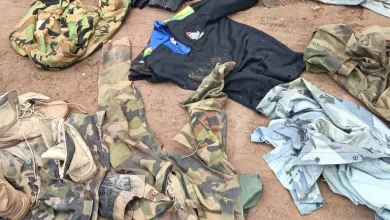
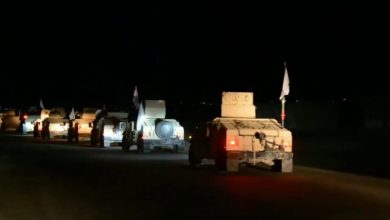
Simultaneously, fighting broke out overnight at the Spin Boldak border crossing in Kandahar province, a key transit point between southern Afghanistan and Pakistan. A source within Taliban ranks in Kandahar told Amu TV that six Pakistani soldiers were killed in the exchange and one was captured. The body of a seventh soldier was also reportedly recovered by Taliban forces. Taliban forces claimed to have seized a number of light and heavy weapons during the confrontation.
This account is single-source and unverified. Pakistani officials have not publicly confirmed these casualty figures or the capture of any personnel. The Taliban claim that Pakistani forces initiated the clash by firing across the border and killing a local child laborer, prompting the retaliatory engagement. Separately, locals reported Pakistani mortar shelling continuing in the Luqman village area of Spin Boldak.
🔵 Strategic Context
Nine Weeks of Border War — Diplomacy Has Not Held
The cross-border conflict between Taliban forces and Pakistan has now continued for nine weeks, escalating from the initial exchange that began on February 26. The violence has included artillery exchanges, airstrikes, and drone operations across multiple eastern and southern Afghan provinces. The United Nations reported that more than 70 civilians were killed in the first two weeks of fighting alone, with later UN figures placing displaced persons at over 94,000 by mid-April.
Delegations from both sides met in Urumqi, China in early April for a week of talks under Beijing’s facilitation. The discussions ended without a clear agreement. A brief ceasefire observed over the Eid al-Fitr holiday did not hold. The Urumqi talks revealed the depth of mutual distrust: Pakistan pressed for the dismantling of Tehrik-i-Taliban Pakistan facilities in Afghanistan and the withdrawal of Taliban units from zero-point border positions, while the Taliban countered with demands that Pakistan shut down alleged militant training sites inside Pakistani territory.
Pakistan’s core position remains that TTP militants use Afghan territory to conduct attacks inside Pakistan. A UN monitoring group has reported approximately 6,000 TTP fighters operating in Afghanistan. The Taliban have consistently denied allowing any group to use Afghan soil against neighboring countries, though they have not provided independent verification of this claim.
Taliban figures released in early April stated that Pakistani attacks had killed over 750 civilians between February 22 and April 3, with nearly 15,000 mortar rounds and rockets fired into Afghan territory during that period. Pakistani officials have not responded to these figures. The most significant single incident remains the March 16 airstrike on the Omid rehabilitation center in eastern Kabul, which UN figures attributed 269 deaths to. Human Rights Watch and Amnesty International have called for an independent investigation, characterizing the strike as a potential war crime.
🔵 Humanitarian Toll
94,000 Displaced — Educational and Medical Infrastructure Repeatedly Hit
The UN has documented severe displacement and civilian harm across Khost, Kunar, Nangarhar, Paktia, and Nuristan provinces. The latest Kunar strikes add a university campus to a growing list of civilian infrastructure struck during this conflict. Residents in border regions have described repeated shelling and mass displacement, with families unable to return home during periods of renewed fighting.
Humanitarian access has been compromised by the closure of key routes in remote border areas, complicating relief operations. The World Food Program has separately reported that food prices in Afghanistan remain approximately 21 percent above year-ago levels, with wheat flour costs up between 11 and 16 percent, adding an economic dimension to an already deepening crisis.
🔵 Strategy Battles Assessment
The University Strike Is a Strategic Inflection Point — Islamabad Is Paying a Rising Reputational Cost
Striking a university faculty building in broad daylight is categorically different from hitting a hillside Taliban position. Whether intentional or the result of inaccurate munitions, the Asadabad university strike will function as a recruiting and propaganda asset for Taliban political messaging far beyond Afghanistan’s borders. Pakistan faces mounting international scrutiny with each civilian institution struck, and the absence of any public comment from Islamabad on Monday’s events reflects a deliberate strategy of plausible deniability that is becoming harder to sustain.
The Spin Boldak ground clash, if Taliban casualty claims are accurate, represents a significant tactical outcome for Afghan forces at a symbolic location — one of the most commercially important border crossings between the two countries. The capture of a Pakistani soldier in particular, if confirmed, would escalate the diplomatic stakes considerably. Pakistan’s silence on this front is notable; confirmation of such a loss would be deeply uncomfortable for Islamabad.
The broader strategic picture reflects a conflict with no clear off-ramp. China’s Urumqi mediation did not produce a framework, and the Eid ceasefire collapsed within days. Pakistan continues to prioritize pressure over negotiation, betting that Taliban tolerance for civilian casualties will eventually force compliance on TTP. The Taliban are wagering the opposite: that the reputational and humanitarian cost of sustained Pakistani strikes will shift international opinion in their favor. Nine weeks in, neither calculation has resolved the conflict.
Strategy Battles — Related Coverage
Sources
- Four Civilians Killed in Pakistan Strikes in Kunar, Taliban Say — Amu TV, April 27, 2026
- Clash Reported Between Taliban, Pakistani Forces at Border Crossing — Amu TV, April 27, 2026
- Pakistan Missile Strikes Kill 3, Injure 45 in Kunar — Khaama Press, April 27, 2026
- Three Killed, 45 Injured in Pakistan’s Attack in Kunar — IANS via Pajhwok Afghan News, April 27, 2026
- Reports: 3 Killed, 45 Injured as Pakistani Missiles Hit Kunar — Republic World, April 27, 2026
- UN Says 94,000 Displaced by Taliban-Pakistan Clashes — Amu TV, April 18, 2026
- Taliban Say Pakistani Strikes Have Killed Over 750 Civilians — Amu TV, April 6, 2026
- Urumqi Convergence: Why China’s Quiet Mediation Matters — Amu TV Analysis, April 13, 2026
Editorial Verification
Kunar strike casualty figures are cross-referenced across Amu TV, Pajhwok Afghan News, Khaama Press, and IANS. Taliban deputy spokesman figures (4 killed, 70+ wounded, 30 students) are higher than Kunar provincial information directorate figures (3 killed, 45 wounded); both sets are reported and labelled. The Spin Boldak clash report of six Pakistani soldiers killed and one captured is single-source (Taliban-aligned source within Kandahar) and is explicitly labelled CLAIM UNVERIFIED throughout this article. Pakistani officials have not commented on any aspect of Monday’s events. UN displacement and casualty figures sourced from verified UN spokesman statements. Taliban cumulative civilian casualty claims (750+) are Taliban-origin figures; UN independently verified 76+ killed in the first two weeks. The March 16 Omid rehabilitation center strike casualty figure of 269 is from UN reporting. All editorial assessments are clearly separated from reported facts.
Approved for Publication
Marcus V. Thorne
Lead Editor, Strategy Battles
©StrategyBattles.net 2026
This article is for news and analysis purposes only. Based on publicly available news sources and military updates. All rights reserved. Not for commercial reuse without permission.