Trump Rejects Iran’s Nuclear Sequencing Plan — Hormuz Blockade Holds as 3-Day Ultimatum Begins
Day 59
Iran War — Ongoing
Zero
Enrichment — U.S. Red Line
Strait Closed
Hormuz — Tanker Traffic
🔴 The Rejection
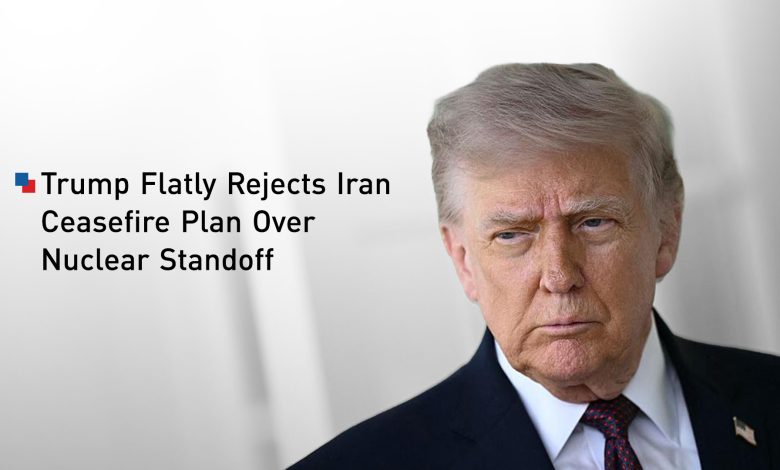
Trump Kills Iran Proposal Over Nuclear Sequencing
President Donald Trump has rejected Iran’s latest proposal to end the two-month war, after Tehran presented a framework that deferred nuclear negotiations until after a ceasefire and maritime disputes were resolved. The rejection was communicated privately during a White House Situation Room meeting on Monday, according to U.S. officials speaking anonymously to Kurdistan24.
Iran’s proposal called for reopening the Strait of Hormuz and lifting the U.S. naval blockade on Iranian shipping as first-phase measures. Only in later stages would nuclear activities be addressed. For Washington, that sequencing is a non-starter.
The U.S. position has been consistent throughout the conflict: nuclear issues must sit at the centre of any framework, not be parked for future rounds of talks. This standoff over sequencing now represents the primary obstacle to a negotiated settlement.
Olivia Wales — White House Spokeswoman, April 28, 2026
“The United States has been clear about its red lines.”
🟡 The Ceasefire Extension
Pakistan Buys More Time, But the Clock Is Ticking
Despite rejecting the Iranian proposal, Trump has formally extended the ceasefire at the request of Pakistani mediators. In a social media post, the president stated that the U.S. military will hold off its planned attack and continue the blockade until Iran submits a unified proposal and discussions are concluded. The original two-week truce agreed on April 8 had been due to expire Wednesday.
Field Marshal Asim Munir and Prime Minister Shehbaz Sharif of Pakistan were cited by Trump as the intermediaries who requested the pause. U.S. officials had separately told outlets that Iran was given three to five days to resolve internal government disagreements and produce a coherent position before Washington resumed operations.
Trump also suggested openly that the Iranian government itself is “seriously fractured,” a characterisation that carries significant weight diplomatically. If the White House believes Tehran cannot produce a unified position, the conditions for a negotiated pause become even harder to meet.
Donald Trump — Social Media Statement, April 22, 2026 (via Al Jazeera)
“Based on the fact that the Government of Iran is seriously fractured… we have been asked to hold our Attack on the Country of Iran until such time as their leaders and representatives can come up with a unified proposal.”
🟡 The Nuclear Stalemate
Zero Enrichment vs. Civilian Rights — The Gap Remains Unbridged
Washington’s stated position is zero enrichment: Iran must not produce any uranium, and existing stockpiles of highly enriched material must be extracted and removed. Trump has claimed Iran agreed to no enrichment at the April 8 ceasefire press conference, asserting the U.S. would help dig up and remove nuclear material from bombed sites.
Iran flatly contradicts this. The head of Iran’s Atomic Energy Organization has publicly rejected any limits on domestic enrichment. Iranian officials have separately stated that enriched uranium will not be transferred abroad under any circumstances. The gap between the two positions is total.
Axios reporting suggests the U.S. may be willing to time-limit its enrichment demands to a 20-year period. Iran has countered with a five-year window. That distance is significant in its own right, but both proposals remain academic while the parties cannot even agree on which issue to tackle first.
Secretary of State Marco Rubio has urged European allies to move quickly on reimposing sanctions, warning that Iran is violating existing agreements and approaching nuclear weapons capability. His statements add external pressure to a diplomatic environment that is already under severe strain.
🔵 Strait of Hormuz
Tanker Traffic Collapses as Physical Supply Constraints Bite
The Strait of Hormuz remains functionally closed to normal commercial traffic. Shipping data shows a sharp decline in tanker transits, with only a handful of vessels passing through the waterway in recent days. Several Iranian oil tankers have been forced to turn back by the U.S. naval presence.
Iran’s Foreign Minister Abbas Araghchi has called the U.S. counter-blockade, which has targeted ships seeking access to Iranian ports since April 13, an “act of war” and a violation of the ceasefire. He stated that Iran knows how to defend its interests and resist what he described as bullying.
Market analyst Fawad Razaqzada of City Index noted that the disruption has moved beyond rhetoric into physical supply constraints. Oil markets continue to price in the uncertainty, contributing to sustained global energy price pressure.
Abbas Araghchi — Iranian Foreign Minister, April 28, 2026 (via Al Jazeera)
“Iran knows how to neutralize restrictions, how to defend its interests, and how to resist bullying.”
🔴 Diplomatic Track
Islamabad Stalled, Moscow Steps In
Diplomatic momentum had been building around Islamabad, where Steve Witkoff and Jared Kushner arrived on April 11 to hold talks with Iranian officials. That process has now stalled following the cancellation of planned follow-up visits. Iranian Foreign Minister Araghchi subsequently travelled to Moscow, where he met President Vladimir Putin and received Russian diplomatic backing.
Russia’s involvement as a backer of Tehran’s position complicates any simple bilateral framework. Moscow has been proposed in the past as a third-party holder of Iranian enriched uranium, but Iran has consistently rejected any transfer of nuclear material abroad.
The collapse of the 2015 nuclear deal following Trump’s withdrawal during his first term continues to cast a long shadow. That breakdown exhausted much of the institutional trust required for phased agreements of the kind Iran is now proposing.
🟡 Domestic Pressure
Approval Ratings Slip as War Drags Into Third Month
Trump faces mounting domestic pressure as the war enters its third month with no resolution in sight. Approval ratings have declined and questions are growing within the U.S. regarding the administration’s strategic objectives beyond preventing Iranian nuclear capability.
On April 19, Trump raised his rhetoric sharply, warning that if a deal was not reached, the United States would target every power plant and bridge in Iran. That threat sits uneasily alongside the simultaneous extension of the ceasefire, creating a mixed signal for Tehran’s negotiators and for Washington’s allies.
Strategy Battles — Related Coverage
Sources
- Kurdistan24 — Trump Rejects Iran Proposal to End War, Citing Nuclear Omission — April 28, 2026
- Al Jazeera — Trump Announces Iran Ceasefire Extension But Says Blockade Remains — April 21, 2026
- Wikipedia — 2026 Iran War Ceasefire — Ongoing
- Wikipedia — 2025-2026 Iran-United States Negotiations — Ongoing
- House of Commons Library — US-Iran Ceasefire and Nuclear Talks 2026 (CBP-10637) — April 28, 2026
- CNN — Day 38 of Middle East Conflict: Iran Rejects 45-Day Ceasefire Proposal — April 7, 2026
Editorial Verification
Trump’s rejection of Iran’s proposal is confirmed by Kurdistan24 via anonymous U.S. officials — single-source for the Situation Room meeting detail. White House spokeswoman Olivia Wales’ comment confirmed via Kurdistan24 only. The ceasefire extension announcement is independently verified by Al Jazeera and confirmed via Trump’s direct social media statements. Tanker traffic disruption confirmed by shipping data cited across multiple outlets. Trump’s internal assessment of Iranian government fracture sourced from his own public statements. Iran’s position on zero enrichment rejection is confirmed across multiple outlets including Al Jazeera and the House of Commons Library briefing. All Russian diplomatic activity confirmed by multiple sources. The 3-to-5 day ultimatum framing sourced from U.S. officials via Kurdistan24 — single-source item.
Approved for Publication
Marcus V. Thorne
Lead Editor, Strategy Battles
©StrategyBattles.net 2026
This article is for news and analysis purposes only. Based on publicly available news sources and military updates. All rights reserved. Not for commercial reuse without permission.