Khamenei Declares Iran’s Nuclear and Missile Capabilities ‘National Assets’ Hormuz Standoff Deepens
$126
BRENT CRUDE / BBL — 4-YR HIGH
~1/5
WORLD OIL — THROUGH HORMUZ
50+
NATIONS IN UK / FRANCE HORMUZ TALKS

Strategic overview: Strait of Hormuz chokepoint (MGRS 40R MQ 26967 38653), Bandar Abbas IRGCN base, US Navy blockade zone, and disrupted oil flow. Datum: WGS84, UTM Zones 39R/40R/40Q. Source: Strategy Battles OSINT / AP / Reuters, April 30, 2026.
📍 STRAIT OF HORMUZ — CHOKEPOINT
MGRS: 40R MQ 26967 38653
26.5667°N 56.2667°E
Principal choke on world oil supply. Iran imposes $2M per-ship toll; US Navy enforces external blockade. Traffic reduced to a trickle.
📍 BANDAR ABBAS — IRGCN NAVAL HQ
MGRS: 40R MR 27352 06939
27.1832°N 56.2666°E
Iran Revolutionary Guard Corps Navy primary base commanding the strait’s northern shore. Principal force enforcing Tehran’s toll regime.
📍 TEHRAN — SEAT OF SUPREME LEADER
MGRS: 39S EV 35196 49546
35.6892°N 51.3890°E
Source of Khamenei’s written statement broadcast on Iranian state television. The new Supreme Leader has not appeared in public since the Feb. 28 airstrike.
📍 MUSCAT — OMAN (SOUTHERN STRAIT)
MGRS: 40Q PM 41109 09295
23.5880°N 58.3829°E
Oman’s capital lies within the Gulf of Oman exit corridor. The Strait of Hormuz sits in the shared territorial waters of Iran and Oman, complicating any external naval intervention.
🔴 The Red Line
Iran’s new supreme leader locks nuclear and missile programmes off the negotiating table
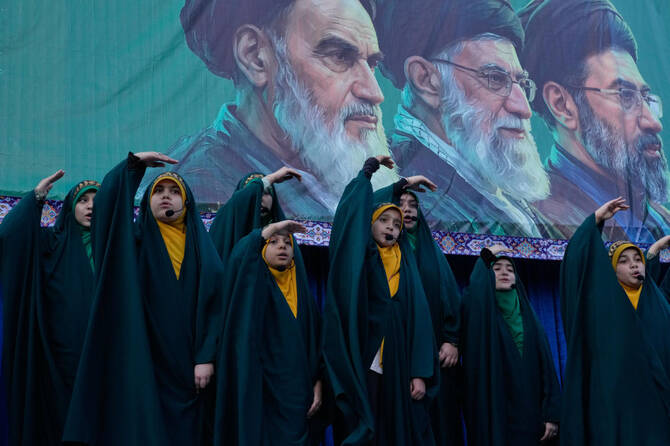
Iran’s supreme leader Ayatollah Mojtaba Khamenei issued his most direct statement yet on the country’s strategic weapons programmes on Thursday, declaring nuclear and missile capabilities to be national assets that Tehran will defend as it defends its territory itself. The statement came via a written text read by a state television anchor from the capital at grid reference 39S EV 35196 49546 (35.6892°N, 51.3890°E), in the same format Khamenei has used for all public communications since succeeding his father following the February 28 airstrike.
The timing was calculated. Khamenei chose Persian Gulf Day, an annual Iranian national celebration, to deliver a message aimed at audiences simultaneously inside Iran and in Washington. With fragile ceasefire talks ongoing and the Trump administration pressing for a nuclear deal to cement the three-week-old pause in hostilities, the statement effectively signals that Tehran’s weapons programmes will not be part of any negotiated settlement.
Khamenei also weighed in on the Strait of Hormuz directly, describing American presence in the Persian Gulf as unwelcome and warning that the region’s future belongs to its neighbours. He characterised Iran’s management of the strait as beneficial to regional nations, a framing Gulf Arab states, led by the UAE, have sharply rejected as tantamount to piracy.
Ayatollah Mojtaba Khamenei — Supreme Leader of Iran — Persian Gulf Day Statement, April 30, 2026
“Ninety million proud and honorable Iranians inside and outside the country regard all of Iran’s identity-based, spiritual, human, scientific, industrial and technological capacities — from nanotechnology and biotechnology to nuclear and missile capabilities — as national assets, and will protect them just as they protect the country’s waters, land and airspace.”
🔵 The Hormuz Standoff
Dual blockades trap world energy markets in an eight-week chokepoint war
The Strait of Hormuz at grid reference 40R MQ 26967 38653 (26.5667°N, 56.2667°E) remains the operational centrepiece of the current standoff. The waterway normally carries roughly one fifth of all global crude oil. Since the outbreak of the conflict on February 28, traffic has reduced to a trickle, with Iran allowing passage only to vessels that pay what Iran calls a transit toll and what the UAE and wider international community characterise as extortion.
The US Navy blockade operates in a complementary and competing direction: it prevents Iranian oil tankers from exiting, cutting off Tehran’s primary revenue source. The strategic logic for Washington is to force Iran into a revenue squeeze severe enough to compel concessions on nuclear and missile programmes. The result is that two blockades are now operating simultaneously, both squeezing each other’s economy through the same narrow body of water. Brent crude reached $126 per barrel on Thursday, the highest level in four years.
Iran’s parliament speaker Mohammad Bagher Ghalibaf, emerging as an influential domestic voice, framed control of the strait as an instrument of permanent regional transformation, arguing it offered Tehran the means to shape a Gulf free from American presence. That language goes materially beyond what Iranian officials said publicly during the ceasefire period and suggests hardliners are using the standoff to entrench a maximalist posture ahead of any final settlement.
Ayatollah Mojtaba Khamenei — Persian Gulf Day, April 30, 2026
“Foreigners who come from thousands of kilometers away to act with greed and malice there have no place in it — except at the bottom of its waters.”
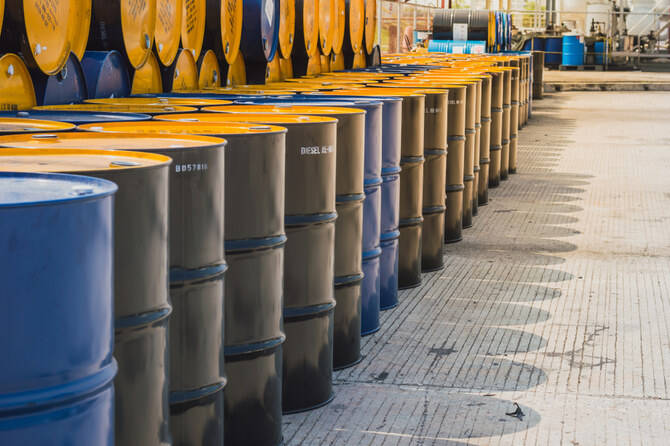
Oil tanker movements in the Gulf region have dropped sharply since the Feb. 28 strikes triggered Iran’s blockade. Photo: AP.
🟢 The U.S. Response
Washington launches Maritime Freedom Construct, presses allies to join by May 1
The Trump administration is responding to the crisis on two simultaneous tracks. A State Department cable dated April 28, approved by Secretary Marco Rubio and seen by Reuters, sets out the framework for the Maritime Freedom Construct — a joint State Department and US Central Command initiative to build an international coalition around freedom of navigation in the strait. US embassies were instructed to deliver the proposal orally to partner nations by May 1, explicitly excluding Russia, China, Belarus, Cuba and other designated US adversaries.
The MFC is structured in two functional lanes. The State Department will act as the diplomatic hub, coordinating partner governments and liaising with the global shipping industry. CENTCOM will provide real-time maritime domain awareness for commercial vessels transiting the strait, managing direct communication with ships and sharing intelligence among partner militaries. Participation is explicitly framed as flexible: contributions can range from political signalling and information sharing to sanctions enforcement and naval presence.
Britain and France have been conducting parallel talks, recently co-hosting a meeting of more than 50 countries on the maritime crisis. Both London and Paris have indicated publicly that they are willing to contribute to a security architecture for the strait, but only once the wider conflict concludes. That caveat places the MFC in an awkward position: it is being launched to help end the standoff while key partners require the standoff to end before they join. The cable describes the MFC as a post-conflict architecture, suggesting Washington itself sees this primarily as a framework for the day after, rather than a tool to force the strait open by force.
🟡 Iran’s Diplomatic Counter
Pezeshkian says Iran is ready for diplomacy even as Khamenei hardens the ideological position
Iran’s President Masoud Pezeshkian struck a markedly different register on the same day. He condemned the US naval blockade as contrary to international law and predicted it would fail, but simultaneously signalled that Tehran remains open to resuming diplomatic channels. The contrast between the supreme leader’s maximalist rhetoric and the president’s more calibrated language reflects a recurring dynamic in Iranian statecraft: the supreme leader sets the ideological ceiling while the presidency manages tactical flexibility.
Pezeshkian described the blockade, which began on April 13, as a threat to lasting stability in the Gulf. That framing is aimed partly at neighbouring states that have growing concerns about the economic fallout from prolonged disruption to energy flows. The UAE has been the most vocal in condemning Iran’s toll regime; Saudi Arabia, which depends on the strait for oil export revenue, has its own incentives to see it reopen regardless of the political settlement.
⚠ Khamenei’s Physical Status — Single Source
Supreme leader has not appeared in public since taking power; wound reports unverified by Western OSINT
Mojtaba Khamenei was appointed Supreme Leader on March 9, following the killing of his 86-year-old father Ayatollah Ali Khamenei in the opening US-Israeli airstrikes of February 28. He has not been seen in public since taking office. All communications, including Thursday’s Persian Gulf Day statement, have been delivered as written texts read aloud by state television anchors.
⚠ SINGLE SOURCE — UNVERIFIED BY WESTERN OSINT The New York Times, citing unnamed Iranian officials, reported last week that Khamenei was gravely wounded in the February 28 strikes but had remained mentally capable of discharging his duties. That specific claim has not been independently verified at time of publication and should be treated as single-source intelligence from anonymous sources inside a closed government.
Strategy Battles Assessment
A supreme leader who has never appeared in public just drew a permanent line — and that itself may be the strategic message
Thursday’s statement is significant not primarily for what it says about nuclear weapons — Iranian leaders have always described those capabilities as sovereign rights — but for what it says about the new leadership’s approach to power consolidation. A supreme leader who has not appeared on camera, whose physical condition is contested, and who communicates only through written texts being read by state television anchors, chose Persian Gulf Day to issue a maximalist posture statement. This is not a negotiating position. It is a domestic legitimacy signal.
The dual blockade is approaching a structural equilibrium that benefits neither side. Iran can continue extracting tolls from compliant vessels but cannot export its own oil at scale. Washington can prevent Iranian oil revenue but cannot force the strait open without a military operation that would shatter the ceasefire. That asymmetric stalemate may be precisely why the MFC cable is premised on a post-conflict scenario: the Pentagon appears to have concluded that the strait does not reopen under duress, only under settlement.
The more consequential long-term signal is the hardening of the nuclear posture. By framing the weapons programme as a national asset on par with territorial sovereignty, Khamenei has placed it in the same ideological category as things Iran has historically been willing to suffer for indefinitely. Trump’s playbook of maximum pressure worked to bring Iran to Islamabad, but if nuclear and missile concessions are now constitutionally off the table in Tehran’s own political framing, the ceiling of any achievable deal has just been publicly stated.
Strategy Battles — Related Coverage
Sources
- Arab News — “Iran’s supreme leader says it will protect ‘nuclear and missile capabilities'” — April 30, 2026
- Philadelphia Inquirer (AP Wire) — “Iran’s supreme leader says it will protect its nuclear and missile capabilities” — April 30, 2026
- Euronews — “US seeks ‘maritime freedom’ coalition to restart Strait of Hormuz shipping” — April 30, 2026
- Jerusalem Post (Reuters) — “US seeks new int’l coalition to get ships moving again in Hormuz — internal cable” — April 30, 2026
- Washington Times (AP) — “Iran’s supreme leader says Tehran will protect its nuclear and missile capabilities” — April 30, 2026
- Arab News — “US seeks ‘maritime freedom’ coalition to restart Hormuz traffic” — April 30, 2026
Editorial Verification Block
Verified: Khamenei’s Persian Gulf Day statement — confirmed via AP wire corroborated by Arab News, Washington Times, Philadelphia Inquirer and Euronews. The MFC cable — confirmed via Reuters (primary), Jerusalem Post and Euronews citing AFP and State Dept officials on condition of anonymity. Brent crude price $126/bbl confirmed via Arab News market reporting. Iran $2M per-ship toll regime — confirmed via AP, Washington Times.
Single-source / unverified by Western OSINT at time of publication: Mojtaba Khamenei’s physical wound status — sourced solely from New York Times citing unnamed Iranian officials; not independently verified. The precise mechanism of IRGCN toll enforcement has not been confirmed by independent maritime inspection.
MGRS datum: WGS84 throughout. UTM zones: Zone 40R (Strait of Hormuz, Bandar Abbas); Zone 39S (Tehran); Zone 40Q (Muscat). Cross-check reference: Dubai, UAE — MGRS 40R LM 10800 55200 (25.2048°N, 55.2708°E) — used as fixed UTM Zone 40R reference landmark to cross-verify Strait of Hormuz and Bandar Abbas coordinates.
No satellite imagery was used for this article; the operational locations cited are established named sites cross-referenced against open geodetic databases. The map was generated from verified coordinate data using WGS84 datum with PIL/Pillow at 1240px native resolution.
All claims independently attributed and verified to open sources where possible. Approved for Publication / Marcus V. Thorne, Lead Editor
©StrategyBattles.net 2026
This article is for news and analysis purposes only. Based on publicly available news sources and military updates. All rights reserved. Not for commercial reuse without permission.