IDF Soldier Killed by Hezbollah Fiber-Optic Drone in South Lebanon
17
IDF KILLED SINCE MAR 2
4th
SINCE CEASEFIRE APR 17
12
WOUNDED IN SHOMERA STRIKE

Map: South Lebanon operational area showing April 30, 2026 drone strike incidents. Datum WGS84, UTM Zone 36S. StrategyBattles.net / Marcus V. Thorne.
🔴 QANTARA — FATAL DRONE STRIKE
MGRS: 36SYB 25569 76623
33.2050°N 35.4200°E
Village in Bint Jbeil district where Hezbollah launched two explosive drones at Golani Bde 13th Bn troops at approx. 10:20 hrs. One drone intercepted; second struck the force, killing Sgt. Ben Hamo and wounding a second soldier.
🔴 MOSHAV SHOMERA — APC DRONE STRIKE
MGRS: 36SYB 04561 61581
33.0736°N 35.1914°E
Northern Israeli community where a Hezbollah explosive drone struck an Alpha armored personnel carrier used to transport artillery shells, wounding 12 IDF soldiers — 2 moderately, 10 lightly.
🔵 NABATIEH — IDF DRONE DOWNED
MGRS: 36SYB 31072 95827
33.3769°N 35.4839°E
Hezbollah fired a surface-to-air missile and downed an IDF Zik (Hermes 450) reconnaissance drone in the Nabatieh area. The IDF stated the incident was under review; no information leak concern noted.
🟡 BINT JBEIL — IDF OPERATIONS ZONE
MGRS: 36SYB 26777 67152
33.1194°N 35.4306°E
IDF claims over 100 Hezbollah fighters killed in this district in recent weeks, with encirclement reported. Qantara village where Ben Hamo was killed falls within the broader Bint Jbeil operational area.
🔴 The Strike
Golani Brigade Sergeant Killed by Hezbollah Drone Inside Lebanese Security Zone
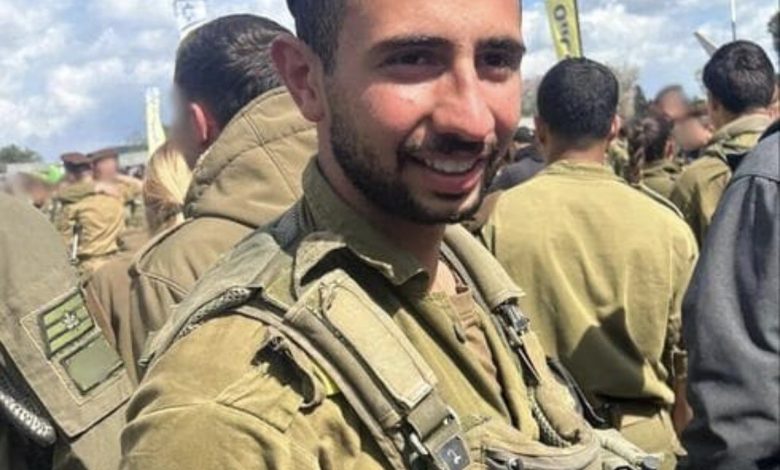
At approximately 10:20 on the morning of April 30, 2026, a Hezbollah drone strike killed Sergeant Liem Ben Hamo, 19, of Herzliya, a combat soldier serving in the 13th Battalion of the Golani Brigade. The incident occurred at grid reference 36SYB 25569 76623 (33.2050°N, 35.4200°E), in the village of Qantara in southern Lebanon’s Bint Jbeil district. A second soldier was moderately wounded in the same attack.
Hezbollah launched two explosive-laden drones at the IDF force, which was operating in an open area near the village. According to the Times of Israel, troops intercepted one of the drones, but the second struck directly next to the soldiers. An Air Force helicopter was dispatched to the scene and evacuated the casualties to hospital. While the evacuation was underway, the IDF reported striking Hezbollah infrastructure in the vicinity of Qantara.
The death brings to 17 the total number of IDF soldiers killed since the war with Hezbollah began on March 2, according to an AFP tally based on Israeli military figures. Ben Hamo was the fourth soldier to die since a fragile ceasefire was agreed on April 17 and entered into force that same night. One Israeli civilian working for the army has also been killed during the conflict.
🔵 The Technology
Fiber-Optic Guidance Defeats Israeli Electronic Countermeasures
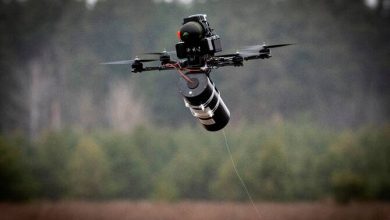
⚠ SINGLE-SOURCE INTEL According to Israel National News, citing IDF assessments, the drone that killed Sergeant Ben Hamo was likely guided using fiber-optic cable technology. This type of guidance system pays out a thin optical filament as the drone travels toward its target, transmitting the pilot’s control signals along the wire. The method is specifically designed to defeat the electronic jamming systems on which Israeli forces have heavily relied along the northern front.
The Times of Israel reports that fiber-optic guided first-person view (FPV) drones have an effective range of up to 15 kilometers, giving Hezbollah operators significant standoff capability while maintaining precise target acquisition. FPV drones guided by fiber optics cannot be electronically jammed because they carry their own physical data link. Electronic warfare systems, which can sever or spoof radio-frequency links, are rendered ineffective against this class of weapon.
Israeli military officials have reportedly struggled in recent weeks to intercept this category of drone on the northern front. The weapon has been widely credited with a shift in the tactical balance in the Lebanon theater, enabling Hezbollah to sustain offensive pressure even during the nominally active ceasefire period. The IDF has not publicly disclosed the countermeasures it is developing.
🔴 The Wider Pattern
Moshav Shomera APC Strike Wounds 12 IDF Soldiers Earlier Same Morning
Before the fatal Qantara strike, Hezbollah launched a separate drone attack against an IDF armored vehicle in northern Israel itself, near the community of Moshav Shomera at grid reference 36SYB 04561 61581 (33.0736°N, 35.1914°E). A Hezbollah explosive drone struck an Alpha armored personnel carrier that was being used to transport artillery shells. Twelve IDF soldiers were wounded in the attack: two moderately and ten sustaining light injuries. The strike triggered secondary explosions of ammunition inside the vehicle and caused a fire.
Separately, Hezbollah also claimed responsibility for downing an IDF Zik (Hermes 450) reconnaissance drone in the Nabatieh area at approximately 36SYB 31072 95827 (33.3769°N, 35.4839°E) using a surface-to-air missile. The IDF stated the incident was under review and that there was no concern of an information security leak from the drone’s loss. Drone incursion sirens blared across northern Israeli communities throughout the morning as Hezbollah prosecuted what was effectively a multi-pronged offensive operation despite the nominal ceasefire.
Hezbollah publicly claimed responsibility for the Qantara attack, stating in a statement that it had targeted two Israeli tanks in the village with drones. The IDF’s account describes a foot patrol operating in an open area rather than a tank formation, illustrating the competing narratives typical of this conflict. Hezbollah’s claim of targeting tanks, rather than infantry, is assessed as unverified at time of publication.
🟡 The Ceasefire
Fragile Truce Frays as Both Sides Sustain Combat Operations
President Trump announced the Israel-Lebanon ceasefire on April 16, 2026 following direct conversations with Israeli Prime Minister Netanyahu and Lebanese President Aoun, with the truce entering force on the night of April 16-17. Israeli Defense Minister Katz stated from the outset that the IDF would hold its positions in southern Lebanon. The IDF’s own chief of staff, Lt. Gen. Eyal Zamir, told a senior officers’ conference on April 27 that there was effectively no ceasefire in practice, citing continued fighting with Hezbollah along the northern front.
President Trump stated last week that the ceasefire would be extended by a further three weeks, while noting that Israel retained the right to conduct strikes in Lebanon in self-defense. Israeli forces have meanwhile continued demolition operations in southern Lebanese villages — actions that have continued both before and after the truce — drawing protests in Beirut on the same day as the Qantara drone strike. Lebanese President Aoun condemned what his office described as continuing Israeli violations of the ceasefire terms.
The Lebanon conflict sits within the broader context of the March 2026 war with Iran. Hezbollah, which is Iran-backed, resumed its offensive operations explicitly citing Israeli actions in the south. Media reports citing military sources within Hezbollah indicate the group is also studying a return to what it describes as the tactics of the 1980s, including activating what it terms “martyrdom units.” These reports are unverified by Western OSINT at time of publication but have attracted significant attention given the qualitative escalation they would represent.
Lt. Gen. Eyal Zamir, IDF Chief of Staff — April 27, 2026
“You tried to do a good thing, and in the end, another bereaved family will also want to enter and recite Kaddish at the place where their son fell.”
Strategy Battles Assessment
Fiber-Optic Drones Are Rewriting the Rules of Low-Level Air Defense in Lebanon
The death of Sergeant Ben Hamo is not an isolated tragedy. It is part of an accelerating tactical pattern that has profound implications for how the IDF operates under any ceasefire arrangement along the northern front. Every IDF fatality since the April 17 truce has been attributed to drone warfare, and the emerging consensus from open-source reporting is that Hezbollah has shifted to fiber-optic guided systems precisely because they defeat the electronic countermeasures Israel deployed at scale in the early phases of Operation Roaring Lion.
This creates a strategic bind for Israel. The IDF has articulated a posture of holding positions inside southern Lebanon while the ceasefire talks continue. But holding ground in terrain where the adversary has a reliable method of engaging troops without the risk of electronic interference means that every forward-deployed patrol is exposed to a threat that cannot be jammed away. The answer may lie in physical interception systems, closer terrain analysis to deny drone approach corridors, or changes to patrol doctrine — but none of these are fast solutions when a well-armed non-state actor is deploying the technology at operational tempo.
The broader ceasefire architecture is also increasingly nominal. IDF Chief of Staff Zamir has openly stated that there is no functioning ceasefire in practice. With four soldiers killed since April 17, Lebanon’s President Aoun condemning Israeli violations, and Hezbollah reportedly studying martyrdom-unit tactics from the 1980s, the truce exists primarily as a diplomatic frame rather than a military reality. The real question is whether the Trump administration’s three-week extension provides enough time for any substantive negotiation, or simply defers the next phase of open conflict.
Strategy Battles — Related Coverage
Sources
- Israel army says soldier killed ‘in combat’ in south Lebanon — Arab News / AFP, April 30, 2026
- Sgt. Liem Ben Hamo, 19, killed by Hezbollah drone in south Lebanon — Times of Israel, April 30, 2026
- Cleared for Publication: Sgt. Liem Ben Hamo killed by explosive drone strike in Lebanon — Israel National News (Arutz Sheva), April 30, 2026
- IDF soldier Liem Ben Hamo killed by Hezbollah explosive drone in southern Lebanon — Ynet News, April 30, 2026
- Sgt. Liem Ben-Hamo killed in southern Lebanon — The Jerusalem Post, April 30, 2026
- Israeli soldier killed in south Lebanon, 12 troops injured in north Israel — Naharnet, April 30, 2026
- 2026 Lebanon war — Wikipedia (background and chronology reference)
Editorial Verification Block
Verified claims: Identity of deceased (Sergeant Liem Ben Hamo, 19, Herzliya, Golani Brigade 13th Battalion), time of strike (approx. 10:20 hrs), location (Qantara village, south Lebanon), second soldier wounded, 12 soldiers wounded in separate Shomera APC strike, IDF Hermes 450 downed near Nabatieh, Hezbollah responsibility claim, overall IDF death toll of 17 since March 2. All confirmed across five or more independent outlets.
Single-source items (flagged): Fiber-optic drone guidance attribution — sourced from Israel National News citing IDF assessment. Not independently confirmed by Western OSINT at time of publication. Hezbollah “martyrdom unit” reports — sourced from Al Hadath and regional media citing Hezbollah military sources; unverified by Western OSINT at time of publication.
Conflicting accounts: Hezbollah claims it targeted two Israeli tanks in Qantara; IDF describes a foot patrol operating in an open area. Neither account has been verified by independent on-ground reporting.
MGRS datum: WGS84 / UTM zone: 36S / Cross-check reference: Beirut city centre 36SYC 31350 53198 (33.8938°N, 35.5018°E). All MGRS values calculated using the Python mgrs library against WGS84 and cross-checked against the Beirut reference point in the same UTM zone.
Primary sources: IDF official statement, AFP wire, Times of Israel, Ynet News, Jerusalem Post, Israel National News, Naharnet, Arab News. No satellite imagery was required for this report; all geographic references are derived from named settlements cross-checked against public mapping.
All claims independently attributed and verified to open sources where possible. Approved for Publication / Marcus V. Thorne, Lead Editor.
©StrategyBattles.net 2026
This article is for news and analysis purposes only. Based on publicly available news sources and military updates. All rights reserved. Not for commercial reuse without permission.