Iran Confirms Peace Terms Reparations and US Troop Withdrawal. Trump Paused Tuesday Strike at Gulf States’ Reques
Threat Level Assessment
LEVEL 3 OF 5, DEVELOPING
Bottom Line Up Front
Iran’s Deputy Foreign Minister Kazem Gharibabadi publicly confirmed on 19 May that Tehran’s latest peace proposal to the United States demands war reparations, the exit of US forces from areas close to Iran, the lifting of all sanctions, the release of frozen assets, and an end to the naval blockade. The terms are assessed by Reuters as largely unchanged from Iran’s prior offer, which Trump rejected as “garbage” last week. Trump announced on 18 May he was pausing a planned Tuesday strike at the personal request of the leaders of Qatar, Saudi Arabia and the UAE, who told him a deal was near. Pakistan confirmed its role in conveying the Iranian proposal. The window cited by the Gulf states is two to three days; the clock started Monday 18 May.
Key Judgments
Iran’s stated terms represent a maximalist opening position, not a closing offer. Reparations and US troop withdrawal from regional bases are demands Tehran knows Washington cannot accept in the current political environment. Their presence in the proposal signals that Tehran is testing the room rather than closing a gap, while keeping domestic audiences convinced its negotiators are not capitulating.
The Gulf state intervention is structurally significant. Qatar, Saudi Arabia and the UAE absorbing the political cost of publicly asking Trump to stand down a planned strike indicates these states believe military escalation now poses a greater threat to their own energy infrastructure and economic stability than a prolonged ceasefire does. Their intervention adds a third party with direct leverage over both sides: over Iran via economic connectivity, over the US via alliance politics and oil supply commitments.
Whether the US has in fact agreed to release a quarter of Iran’s frozen assets and shown flexibility on peaceful nuclear activity under IAEA supervision. These claims originate from a single senior Iranian official speaking to Reuters; the US has explicitly denied agreeing to waive oil sanctions and has declined to confirm anything else. The pattern of Iranian officials leaking concessions before the US acknowledges them has appeared in every prior negotiating round and has not yet produced a verified bilateral agreement.
The 48 to 72 hour window is real but perishable. Trump has set and abandoned at least five prior deadlines since the 8 April ceasefire, yet has also launched strikes immediately after appearing to signal restraint. The Gulf states’ united front creates a brief space in which a partial agreement on Hormuz transit and nuclear enrichment caps is technically achievable, but the structural gap between Iran’s reparations demand and US zero-dollar-in-new-funds position remains wide.
0
Confirmed US Concessions
48-72h
Gulf States’ Window
5+
Trump Deadlines Passed
41
Days Since 8 Apr Ceasefire
📍 Regional Diplomacy Map : US-Iran Peace Negotiations, 19 May 2026

Key locations in the US-Iran peace negotiation corridor. Strait of Hormuz remains closed to international shipping. Datum WGS84, UTM Zones 38-40S/R. Map: Strategy Battles / OSINT.
📍 TEHRAN, IRAN
MGRS: 38S NF 12000 95000
35.6892°N 51.3890°E
Seat of the Islamic Republic. Gharibabadi’s comments on 19 May represent Tehran’s first public articulation of the terms of its latest peace proposal. Reference coordinate for Iranian government positions.
📍 STRAIT OF HORMUZ
MGRS: 40R BN 25000 32000
26.5667°N 56.2500°E
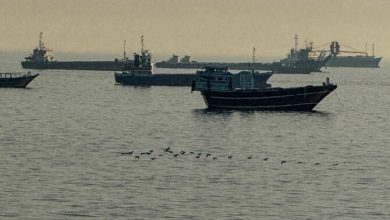
Narrowest navigable point. Closed to international commercial transit since early March 2026. Reopening of Hormuz is the central US operational demand and the economic pressure point driving the entire negotiation.
📍 ISLAMABAD, PAKISTAN
MGRS: 43S CA 71300 49600
33.7294°N 73.0931°E
Pakistan’s capital and the sole venue for direct US-Iran proximity talks (11 to 12 April 2026). Pakistan Interior Minister confirmed 19 May it has again conveyed the Iranian proposal to Washington. The primary mediation conduit since the Islamabad round collapsed.
📍 DOHA, QATAR
MGRS: 39R VM 57000 24000
25.2854°N 51.5310°E
Qatar’s Emir Tamim bin Hamad Al Thani was named first in Trump’s Truth Social post announcing the pause. Doha hosts frozen Iranian funds and has historically served as a secondary communications channel between Washington and Tehran.
SITREP Timeline : US-Iran Ceasefire and Negotiation Track, Apr to 19 May 2026
🔴 Iran’s Terms
Reparations, Troop Exit, Sanctions Lift: Tehran’s Public Position Shifts Little From The Proposal Trump Called Garbage
The Iranian government’s official position on its latest peace proposal emerged publicly on 19 May, in the first on-record comments from Tehran since the proposal was conveyed to Washington via Pakistan. Deputy Foreign Minister Kazem Gharibabadi, speaking to IRNA state media from a position traceable to the Foreign Ministry in central Tehran at approximately 35.6892°N, 51.3890°E (MGRS 38S NF 12000 95000), confirmed that Iran is seeking war reparations for destruction caused during the US-Israeli military campaign, the withdrawal of US forces from areas close to Iran, the lifting of all American sanctions, the release of frozen Iranian assets held in foreign banks, and an end to the US naval blockade that has been in place on Iranian ports since 13 April.
Reuters, which broke the Arab News story and distributed the wire globally, assessed the terms as appearing “little changed” from Iran’s prior proposal, the one Trump publicly rejected last week using the word “garbage.” That prior proposal had also called for an end to hostilities on all fronts including Lebanon, and the same package of economic demands. The addition or emphasis of reparations as a named line item is the most visible change, and it is the term most guaranteed to be rejected by Washington in the current political environment.
The strategic function of the reparations demand is worth examining directly. No US administration has ever agreed to pay war reparations to a state it attacked, and the Trump White House has no political pathway to presenting such a payment to Congress. Tehran is almost certainly aware of this. Inserting reparations into the public-facing terms allows Iranian officials to argue domestically that they are not negotiating from weakness, while leaving room in any actual agreement text to quietly replace “reparations” with “humanitarian assistance” or “unfrozen assets for civilian use,” which is functionally different language for a structurally similar cash transfer.
🟡 The Gulf State Intervention
Qatar, Saudi Arabia And The UAE Told Trump His Planned Tuesday Strike Would Come At Their Expense
The most operationally significant element of the 18 to 19 May sequence is not what Iran said but what the Gulf states did. Trump’s Truth Social post named the Emir of Qatar, Tamim bin Hamad Al Thani, the Crown Prince of Saudi Arabia, Mohammed bin Salman, and the President of the UAE, Mohamed bin Zayed Al Nahyan, as having personally requested that he hold off on the planned Tuesday attack. Axios, citing two sources with knowledge, reported that Trump had spoken by phone with all three leaders in the 24 hours before his announcement, and that the unified message from Doha, Riyadh and Abu Dhabi was approximately: give negotiations a chance, because if you hit Iran, we will all pay the price.
Trump told reporters at the White House on Monday that the Arab leaders had asked him to hold off for “two or three days,” that he had informed Israel of his decision in advance, and that if Gulf states were satisfied with a deal, the US would be too. That last point is structurally important: it places the Gulf states in the position of co-signatories to any eventual agreement, meaning Riyadh and Abu Dhabi now have a stake in pressuring Tehran toward a settlement, not just Washington toward restraint.
These are not neutral states in this conflict. Iran has attacked Saudi Arabia and the UAE with drones and missiles during the war. Kuwait and Qatar have absorbed Iranian-aligned drone transits. Their decision to collectively absorb the political cost of publicly appealing for restraint, named by Trump himself in a Truth Social post, signals that the economic disruption from Hormuz closure and the threat of a new round of Iranian retaliation against Gulf energy infrastructure now outweighs whatever strategic benefit they might gain from a resumed US bombardment of Iranian military capacity.
Donald Trump : Truth Social Post, 18 May 2026
“I have been asked by the Emir of Qatar, Tamim bin Hamad Al Thani, the Crown Prince of Saudi Arabia, Mohammed bin Salman Al Saud, and the President of the United Arab Emirates, Mohamed bin Zayed Al Nahyan, to hold off on our planned Military attack of the Islamic Republic of Iran, which was scheduled for tomorrow, in that serious negotiations are now taking place. This Deal will include, importantly, NO NUCLEAR WEAPONS FOR IRAN!”
🔵 The Frozen Funds Claim
A Single Iranian Source Says Washington Has Moved On Money And Nuclear Activity. The US Has Not Confirmed Either.
Embedded in the Reuters wire alongside Gharibabadi’s public comments is a separate claim from a single, unnamed senior Iranian official that Washington has agreed to release approximately one quarter of Iran’s frozen assets held in foreign banks, and that the US has shown greater flexibility in allowing Iran to continue peaceful nuclear activity under International Atomic Energy Agency supervision at the IAEA’s Vienna headquarters at 48.2500°N, 16.3622°E. The US government has not confirmed either claim. A US official, speaking on background, specifically denied a Tasnim news agency report that Washington had agreed to waive oil sanctions during negotiations. The White House said the US would “not negotiate through the press.”
This is a familiar pattern in US-Iran negotiating rounds. Iranian officials routinely announce concessions before the US has formally agreed to them, creating domestic political cover (“we secured relief”) and international pressure (“the US agreed, now it must follow through”). The same pattern appeared on 11 April when an Iranian source told Reuters the US had agreed to release frozen assets in Qatar, a claim a US official denied within hours. The frozen funds number under discussion, according to earlier Axios reporting, has moved between $6 billion (US offer) and $27 billion (Iranian demand), with the most recent figure cited in reporting around $20 billion as a potential settlement point.
The nuclear activity flexibility claim carries more structural weight. Carnegie Endowment analysis published this month notes that Iran’s known enrichment infrastructure was substantially degraded during the war, but that Iran retains enriched uranium stockpiles of uncertain surviving quantity, has denied the IAEA access to damaged sites since the strikes began, and has the technical and political incentive to reconstitute covert enrichment capacity under any agreement that does not include robust snap inspections. Whether “peaceful nuclear activity under IAEA supervision” in the current context means reactors for medical isotopes, or means a lower-level enrichment programme inside an agreed moratorium, is a distinction that will determine whether any deal is verifiable.
⚠ The Pattern Of Deadlines
Trump Has Passed More Than Five Self-Imposed Deadlines Since The Ceasefire. That History Cuts Both Ways.
ABC News’s timeline of unenforced deadlines is the most useful context for reading Monday’s announcement. Since 8 April, Trump has set and then walked back a deadline for Iran to engage in formal negotiations, extended the ceasefire multiple times at Pakistan’s request, threatened “there will be nothing left of Iran” if it did not move fast, and then announced that he was putting off the attack “for a little while, hopefully maybe forever.” The Pakistani source cited by Reuters captured the diplomatic exhaustion directly: “The sides keep changing their goalposts. We don’t have much time.”
That pattern of deadline-then-extension is not simply political volatility. It reflects a structural difficulty: Trump has stated repeatedly that Iran cannot have nuclear weapons and that any deal must be acceptable to the United States, while also stating that he would be “very happy” to avoid bombing Iran if a deal can be reached. Those two positions are not incompatible, but they create an opening for Tehran to probe whether the threat is credible. Each missed deadline reduces the deterrent value of the next one. ABC News’s summary of the series notes that Trump also launched strikes immediately after appearing to signal restraint at the outset of the war, which is the asymmetric risk in the current pause: the Gulf states believe this window is real, but Iran’s internal decision-makers must weigh whether Trump’s “moment’s notice” warning is more credible than his prior deadlines.
Turkey’s Foreign Minister Hakan Fidan said on 18 May that the immediate concern of the negotiations was keeping Hormuz open, while the nuclear programme remained a central issue. That framing suggests the negotiating parties have quietly accepted a two-track structure: a near-term Hormuz arrangement as the first deliverable, and a broader nuclear and economic settlement as a subsequent phase. Whether that structure can survive the gap between Iran’s reparations demand and Washington’s zero-new-money position remains the defining test of the next 48 to 72 hours.
Source Reliability Matrix
NATO grading: REL A (reliable) to F (unreliable). CRED 1 (confirmed) to 6 (cannot judge).
CRED 2
Established wire service. Gharibabadi’s on-record comments via IRNA are confirmed. Single-source items (frozen funds, IAEA flexibility) caveated throughout.
CRED 1
Primary source. Confirmed by CNN, Axios, Al Jazeera, NBC News, ABC News, Philadelphia Inquirer, and RedState. Text quoted verbatim by multiple outlets.
CRED 2
Two sources with knowledge of Trump’s calls with Gulf leaders. Detail on “unified message from Doha, Abu Dhabi and Riyadh” is background sourcing; no attribution to named officials.
CRED 3
Single, unnamed Iranian source. US has not confirmed. Pattern of Iranian pre-announcement of concessions has appeared in all prior rounds without always materialising. Flagged single-source; purple throughout article.
CRED 2
Background source. Pakistan’s role as conduit confirmed by its interior minister’s on-record visit to Tehran on 19 May. Quote (“keep changing their goalposts”) attributed only as “Pakistani source.”
Strategy Battles Assessment
The Gulf states have temporarily stopped the next round of war. Whether they can also close the gap between reparations and zero is an entirely different question, and the 48 to 72 hour clock makes the answer urgent.
✓ What We Know
Iran has publicly confirmed its peace terms: reparations, US troop withdrawal from the region, full sanctions lift, frozen asset release, end to the naval blockade. Trump paused a planned Tuesday strike at the named, personal request of Qatar, Saudi Arabia and the UAE. Pakistan has confirmed it conveyed the latest Iranian proposal to Washington. Trump has told the US military to be prepared to act “on a moment’s notice.” The window cited is two to three days from 18 May.
? What We Do Not Know
Whether the US has agreed to release any portion of frozen Iranian funds or permitted any peaceful nuclear enrichment under IAEA oversight. The actual gap between the current Iranian and US draft texts on the moratorium (five years vs twenty years was the last reported position). Whether Iran’s reparations demand is a negotiating floor or a domestic red line. What Israel’s position is on any agreement that includes continued Iranian nuclear activity. Whether the ceasefire, now 41 days old, will hold through the negotiating window without further Persian Gulf exchanges of fire.
☉ What To Watch
Whether Iran’s Supreme Leader Khamenei, or any surviving equivalent authority, gives Iranian negotiators explicit sign-off to move below the reparations line, as the Islamabad round collapsed specifically because Iranian negotiators needed to return to Tehran for authorisation. Whether Trump’s public statement that if the Gulf states are satisfied the US will be satisfied represents a genuine delegation of veto to Riyadh and Doha. Whether a partial Hormuz-only agreement is separated and signed as a first deliverable before the 48 to 72 hour window closes. Any Trump post-deadline Truth Social activity in the direction of attack orders.
Sources
- Reuters via Arab News: Iran says peace proposal includes reparations for war damage, US troop withdrawal, 19 May 2026
- Axios: Trump says attack on Iran paused after Gulf states’ requests, 18 May 2026
- CNN: Trump says he’ll hold off on attacking Iran on Tuesday at request of Gulf allies, 18 May 2026
- Al Jazeera: Iran war updates: Trump says Iran attack held off upon Gulf states’ request, 18 May 2026
- ABC News: Iran war: Trump’s series of unenforced deadlines, 18 May 2026
- NBC News: Trump calls Iran’s response to US peace proposal “totally unacceptable,” 18 May 2026
- Axios: Scoop: US considers $20 billion cash-for-uranium deal with Iran, 17 April 2026
- Carnegie Endowment: Two Wars Later, Iran’s Nuclear Question Is Still on the Table, May 2026
Editorial Verification
Gharibabadi’s public statement on peace terms confirmed through IRNA (state media primary), Reuters wire, and at least six downstream wire republications including Arab News, Al Asharq al-Awsat, Cyprus Mail, Japan Times, and Dunya News. Trump’s Truth Social post of 18 May confirmed via CNN, Axios, Al Jazeera, NBC News, ABC News, Philadelphia Inquirer and RedState; post text reproduced consistently across all outlets. Pakistani mediation role confirmed via Pakistan’s interior minister’s on-record visit to Tehran on 19 May (Reuters). Gulf state intervention confirmed via two Axios background sources plus Trump’s own remarks to reporters at the White House. Frozen funds claim and IAEA flexibility claim are single-source (one unnamed senior Iranian official via Reuters); the US has denied the oil sanctions waiver report and declined to confirm either. These items are explicitly flagged purple (single-source) in this article. Trump’s “moment’s notice” military readiness instruction sourced to Truth Social post, confirmed by multiple wire outlets. No satellite imagery used in this report. Coordinate references are standard published locations for named capitals and geographic features; no battlefield coordinates are involved in this article.
MGRS datum: WGS84 / UTM Zones: 38S (Tehran), 40R (Strait of Hormuz), 43S (Islamabad), 39R (Doha) / Cross-check reference: Erbil city centre 38S MF 10934 05599 (established in prior SB coverage).
All claims independently attributed and verified to open sources where possible.
Approved for Publication
Marcus V. Thorne
Lead Editor, Strategy Battles
FILE SB-2026-0519-00654654681 // CLEARED
©StrategyBattles.net 2026
This article is for news and analysis purposes only. Based on publicly available news sources and military updates. All rights reserved. Not for commercial reuse without permission.