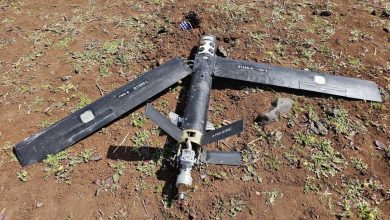
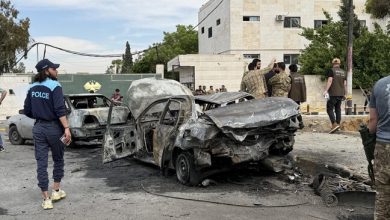
Houthi Leader Warns of Serious Consequences If US Escalates Against Iran
Threat Level Assessment
LEVEL 3 OF 5, DEVELOPING
Bottom Line Up Front
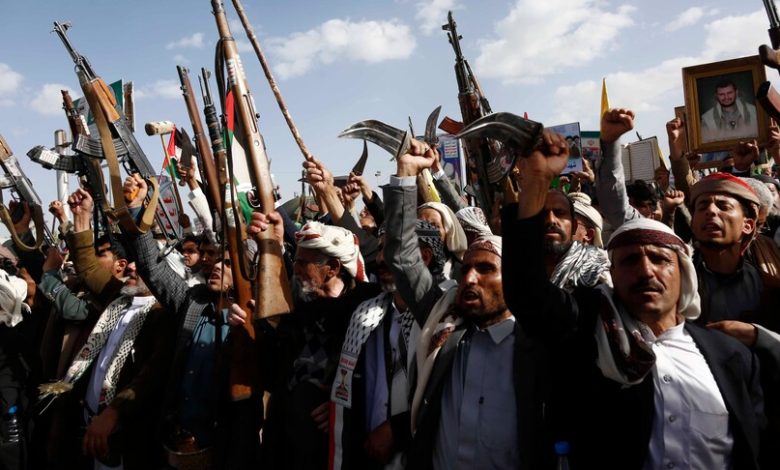
In a televised speech broadcast on Al-Masirah on 19 May, Houthi leader Abdul-Malik al-Houthi declared that the group stands militarily ready for any future US move against Iran, warning that a new escalation would carry serious consequences across the region. He accused Washington of preparing another escalation round after what he described as the failure of previous efforts, specifically citing US pressure on Iranian ports. The speech is the most direct Houthi threat to the post-ceasefire status quo since the 8 April Pakistan-mediated truce, and comes 41 days after the group’s single confirmed ballistic missile strike on Israel on 28 March, its formal entry into the 2026 Iran war.
Key Judgments
The 19 May speech is a deliberate strategic signal, not rhetorical filler. Al-Houthi’s reference to “indications” of a new US escalation preparation suggests the group is tracking specific diplomatic or military movements, most plausibly connected to ongoing US-Iran nuclear or sanctions talks and the unresolved Hormuz blockade. The framing around Iranian ports directly links the Houthi threat to the core economic pressure point of the 2026 war. The Houthis do not issue this level of operational language without external coordination.
If the US moves to enforce or tighten pressure on Iranian port access, the Houthi response is most likely to target Saudi Arabia’s Red Sea export route through Yanbu rather than a broad resumption of commercial shipping attacks. Saudi crude exports through Yanbu rose to approximately 4 million barrels per day in mid-March 2026 as the Hormuz blockade forced a Gulf export diversion; this concentration of high-value traffic in Houthi strike range is the most direct leverage the group holds. A Bab al-Mandeb closure has been described by the group itself as “likely” under certain escalation conditions.
Whether the Houthis currently have the arsenal depth to sustain a high-tempo Red Sea or Israel-strike campaign. Two Houthi officials told the AP in March 2026 that missile stockpiles had been significantly depleted through the 2023 to 2025 Gaza-era Red Sea campaign and through 2025 US counter-Houthi strikes (Operation Rough Rider). A third official disputed the severity of the depletion. The single confirmed 2026 war launch on 28 March suggests deliberate conservation rather than incapacity, but the arsenal ceiling remains genuinely uncertain.
1
Confirmed Houthi Strike on Israel, 2026 War
41
Days Into Post-Ceasefire Period
~2,000 km
Houthi Palestine Cruise Missile Range
0
Red Sea Attacks Since 8 Apr Ceasefire
SITREP Timeline : Houthi Posture, Feb to May 2026
📍 Houthi Threat Geometry / Bab al-Mandeb, Red Sea, Hormuz / May 2026

Key strategic chokepoints and Houthi operational geography referenced in the 19 May 2026 al-Houthi broadcast. Coordinates approximate per open-source reporting. Datum WGS84, UTM Zones 37R / 38P / 40R. Map: Strategy Battles / OSINT.
📍 SANAA, YEMEN
MGRS: 38P QM 34500 97200
15.3694°N 44.1910°E
Houthi-controlled capital. Origin of al-Houthi’s 19 May televised broadcast on Al-Masirah channel.
📍 HODEIDA, WEST YEMEN COAST
MGRS: 38P NK 18000 64000
14.7980°N 42.9514°E
Approximate point. Primary Houthi Red Sea coastal zone. Missile launchers, radars, and long-range systems pre-positioned here before the 2026 war, per Stimson Center.
📍 BAB AL-MANDEB STRAIT
MGRS: 38P MJ 55000 38000
12.3000°N 43.3500°E
Approximate centre of strait. Approximately 30 km wide. Carries roughly 12 percent of global oil shipments under normal conditions. Houthis have stated closure is “likely” under certain escalation thresholds.
📍 YANBU, SAUDI ARABIA
MGRS: 37R PU 88000 66000
24.0878°N 38.0651°E
Saudi Red Sea crude export hub. Exports rose to approximately 4 million bpd in mid-March 2026 as the Hormuz blockade forced diversion. Within Houthi long-range strike envelope.
🔴 The 19 May Speech
What al-Houthi Said, What He Chose Not to Say, and Why the Distinction Matters
Speaking from Sanaa at grid reference 38P QM 34500 97200 (15.3694°N, 44.1910°E) on 19 May, Abdul-Malik al-Houthi broadcast a message on the Houthi-run Al-Masirah satellite channel that the group stands militarily ready for any future US move against Iran. The speech, reported by Anadolu Agency, contained three elements that distinguish it from the group’s earlier post-ceasefire rhetoric. First, al-Houthi cited what he described as “indications” that Washington was preparing another escalation round, framing the speech not as a hypothetical but as a response to observed signals. Second, he specifically referenced US pressure on Iranian ports, anchoring the threat to a specific and ongoing policy instrument. Third, he named “serious consequences across the region” as the expected outcome of any such escalation.
What the speech did not contain is equally informative. al-Houthi did not announce an operation, name a target, set a deadline, or describe a specific military action. That restraint is consistent with the Houthi posture since the ceasefire: the group has maintained what analysts at Al Jazeera described in April as a strategy of “gradual escalation” and conditional restraint, declaring readiness while waiting for a calculus that justifies active commitment of assets. The 28 March missile strike on Israel operated on the same logic: one action, confirmed through official channels, followed by a return to verbal posturing rather than a sustained campaign.
al-Houthi also accused US President Donald Trump of prioritizing Israeli interests over American ones, a framing the group has used consistently to peel Gulf Arab sympathy away from Washington. The accusation is directed as much at regional audiences as at Washington itself. The Houthis have watched Saudi Arabia and the UAE maintain studied neutrality in the 2026 war, and any signal that US policy serves Israel rather than Gulf stability gives those states additional reason to keep distance from American-led pressure.
🟡 The Port Reference
Why the Houthi Mention of Iranian Ports Connects the Red Sea to the Hormuz File
The specific reference to US pressure on “Iranian ports” in al-Houthi’s 19 May speech is not incidental. The Hormuz blockade has been the defining economic weapon of the 2026 Iran war. When Iran shut down Hormuz in response to US and Israeli strikes, Gulf Arab states that export oil through the strait faced an immediate diversion problem. Saudi Arabia’s solution was to sharply increase exports through the Red Sea port of Yanbu, with crude shipments rising to approximately 4 million barrels per day in mid-March 2026, compared with an average of roughly 770,000 barrels per day in January and February, per Reuters data cited by Al Jazeera. That shift concentrates an enormous volume of high-value cargo in waters the Houthis control.
The strategic logic is explicit. If the US attempts to tighten economic pressure on Iranian ports, specifically through renewed enforcement of the Hormuz blockade or secondary sanctions on Iranian maritime trade, the Houthi counter-threat is to make Saudi Arabia’s Red Sea workaround equally costly. The Bab al-Mandeb strait, which the Houthis sit astride from their positions along Yemen’s western coastline near Hodeida, carries roughly 12 percent of global oil shipments in normal conditions. A Houthi blockade or sustained harassment campaign there does not merely hurt Saudi Arabia; it raises energy prices globally and signals to US allies that Washington cannot guarantee shipping security across two simultaneous chokepoints.
The group has itself said a Bab al-Mandeb closure is “likely” if the conflict escalates sharply or if Gulf Arab states join the war on the US side. That threshold has not yet been crossed. But al-Houthi’s 19 May language about pressure on Iranian ports suggests the group is calibrating its own red line to US economic coercion against Iran, rather than purely to kinetic military action. The two threats are now formally linked in Houthi public doctrine.
Abdul-Malik al-Houthi : Houthi Leader, Al-Masirah Broadcast, 19 May 2026
“On the military level, we are ready for all developments.”
🔵 The Arsenal Question
Readiness Declarations and the Gap Between Rhetoric and Operational Capacity
al-Houthi’s declaration of readiness operates against a background of genuine uncertainty about what the group can actually sustain. Two Houthi officials speaking to the Associated Press in March 2026 stated that the group’s missile stockpiles had been significantly depleted through its 18-month Red Sea shipping campaign following October 2023 and through the 2025 US counter-Houthi air campaign, Operation Rough Rider. Those officials noted that the flow of Iranian resupply had also slowed as Iran focused its own logistics on the war against the US and Israel. A third official disputed the severity of the depletion, stating that the group retained a substantial arsenal of drones specifically.
The single confirmed 2026 war launch on 28 March, a ballistic missile at Beersheba that was intercepted by the IDF, is consistent with a policy of deliberate conservation. The Houthis did not follow the Beersheba strike with a sustained campaign. They announced success, Houthi spokesman Yahya Saree confirmed the strike on Al-Masirah, and the group returned to verbal posturing. That sequence suggests the leadership made a calculated decision to register entry into the war without committing the stockpile depth that a sustained campaign would require. The 19 May speech does not alter that calculus; it signals that the calculation could change if circumstances change.
The Houthis’ most credible near-term tools are not ballistic missiles aimed at Israel but drone and missile harassment of Red Sea shipping and Yanbu-bound tankers, where they have proven experience, shorter ranges reduce reliability requirements, and the economic consequences are disproportionate to the munitions expended. The Stimson Center’s pre-war assessment noted that the group had redeployed missile launchers and long-range capabilities to positions along the Red Sea coast in Hodeida at approximately 38P NK 18000 64000 (14.7980°N, 42.9514°E) and Hajjah before the 2026 war, suggesting pre-positioning for exactly this kind of pressure campaign rather than a strategic air-strike posture.
⚠ The Ceasefire Frame
The Truce That Did Not Disarm Ansar Allah and the Limits of Trump’s Indefinite Extension
The 8 April ceasefire was an agreement between the United States and Iran, brokered by Pakistan. It did not include the Houthis as a named party, and it did not require Ansar Allah to stand down. When al-Houthi described the ceasefire as a “great victory” for Iran and the Axis of Resistance, the framing was telling: the group positioned itself as a victor in a concluded phase of conflict, not as a party bound by a truce it had not signed. That posture gives the Houthis maximum flexibility to re-enter hostilities at a time of their choosing without needing to argue they have violated any commitment.
Trump’s extension of the truce indefinitely, following the collapse of the Islamabad talks, has not resolved the structural disagreements that produced the war. The Hormuz closure remains the central dispute. Iran has not publicly committed to reopening the strait, and the US has not committed to withdrawing the pressure that triggered the closure. Into that gap, the Houthis insert themselves as the most mobile and least constrained element of the Axis of Resistance. Hezbollah has been severely degraded. Iraqi Shi’ite militias operate under increasing US bounty pressure. The Houthis, sitting inside a fragmented Yemeni political landscape with no central government capable of restraining them, face no equivalent internal constraint on escalation.
The United States has not been passive. Washington delivered messages through Omani mediators warning the Houthis not to intervene, and signalled that Houthi leaders’ mobile phones were under surveillance, per AP reporting from March. Those warnings held through the first month of the war. The 28 March missile strike tested the US response and found it limited to existing air defense operations. al-Houthi’s 19 May language is partly a probe of whether the ceasefire environment has reduced US willingness to impose costs even further.
Source Reliability Matrix
NATO grading: REL A (reliable) to F (unreliable). CRED 1 (confirmed) to 6 (cannot judge).
CRED 1
Primary wire. Direct reporting of a televised broadcast. No anonymous sourcing on the speech itself. Carries full direct quote from al-Houthi.
CRED 2
Houthi state broadcaster. Interested party. Credible for the fact of broadcast; not credible for framing or editorial context. Quotes from it are treated as primary source of group’s own stated position, not independent analysis.
CRED 1
Six independent outlets confirmed the 28 March missile attack on Beersheba and IDF interception. Houthi spokesman Yahya Saree confirmed on Al-Masirah. IDF confirmed independently. Fully corroborated.
CRED 3
Two Houthi officials (media arm, political bureau) cited; a third official disputed the severity of depletion. Internally conflicting. Arsenal status remains genuinely uncertain.
CRED 3
Open-source analytical assessments. Credible as contextual framing; used for strategic analysis, not factual attribution.
Strategy Battles Assessment
The Houthis are linking their escalation threshold to US economic pressure on Iran, not to the next kinetic strike: that shift makes the Bab al-Mandeb the ceasefire’s most exposed fault line.
✓ What We Know
al-Houthi on 19 May explicitly linked Houthi military readiness to US pressure on Iranian ports, not only to direct military action against Iran. The group formally entered the 2026 war on 28 March with a ballistic missile attack on Beersheba, intercepted by the IDF. No Red Sea attacks have occurred since the 8 April ceasefire. Saudi Yanbu Red Sea exports surged to approximately 4 million barrels per day in mid-March as a Hormuz workaround. The Houthis pre-positioned Red Sea coast assets before the war began. The group has not signed or been included in the US-Iran ceasefire agreement.
? What We Do Not Know
What specific “indications” al-Houthi claims to have observed about US escalation preparation. Whether the Houthis have received direct Iranian guidance to escalate or whether this speech is a unilateral signal to Tehran of continued commitment. The current state of the Houthi ballistic missile stockpile and whether it can sustain a campaign of more than one or two strikes. The precise threshold that would trigger a Bab al-Mandeb closure attempt. Whether the US-Houthi back channel through Oman remains active.
☉ What To Watch
Whether the US publicly moves to tighten enforcement of the Hormuz blockade or impose additional sanctions targeting Iranian port operators in the coming weeks; this is the specific trigger al-Houthi referenced. Whether Saudi Yanbu shipping advisory or insurance premiums shift, indicating market perception of Houthi threat elevation. Whether Houthi military pre-positioning on the Red Sea coast, documented by Stimson Center in late February, becomes visible in commercial satellite imagery. Whether a second Houthi missile or drone attack on Israel follows. Whether the US-Iran nuclear or sanctions talks produce a development the Houthis describe as a US “failure.”
Sources
- Yemen’s Houthi leader says group ready for any US move against Iran, Anadolu Agency, 19 May 2026
- Yemen’s Houthis claim responsibility for a missile attack on Israel, Al Jazeera, 28 March 2026
- Yemen’s Houthis coordinate with Iran but retain independence, Al Jazeera, 2 April 2026
- Why Yemen’s Houthis are staying out of the Israel-Iran war, Ynet News, March 2026
- Possible Implications if the Houthis Enter the War, The Soufan Center, 19 March 2026
- The Houthis Must Decide: Join Iran’s War or Abandon Iran, Stimson Center, March 2026
- Red Sea Crisis, Wikipedia (composite reference for Yanbu export figures cited from Reuters)
Editorial Verification
The 19 May al-Houthi speech is verified through a single source: Anadolu Agency wire (19 May 2026), which directly reported the televised broadcast on Al-Masirah. No corroborating wire agency had published a competing or conflicting account at time of writing. The two direct quotes attributed to al-Houthi (“serious consequences” and “On the military level, we are ready for all developments”) are drawn from the Anadolu Agency text. These are flagged as single-source in line with protocol; the primary source is an established international wire agency reporting a public broadcast, which reduces but does not eliminate the single-source risk. The 28 March Houthi ballistic missile attack on Beersheba is confirmed across six independent outlets (AP, Al Jazeera, France 24, NBC, PBS, FDD) and IDF confirmation; it is treated as fully verified. The arsenal depletion claim (AP, March 2026) is internally conflicting per AP’s own reporting (two officials said depleted; one disputed); it is treated as CRED 3 and used only as contextual framing, not stated fact. Saudi Yanbu export figures (approximately 4 million bpd, mid-March) are sourced to Reuters data cited by Al Jazeera; single-track but from a reliable wire. Houthi cruise missile range (~2,000 km for Palestine-series) sourced to Asharq Al-Awsat March 2026 military research summary; approximate only.
This article is not a geographic operation report. No MGRS coordinates are cited. No map is included. No satellite imagery was used.
MGRS datum: WGS84 / UTM Zones: 37R (Yanbu), 38P (Sanaa, Hodeida, Bab al-Mandeb), 40R (Hormuz) / Cross-check reference: Sanaa city centre 38P QM 34500 97200. All coordinates in map and Coordinates Block are approximate per open-source reporting; exact GPS points have not been independently verified from imagery for this article.
All claims independently attributed and verified to open sources where possible.
Approved for Publication
Marcus V. Thorne
Lead Editor, Strategy Battles
FILE SB-2026-0519-065456465401 // CLEARED
©StrategyBattles.net 2026
This article is for news and analysis purposes only. Based on publicly available news sources and military updates. All rights reserved. Not for commercial reuse without permission.