UAE Barakah Nuclear Plant Hit by Drone, Six Intercepted in 48 Hours
Threat Level Assessment
LEVEL 4 OF 5, SERIOUS
Bottom Line Up Front
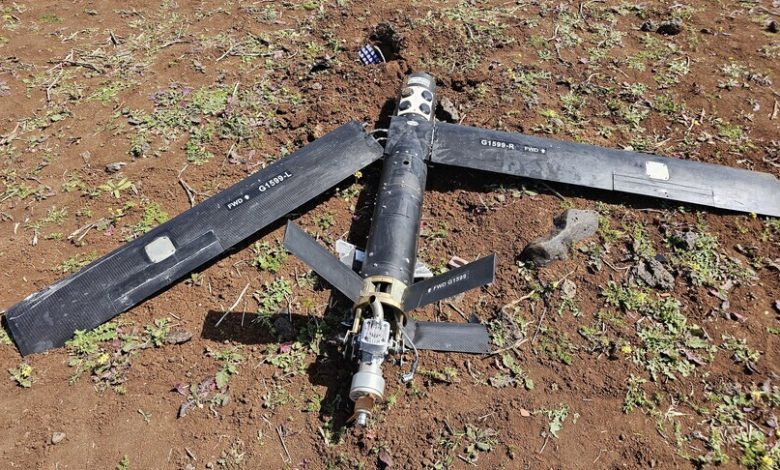
On 17 May 2026, a drone struck an electrical generator outside the inner perimeter of the Barakah Nuclear Energy Plant in Abu Dhabi’s Al Dhafra region, igniting a fire. Two accompanying drones were intercepted by Emirati air defences. No injuries were sustained and no radiation was released, with all four reactors continuing to operate normally. On 19 May, the UAE Ministry of Defence announced that technical tracking and monitoring had confirmed all six drones intercepted or engaged in the preceding 48 hours, including the three from the 17 May Barakah attack, originated from Iraqi territory. The UAE has reserved the right to take all necessary measures to protect its sovereignty, marking the first time a nuclear facility in the Arab world has been successfully targeted in the 2026 Iran war.
Key Judgments
The Barakah strike represents a deliberate escalation against critical civilian infrastructure and marks the first successful weapons impact on a nuclear power facility in the Arab world. The target selection is strategically significant: Barakah supplies approximately 25 percent of UAE electricity, and its four APR-1400 reactors carry the symbolic weight of the Arabian Peninsula’s first and only operational nuclear power station. A strike that generates a fire on site, however confined, forces IAEA notification, international condemnation, and a sovereign response calculation from Abu Dhabi.
The drones were launched by Iran-aligned Shi’ite militia groups operating within Iraq, not by the IRGC directly from Iranian soil. The UAE Ministry of Defence’s statement attributes origin to Iraqi territory, not to Iran itself. Saudi Arabia on 17 May separately confirmed intercepting three drones that entered its airspace from Iraqi territory. The Shahed-136 one-way attack drone, with a range of approximately 2,000 to 2,500 kilometres, is capable of reaching the Al Dhafra region from southern or central Iraq. Iraq-based Popular Mobilisation Forces factions have previously claimed and executed attacks on Gulf states in the context of the 2026 Iran war.
Whether the Barakah strike represents a deliberate decision to target nuclear infrastructure specifically, or whether the plant was selected opportunistically as the largest identifiable structure in the Al Dhafra region reachable by a one-way attack drone on that trajectory. The distinction matters for assessing whether subsequent strikes will attempt to penetrate the plant’s inner perimeter. No group has claimed responsibility, and Iran has not publicly addressed the incident. The presence of western border entry routing is consistent with Iraq-origin trajectories, but is not a determinative proof of any specific launch site, faction, or targeting intent.
1
Drone That Struck Barakah
6
Total Drones, 48 Hours
5,600 MW
Barakah Capacity, UAE Grid
0
Casualties / Radiation Release
📍 Barakah Nuclear Energy Plant Strike Zone / Al Dhafra Region, Abu Dhabi / 17 May 2026

Strike zone at 39Q XG 25249 50588. Drone trajectory from Iraqi territory per UAE MOD technical investigation. Datum WGS84, UTM Zone 39Q. Map: Strategy Battles / OSINT.
📍 BARAKAH NUCLEAR ENERGY PLANT
MGRS: 39Q XG 25249 50588
23.9622°N 52.2310°E
Primary strike site. Four-reactor APR-1400 plant. Drone hit electrical generator outside inner perimeter 17 May 2026. No radiation release. All units continued operating normally.
📍 ABU DHABI CITY CENTRE, CROSS-CHECK
MGRS: 40R BN 34125 07001
24.4539°N 54.3773°E
UAE capital. Barakah plant lies approximately 225 km west of Abu Dhabi city centre, near the Saudi border. Cross-check reference for MGRS grid orientation across zones 39Q and 40R.
SITREP Timeline : UAE Drone Attacks / Feb to May 2026
🔴 The Strike
A Generator Fire Outside the Perimeter. One Reactor on Emergency Diesels. No Radiation. All Four Units Still Running.
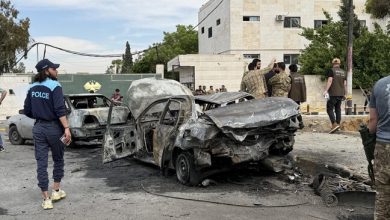
At grid reference 39Q XG 25249 50588 (23.9622°N, 52.2310°E) on the Arabian Gulf coastline of Abu Dhabi’s Al Dhafra region, three drones entered UAE airspace from the western border on the morning of 17 May 2026. Emirati air defences engaged the formation. Two were intercepted and neutralised. The third reached the Barakah Nuclear Energy Plant and struck an electrical generator situated outside the facility’s inner perimeter. A fire followed. Abu Dhabi authorities responded and the blaze was contained. At no point did the Federal Authority for Nuclear Regulation report any impact on plant safety, radiological levels, or the readiness of essential systems. All four APR-1400 reactors continued operating normally throughout the incident, although one reactor, Unit 3, was temporarily powered by emergency diesel generators while the external generator burned.
The IAEA Director-General Rafael Grossi was informed promptly. In a statement on the agency’s official X account, Grossi expressed grave concern and stated that military activity threatening nuclear safety was unacceptable. He called for maximum military restraint near any nuclear power facility. The IAEA reported it was following the situation closely and remained in constant contact with UAE authorities, ready to provide assistance. Grossi separately spoke by telephone with UAE Deputy Prime Minister and Foreign Affairs Minister Sheikh Abdullah bin Zayed, who characterised the attack as a breach of international law and stressed the UAE’s right to respond in accordance with international covenants.
The distinction between a generator outside the inner perimeter and the reactor containment buildings themselves is operationally critical, but the psychological and political effect of a successful weapons impact on the site is significant regardless of the physical location of the damage. Barakah is the Arab world’s only operational nuclear power station, a 0 billion facility built with South Korean KEPCO assistance, operating since 2020, and supplying approximately 25 percent of the UAE’s electricity. Its four APR-1400 pressurised water reactors generate 40 terawatt hours of clean electricity annually. A fire on its grounds, however contained, produces an IAEA notification, international condemnation, and a formal sovereign response calculation from Abu Dhabi that did not exist before 17 May.
🟡 The Attribution
Iraqi Territory, Per UAE Technical Investigation. No Group Claimed Responsibility. Iran Has Not Commented.
On 17 May, the UAE Ministry of Defence confirmed only that three drones entered its airspace from the western border and stated that investigations were underway to determine the origin of the attack. No state actor or non-state group was publicly named. No immediate claim of responsibility was issued. Iran, through its Foreign Ministry, made no public statement about the Barakah incident. The UAE’s diplomatic adviser Anwar Gargash stated on social media that regardless of whether the attack was carried out by a principal actor or its proxies, it represented a dangerous escalation.
On 19 May, following the conclusion of its technical tracking and monitoring investigation, the UAE Ministry of Defence publicly confirmed that all six drones engaged or intercepted across the preceding 48-hour period, covering both the 17 May Barakah incident and subsequent interceptions, originated from Iraqi territory. The statement did not identify a specific faction within Iraq or attribute direct state authority to any actor. Saudi Arabia separately reported on 17 May that it had intercepted three drones entering its own airspace from Iraqi territory on the same date, which corroborates the Iraqi launch-point geography for this episode.
Iraq-based Popular Mobilisation Forces factions with Iranian affiliation have operated Shahed-136 class one-way attack drones, which carry an estimated range of approximately 2,000 to 2,500 kilometres. From southern Iraqi launch points, the Al Dhafra region of Abu Dhabi falls comfortably within that envelope. The Iraqi federal government on 19 May reiterated its formal rejection of attacks targeting countries in the region, including drone strikes originating from Iraqi territory, but has not announced any specific interdiction or enforcement action against the groups responsible.
IAEA Director-General Rafael Grossi : X Statement, 17 May 2026
“Military activity that threatens nuclear safety is unacceptable. I call for maximum military restraint near any nuclear power plant to avoid the danger of a nuclear accident.”
🔵 The Facility
The Arab World’s Only Nuclear Power Station. 25 Percent of UAE Electricity. A Target With No Strategic Precedent in the Region.
The Barakah Nuclear Energy Plant sits on the Arabian Gulf coastline in Abu Dhabi’s Al Dhafra region, approximately 53 kilometres west-southwest of the city of Al Dhannah and around 225 kilometres west of Abu Dhabi’s city centre. Its four APR-1400 nuclear reactors came online progressively between 2021 and 2024: Unit 1 in April 2021, Unit 2 in March 2022, Unit 3 in February 2023, and Unit 4 in September 2024. The plant is operated by Nawah Energy Company, a joint venture between the Emirates Nuclear Energy Corporation and Korea Electric Power Corporation. Each reactor is a pressurised water reactor rated at 1,400 megawatts; the four units give the plant a combined nameplate capacity of 5,600 megawatts, the largest single electricity source in the UAE.
The UAE operates Barakah under a formal 123 Agreement with the United States, under which Abu Dhabi committed to forego domestic uranium enrichment and reprocessing of spent fuel. Uranium for the plant is sourced from abroad, with fuel assemblies manufactured by Kepco Nuclear Fuels. The agreement was specifically designed to place Barakah within the international non-proliferation framework and to differentiate the UAE’s civil nuclear programme from Iran’s. The IAEA exercises regular safeguard inspections. Targeting the facility therefore carries a specific international legal dimension that a strike on a desalination plant or conventional power station does not.
Barakah had come under a notional attack claim before: in December 2017, Yemen’s Houthi rebels claimed to have fired a cruise missile toward the plant while it was still under construction, which Abu Dhabi denied, stating no missile had reached the UAE. The 17 May 2026 strike is therefore not only the first successful impact on the site since construction began, but the first occasion on which external monitoring bodies such as the IAEA have been formally notified of a weapons impact at the facility.
⚠ The Strategic Context
A Ceasefire That Covers the US-Iran Axis. Not the Militia-Gulf State Axis.
The 8 April Pakistan-mediated ceasefire between the United States and Iran halted direct hostilities between the two states. It did not, and its terms as publicly described do not appear to, constrain Iran-aligned Shi’ite militia groups operating inside Iraq from continuing to launch drone and missile attacks against Gulf states. The pattern since April has been one of continued militia-sourced attacks on UAE and Saudi territory while Iran maintains formal deniability and the ceasefire between Washington and Tehran nominally holds. The National’s reporting from 18 May notes that Tehran resumed strikes on the Emirates this month after a brief pause following the ceasefire announcement, suggesting the operational tempo has deliberately re-escalated.
Trump’s social media warning to Iran on 17 May, the same day as the Barakah strike, that the clock was ticking and Tehran should make a deal “FAST, or there won’t be anything left of them” coincided with reporting by Iran International that the US was considering military options. Iran’s army spokesman Mohammad Akraminia separately warned on 19 May that if the US resumed attacks, Iran would open new fronts with new equipment and new methods. The two sides are in a posture that is formally ceasefire and practically escalatory. The Barakah strike is the sharpest single escalation within that paradox since the April pause began.
For Abu Dhabi, the response options are constrained by several factors. The UAE has formally hosted Israeli and US air defence assets and personnel, which provides some deterrent overhead but has clearly not prevented every incoming drone from reaching its target. The State Department’s Rewards for Justice programme has issued bounties on Iraq-based militia commanders, most recently targeting Harakat Hezbollah al Nujaba leader Akram Abbas al Kabi in May, but financial pressure on militia leadership has not visibly reduced operational tempo. The Ministry of Defence’s language on 19 May, reserving the full right to take all necessary measures, is a standard sovereign warning with teeth: it was used before previous UAE retaliatory actions in the Yemen context, and foreign policy observers will be watching whether it is followed by any direct kinetic response toward launch-point infrastructure inside Iraq.
Source Reliability Matrix
NATO grading: REL A (reliable) to F (unreliable). CRED 1 (confirmed) to 6 (cannot judge).
CRED 1
Primary government source for drone count, intercept detail, and Iraqi-territory attribution of launch origin. Attribution to Iraq not independently verified by a separate technical body at time of writing.
CRED 1
Official Abu Dhabi government channel. Confirmed fire, confirmed no injuries, confirmed no radiological impact. Does not identify attacker.
CRED 1
Independent international nuclear authority. Confirmed radiation levels normal, Unit 3 on emergency diesel generators, all units otherwise operating normally. Verified via multiple wire pickups.
CRED 2
Established regional and UAE-based outlets. Providing government statement relay and independent background context. CRED 2 reflects reliance on government and official channel sourcing for primary facts.
CRED 2
International wire relay and independent reporting. Corroborate core facts. Additional contextual detail on ceasefire dynamics and Trump warning language sourced here.
Strategy Battles Assessment
Iran-aligned forces have now successfully struck the Arab world’s only nuclear power station. The ceasefire bought a pause in the US-Iran air war. It did not constrain the militia-Gulf state war operating beneath it, and that sub-conflict has now crossed a threshold it cannot uncross.
✓ What We Know
On 17 May, one drone struck an electrical generator outside the Barakah Nuclear Energy Plant’s inner perimeter, igniting a fire. Two accompanying drones were intercepted. No casualties. No radiation release. All four reactors continued operating normally; Unit 3 temporarily used emergency diesels. The IAEA was notified and confirmed radiological safety remained intact. On 19 May, the UAE Ministry of Defence confirmed via technical tracking that all six drones engaged or intercepted in the preceding 48 hours, including the 17 May Barakah attack, originated from Iraqi territory. Saudi Arabia separately intercepted three Iraq-origin drones on 17 May. No group claimed responsibility. Iran made no public comment.
? What We Do Not Know
Which specific Iraqi militia faction or factions planned and executed the Barakah strike and the subsequent drone operations. Whether Barakah was selected as a deliberate nuclear-infrastructure target or was the largest identifiable structure on a trajectory chosen for other reasons. The exact launch location within Iraq. Whether Iran at the command level authorised the Barakah strike specifically, or whether the decision was taken at militia level. What the three additional drones intercepted after 17 May were targeting. Whether the UAE’s “necessary measures” reservation will produce a direct kinetic response against Iraqi launch-point infrastructure.
☉ What To Watch
Whether any militia group claims the Barakah strike in the coming days, which would formally shift attribution beyond UAE technical inference. Whether a second strike on Barakah or other UAE critical infrastructure is attempted, indicating a deliberate targeting strategy for nuclear and energy facilities. Whether the Iraqi federal government takes any enforcement action against militia launch sites. Whether the US adjusts the ceasefire terms or issues a direct ultimatum to Tehran over militia attacks on Gulf state partners. Whether IAEA or UAE nuclear authorities announce any precautionary operational changes to the Barakah plant posture.
Sources
- UAE intercepts 6 drones in past 48 hours, defence ministry says, Dawn (Islamabad), 19 May 2026
- Drone strike sparks fire on perimeter of UAE’s Barakah nuclear power plant, Al Jazeera, 17 May 2026
- Drone strike causes fire at Barakah nuclear plant perimeter in Abu Dhabi, The National, 17 May 2026
- UAE launches investigation into source of drone strike on Barakah nuclear plant, The National, 17 May 2026
- Drones that targeted UAE’s Barakah nuclear plant came from Iraqi territory, Gulf News, 19 May 2026
- UAE says drones targeting Barakah nuclear plant came from Iraq, Arab News, 19 May 2026
- What is the UAE’s Barakah nuclear plant, nearly hit by a drone, Al Jazeera, 18 May 2026
- Nuclear power plant set on fire in drone attack, Newsweek, 17 May 2026
- Drone strike sparks fire at UAE nuclear power plant, the first time it’s been attacked since the Iran war started, Fortune, 17 May 2026
Editorial Verification
The 17 May Barakah strike is verified through UAE Ministry of Defence official statement, Abu Dhabi Media Office, IAEA Director-General Grossi X statement (independently carried by Al Jazeera, The National, Gulf News, Newsweek, and Fortune). The 19 May six-drone intercept announcement and Iraqi-territory attribution is sourced from the UAE Ministry of Defence official statement carried by Dawn, Gulf News, Arab News, and The New Region. Saudi Arabia’s independent confirmation of three Iraq-origin drones on 17 May is sourced from Times of Israel liveblog citing Saudi defence ministry. The IAEA Grossi quote is sourced from the verified @iaeaorg X account and independently confirmed by at least four wire outlets. The Sheikh Abdullah bin Zayed characterisation of the attack as a “treacherous terrorist attack” is verified via The National and UAE Ministry of Foreign Affairs. The Anwar Gargash “dangerous escalation” statement is sourced to Vision Times citing his X post. Iraqi territory attribution is per UAE MOD technical investigation only; no independent technical corroboration from a separate body is available at time of writing. No specific faction or individual actor is named in this report as responsible, consistent with the state of public attribution at publication.
MGRS datum: WGS84 / UTM Zone: 39Q (Barakah site) and 40R (Abu Dhabi city cross-check) / Cross-check reference: Abu Dhabi City Centre 40R BN 34125 07001.
No satellite imagery has been used in this report. Barakah plant coordinates (23.9622N, 52.2310E) sourced from Mapcarta / OpenStreetMap via published records; cross-confirmed against multiple public plant location databases.
All claims independently attributed and verified to open sources where possible.
Approved for Publication
Marcus V. Thorne
Lead Editor, Strategy Battles
FILE SB-2026-0519-6541585654654001 // CLEARED
©StrategyBattles.net 2026
This article is for news and analysis purposes only. Based on publicly available news sources and military updates. All rights reserved. Not for commercial reuse without permission.