OPERATION EPIC FURY Week Six Situation Report
Executive Summary
Week six produced the most operationally significant events of the conflict to date. Iran shot down a U.S. F-15E Strike Eagle over southwestern Iran — the first manned American aircraft lost to enemy fire since 2003. A 36-hour manhunt for the missing weapons systems officer ended in a daring Easter Sunday rescue involving a covert CIA deception operation, a makeshift U.S. airbase built inside Iran, and the deliberate destruction of two C-130s on Iranian soil. Israel killed Hezbollah’s southern front commander in Beirut and escalated ground operations in Lebanon. Iran struck Kuwait’s largest oil refinery, an Oracle headquarters in Dubai, and fired daily missile and drone barrages across six Gulf states. Trump set a Tuesday deadline: reopen the Strait of Hormuz or face destruction of every power plant in Iran.
13
U.S. KIA
365
U.S. WIA
2,076+
Iranians Killed
1,318+
Lebanon Killed
500+
Iranian Missiles at Israel
$109
Brent Crude/bbl
🔴 Section One
U.S. Military Operations
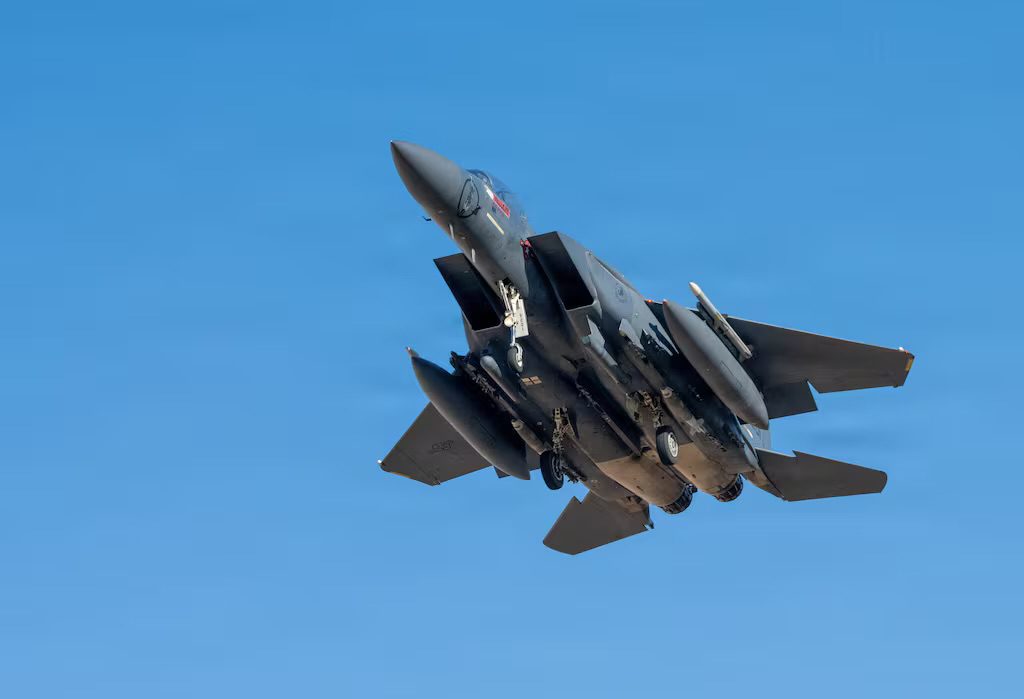
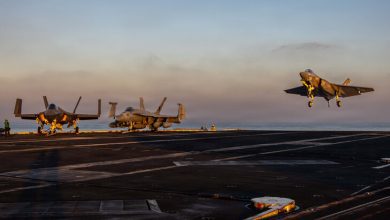
B-52s Over Iran for the First Time. On Monday March 30 the U.S. began flying B-52 Stratofortress strategic bombers directly over Iranian territory for the first time — a deliberately visible signal of air dominance. The B-52s targeted an ammunition depot and air base in Isfahan, causing vast explosions. The deployment demonstrated American confidence that Iran’s air defenses had been sufficiently degraded to operate heavy bombers over Iranian skies.
Trump’s Prime-Time Address. On Tuesday April 1, Trump told the nation that U.S. strikes have “dramatically curtailed” Iranian missile and drone systems and that attacks would escalate over the next two to three weeks. CENTCOM Commander Admiral Brad Cooper said at a briefing that Iran’s “air and missile defense systems have largely been destroyed.” Within 48 hours Iran shot down an F-15E.
The B1 Bridge Strike. On Wednesday April 2, U.S. and Israeli warplanes struck the B1 bridge between Tehran and Karaj — described as the highest bridge in the Middle East — in two strikes that killed eight people and wounded 95 others who had gathered along the riverbank to celebrate Iran’s Nature Day public holiday. Trump posted video of the collapse on Truth Social.
F-15E Shot Down — April 3. The defining U.S. military event of the week. An F-15E Strike Eagle from the 494th Fighter Squadron, RAF Lakenheath, was shot down by Iranian fire over Kohgiluyeh and Boyer-Ahmad province — the first manned American aircraft downed over Iranian territory since the conflict began and the first U.S. jet lost to enemy fire in over 20 years. The pilot was rescued by special operations forces within hours. The weapons systems officer, a colonel, remained missing for more than 36 hours. An A-10 Thunderbolt II was also struck during the rescue operation, its pilot ejecting safely over Kuwait. Two HH-60G Pave Hawk helicopters were hit by Iranian small arms fire but returned safely.
For our full detailed coverage of the search and rescue operation read: Race Against Time: The Search for America’s Missing Airman Deep Inside Iran
The Easter Sunday Rescue. Early on April 5, Trump posted: “WE GOT HIM!” The colonel had been rescued after a heavy firefight. The New York Times reported the mission involved creation of a makeshift U.S. airbase inside Iran, the intentional destruction of two C-130s on Iranian soil to prevent capture, and a CIA deception operation confusing Iranian forces into believing the colonel had already been recovered by ground transport. Trump called it “one of the most daring Search and Rescue Operations in U.S. History.” The airman was described as seriously wounded but expected to fully recover.
Map: U.S. military operations, Week Six — Strategy Battles graphic, not to scale
🟢 Section Two
Israeli Military Operations — Lebanon Front
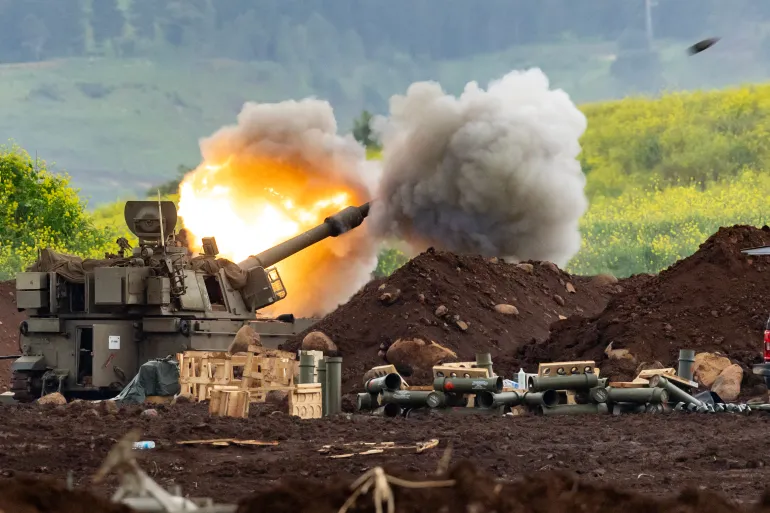
Hezbollah Southern Front Commander Killed. The most significant Israeli strike of the week came on Tuesday April 1 when Israel’s navy killed Haj Youssef Ismail Hashem — commander of Hezbollah’s southern front — in a precision strike on Beirut’s Jnah neighbourhood. At least seven people were killed in the strike. It was the most senior Hezbollah commander killed since the Lebanon fighting resumed on March 2. Hezbollah confirmed his death, calling him a “beacon of the Islamic Resistance.”
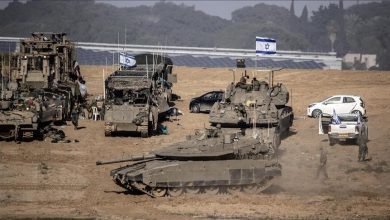
Ground Operations Intensified. All four IDF divisions operating in southern Lebanon — the 91st, 36th, 146th and 162nd — conducted sustained operations throughout the week. The 146th Division dismantled more than 180 Hezbollah terrorist infrastructure networks. The 162nd Division located numerous weapons stockpiles. The 36th Division killed three Hezbollah fighters on motorcycles. Multiple Hezbollah fighters surrendered and were taken prisoner, with IDF sources noting “low morale” among those captured.
Home Demolitions Ordered. Defence Minister Israel Katz ordered the IDF to demolish homes in southern Lebanese border villages used by Hezbollah as launch and observation sites. He declared 600,000 displaced Lebanese civilians will not be allowed to return until Israeli security is guaranteed.
Israel Halts Strikes for U.S. Rescue. On Friday April 3 and Saturday April 4, Israel cancelled all planned strikes on Iran to avoid interfering with the search-and-rescue operation for the missing colonel. Israel simultaneously provided intelligence to U.S. forces to assist in locating the airman.
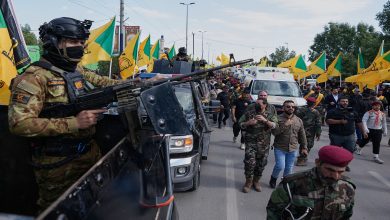
Hezbollah Fires Back. Hezbollah launched sustained rocket attacks throughout the week. On Tuesday evening more than 100 rockets were fired in a single barrage at northern Israel. On Thursday more than 30 rockets struck the Kiryat Ata area east of Haifa. The death toll in Lebanon since fighting resumed on March 2 stood at more than 1,318 killed, 3,935 injured, and more than one million displaced.
Map: Israeli military operations in Lebanon, Week Six — Strategy Battles graphic, not to scale
🟡 Section Three
Iranian Military Operations
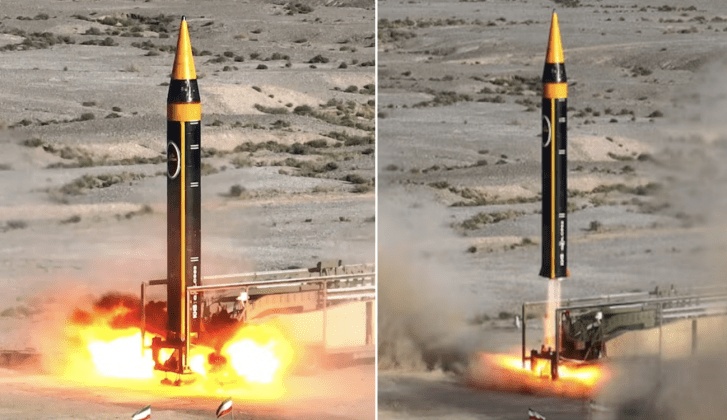
Daily Missile and Drone Barrages. Iran maintained a relentless operational tempo throughout week six despite five weeks of sustained U.S. and Israeli strikes on its missile infrastructure. Ballistic missiles, cruise missiles, and Shahed kamikaze drones struck targets across Israel, Kuwait, Saudi Arabia, the UAE, and Bahrain every single day of the week. The Pentagon has claimed to have degraded approximately 90 percent of Iran’s ballistic missile and drone capabilities — yet Iran continued firing hundreds of projectiles across the region.
Kuwait’s Largest Refinery Hit. On Friday April 3, Iranian drones struck Kuwait’s Mina Al-Ahmadi oil refinery — the country’s largest — setting several production units on fire. No injuries were reported but oil production was disrupted. Separately, Iranian drones damaged two Kuwaiti power and desalination plants, shutting down electricity generating units and threatening water supplies.
Oracle Dubai Headquarters Struck. On Saturday April 4, an apparent Iranian drone struck the Dubai headquarters of U.S. tech giant Oracle along Sheikh Zayed Road after Iran’s IRGC specifically threatened the firm. Footage verified by the Associated Press showed damage to the building, demonstrating Iran’s continued ability to strike high-profile civilian targets in Gulf cities.
Iran Strikes Near IDF Kirya HQ. On Saturday April 4, an Iranian missile struck near the IDF’s Kirya headquarters compound in Tel Aviv. Sirens sounded throughout central Israel. At least 24 Israelis have been killed since the war began on February 28.
F-15E Shot Down — Iran’s Biggest Military Success. Iran’s most significant military achievement of the conflict came on April 3 when Iranian air defenses downed a U.S. Air Force F-15E Strike Eagle over southwestern Iran. Iran’s IRGC initially falsely claimed it was an F-35 stealth fighter and used fabricated footage and video game imagery to support the claim. For our full investigation read: Iran Claims Second U.S. F-35 Downed in Two Weeks as Pentagon Stays Silent
Cluster Missiles Bypassing Israeli Defenses. Iran continued its systematic use of Khorramshahr ballistic missiles carrying cluster warheads throughout the week, releasing submunitions at high altitude to bypass Israel’s David’s Sling terminal defense system. For our full technical analysis read: Raining Fire: Iran’s Cluster Bomb Missiles Are Beating the World’s Best Air Defenses
Map: Iranian military strike operations across the region, Week Six — Strategy Battles graphic, not to scale
🔵 Section Four
Diplomatic Situation
Six weeks into the conflict the diplomatic picture remains fractured but not entirely static. Iran publicly insists there are no negotiations with Washington — Foreign Minister Araghchi says trust is “at zero.” Yet Pakistan, Egypt, Oman, and Qatar are all actively serving as back-channels. Oman has been holding last-ditch talks with Iran on a “safe passage protocol” for the Strait. Egypt’s FM held calls with U.S. special envoy Steve Witkoff and Iran’s FM. Pakistan called its ceasefire mediation efforts “right on track.” Former Iranian FM Zarif published a piece in Foreign Affairs suggesting Iran should offer to limit its nuclear programme and reopen the Strait in exchange for sanctions relief — a significant signal from within Iran’s political establishment.
Europe is increasingly fractious. Spain, France, and Italy have all restricted U.S. military operations — closing airspace, denying base access, and limiting logistical support. French President Macron called using force to reopen the Strait “unrealistic.” The UN Secretary-General warned the conflict risks spiralling into a wider war. Pope Leo XIV, in his first Easter Mass at the Vatican, said: “Let those who have weapons lay them down.”
Editor’s Assessment
Week Six Analysis — What It All Means
Week six was defined by a central contradiction. Trump declared on Tuesday that Iran’s military had been “annihilated.” By Thursday Iran had shot down an F-15E, struck an A-10, hit two rescue helicopters, killed five people during the rescue operation, and kept a U.S. colonel running for his life in the mountains of southwestern Iran for 36 hours. The Easter Sunday rescue was genuine — a remarkable operational achievement by U.S. special operations forces. But the fact that a rescue of that scale and complexity was necessary at all tells the real story about the state of this conflict after six weeks.
In Lebanon Israel is methodically dismantling Hezbollah’s infrastructure and has killed the group’s southern front commander — but at enormous humanitarian cost with more than a million displaced and over 1,300 killed. In the Gulf, Iran continues to demonstrate that despite five weeks of sustained bombardment it retains the operational capacity to strike oil refineries, tech headquarters, desalination plants, and power infrastructure across six countries every single day.
The Tuesday deadline is the defining moment of week seven. If Iran makes any gesture toward the Strait, Trump has room to claim a win and de-escalate. If Iran refuses and Trump strikes power plants, the humanitarian consequences inside Iran will be severe and the international backlash will be unlike anything seen so far. Watch for movement from Oman, Pakistan, and Egypt in the next 48 hours — the back-channels are the only viable exit from a war consuming military resources, political capital, and human lives on every side.
Strategy Battles — Related Coverage This Week
Sources
- Al Jazeera — Iran War Day 37: Full Live Coverage
- CBS News Live Updates — Week Six Iran War Coverage
- NPR — Trump Rescue Announcement and Hormuz Ultimatum
- Al Jazeera — Israeli Strikes Kill 7 in Southern Lebanon, Hezbollah Fires Back
©StrategyBattles.net 2026
This article is for news and analysis purposes only. It is based on publicly available news sources and military updates. All rights reserved. Original reporting may come from various open sources. Not for commercial reuse without permission. Strategy Battles Weekly War Report is published every Sunday.