UN Warns Ukraine War Spiraling Out of Control Zaporizhzhia Nuclear Risk and No Diplomatic Progress
15,578
Verified Ukrainian Civilian Deaths Since 2022
43,352
Verified Civilians Injured
10.8m
People Need Humanitarian Aid in 2026
Khaled Khiari — UN Assistant Secretary-General, Security Council Briefing, April 20, 2026
“We cannot afford the risk of the conflict spiraling out of control with even higher human cost and unpredictable consequences for us all.”
🔴 The UN Warning
Alarming Escalation, No Diplomatic Progress — “Russian Attacks Continue to Intensify”
The United Nations warned Monday of a dangerous new escalatory trajectory in Ukraine following a Security Council briefing in which senior officials described the situation as the most alarming since the full-scale invasion began. Khaled Khiari, UN Assistant Secretary-General for the Middle East, Asia and the Pacific, told the Council that since the last briefing, “we have seen an alarming escalation of fighting, while there was no significant diplomatic progress.” He stated that “Russian attacks continue to intensify, with mounting civilian casualties and devastation across Ukraine.”
Khiari noted Russia’s 32-hour Easter truce from April 11-12, saying the UN welcomed any initiative that brought respite to the civilian population — even a limited one. But he made clear the broader picture was deteriorating. The UN’s Office for the Coordination of Humanitarian Affairs separately confirmed that in 2026, 10.8 million people need humanitarian assistance and that UN partners require $2.3 billion to reach 4.1 million prioritised for immediate aid — of which nearly three-quarters remains unfunded.
🟡 Nuclear Warning
Zaporizhzhia Nuclear Plant — A Chernobyl Warning on the 40th Anniversary
With the 40th anniversary of the Chernobyl disaster approaching on April 26, Khiari issued an explicit nuclear warning. He said Chernobyl “serves as a warning of the scale of destruction we could witness in case of another incident, intended or unintended, while the war continues to endanger Ukraine’s nuclear sites, especially the Zaporizhzhia Nuclear Power Plant, the largest nuclear facility in Europe.” He called for all military activities near nuclear sites to “cease immediately.” The Zaporizhzhia plant, which has been under Russian control since March 2022, has been the subject of repeated safety alerts from the International Atomic Energy Agency throughout the conflict.
🔵 The Human Toll
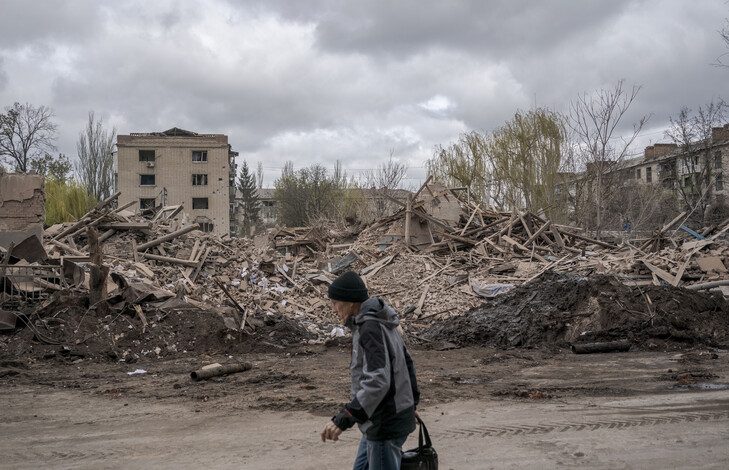
15,578 Verified Civilian Deaths — Children, Drones and a Widening Strike Pattern
The UN’s OHCHR has now verified at least 15,578 Ukrainian civilians killed since February 2022, including 784 children, with a further 43,352 injured including 2,668 children. UN Assistant Secretary-General for Humanitarian Affairs Joyce Msuya told the Council that “attacks have intensified, and civilians continue to bear the brunt,” with the geographic spread of strikes widening and damage to key access routes limiting the reach of humanitarian operations. Earlier UN reporting confirmed that short-range drone attacks have become the leading cause of civilian casualties — with a near-doubling of the casualty rate in the first two months of 2026 compared to the same period in 2025. In February alone, 60% of all civilian casualties occurred in frontline regions, and almost half of those killed were older people.
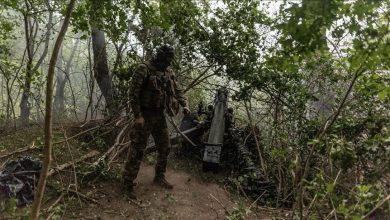
On the ground, fighting on April 20 remained intense across multiple sectors. Ukrainian forces repelled 139 combat engagements across the front, with the heaviest action in the Pokrovsk sector where 25 Russian assaults were stopped. Russia launched nearly 70 attacks on the Dnipropetrovsk region using drones, artillery and aerial bombs in a single day, killing three people and wounding eight. A residential building in Kharkiv’s Osnovianskyi district was struck by a Russian drone, injuring three more civilians.
Strategy Battles Assessment
The UN’s language at the Security Council on Monday is notable precisely because it comes from an institution that often defaults to measured diplomatic language. “Spiraling out of control” and “alarming escalation” in the same briefing — with no diplomatic progress to set against them — is a signal that the trajectory on the Ukraine front has worsened significantly while global attention has been consumed by the Iran war and the Middle East ceasefire negotiations. The Chernobyl/Zaporizhzhia framing is deliberate: with the 40th anniversary on April 26, the UN is using the occasion to force the nuclear risk back onto the agenda at a moment when it has largely dropped out of mainstream coverage. With $1.7 billion of the $2.3 billion humanitarian appeal still unfunded and 10.8 million people in need, the aid gap is as acute as the military one.
Strategy Battles — Related Coverage
Sources
- Anadolu Agency — UN Warns Ukraine War Risks Spiraling Out of Control (April 20, 2026)
- UN News — Ukraine: Danger Is Only Increasing, Warns UN Human Rights Office (March 2026)
- OCHA Ukraine — 2026 Humanitarian Response Plan ($2.3 billion required for 4.1 million people)
- Ukrinform — Ukraine Front Line Updates, April 20, 2026
Editorial Verification
All UN quotes are from Khaled Khiari and Joyce Msuya’s Security Council briefing as reported by Anadolu Agency on April 20. Civilian casualty figures — 15,578 killed, 784 children, 43,352 injured, 2,668 children — are from OHCHR verified data as cited in the UN briefing. The $2.3 billion humanitarian appeal and 10.8 million people in need are from OCHA Ukraine 2026 data. The Zaporizhzhia nuclear plant warning is from Khiari’s own statement. Front line combat data for April 20 is from Ukrinform sourced to the Ukrainian General Staff. Original editorial analysis by Strategy Battles.
Approved for Publication
Marcus V. Thorne
Lead Editor, Strategy Battles
©StrategyBattles.net 2026
This article is for news and analysis purposes only. Based on publicly available news sources and military updates. All rights reserved. Not for commercial reuse without permission.