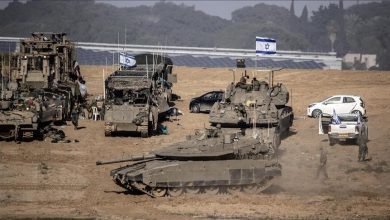
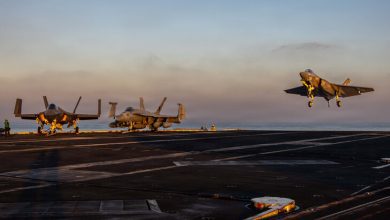
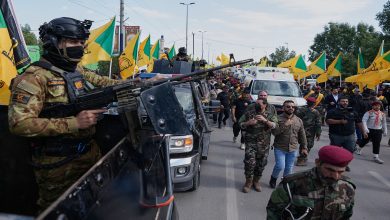
Iran-Backed Militia Drone Attacks Gulf Nearly 1,000 Strikes in Five Weeks, Half Launched From Iraq
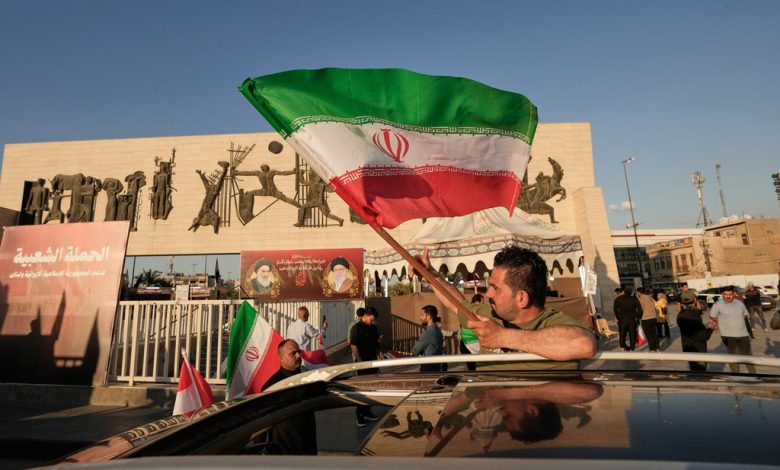
~1,000
Drone Attacks on Saudi Arabia
50%
Launched from Iraqi Territory
250,000
Estimated Militia Fighters
Dozens
Militia Groups in Iraq
5 weeks
Duration of Shadow War
$bn+
Estimated Militia Funding
🔴 The Scale
Nearly 1,000 Drone Attacks in Five Weeks — Half From Iraq
Iran-backed militias in Iraq have been running what The Wall Street Journal described as a “shadow war within a war” — launching waves of explosive drone attacks across the Gulf that targeted Saudi Arabia, Kuwait, Bahrain and infrastructure across the region. According to assessments cited in the WSJ’s analysis, up to half of the nearly 1,000 drone attacks on Saudi Arabia alone originated from Iraqi territory over more than five weeks of conflict following the outbreak of the US-Israel war with Iran on February 28, 2026.
The attacks struck energy infrastructure with surgical focus. A refinery in Yanbu — the sensitive Red Sea oil hub — was hit, alongside oil fields in Saudi Arabia’s Eastern Province, the geographic heart of the Kingdom’s crude export capacity. The targeting pattern reflects a deliberate strategy: damage the economic assets of states hosting U.S. military forces and aligned with Washington, without a direct Iranian fingerprint on the strike.
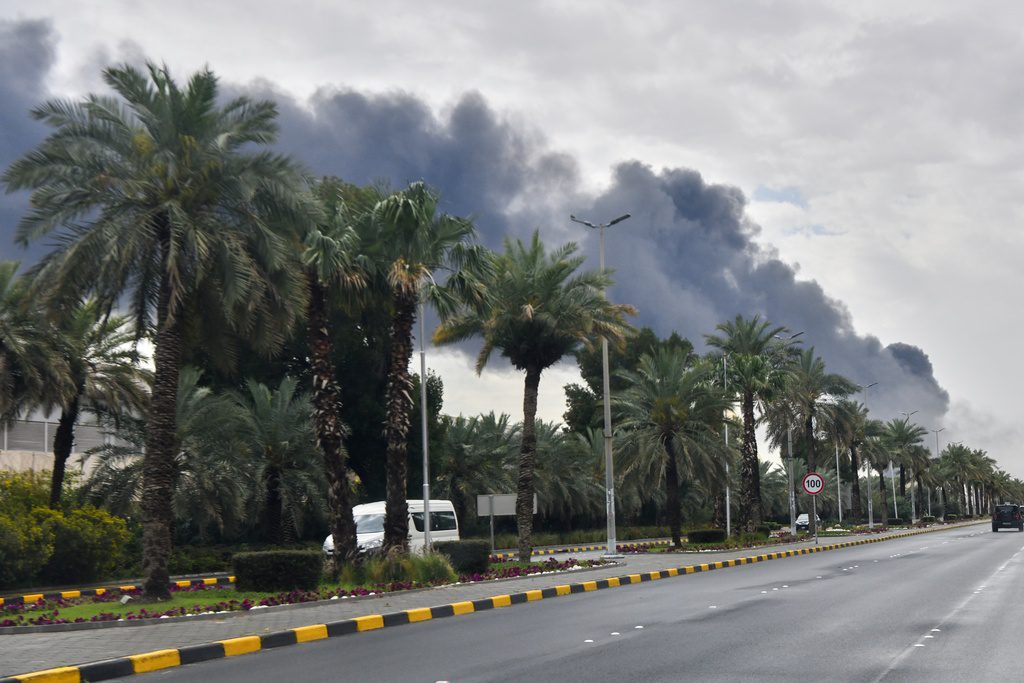
Smoke rises over Kuwait’s international airport following a militia drone strike in March 2026 — Kuwait’s only civilian airport was targeted in attacks launched from Iraqi territory. Photo: AP via Kurdistan24.
🟡 The Targets
Kuwait Airport. Bahrain After the Ceasefire. UAE Consulate in Kurdistan. US Embassy Baghdad.
The geographic reach of the shadow war extends across the entire Gulf. Drones launched from Iraqi territory targeted Kuwait’s only civilian airport — a strike that carries both economic and psychological impact. Bahrain was hit even after a ceasefire was announced earlier in the conflict, demonstrating that militia operations do not automatically halt when state-level diplomacy produces a truce. Inside Iraq itself, militia groups targeted Gulf-linked assets on their own soil: the Kuwaiti consulate in Basra was struck, and the UAE’s consulate in the Kurdistan Region was also hit — a stark signal that the proxy war has no safe diplomatic ground.
Iran’s own direct strikes — thousands of drones and missiles fired at U.S. bases and allied infrastructure across the region — run in parallel with militia activity. The combination is deliberate: Iran fires from home soil at high-value military targets while its proxies, operating from Iraq, expand the pressure to the economic and civilian infrastructure of Gulf states. The operational logic is to maximise geographic coverage and target diversity while distributing attribution.
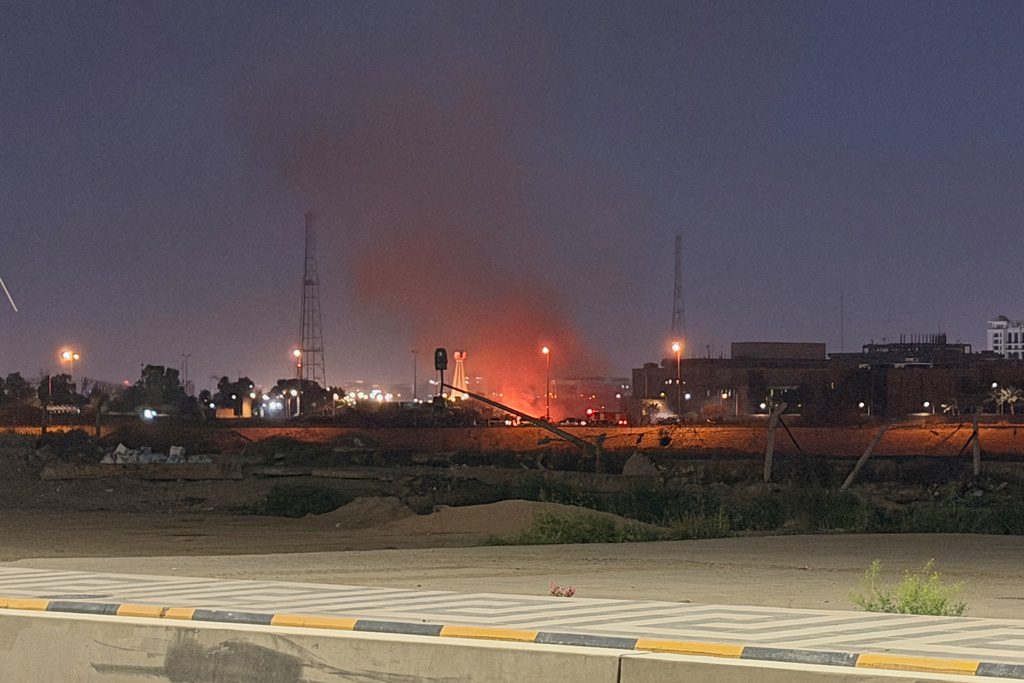
Flames appear to engulf a structure within the U.S. Embassy compound in Baghdad — militia attacks have directly targeted American diplomatic and military facilities inside Iraq. Photo: AP via Kurdistan24.
🔵 The Force Behind It
Dozens of Groups, 250,000 Fighters, Billions in Funding — Beyond Iraq’s Government Control
Iraq’s Iran-aligned militia network now numbers in the dozens of groups with an estimated 250,000 fighters, access to billions of dollars in funding, and arsenals that include long-range missiles. This is not a peripheral force — it is the primary instrument through which Iran has expanded the operational footprint of the conflict beyond its own borders without committing its own forces to a second front. The sustained and coordinated nature of attacks over five weeks marks a qualitative shift from previous years of sporadic militia activity.
The WSJ report raises a critical question for Iraqi sovereignty: these groups appear to be operating beyond the full control of the Iraqi central government. Baghdad has condemned the attacks publicly, summoned foreign ambassadors and called for restraint. It has not stopped the attacks. The gulf between official Iraqi government policy and militia operational freedom reflects the degree to which Iran’s proxy network has embedded itself inside Iraqi military and political structures over two decades. The ceasefire announcements of April 8 did not stop the drones. The Lebanon ceasefire of April 17 did not stop them either.
Strategy Battles Assessment
The “shadow war within a war” framing is correct but understates the permanence of what has been established. In five weeks Iran’s proxy network launched nearly 1,000 drone attacks on a single country. That is not a shadow — it is a second front, run through Iraqi territory with deniability. The ceasefire discussions at Islamabad have focused on the Iran-U.S. state-level confrontation: nuclear enrichment, the Strait, the blockade. None of the proposed frameworks address what the Iraqi-based militia network does when the state ceasefire holds.
If the Islamabad talks produce an agreement, the militias are not party to it. Kata’ib Hezbollah said so explicitly in its April 18 statement when it called for expanded resistance operations and new fronts. The shadow war does not end with a state ceasefire. It pauses, reorganises and resumes. That is the lesson of every previous ceasefire involving Iran’s proxy network — and it is what makes this conflict genuinely different from any previous U.S.-Iran confrontation.
Strategy Battles — Related Coverage
Sources
- Kurdistan24 — Iran-backed Militias Expanded Shadow War Across Gulf as Drone Attacks Intensified (April 21, 2026)
- The Wall Street Journal — “A Shadow War Within a War”: Iran-Backed Militias in Iraq (April 2026)
Editorial Verification
All attack figures, targeting details (Yanbu refinery, Saudi Eastern Province oil fields, Kuwait airport, Bahrain, Kuwaiti consulate Basra, UAE consulate Kurdistan Region, U.S. Embassy Baghdad) and militia size estimates (dozens of groups, 250,000 fighters, billions in funding) are sourced to Kurdistan24’s report citing the Wall Street Journal analysis. Photos are via AP as credited by Kurdistan24. Original editorial analysis by Strategy Battles.
Approved for Publication
Marcus V. Thorne
Lead Editor, Strategy Battles
©StrategyBattles.net 2026
This article is for news and analysis purposes only. Based on publicly available news sources and military updates. All rights reserved. Not for commercial reuse without permission.