Lebanon-Israel Ceasefire Talks at White House Expiry Sunday
Conflict Diplomacy / Middle East
White House Hosts Second Lebanon-Israel Talks as Ceasefire Expires Sunday
Beirut demands ceasefire extension and halt to home demolitions; Trump to greet ambassadors as 10-day truce nears expiry
23 April 2026 | Washington D.C. / Beirut | Lebanon-Israel Ceasefire
Ceasefire Expiry Sunday
US-Brokered Talks
OSINT Compliance
Sources: Anadolu Agency (AA), The Associated Press, Washington Post, NPR, The National, RTE News, Al Jazeera, Wikipedia (2026 Israel-Lebanon Ceasefire / Peace Talks), Military.com. Ceasefire expiry date, ambassador identities and US delegation composition corroborated across multiple sources. Home demolition figures drawn from Washington Post and Al Jazeera field reporting. Hezbollah statements from direct press conference transcript (RTE/AA). Israeli buffer zone details from NPR, Wikipedia, Al Jazeera analysis. Some figures (e.g. total killed, homes destroyed) are Lebanese government estimates and noted as such.
Verified by Marcus V. Thorne / Lead Editor, Strategy Battles — 23 April 2026
2,500+
Killed in Lebanon Since 2 March
10-Day
Ceasefire — Expires Sunday 27 Apr
40,000+
Homes Destroyed (Lebanese Estimate)

Southern Lebanon ceasefire zone: Israeli buffer zone (red), UN Blue Line, Litani River, and key demolished villages. Washington talks context shown top-right. Map: Strategy Battles / OSINT, April 2026.
🏸 The Washington Talks
Second Direct Session in Three Decades — Now Escalated to the White House
What began as a State Department meeting has now moved to the White House itself. President Trump will greet the ambassadors of Lebanon and Israel on Thursday, according to a White House official who spoke anonymously because they were not authorized to disclose the development publicly. The upgrade in venue signals the administration is treating the diplomatic push as a presidential priority.
The US delegation is led by Secretary of State Marco Rubio alongside State Department Counsellor Michael Needham, Ambassador to Israel Mike Huckabee, and Ambassador to Lebanon Michel Issa. Lebanon’s envoy is Ambassador to the US Nada Hamadeh Moawad. Facing her across the table is Israeli Ambassador Yechiel Leiter.
This is only the second direct meeting between Lebanese and Israeli diplomats in roughly three decades, following the first session held on 14 April at the State Department. That initial session was described as preparatory. Thursday’s talks, with the ceasefire expiring in three days, carry far greater urgency.
📌 Beirut’s Position
Extension, Demolition Halt, and Eventual Israeli Withdrawal
Lebanon’s President Joseph Aoun confirmed his country would seek an extension of the ceasefire and a halt to Israeli demolitions of homes in occupied southern villages. A senior Lebanese official, speaking anonymously to Anadolu Agency, said the meeting is a follow-up to last week’s preparatory session and that Beirut will formally request both demands on the table.
Beirut is also treating a ceasefire extension as a precondition for progressing to the next phase of talks. That wider agenda would include pushing for an Israeli military withdrawal, the return of Lebanese nationals detained in Israel, formal demarcation of the land border, and reconstruction assistance. Lebanon’s President Aoun has also pointed to halting all Israeli attacks and securing eventual troop withdrawal as core goals.
Prime Minister Nawaf Salam told the Washington Post that any lasting deal must include full Israeli withdrawal from Lebanese territory. Israel has established what it calls a buffer zone, reaching roughly ten kilometres into southern Lebanon. Salam said Lebanon wants Trump to use his influence with Israel to make withdrawal happen.
Lebanese President Joseph Aoun
“The only solution to the situation in Lebanon is a ceasefire with Israel that will lead to direct negotiations between the two countries.”
🔴 The Buffer Zone and Village Demolitions
Israel Continues Demolitions Inside Lebanon Despite Ceasefire
The sharpest point of contention at Thursday’s talks is the physical transformation of southern Lebanon underway even as the ceasefire holds. Israel has declared a roughly ten-kilometre buffer zone north of the border, which it calls the Yellow Line, mirroring the approach used in Gaza. Israeli Defence Minister Israel Katz stated publicly that the military will continue to hold and control all positions it has cleared and secured.
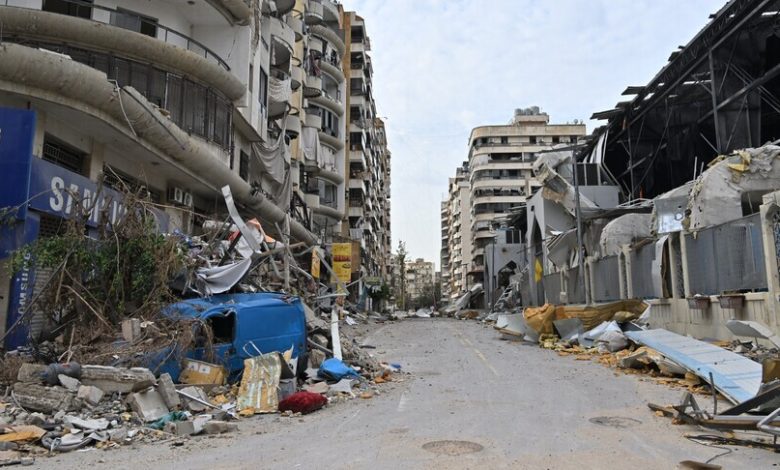
Field reporting from the Washington Post describes the village of Beit Lif, approximately four kilometres north of the Israeli border, as almost entirely flattened. What was once home to thousands of people has been reduced to concrete rubble by controlled demolitions. Israeli commanders have said residents will not be allowed to return to 55 villages within the operational zone. Prime Minister Netanyahu visited troops inside Lebanon and stated that every terrorist position is simply being flattened.
Israeli airstrikes on Wednesday killed at least five people in southern Lebanon, including journalist Amal Khalil from Al-Akhbar newspaper. Lebanese officials said Khalil and a colleague sheltered in a building after a nearby vehicle was targeted, but the building was then struck. It was Lebanon’s deadliest day since the ceasefire began on 16 April.
Al Jazeera’s analysis describes the Yellow Line provisions as riddled with contradictions: the ceasefire text says Israel shall preserve its right to take all necessary measures in self-defence, a clause Israel has used to justify continued operations inside the zone. Hezbollah has responded with a drone attack against Israeli troops in the south and declared it retains the right to resist occupying forces.
✅ Ceasefire Framework
How a Ceasefire Extension Would Work
The 10-day ceasefire, announced by President Trump on 16 April and effective from 16-17 April 2026 at 17:00 EST, established a temporary halt to offensive military operations. Under the terms set out by the State Department, the ceasefire can be extended by mutual agreement if progress is made during talks and if Lebanon effectively demonstrates its ability to assert sovereignty.
Israel retains the right to act in self-defence against imminent or ongoing threats under the agreement’s wording. Lebanon, with international support, is to take steps to prevent Hezbollah and other armed groups from attacking Israel. The US has stated its desire to support Lebanon in restoring state authority and economic recovery while reducing the influence of what it calls Iran-backed terrorist organisations.
Hezbollah was not party to the ceasefire and did not formally sign it. The group’s senior politician Hassan Fadlallah said Hezbollah wants the truce to continue but only on the basis of full Israeli compliance, including halting assassinations, ceasing fire completely, and halting village destruction. Fadlallah also urged the Lebanese government to cancel all direct contact with Israel.
US State Department Official
“The time has come to treat Lebanon as a sovereign state and to finally empower it to act like one, rather than letting an Iran-backed terrorist organisation have a veto on its future or block peace.”
⚠ Hezbollah’s Stance
Excluded from Talks, But Never Absent
Hezbollah has made clear it opposes the direct Lebanon-Israel talks and has urged Beirut to cancel all forms of direct contact with Israel. The group’s spokesperson Salman Harb told NPR that Hezbollah maintained its right to resist if Israel refused to withdraw from Lebanon. Despite this, the Lebanese government under President Aoun and Prime Minister Salam is pressing ahead, reflecting Beirut’s stated intention to assert sovereign authority and reduce Hezbollah’s political veto.
The ceasefire came about partly as a result of Iranian pressure, according to Hezbollah itself, rather than US mediation. Hezbollah said it entered the broader regional conflict on 2 March in response to the killing of Iranian Supreme Leader Ayatollah Ali Khamenei in Israeli-US strikes, and to retaliate for what it described as more than a year of ceasefire breaches. The group launched over 1,300 waves of attack on Israel during the conflict.
🌐 Regional Context
Lebanon Talks: The Last Viable US Diplomatic Win?
The Lebanon-Israel negotiations are taking place against a turbulent regional backdrop. The Islamabad talks between the US and Iran collapsed without agreement. Hamas has apparently rejected the Gaza demilitarisation plan put forward by US envoy Nickolay Mladenov. With those tracks stalled, the Israel-Lebanon track may represent the only near-term opening for American diplomacy to translate military gains into a lasting political outcome.
Washington has explicitly denied any formal link between the Lebanon mediation and its diplomatic efforts over the Iran conflict. However, the broader regional dynamics cannot be ignored. Iran had previously called for Lebanon to be included in any wider ceasefire. Lebanon’s Prime Minister Salam also rejected an Iranian offer to negotiate on Beirut’s behalf, a significant statement of sovereign intent from a government that has moved to legally restrict Hezbollah’s influence and approved disarmament plans.
The United Nations is separately considering some form of ongoing presence in southern Lebanon once UNIFIL’s mandate formally ends later this year. The UN Interim Force in Lebanon, deployed since 1978 with over 7,000 troops from 47 nations, has recorded five deaths in recent weeks, including three from Indonesia and two from France. UN Under-Secretary-General Jean-Pierre Lacroix is consulting all parties about post-UNIFIL options and is expected to make recommendations to the Security Council by June.
Strategy Battles Assessment
Thursday’s White House session is the single most consequential diplomatic event of the Lebanon conflict to date. Moving the talks from the State Department to the White House itself is not a logistical detail. It signals that Trump is personally invested in this track in a way that Israeli and Lebanese negotiators cannot ignore. The question is what that pressure actually produces.
Lebanon’s core demands, an extended ceasefire and a halt to home demolitions, are deeply asymmetric with what Israel is currently doing on the ground. The IDF has not paused its Yellow Line consolidation. Netanyahu has visited troops inside Lebanon and used language that mirrors the Gaza operation. Fifty-five villages are now closed to returnees. Entire communities like Beit Lif have been levelled. For any ceasefire extension to be meaningful, Israel would have to stop doing what it is currently treating as permitted under the truce’s own terms.
The strategic logic of the Israeli position is not hard to read. A buffer zone is cheaper to defend than a contested front line. Demolishing potential Hezbollah firing positions now, during a ceasefire, reduces future military risk. But it also poisons the diplomatic track and hands Hezbollah a propaganda win at exactly the moment Lebanon’s sovereign government is trying to sideline the group. If Beirut cannot show its people that Washington’s pressure delivers a halt to demolitions, the domestic political argument for restraining Hezbollah collapses.
A ceasefire extension is probable. A meaningful Israeli concession on demolitions is far less certain. The real test of Thursday’s talks is not whether the truce survives Sunday. It is whether the next phase of negotiations has a foundation that both the Lebanese state and, critically, the Lebanese public can sustain against Hezbollah’s opposition. That is a much harder bar to clear than a photo call with Trump.
Strategy Battles — Related Coverage
Sources
- Anadolu Agency — Israel-Lebanon Conflict Live Blog, 23 April 2026
- Washington Post — U.S. to Host Israel-Lebanon Talks as Ceasefire Deadline Nears, 23 April 2026
- Washington Post — Lebanon Looks to Trump for Leverage Over Israel, 23 April 2026
- Washington Post — Lebanon Decries Israeli Demolition of Homes After Ceasefire, 23 April 2026
- NPR — Trump Will Welcome Envoys of Lebanon and Israel at White House, 23 April 2026
- The National — Second Round of Lebanon-Israel Talks Set to Take Place in Washington, 23 April 2026
- RTE News — Lebanon to Seek Ceasefire Extension in Talks with Israel, 23 April 2026
- Al Jazeera — Does Israel’s Yellow Line Violate the Lebanon Ceasefire?, 19 April 2026
- Military.com / AP — Lebanon and Israel Resume Direct Talks in Washington, 23 April 2026
- Wikipedia — 2026 Israel-Lebanon Ceasefire (accessed 23 April 2026)
- Wikipedia — 2026 Israel-Lebanon Peace Talks (accessed 23 April 2026)
- NPR — Israel Is Building a Buffer Zone Inside Lebanon, 14 April 2026
Editorial Verification
The ceasefire start date (16 April 2026), expiry date (Sunday 27 April 2026), US and Lebanese delegation details, venue change to the White House, and Lebanon’s stated demands have been verified across multiple independent sources including AP, Anadolu, Washington Post, NPR, and The National. The casualty figure of approximately 2,500 killed in Lebanon since 2 March is a Lebanese government estimate and is presented as such. The figure of 40,000 homes destroyed is a Lebanese official estimate cited by NPR. Israeli operations within the buffer zone are reported and documented. Hezbollah’s stated positions are drawn from verified press statements. Details of the first talks (14 April) are verified against State Department records and multiple news agency reports. The “Yellow Line” analysis is sourced from Al Jazeera and is not an Israeli government formulation.
Approved for Publication / Marcus V. Thorne — Lead Editor, Strategy Battles — 23 April 2026
©StrategyBattles.net 2026. All rights reserved. Content is for informational and analytical purposes only. All casualty figures, territorial claims, and unilateral statements from parties to the conflict are sourced and labelled accordingly. Strategy Battles does not endorse claims made by any party. Map produced from open-source intelligence and publicly available geographic data.