U.S. Military in the Iran War: Strategic Gains, Lessons Learned, and What China, Russia, and Europe Concluded
12,300+
Confirmed Targets Struck Inside Iran
20+
Weapon Systems Debuted in Combat
40%
Iran’s Pre-War Drone Arsenal Retained (Intel Est.)
🔵 Section One
Introduction: America at War with Iran
The conflict that began on February 28, 2026, when the United States and Israel launched Operation Epic Fury against the Islamic Republic of Iran, represents the most extensive American air and naval combat operation in more than two decades. Within the first forty days of hostilities, CENTCOM confirmed striking over 12,300 targets across all 31 of Iran’s provinces, ranging from ballistic missile production facilities and IRGC command nodes to petrochemical infrastructure and underground launcher complexes. The scale, tempo, and geographic breadth of the campaign place it in a category apart from the limited-strike operations of previous administrations.
This assessment does not evaluate whether the war was politically justified. Its scope is narrower and, in many respects, more consequential: what has the United States actually learned from this experience, what strategic gains have been consolidated, what weaknesses have been exposed, and what conclusions are being drawn by the governments watching from Beijing, Moscow, Brussels, Riyadh, and Islamabad. The answers to those questions will shape global security architecture for at least a generation.
The ceasefire of April 8 froze the battlefield, but it did not freeze the analysis. Intelligence assessments leaked to The New York Times on April 19 have already begun complicating the public victory narrative. The gap between what the Pentagon has said publicly and what U.S. officials are telling analysts in private is now a documented feature of this conflict, and it is that gap, as much as the operational record itself, that defines the strategic situation America now faces.
🟢 Section Two
Strategic and Military Gains: What America Has Validated
The most durable gain from the Iran campaign is the battlefield validation of a generation of American weapons development conducted without peer-level combat testing. More than twenty distinct weapon systems were deployed in operational conditions for the first time or in scales that far exceeded any prior use. That data cannot be replicated in exercises or simulations, and it has already begun informing procurement decisions, doctrine revision, and export strategies.
The GBU-57 Massive Ordnance Penetrator, America’s most powerful conventional bunker-busting bomb, was deployed operationally for the first time at scale, delivered by B-2 Spirit stealth bombers against Iran’s hardened underground missile facilities. The real-world penetration data against reinforced Iranian geology and Soviet-era construction techniques provides an irreplaceable performance baseline. Similarly, the Precision Strike Missile (PrSM) made its first confirmed combat use when fired from HIMARS launchers against targets in southern Iran, demonstrating the system’s operational range and terminal accuracy under real-world GPS conditions across contested airspace.
The stealth bomber triad performed cohesively. B-2 Spirits, B-1B Lancers, and B-52H Stratofortresses operated in a coordinated strike architecture that validated joint long-range strike planning under sustained operational tempo. The B-52’s first confirmed overflights of Iranian airspace in the conflict’s final weeks represented a deliberate strategic signal as much as a kinetic act: the United States had achieved sufficient suppression of Iranian air defences to fly its most iconic and largest platform unimpeded over a nation it had been at war with for forty days.
The deployment of the EA-37B Compass Call electronic attack aircraft, confirmed by Alma Research during the April 3 reporting period, provided real-world assessment of Iranian radar and communications vulnerabilities. Electronic warfare is notoriously difficult to test authentically in peacetime exercises. The Iran campaign provided an adversary with layered, Russian-supplied and indigenous air defence architecture against which American electronic warfare capability could be evaluated at full operational intensity.
On the deterrence ledger, the campaign demonstrated that the United States retains the capacity to sustain a high-intensity air campaign at industrial scale against a nation with meaningful integrated air defences. CENTCOM’s rate of confirmed strikes, exceeding 300 target events per day at peak tempo, represents a logistical and strike-generation achievement that reassures treaty allies and complicates the targeting calculus of potential adversaries. That demonstration value persists beyond the ceasefire and is not diminished by subsequent intelligence assessments of Iranian arsenal retention.
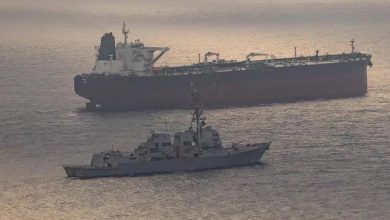
The naval blockade of the Strait of Hormuz, maintained throughout the conflict, constituted a significant proof of concept for economic warfare at scale. Enforcing a maritime exclusion zone over the world’s most critical energy chokepoint without triggering direct conflict with China or Russia — both of whom have stated interests in Hormuz transit — demonstrated a degree of escalation management that will inform future naval strategy. The blockade also provided operational data on drone and missile threats to surface vessels in confined waters, a scenario that has dominated naval planning discussions for a decade but has rarely been tested against an adversary of Iran’s sophistication.
🔴 Section Three
Lessons Learned and Weaknesses Exposed
The most consequential lesson of the Iran campaign has already been entered into the intelligence record. Despite striking over 12,300 targets over forty days, the United States did not succeed in eliminating Iran’s missile and drone arsenal. According to U.S. military and intelligence officials cited by The New York Times on April 19, Iran retains approximately 40% of its pre-war drone stockpile and more than 60% of its missile launcher systems. Recovery operations after the ceasefire have already retrieved roughly 100 launcher systems from concealed underground positions, with analysts estimating Iran could reconstitute up to 70% of its pre-war capability once full excavation is complete.
This outcome exposes a fundamental tension at the core of modern strike warfare against a geographically large adversary with deep concealment doctrine. Iran invested decades in dispersing, hardening, and hiding its missile infrastructure specifically in anticipation of this kind of campaign. The physics of underground storage in mountain terrain, combined with Iran’s geography spanning an area larger than Western Europe, means that no air campaign of any duration could plausibly achieve complete disarmament without ground forces. The U.S. did not deploy ground forces, and it was never going to. The strategic implication is that sustained air campaigns against hardened underground arsenals have a ceiling on achievable disarmament, a ceiling that American planners must now factor explicitly into any future deterrence framework involving China or North Korea.
U.S. Intelligence Source — via The New York Times, April 19, 2026
“They are still very much poised to wreak absolute havoc throughout the entire region.”
A secondary and related intelligence failure concerns the prewar assessment of Iranian concealment capacity. U.S. and Israeli strike planners almost certainly used targeting packages built on pre-war intelligence about the location of Iranian launchers and missile stocks. The fact that so many systems survived in concealed caves and bunkers raises questions about whether the targeting intelligence was incomplete, whether Iran successfully deceived pre-war reconnaissance, or whether concealment operations were more extensive than pre-conflict analysis anticipated. This is not a trivial concern: the same question will be asked about Chinese and North Korean underground military infrastructure in any future conflict scenario.
The campaign also exposed the strategic cost of asymmetric economic targeting. While CENTCOM struck energy infrastructure, refineries, and industrial facilities across Iran, Tehran reciprocated by targeting the Gulf states’ energy infrastructure with its surviving drone and missile forces. Saudi Arabia absorbed at least 38 confirmed ballistic missile attacks and 435 drone strikes during the conflict. A desalination plant in Kuwait was struck, threatening drinking water supply. The King Fahd Causeway connecting Saudi Arabia and Bahrain was closed. Energy volatility across the region generated economic costs that fell not only on Iran’s adversaries but on the global economy. The lesson is that striking an adversary’s economic infrastructure in a region of this density of interdependence carries systemic risk that extends well beyond the direct combatants.
The loss of at least one E-3 Sentry AWACS aircraft at Prince Sultan Air Base in Saudi Arabia, confirmed by The Wall Street Journal, represents a qualitatively significant platform loss. The E-3 is not easily replaced, and its destruction at a fixed forward base highlights the vulnerability of high-value intelligence and command assets to Iranian ballistic missile strikes even within allied territory. It raises uncomfortable questions about forward basing doctrine in any future conflict where an adversary retains meaningful precision ballistic missile capability at strategic range.
There is, finally, the credibility problem generated by the divergence between public statements and classified assessments. Senior officials from the President downward described Iran’s military as effectively destroyed. Classified intelligence assessments told a different story. When that gap became public, it did not just damage the administration’s domestic credibility: it signalled to adversaries and allies alike that American public claims about military outcomes cannot be taken at face value without independent verification. That is a cost that compounds over time and across scenarios far beyond the Iran conflict.
🟡 Section Four
What the World Has Observed
No conflict of this scale in the post-Cold War era has been watched more carefully by more sophisticated military establishments than Operation Epic Fury. The Iran campaign constitutes an unprecedented real-world test of American military doctrine, technology, and political will — and every major power has conducted its own lessons-learned analysis in parallel.
China has drawn a set of conclusions that are simultaneously reassuring and alarming to American planners. Reassuring: the PLA observed that U.S. stealth platforms and precision munitions performed with high reliability, that America retains an enormous qualitative and logistical advantage in long-range strike capability, and that sustained American air campaigns against integrated air defence systems remain broadly effective. Alarming for China’s adversaries: Beijing also observed that underground dispersal and hardening worked. Iran’s concealment doctrine — modelled in part on North Korean and Chinese practices — protected a substantial fraction of its arsenal. The PLA has invested heavily in underground infrastructure for its missile forces. The Iran campaign suggests that investment was strategically sound.
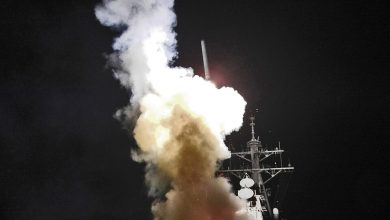
Russia observed the campaign through the lens of its ongoing war in Ukraine, where it faces U.S.-supplied precision weapons on a daily basis. Moscow will have noted the performance of the PrSM from HIMARS, the operational range of the Tomahawk in a permissive environment, and the effectiveness of the EA-37B Compass Call in suppressing adversary communications. It will also have noted what it did not see: the deployment of U.S. ground forces, the use of hypersonic weapons at scale, and any decisive collapse of Iranian command and control despite weeks of decapitation-targeting. For Russian planners, the lesson is that American airpower remains formidable but is not omnipotent against a sufficiently prepared defensive posture.
European NATO members watched the campaign with a mixture of reassurance and anxiety. Reassurance, because the campaign confirmed the United States retains both the capability and the political will to conduct large-scale offensive operations when it judges the stakes sufficient. Anxiety, because the campaign consumed enormous quantities of precision munitions from American stockpiles, demonstrated the continued dependence of the alliance on U.S. strike architecture, and raised questions about whether American attention and resources can simultaneously sustain the Iran campaign, the Ukraine support effort, and a credible deterrent posture in the Indo-Pacific. European defence ministries will accelerate sovereign capability programmes as a direct consequence of watching Operation Epic Fury, not because they doubt American commitment, but because the visible limits of American bandwidth make that acceleration prudent.
Gulf states, particularly Saudi Arabia, the UAE, and Bahrain, drew the most immediate and operational conclusions. Their territory was struck. Their energy infrastructure was damaged. Their populations absorbed the psychological burden of Iranian ballistic missiles landing in their cities. The conflict has confirmed the existential value of American military presence in the Gulf and accelerated Gulf investment in domestic air and missile defence capability. At the same time, the conflict demonstrated that hosting American forces does not confer immunity from retaliation, a calculation that smaller Gulf states will factor heavily into future basing negotiations. The destruction of the E-3 AWACS at Prince Sultan Air Base, a facility in Saudi Arabia, will have been particularly noted in Riyadh.
Non-aligned states in the Global South, many of which have deepened economic relationships with both the United States and China over the past decade, observed the conflict as a data point in the broader question of whether American military primacy is consolidating or eroding. The capacity to strike 12,300 targets in forty days argues for consolidation. The failure to destroy Iran’s arsenal, the regional economic disruption, and the credibility gap between official statements and intelligence reality argue for something more complicated.
🔵 Section Five
Conclusion: Strengthened, Complicated, or Both?
A rigorous assessment of the Iran campaign does not support either a simple victory narrative or a simple failure narrative. The United States has emerged from Operation Epic Fury with a richer body of operational data, a validated generation of weapons systems, and a demonstrated capacity for sustained high-intensity strike operations that no other nation on earth can match. These are genuine and durable strategic assets.
At the same time, the campaign has revealed the ceiling on what sustained airpower can achieve against a large state adversary with decades of concealment investment and a willingness to absorb extraordinary damage. It has demonstrated the reciprocal escalatory logic of infrastructure targeting in a densely interconnected region. It has consumed precision munitions at rates that will require years to replenish. And it has produced a documented gap between official public claims and classified assessments that will complicate American diplomatic and deterrence signalling for years to come.
The most strategically significant outcome may not be what happened inside Iran’s borders. It may be what happened in the analytical communities of Beijing, Moscow, Pyongyang, and Taipei. The Iran campaign has provided every major military power with the highest-quality real-world data on American military performance since 2003, at a moment when several of those powers are actively revising their own military strategies and investment priorities. Whether America’s global position has been strengthened or complicated by that transparency is not a question with a single answer. It depends which adversary is asking, what their prior assumptions were, and what they have chosen to learn.
What is not in question is that the Iran war has made the world’s strategic balance sheet considerably more legible to everyone who was watching. In a period of great-power competition, that legibility cuts in multiple directions simultaneously. America’s task now is to ensure that the lessons it draws from this conflict are as honest as the lessons being drawn about it.
Strategy Battles Assessment
The Concealment Problem Is Now the Central Problem of Western Strike Doctrine
The Iran campaign’s most lasting strategic contribution may be that it has moved a theoretical planning problem into the domain of documented fact. Analysts have long argued that underground dispersal and hardening can limit the effectiveness of even the most capable conventional air campaigns. Operation Epic Fury has now proved that argument correct at operational scale, against a real adversary, under sustained maximum-effort conditions.
The implications for Indo-Pacific planning are severe. China’s missile forces are considerably more dispersed, more numerous, and more deeply hardened than Iran’s. North Korea’s underground military infrastructure is arguably the most extensive on earth. If 12,300 strikes over forty days cannot eliminate an adversary’s missile capability against a country the size of Iran, the arithmetic becomes far more challenging against either of those scenarios.
The United States does not yet have a public doctrine that addresses this ceiling honestly. Developing one — and communicating it to allies, adversaries, and the American public in terms that sustain credible deterrence without overpromising on achievable outcomes — is arguably the most important strategic task that emerges from this conflict. The weapons performed. The doctrine needs to catch up.
Strategy Battles — Related Coverage
Sources
- The New York Times — Iran Retains Significant Military Capability, U.S. Officials Say (April 19, 2026)
- Anadolu Agency — U.S. Officials Say Iran Retains Significant Drone, Missile Capability (April 19, 2026)
- The Soufan Center — Iran’s Missile and Drone Arsenal Remains Potent Despite Five Weeks of Intensive Strikes (April 6, 2026)
- Bloomberg — Iran Preserves Missile, Drone Capabilities Despite U.S. Strikes, Intelligence Says (April 16, 2026)
- CNN — U.S. Intelligence: Iran Still Has Thousands of Drones, Missiles Despite Weeks of Strikes (April 2, 2026)
- Wikipedia — Timeline of the 2026 Iran War (continuously updated)
- Alma Research and Education Center — Daily Report: The Second Iran War (April 3, 2026)
- The Washington Institute — Iraq at Another Crossroads: Iran-Backed Militias and Washington (2026)
- Al Jazeera — Iran War: Day 39 Tracker (April 7, 2026)
- The Jerusalem Post — A Ceasefire Won’t Stop Iran’s Military Industry (April 2026)
Editorial Verification
All operational statistics cited in this article — including the 12,300-target strike figure, Iran’s 40% drone and 60%+ launcher retention rates, the 3,000+ ACLED strike events, and platform-specific deployment confirmations including PrSM, EA-37B and GBU-57 — are sourced to CENTCOM public statements, U.S. military and intelligence officials as reported by The New York Times (April 19, 2026), The Soufan Center, Alma Research, Al Jazeera, Bloomberg, and CNN. The E-3 AWACS loss at Prince Sultan Air Base is sourced to The Wall Street Journal. Saudi strike totals are sourced to the Saudi Ministry of Defence. The divergence between official public statements by President Trump and Defense Secretary Hegseth and classified intelligence assessments is documented in The New York Times reporting and corroborated by multiple outlets.
Strategic analysis and editorial assessments are original to Strategy Battles and reflect the independent judgment of the editorial team. They do not represent the views of any government, military establishment, or intelligence agency.
Approved for Publication / Marcus V. Thorne — Lead Editor, StrategyBattles.net — April 25, 2026
©StrategyBattles.net 2026 — All Rights Reserved
This article is published for informational and analytical purposes. All claims attributed to external sources are credited accordingly. Unverified claims are clearly labelled. Strategy Battles does not advocate for any military action or political position.