China Deploys Liaoning Carrier and Drone Ship as Balikatan Launches With Japanese Combat Troops
3
PLA Naval Groups Deployed
17,000+
Balikatan Troops (7 Nations)
19 Days
Balikatan Duration (Apr 20 – May 8)
📍 South China Sea / Philippine Sea — PLA Operations vs Balikatan 2026

PLA vessel positions are approximate, based on official PLA statements and open-source satellite imagery reports. Map: Strategy Battles / OSINT. April 25, 2026.
🟡 The Trigger
Japan’s Taiwan Strait Transit Sets Off a Chain Reaction
On April 17, the Japanese destroyer JS Ikazuchi transited the Taiwan Strait, the fourth such passage by a Japanese warship since September 2024. The timing compounded Beijing’s anger: April 17 is the anniversary of the 1895 Treaty of Shimonoseki, under which Japan forced China to cede Taiwan. The PLA Daily accused Tokyo of harming the feelings of the Chinese people.
Three days later, on April 20, the United States and the Philippines launched Balikatan 2026, the largest iteration of the annual joint exercise since it began in the 1990s. Japan participated not as an observer but as an active combat partner for the first time, deploying approximately 1,400 troops and making Japan the third-largest troop contributor after the US and Philippines.
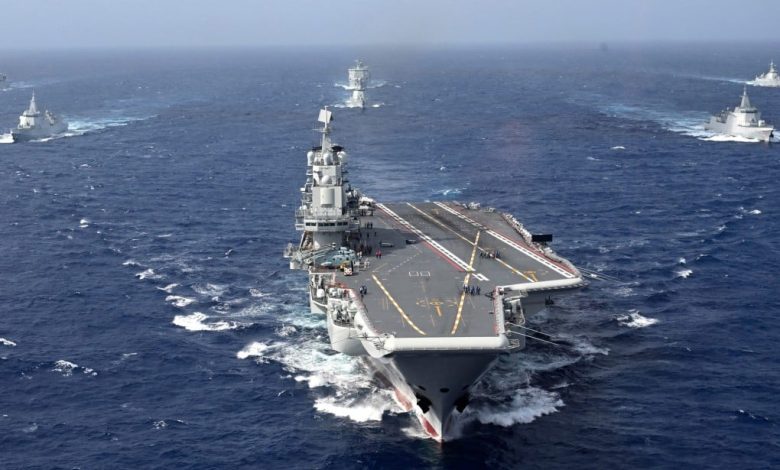
Beijing did not respond with words alone. The same day Balikatan opened, the aircraft carrier Liaoning transited the Taiwan Strait heading south. Simultaneously, the PLA Eastern Theatre Command dispatched the 133rd naval task group through the Yokoate Channel, a waterway through the Ryukyu Islands close to the Japanese mainland, into the Western Pacific.
🔴 The Operations
Three PLA Forces, Two Theatres, One Message
The PLA Southern Theatre Command confirmed on April 25 that a naval fleet had conducted drills in waters east of Luzon, the northernmost major island of the Philippines. The fleet was led by the Type 055 guided-missile destroyer Zunyi, with footage published by the navy showing the Zunyi at the head of a four-ship formation. The command described the drills as a necessary action taken in response to the current regional situation.
A third naval asset entered the picture on April 22, when the PLA Navy announced that the Type 076 amphibious assault ship Sichuan had departed Shanghai for the South China Sea. The Sichuan is China’s first next-generation drone-carrier class vessel, capable of operating both drones and manned aircraft, and its sea trials in the same contested waters where Balikatan drills are underway carried undeniable symbolic weight.
The Eastern Theatre Command described its own movements as routine training activity organized in accordance with the annual plan and not aimed at any specific country. Analysts noted the composition and timing of all three deployments told a different story.
🟡 Balikatan 2026
The Exercise Beijing Fears Most
Balikatan 2026, running April 20 to May 8, brings together more than 17,000 troops from seven participating nations, including approximately 10,000 Americans. France, Canada, Japan, Australia, and New Zealand are active participants this year. A further seventeen nations are observing the drills. The exercises span the Philippines from northern Luzon facing the Taiwan Strait, down to Palawan overlooking the South China Sea.
Japan’s participation marks a historic threshold. Japanese forces will conduct live-fire exercises using Type 88 surface-to-ship missiles in waters north of Luzon, the first time Japan has fired the weapon system outside its own territory. The Philippines’ BrahMos supersonic cruise missile, the most powerful weapon in the country’s arsenal, will undergo simulation firing during a joint maritime strike exercise off northern Luzon.
Armed Forces of the Philippines chief General Romeo Brawner Jr. told troops at the opening ceremony to stand together, act together, and when necessary, defend together. The drills also coincide with the 75th anniversary of the 1951 Philippine-US mutual defense treaty and occur amid escalating Chinese assertiveness in the West Philippine Sea.
Guo Jiakun — Chinese Foreign Ministry Spokesperson, April 20, 2026
“We wish to remind the countries concerned that blindly binding themselves together in the name of security will only be akin to playing with fire, ultimately backfiring upon themselves.”
🔴 Scarborough Shoal
China Deploys Floating Barrier to Block Filipino Fishermen
Concurrent with the naval exercises, China has deployed a 352-metre floating barrier, fishing boats, and a coast guard vessel to block access to Scarborough Shoal, a traditional fishing ground inside the Philippines’ exclusive economic zone. The Philippine Coast Guard confirmed six Chinese maritime militia vessels were positioned inside the shoal, with three more outside, effectively choking off Filipino fishermen.
The Scarborough blockade is a direct escalation layered on top of the military signaling. It demonstrates that Beijing’s pressure campaign is not limited to naval exercises and diplomatic statements. It is a sustained, physical assertion of control over disputed waters that the Philippines and its allies have not yet found an effective counter to.
🔵 Diplomatic Context
Military Muscle Before High-Level Diplomacy
The timing of these deployments intersects with larger geopolitical currents. Japanese Prime Minister Takaichi Sanae recently met US President Donald Trump in Washington, and a potential Trump-Xi meeting in Beijing is reported to be under consideration. For Beijing, entering high-level diplomacy from a position perceived as militarily weak would be politically unacceptable.
Analysts have also noted that in October 2024, the PLA operated two carrier strike groups simultaneously in the South China Sea for the first time, deploying both the Liaoning and Shandong with at least eleven escorts. The current deployment, adding a third major asset with the Type 076 Sichuan, may represent preparation to exceed that precedent. Pentagon reporting from 2025 projects Beijing plans to field nine carrier strike groups by 2035.
Strategy Battles — Related Coverage
Sources
- Amber Wang, South China Morning Post — “China stages navy drill as US and Philippines embark on Balikatan 2026,” April 24, 2026
- The Diplomat — “China’s Liaoning Carrier Heads South: More Than a Routine Drill,” April 2026
- Philstar.com — “Balikatan 2026: Japan’s first PH combat role since WWII draws China’s ‘playing with fire’ warning,” April 21, 2026
- The Star (Malaysia) — “PLA’s new Type 076 ‘drone carrier’ to take part in South China Sea training drills,” April 23, 2026
- The Print — “China is worried about US-Philippines military exercises. It’s too close for comfort,” April 2026
- The Gateway Pundit — “China’s PLA Navy Expands Operations Meant to Intimidate Japan and the Philippines,” April 2026
- PLA Southern Theatre Command — Official statement on Luzon drill, April 25, 2026
- PLA Eastern Theatre Command — Official statement on 133rd task group sortie, April 2026
- Ministry of National Defense, Republic of China (Taiwan) — Confirmation of Liaoning Taiwan Strait transit, April 20, 2026
Editorial Verification
The PLA Southern Theatre Command drill east of Luzon is confirmed via official PLA statement and multiple corroborating sources. The Liaoning Taiwan Strait transit on April 20 is confirmed by the ROC Ministry of National Defense. The 133rd task group Yokoate Channel transit is confirmed via PLA Eastern Theatre Command statement. The Type 076 Sichuan sortie from Shanghai is confirmed by official PLA Navy Weibo. Balikatan 2026 opening and Japanese participation details are confirmed across multiple Philippine, US, and international outlets. The Scarborough Shoal floating barrier is confirmed via Reuters satellite imagery reporting. Exact number of PLA vessels in the Luzon drill was not disclosed by the PLA; four ships visible in released footage are confirmed. All PLA statements denying that drills target specific nations are reported as statements, not endorsed as factual assessments.
Approved for Publication
Marcus V. Thorne
Lead Editor, Strategy Battles
©StrategyBattles.net 2026
This article is for news and analysis purposes only. Based on publicly available news sources and military updates. All rights reserved. Not for commercial reuse without permission.