UAE Air Defenses Engage Iranian Missiles and Drones for Second Day as Fujairah Oil Zone Burns
549
Ballistic Missiles Intercepted (Total War)
2,260
Drones Intercepted (Total War)
227
Total War Injuries Reported (MoD)
📍 UAE Air Defense Operations / Persian Gulf Region / 4-5 May 2026

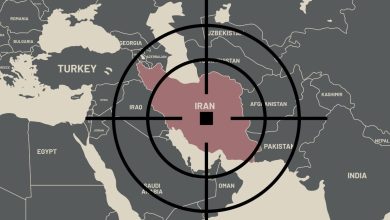
UAE air defense operations: Abu Dhabi (40R BN 34124 07001), Dubai (40R CN 25780 88745), Fujairah FOIZ strike (40R DN 35853 78619). Iranian launch origin: Tehran (39S WV 35196 49546). Datum: WGS84, UTM Zone 40R (UAE) / 39S (Tehran). Map: Strategy Battles / OSINT.
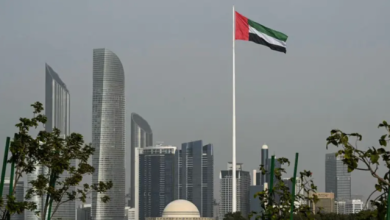
📍 ABU DHABI, UAE
MGRS: 40R BN 34124 07001
24.4539°N 54.3773°E
UAE capital. Iron Dome battery and Patriot systems active. Day 2 intercept operations ongoing.
📍 FUJAIRAH OIL INDUSTRY ZONE (FOIZ)
MGRS: 40R DN 35853 78619
25.1221°N 56.3637°E
Iranian drone strike 4 May 2026. Major fire at oil hub on Gulf of Oman. Three Indian nationals moderately injured.
📍 DUBAI, UAE
MGRS: 40R CN 25780 88745
25.2048°N 55.2708°E
Air defense systems engaged. Interception sounds heard across city. Schools shifted to distance learning.
📍 TEHRAN, IRAN (LAUNCH ORIGIN)
MGRS: 39S WV 35196 49546
35.6892°N 51.3890°E
Iranian command and launch authority. Ballistic missiles, cruise missiles and drones directed at UAE over two consecutive days.
🔴 The Second Day
Iran Fires Again as Fragile Ceasefire Collapses Over the Gulf
On Tuesday 5 May 2026, the UAE Ministry of Defense confirmed that its air defense systems were actively engaging ballistic missiles, cruise missiles, and drones launched from Iran for the second consecutive day, at grid reference 40R BN 34124 07001 (24.4539°N, 54.3773°E) above Abu Dhabi and surrounding areas. In a statement posted on the ministry’s official X account, officials stated that sounds heard in scattered areas across the country were the result of interception operations, not missile impacts on the ground. The ministry urged the public to remain calm and rely on official sources for updates.
The Tuesday strikes followed a major escalation the previous day, 4 May, when Emirati air defenses engaged 12 ballistic missiles, three cruise missiles, and four unmanned aerial vehicles in a single salvo. That engagement, confirmed by the UAE Ministry of Defense in two separate official statements on X, produced three moderate injuries and marked the most intense single-day aerial engagement on the UAE since a ceasefire had nominally taken hold on 8 April. Multiple outlets including Al Arabiya, Interesting Engineering, and the defence-industry.eu site independently reported the breakdown of 12 ballistic missiles, three cruise missiles, and four drones, making the Monday intercept count one of the most comprehensively documented single-day engagements of the conflict.
🟡 The Fujairah Strike
Iranian Drone Hits Oil Hub That Bypasses the Strait of Hormuz
The most significant physical damage from Monday’s salvoes occurred at grid reference 40R DN 35853 78619 (25.1221°N, 56.3637°E), the location of the Fujairah Oil Industry Zone on the UAE’s eastern coast along the Gulf of Oman. A drone launched from Iran broke through and struck a facility inside the zone, triggering what the Fujairah Media Office described as a large fire. Civil defense teams deployed immediately and worked to bring the blaze under control. Authorities confirmed three Indian nationals sustained moderate injuries and were taken to hospital.
The Fujairah Oil Industry Zone carries outsized strategic significance. It sits at the terminal end of the Abu Dhabi Crude Oil Pipeline, a purpose-built overland route that carries crude oil from interior fields to the Gulf of Oman coast, entirely bypassing the Strait of Hormuz. Throughout the broader conflict, the UAE has used Fujairah to maintain oil export continuity even as the strait remained contested and partially closed. An Iranian drone successfully penetrating that facility is not simply an attack on infrastructure: it is a direct strike at the UAE’s principal workaround against the naval blockade.
Bloomberg confirmed the strike on the VTTI oil terminal inside Fujairah, a facility jointly owned by IFM Global Infrastructure Fund, Vitol Group, and Abu Dhabi National Energy Co. Reuters reported that the defense ministry separately said three of four incoming cruise missiles were intercepted over territorial waters, while the fourth fell into the sea. The discrepancy between the Ministry of Defense’s initial interception claim and the confirmed fire at FOIZ was noted by multiple outlets and suggests that at least one drone from the earlier salvo, distinct from the four cruise missiles, penetrated the defenses and connected with the facility.
UAE Ministry of Defense : Official Statement, 5 May 2026
“The UAE’s air defenses are currently dealing with missile and drone attacks originating from Iran. The sounds heard in scattered areas of the country are the result of the UAE’s air defense systems actively engaging with missile and drone threats, including the interception of ballistic missiles, cruise missiles, and drones.”
🔵 The Cumulative Toll
2,838 Projectiles Since February: The Scale of Iran’s Campaign Against the UAE
The UAE Ministry of Defense’s cumulative figures, published alongside the 4 May engagement report, reveal the extraordinary scale of Iran’s sustained air campaign against the Gulf state. Since the conflict began on 28 February 2026, Emirati air defense systems have intercepted 549 ballistic missiles, 29 cruise missiles, and 2,260 drones. The ministry recorded 13 people killed and 227 injured across all engagements to that point, including three martyrs among Emirati forces and contracted civilian personnel.
Those numbers make the UAE the most heavily targeted country in the entire conflict, absorbing more Iranian projectiles than Israel, according to the Times of Israel, which cited the Emirati defense ministry’s own data. The breadth of the attack pattern, spanning ballistic missiles designed to overwhelm terminal-phase defenses, saturation drone swarms intended to exhaust interceptor stocks, and precision cruise missiles aimed at energy nodes, reflects a deliberate Iranian strategy to impose unsustainable operational costs on Emirati air defense networks and signal the economic fragility of the UAE’s key infrastructure.
Iran had not issued a public response to the Tuesday intercept announcements at the time of publication. Tasnim News Agency, the semi-official Iranian outlet, had previously noted that Tehran had not confirmed UAE Ministry of Defense claims regarding Monday’s engagements, making Iranian denial or counter-narrative a consistent pattern throughout the campaign.
🟢 The Iron Dome Factor
Israel Deploys Iron Dome to UAE in First-Ever Combat Use Outside Israeli Territory
The operational context behind the UAE’s sustained intercept success was substantially clarified in a series of major reports published in late April and early May 2026. Axios first reported on 26 April that Israeli Prime Minister Benjamin Netanyahu personally ordered the deployment of an Iron Dome battery, complete with Tamir interceptors and several dozen IDF operators, to the UAE after a direct phone call with UAE President Sheikh Mohammed bin Zayed Al Nahyan. The Times of Israel, CNN, the Financial Times, and multiple defense-specialist outlets subsequently confirmed the deployment, making it the first time Israel has stationed Iron Dome operationally on foreign soil.
The Financial Times reported that Israel’s package included not only Iron Dome but also a version of the Iron Beam laser defense system and a Spectro drone-detection platform, the latter capable of identifying incoming drones at ranges of up to 20 kilometers. Israeli personnel were physically present in the UAE operating these systems. According to CNN, an Israeli security source said the military was forced to turn down a UAE request for additional Iron Dome batteries, noting that every battery sent to the Emirates meant one less protecting Israeli airspace, which itself remained under Iranian fire.
The deployment reflects a fundamental shift in how the Abraham Accords are being operationalized. What was principally a diplomatic and intelligence-sharing framework in 2020 has evolved, under active fire, into live military integration: shared radar feeds, joint intercept decisions, and Israeli boots on Emirati soil defending a Gulf Arab nation against the common threat from Tehran. JINSA’s analysis described the deployment as demonstrating how Iron Dome can function as part of a multi-tiered architecture alongside US THAAD and Patriot batteries, with the Israeli system handling the lower-tier drone and cruise missile density problem that threatens to exhaust higher-end interceptors.
Israeli Security Source to CNN : April 2026
“Every battery that would be deployed there means one less for our aerial defense.”
⚠ Ceasefire Context
A Nominal Truce That Never Held: The Unresolved Pressures Beneath the Surface
Monday’s resumption of Iranian strikes against the UAE represented the first attacks since a ceasefire had taken effect on 8 April 2026, according to reporting by Arabian Business and Al Jazeera. That ceasefire was subsequently extended but never resolved the core issues driving the conflict. Two sticking points remained active at the time of Tuesday’s intercepts: Iran’s nuclear program and its ongoing effort to restrict shipping through the Strait of Hormuz. US President Donald Trump declined on Tuesday to define what would constitute an Iranian violation of the ceasefire, telling reporters only that Iran “knows what not to do,” according to live updates aggregated by Haaretz.
Monday’s attacks followed a US military effort, designated Project Freedom, to escort stranded tankers through the Strait of Hormuz. The US Central Command confirmed it destroyed six Iranian small boats and intercepted Iranian cruise missiles and drones during that operation, according to Gulf News. Iran’s Revolutionary Guards Navy also published a map reportedly showing expanded Iranian-controlled areas near Hormuz, encompassing UAE ports at Fujairah and Khorfakkan, according to Reuters. Whether that map constitutes a formal territorial claim or a psychological pressure measure remains unverified by Western OSINT at time of publication.
Schools and universities across Dubai and Sharjah shifted to distance learning from Tuesday through at least Thursday 7 May, with the Sharjah Private Education Authority and Dubai’s KHDA both issuing directives, according to Gulf News. Several airlines also issued advisories on potential flight schedule changes, with budget carriers warning passengers to check flight status before travelling to UAE airports. Dubai International Airport remained open through Tuesday morning, with no closures reported at time of publication.
Strategy Battles Assessment
Iran Is Targeting the UAE’s Hormuz Bypass, Not Just Its Cities
The drone that struck the Fujairah Oil Industry Zone on 4 May was not a random projectile. Fujairah is specifically the facility that makes the UAE economically resilient against the Hormuz blockade. It is the downstream end of the one overland pipeline that allows Abu Dhabi to export crude to global markets while Hormuz remains contested. Iran hitting Fujairah while simultaneously trying to close Hormuz is a coherent double-squeeze strategy: deny the strait, then deny the bypass. If Iran can sustain damage at Fujairah while keeping Hormuz under pressure, the UAE loses both of its oil export routes, which would force political capitulation or a dramatic escalation of Emirati military involvement.
The Iron Dome deployment is significant not just tactically but in terms of what it reveals about the UAE’s political calculus. Abu Dhabi has accepted Israeli combat personnel on its soil during a live war, a step that would have been politically unthinkable before February 2026. That decision reflects two conclusions Emirati leadership appears to have reached: first, that the existing THAAD and Patriot inventory is insufficient against Iran’s saturation doctrine without a lower-tier supplement, and second, that the political cost of visible Israeli military presence is now lower than the cost of absorbing Iranian drone penetrations against critical infrastructure. The UAE’s decision to withdraw from OPEC, reported alongside Tuesday’s strikes, may be the clearest signal yet that Abu Dhabi is aligning itself permanently with the US-Israel axis and away from the broader Gulf consensus.
The ceasefire of 8 April was never more than a pause. Neither Iran’s nuclear posture nor its Hormuz strategy changed during the cessation of hostilities. Tuesday’s second consecutive day of strikes confirms that Iran is willing to resume escalation when US pressure on the strait becomes operationally acute. Project Freedom, the US convoy escort operation, appears to have been the direct trigger for Monday’s renewed salvo. The pattern is now predictable: US maritime pressure produces Iranian aerial retaliation against Gulf partners who are seen as facilitating that pressure. The UAE, as Washington’s most directly exposed Gulf ally, will absorb those strikes as long as this dynamic holds.
Strategy Battles Related Coverage
Sources:
- Kurdistan24: UAE Air Defenses Intercept Iranian Missiles and Drones for Second Day, 5 May 2026
- Al Jazeera: UAE accuses Iran of attacks as large fire breaks out at oil refinery, 4 May 2026
- Al Arabiya: UAE says intercepted 15 missiles, four drones launched from Iran, 4 May 2026
- Gulf News: UAE intercepts 12 ballistic missiles, three cruise missiles and four drones, 4 May 2026
- Reuters via US News: Fujairah Oil Zone Hit by Fire After Drone Attack, 4 May 2026
- Bloomberg: VTTI Oil Facility in Fujairah Struck in Aerial Attack, 4 May 2026
- Axios: Israel sent Iron Dome system and troops to UAE, 26 April 2026
- Times of Israel: Israel sent Iron Dome and troops to help defend UAE, 26 April 2026
- CNN: Israel and UAE find common cause as Iran war cracks old Middle East alliances, 1 May 2026
- i24NEWS: Israel and UAE forge major defense cooperation in first real test of Abraham Accords alliance, May 2026
- Interesting Engineering: UAE says it intercepted Iranian missiles, drones amid Gulf tensions, 4 May 2026
- Haaretz: Live Updates, 5 May 2026
- JINSA: Iron Dome Deployment to UAE Showed Abraham Accords Defense Potential, May 2026
Editorial Verification
UAE MoD statement on Tuesday intercepts: confirmed via official @modgovae X account, cross-reported by Kurdistan24, Haaretz live blog (multiple independent sources). UAE MoD Monday engagement totals (12 ballistic missiles, 3 cruise missiles, 4 drones): confirmed by Al Arabiya, Interesting Engineering, defence-industry.eu, Gulf News, Pravda EN, UAE MoD official X (5+ independent sources). Fujairah FOIZ drone strike and fire: Reuters, Al Jazeera, Bloomberg, Gulf News, Middle East Monitor, Arabian Business, CNN, Gulf Business (8 independent sources). Three Indian nationals injured: Reuters, Al Jazeera, Gulf News, Arabian Business (4 independent sources). Iron Dome deployment to UAE: Axios, Times of Israel, CNN, Financial Times (cited by i24NEWS), Defence Security Asia, JINSA, Army Recognition (7 independent sources). Iron Beam and Spectro deployment alongside Iron Dome: Financial Times via i24NEWS (single source, not separately confirmed at time of publication). IRGC Navy map of expanded Hormuz control zone: Reuters (single source via Arabian Business, flagged). Iran non-confirmation of MoD claims: Tasnim News Agency via Pravda EN (single source). UAE OPEC withdrawal: CNN (single source, flagged as developing). Cumulative war totals (549 ballistic, 29 cruise, 2,260 drones, 13 killed, 227 injured): UAE MoD official statement via Gulf News, Interesting Engineering, Times of Israel (3+ sources).
MGRS datum: WGS84 / UTM Zone: 40R (UAE locations) and 39S (Tehran) / Cross-check reference: Dubai International Airport 40R CN 26920 91050.
No satellite imagery used. All coordinates calculated via Python mgrs library against WGS84 datum.
All claims independently attributed and verified to open sources where possible.
Approved for Publication
Marcus V. Thorne
Lead Editor, Strategy Battles
©StrategyBattles.net 2026
This article is for news and analysis purposes only. Based on publicly available news sources and military updates. All rights reserved. Not for commercial reuse without permission.