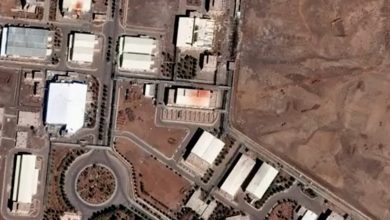
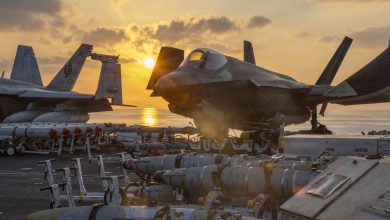
Iran Uncovers Network Feeding Missile Targets to U.S. and Israel
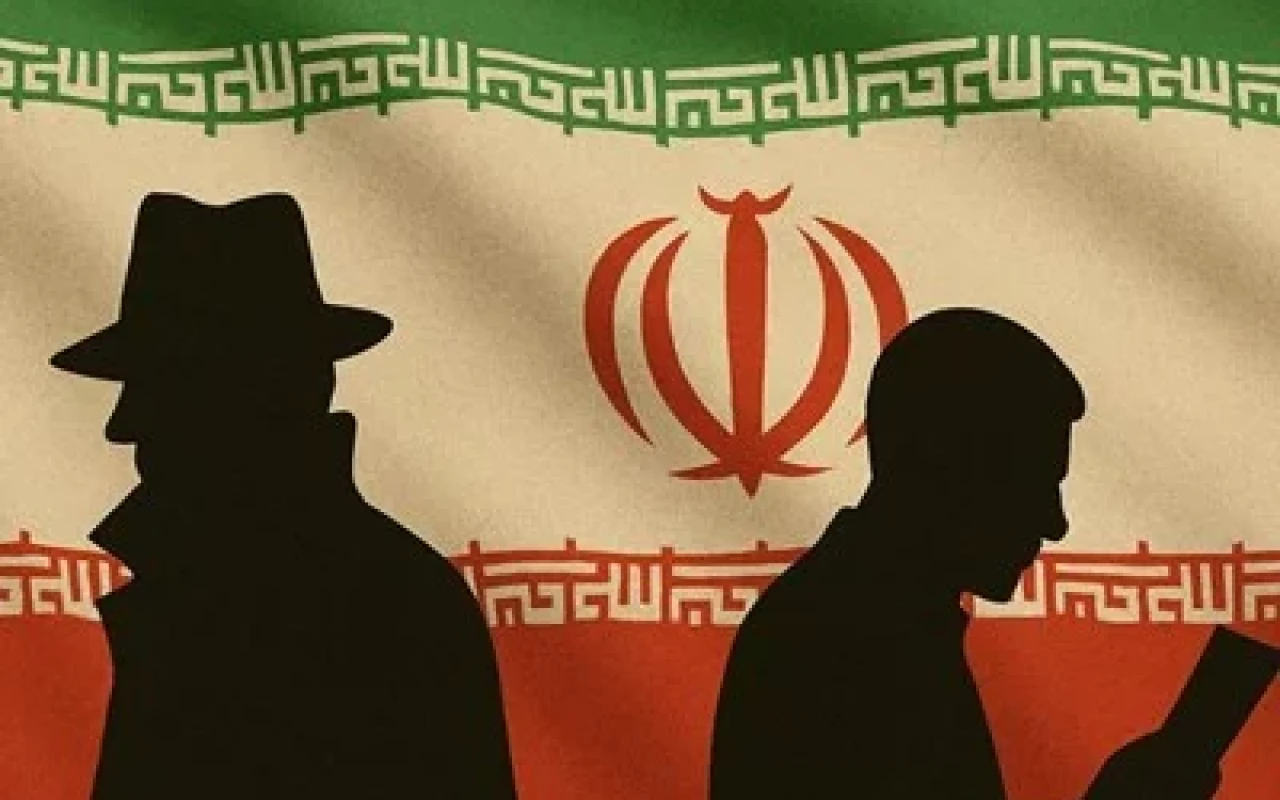
Executive Summary
Iran’s Public Security Police announced Sunday the arrest of 50 people across 16 provinces on espionage charges — the latest wave of a sweeping internal security purge that has now claimed over 500 people since Operation Epic Fury began on February 28. The detainees are accused of mapping military positions, identifying targets for precision missile strikes, and transmitting coordinates to foreign intelligence services. This special report examines who is being arrested, what they are accused of doing, the legal machinery being used against them, what the scale of the purge reveals about foreign intelligence penetration of Iran, and why it matters strategically.
500+
Total Arrested Since Feb 28
50
Arrested April 12 Wave
16
Provinces Swept
6
Executions for Espionage
☠
Death Penalty Applicable
43
Days Since War Began
🔴 Section One
What Happened — The April 12 Arrests
Iran’s Public Security Police, FARJA, announced Sunday a coordinated security operation spanning 16 Iranian provinces that resulted in 50 arrests on charges of espionage and collaboration with foreign enemies. According to the official police statement reported by Voice of Emirates, the detainees are accused of preparing and monitoring detailed maps of strategic and sensitive locations — including public infrastructure facilities, security checkpoints, and military troop deployment sites — with the stated purpose of facilitating combat operations by identifying “fixed and moving coordinates” for guiding precision missile and drone strikes.
During the raids, authorities confirmed the seizure of sophisticated electronic devices, satellite communication equipment, and in some cases weapons. Iranian state media outlets including SNN described the detainees as “mercenaries” working for the United States and Israel. All charges were filed under Iran’s newly strengthened wartime espionage law — under which those convicted of activities that harm national security face the death penalty and total asset confiscation.
Iranian authorities have not presented independent publicly verifiable evidence. Human rights organisations, including Amnesty International, have consistently documented Iran’s use of espionage and national security charges as a tool to suppress dissent, often without due process. These caveats apply to all Iranian government claims in this report. Strategy Battles reports the arrests as officially claimed — not as independently verified fact.
Iran’s Wartime Espionage Arrest Timeline — Confirmed Waves
- Early March 2026: 30 arrested — Iran Intelligence Ministry — “spies, domestic mercenaries and operational elements of the American-Zionist enemy” — multiple provinces — included one foreign national in Razavi Khorasan accused of collecting military intelligence for two unnamed Gulf states — Iran International
- Mid-March 2026: 20 arrested — West Azerbaijan province — accused of “sending details of military, law enforcement and security locations to the Zionist enemy” — Fars News Agency citing provincial prosecutor — Times of Israel
- Mid-March 2026: 54 arrested — alleged riot leaders and property attackers — 2 specifically accused of transmitting coordinates of sensitive locations to Mossad — 11 shot while resisting — 3 firearms, 76 bladed weapons, 1 grenade seized — New Arab
- Running total — Police Chief Radan: 500 arrested since February 28 — half involved “serious incidents” including target data transmission and filming of strike sites — Jerusalem Post
- April 12, 2026: 50 arrested — 16 provinces — missile target identification — satellite comms devices and weapons seized — FARJA official statement — Voice of Emirates
🟡 Section Two
How the Intelligence Network Allegedly Operated
What makes the April 12 arrests strategically significant is not the number alone — it is what they reveal about the alleged methodology. Based on Iranian official descriptions and wider reporting, the network does not appear to have been composed primarily of trained intelligence officers. It relied, in large part, on ordinary civilians recruited to conduct seemingly mundane surveillance tasks that collectively generated targeting intelligence of genuine operational value.
The tasks described by Iranian authorities are precise in their detail: photographing security checkpoints, filming troop deployment sites, recording the positions of Basij and IRGC units operating from residential buildings, mapping infrastructure facilities, identifying the locations of hidden command posts, and transmitting “fixed and moving coordinates” in real time for precision strike guidance. According to the statement cited by Voice of Emirates, even previously concealed positions — including what authorities described as special forces hideouts inside Azadi Stadium and IRGC units deliberately stationed in civilian buildings — had been identified and successfully targeted as a direct result of this ground-level intelligence collection.
According to Newsweek, some operatives arrested in previous waves received training abroad — in Georgia and Nepal — arranged by Israeli intelligence. Others were Iranian expatriates and diaspora figures who supported logistics, communications, and funding for in-country networks. An Economist report cited by Newsweek noted that Israeli intelligence had conducted a multi-year, high-technology espionage campaign inside Iran including Mossad operatives posing as foreign nationals. Iran International reported that Fars News Agency confirmed the seizure of more than 10,000 micro aerial vehicles in Tehran alone in previous sweep operations — a remarkable figure that underscores the scale of drone-based surveillance activity apparently underway inside the country.
“Israel has begun targeting security checkpoints based on tip-offs from informants on the ground — representing a new phase of its assault on Iran.”
— Source briefed on Israel’s military strategy, reported by New Arab citing Reuters
This shift from broad infrastructure targeting to precision targeting of mobile and semi-hidden assets is exactly what human intelligence on the ground enables. Satellite imagery can identify fixed targets — nuclear facilities, air bases, missile production plants. It cannot reliably locate a Basij unit that has moved into a residential building, or an IRGC commander sheltering in a sports stadium. For that level of targeting granularity, you need a person already inside the country, with a phone, providing coordinates in real time. That is what the arrested individuals are accused of providing — and the precision of strikes throughout Operation Epic Fury suggests the intelligence was operationally effective.
🔵 Section Three
The Legal Machinery — Death Sentences and Wartime Courts
Iran has constructed an entirely new legal architecture to process the volume of espionage arrests the war has generated. Parliament passed an emergency bill increasing penalties for espionage and collaboration with “hostile states,” allowing suspects to be tried under wartime conditions, according to Iran International. Judiciary chief Gholamhossein Mohseni-Ejei confirmed that those arrested in the context of the conflict would be prosecuted under “wartime legal provisions.” Special judicial branches have been established in provincial prosecutors’ offices across the country specifically to handle Israeli and U.S.-linked espionage cases on an “extraordinary” basis. The judiciary’s spokesperson stated publicly that existing espionage laws were “too general” and “inadequate” for the current caseload.
Under the new law, those convicted of espionage activities that harm national security face the death penalty, with all movable and immovable assets subject to confiscation. This is not a theoretical threat. Executions have already occurred. Iran executed three men convicted of espionage for Israel — Majid Mosayebi, Esmail Fekri, and Mohammad Amin Mahdavi-Shayesteh — bringing the confirmed total of espionage-related executions during the conflict to six, according to Iran International. All three were charged with smuggling “assassination equipment” and aiding sabotage operations targeting critical Iranian infrastructure.
Human Rights Context — Important Caveats
Amnesty International and the Norway-based Iran Human Rights organisation have condemned Iran’s intensifying crackdown, warning that many of those accused are denied due process, access to independent legal representation, and fair trials. Amnesty notes that Iran is the world’s second most prolific executioner after China, and has historically used espionage and national security charges to suppress political dissent without producing publicly verifiable evidence.
Iran Human Rights documented at least 223 people arrested on charges related to collaboration with Israel in a previous wave, cautioning that actual figures were likely significantly higher. Strategy Battles reports all Iranian government claims in this report as officially stated — not as independently verified facts. Readers should apply appropriate scepticism to casualty figures, equipment seizure claims, and accusations of espionage that have not been tested in independent legal proceedings.
🟢 Section Four
Strategic Assessment — What the Purge Reveals
The scale of Iran’s internal security response is itself the most revealing piece of open-source intelligence in this story. Five hundred arrests. Special wartime courts. Emergency espionage legislation. Six executions. Security sweeps spanning 16 provinces simultaneously on a single day. These are not the actions of a government confident in its internal security situation. They are the actions of a government that has discovered, in the middle of a war, that its territory has been penetrated more deeply than it previously understood — and that is now conducting an urgent and aggressive effort to close those gaps.
The admission embedded in these arrests is significant. When Iran’s police chief confirms that 250 of the 500 people arrested involved “serious incidents” including the provision of targeting data and the filming of strike sites, he is simultaneously confirming that those 250 people were successful enough to generate actionable intelligence — intelligence that translated into airstrikes on targets that would not otherwise have been locatable. The precision of U.S. and Israeli strikes throughout Operation Epic Fury — including the targeting of mobile IRGC units, the killing of commanders who were constantly relocating, the destruction of assets concealed inside civilian infrastructure — is more explicable in that context.
The new Supreme Leader Mojtaba Khamenei, who assumed the role under extraordinary circumstances after his father’s assassination on February 28, inherits an intelligence crisis that predates the current war but has been dramatically accelerated by it. The IRGC’s Intelligence Organisation — led until April 6 by Majid Khademi, himself killed in an Israeli precision strike on central Tehran — was the institution responsible for detecting exactly the kind of penetration these arrests now confirm. Khademi is dead. His predecessor was also killed by Israel. The organisation charged with protecting Iran from infiltration has now lost two consecutive chiefs to targeted assassinations, and the arrests of 500 people for espionage suggest the infiltration those chiefs were supposed to prevent had already gone very deep indeed.
The intelligence war inside Iran is not a sideshow to the air campaign. It is a central pillar of it. A strike force cannot identify and kill a commander who is constantly moving unless someone on the ground is tracking that movement. It cannot destroy a missile unit hiding in a residential building unless someone inside the country photographs it and transmits the coordinates. The 500 arrests Iran has now announced are a measure not of Iran’s security success — but of how extensive the foreign intelligence network inside Iran had become before the purge began. For every person arrested, the question Tehran’s security services must be asking is how many others they have not yet found.
Strategy Battles — Related Coverage
Editorial Verification
This report has been reviewed for factual accuracy and OSINT compliance. All Iranian government claims are reported as officially stated and clearly attributed. Human rights context is sourced to independent international organisations. Strategic analysis is the original assessment of Strategy Battles and does not represent the position of any government or intelligence agency.
Approved for Publication
Marcus V. Thorne
Lead Editor, Strategy Battles
Sources
- Voice of Emirates — Iran Arrests 50 People on Charges of Espionage and Identifying Military Targets for Missiles (April 12, 2026)
- New Arab — Iran Arrests Dozens for Alleged Espionage Amid Wartime Crackdown
- Jerusalem Post — Iran Arrests 500 Accused of Giving Information to Enemies, Police Chief Says
- Times of Israel — Iran Said to Arrest 20 People for Allegedly Cooperating with Israel
- Iran International — Iran Says It Arrested 30 People Accused of Spying for US and Israel (March 10, 2026)
- Newsweek — Inside Iran’s Spy Crisis: Who Helped Israel’s Attacks as 700 Arrested?
- TRT World — Iran Has Arrested 500 People on Espionage Charges Since Start of US-Israeli War
©StrategyBattles.net 2026
This article is for news and analysis purposes only. It is based on publicly available news sources and military updates. All rights reserved. Original reporting may come from various open sources. Not for commercial reuse without permission.