Iran Rejected Every U.S. Demand — Now Trump Has Ordered a Naval Blockade of the Strait of Hormuz
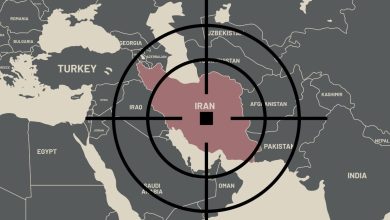
WASHINGTON / ISLAMABAD, April 12, 2026 — The Islamabad peace talks between the United States and Iran are over. Twenty-one hours of the most consequential direct U.S.-Iran diplomacy since 1979 ended without a deal on Sunday — and within hours President Donald Trump ordered the U.S. Navy to begin an immediate blockade of the Strait of Hormuz. The collapse was not a near miss. It was a head-on collision between two irreconcilable positions on every issue that mattered. Iran rejected every major American demand on the table. Trump responded by ordering control of the waterway through which roughly one fifth of the world’s daily oil supply passes. The Iran-Israel-U.S. war just entered a dangerous new phase.
The Islamabad Talks — What Happened
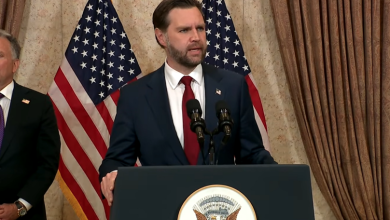
As Strategy Battles reported in detail in our full breakdown of the Islamabad negotiations — Islamabad Talks Collapse: Vance Says Iran Refused America’s Terms After 21 Hours of Negotiations — U.S. Vice President JD Vance led a senior delegation including Special Envoy Steve Witkoff and Jared Kushner through more than 21 hours of direct negotiations with Iranian officials in Islamabad. Pakistan’s Prime Minister Shehbaz Sharif and Army Chief General Asim Munir mediated throughout. The talks — the first face-to-face U.S.-Iran engagement since the 1979 Islamic Revolution — ended before dawn on Sunday with Vance walking out, boarding Air Force Two, and declaring that Iran had “chosen not to accept our terms.”
What those terms were — and why Tehran rejected every single one of them — is what this report documents in full.
What the U.S. Demanded — The Full List
A senior White House official revealed the complete set of American conditions to CNN following the collapse. The demands represented Washington’s bottom line on every front — the Iran nuclear deal negotiations of 2026, the Strait of Hormuz crisis, Iran’s proxy network, and the broader regional security architecture. Iran said no to all of them.
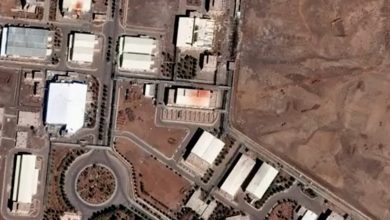
On nuclear weapons — the issue Vance called “the only point that really mattered” — Washington demanded a permanent and complete halt to uranium enrichment, the physical dismantlement of Iran’s key nuclear enrichment facilities, and the surrender of Iran’s stockpile of more than 400 kilograms of highly enriched uranium believed to be stored in underground sites. Iran refused to halt enrichment, refused to dismantle its facilities, and refused to hand over the uranium. It insisted on its right to continue its nuclear programme under international law.
On Iran’s regional proxy network — a defining feature of the Iran war 2026 strategic picture — Washington demanded permanent severance of all financial and logistical support to Hamas, Hezbollah, and the Houthi movement in Yemen. Iran rejected this outright, according to Kurdistan 24.
On the Strait of Hormuz — the global oil chokepoint that Iran has controlled since the war began and that sits at the heart of the Hormuz crisis 2026 — Washington demanded a full and unconditional reopening with no tolls or transit fees imposed on any vessels. Iran refused. Tehran had indicated it wished to maintain the right to charge vessels a transit toll as part of any permanent settlement — a position Washington described as extortion. On frozen Iranian financial assets, the two sides disagreed on how much Washington was prepared to release. And on a broader regional de-escalation framework, Iran would not accept American terms either.
Full U.S. Demand List — What Iran Rejected at Islamabad
- Nuclear enrichment: Permanent complete halt to all uranium enrichment — Iran refused
- Facility dismantlement: Physical destruction of key nuclear enrichment sites — Iran refused
- Uranium surrender: Handover of 400kg+ stockpile of highly enriched uranium — Iran refused
- Proxy funding: Permanent end to all support for Hamas, Hezbollah and the Houthis — Iran refused
- Strait of Hormuz: Full unconditional reopening with zero tolls on any vessels — Iran refused
- Frozen assets: Disagreement on amount to be released — no agreement reached
- Regional framework: Acceptance of a broader de-escalation agreement covering regional allies — Iran refused
Iran’s Position — America Made Excessive Demands
Tehran’s account of why the Iran-U.S. Islamabad talks failed is the mirror image of Washington’s. Iranian state broadcaster IRIB stated that “after 21 hours of talks and diplomatic efforts, the excessive demands by America prevented any agreement.” Foreign Ministry spokesman Esmaeil Baqaei acknowledged partial progress on some issues but said the gaps on two or three core topics were unbridgeable. Iran’s chief negotiator, Parliament Speaker Mohammad Bagher Qalibaf, said the U.S. had “failed to gain the trust of the Iranian delegation” — leaving a narrow door open by adding that “America has understood our logic and principles, and now it is time for it to decide whether it can earn our trust or not.”
Iran’s own demands had been equally ambitious. Tehran sought a guaranteed end to all U.S. and Israeli military operations, a halt to Israeli strikes on Hezbollah in Lebanon, the release of approximately six billion dollars in frozen assets, recognition of its right to continue its nuclear programme, and ongoing control over the Strait of Hormuz including the right to charge transit tolls permanently. The two sides were not working from the same page. They were reading from entirely different books.
“There is only one thing that matters — IRAN IS UNWILLING TO GIVE UP ITS NUCLEAR AMBITIONS. As I have always said — IRAN WILL NEVER HAVE A NUCLEAR WEAPON.”
— President Donald Trump, Truth Social, April 12, 2026, reported by CNBC
Trump Orders the Hormuz Blockade
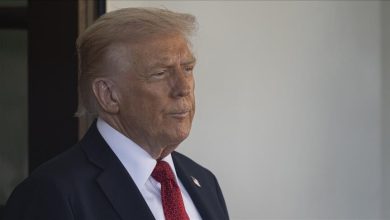
Washington’s response was immediate and military. Within hours of Vance’s departure from Islamabad, Trump posted on Truth Social: “Effective immediately, the United States Navy, the Finest in the World, will begin the process of BLOCKADING any and all Ships trying to enter, or leave, the Strait of Hormuz.” He added that he had instructed the Navy to “seek and interdict every vessel in International Waters that has paid a toll to Iran,” that U.S. forces would begin clearing Iranian sea mines from the waterway, and that any Iranian forces who fired on U.S. vessels or “peaceful vessels” would be “BLOWN TO HELL,” as reported by Al Jazeera.
The U.S. Navy had already sent two guided-missile destroyers — the USS Frank E. Petersen and USS Michael Murphy — through the Strait on Saturday, the first American warships to transit since the Iran war 2026 began on February 28, according to CBS News. U.S. Central Command confirmed both vessels had begun mine-clearing operations in the strait. Trump said other countries including the United Kingdom would send minesweepers to assist.
What a Hormuz Blockade Means for Global Oil
The Strait of Hormuz is the world’s most critical energy chokepoint. Approximately 20 percent of global oil supply and significant volumes of liquefied natural gas pass through it in normal conditions. The Hormuz oil crisis has already sent Brent crude to $109 per barrel — up more than 50 percent since the Iran-Israel war began. A U.S. naval blockade does not simply add pressure on Iran. It compounds the energy crisis for China, Japan, South Korea, Europe and every other country dependent on Gulf exports.
Karen Young, a senior scholar at Columbia University’s Centre on Global Energy Policy, warned on CNN that “if we have a blockade, we still have the problem of a shortage in the market of about 7 million barrels of crude, 4 million barrels of product not getting out — and we just added to that by making the Iranian barrels off the market.” She warned that elevated oil prices could persist well into late 2026 even after the conflict ends, given the scale of infrastructure damage and the time required to reopen and repair damaged facilities. Senator Mark Warner told CNN he could not understand “how blockading the strait is somehow going to push the Iranians into opening it.”
Analysis
The Islamabad talks failed because both sides came with maximalist positions and neither had sufficient reason yet to abandon them. Iran has survived 43 days of the most intensive air campaign since the Second World War. It still controls the Strait of Hormuz. It still holds its enriched uranium stockpile. Its proxy network is damaged but operational. From Tehran’s perspective that is not the position of a government that dismantles its nuclear programme and surrenders Hormuz control in a single meeting in Pakistan. From Washington’s perspective, a deal that leaves Iran’s nuclear infrastructure intact and the strait under IRGC control is not a deal — it is a strategic defeat dressed up as diplomacy. The naval blockade is Trump’s answer to that deadlock. Whether it generates the leverage needed to bring Iran back to the table on American terms, or whether it simply escalates a conflict already producing 3,700 deaths and $109 oil, is the central question of the coming days. The ceasefire technically remains in place. But a U.S. naval blockade of the Strait of Hormuz and a fragile ceasefire cannot coexist indefinitely. One of them will break first.
Strategy Battles — Related Coverage
Editorial Verification
This report has been reviewed for factual accuracy and cross-referenced against multiple verified international news sources. All U.S. government demands are sourced to named officials. Iranian positions are sourced to official spokespeople. Trump’s blockade announcement is verified against his published Truth Social post.
Approved for Publication
Marcus V. Thorne
Lead Editor, Strategy Battles
Sources
- Strategy Battles — Islamabad Talks Collapse: Vance Says Iran Refused America’s Terms After 21 Hours of Negotiations
- Kurdistan 24 — Iran Said No to Everything: The Full List of U.S. Demands That Broke the Islamabad Talks
- CNBC — Trump Says U.S. Will Blockade Strait of Hormuz After Iran Peace Talks Fail
- CBS News — Trump Says U.S. Will Blockade Strait of Hormuz and Intercept Ships That Paid Tolls to Iran
- Al Jazeera — Trump Orders Hormuz Blockade After U.S.-Iran Peace Talks End
- CNN — Live Updates: Iran War News, Trump Says U.S. Will Blockade Strait of Hormuz
©StrategyBattles.net 2026
This article is for news and analysis purposes only. It is based on publicly available news sources and military updates. All rights reserved. Original reporting may come from various open sources. Not for commercial reuse without permission.