Islamabad Talks Collapse Vance Says Iran Refused America’s Terms After 21 Hours of Negotiations
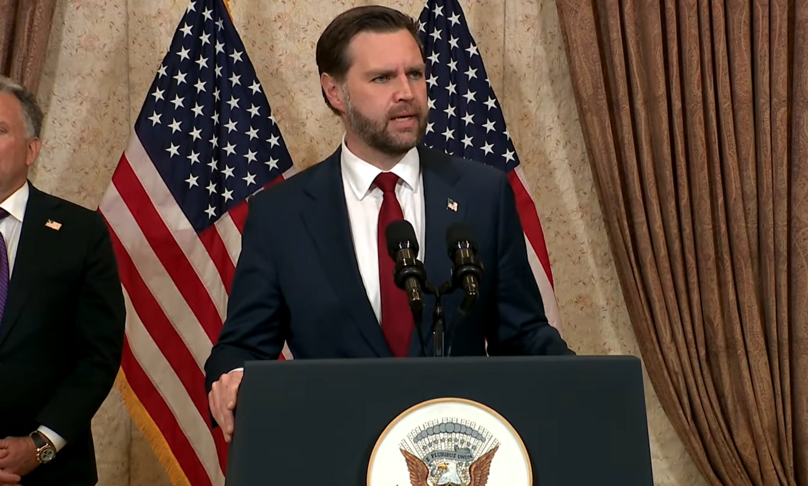
ISLAMABAD / WASHINGTON, April 12, 2026 — The most significant direct talks between the United States and Iran since the 1979 Islamic Revolution ended without a deal on Sunday morning, with U.S. Vice President JD Vance declaring that Tehran had refused to commit to abandoning its nuclear weapons programme and had “chosen not to accept our terms.” After 21 hours of negotiations in Islamabad, Pakistan — the first face-to-face meeting between the two governments in over four decades — Vance departed for Washington, leaving behind a fragile two-week ceasefire, an unresolved Strait of Hormuz crisis, and a fundamental divide between what Washington demands and what Tehran is prepared to give.
What Vance Said — and How He Said It
The four-minute press conference Vance gave at the Serena Hotel in Islamabad before boarding Air Force Two was terse, pointed, and carefully worded. He acknowledged the talks had been substantive but left no room for ambiguity about the outcome. “We have been at it now for 21 hours, and we have had a number of substantive discussions — that’s the good news,” Vance told journalists, according to Anadolu Agency. “The bad news is that we have not reached an agreement, and I think that’s bad news for Iran much more than it’s bad news for the United States of America.”
The central sticking point, according to Vance, was nuclear weapons. When asked by CNN’s Nic Robertson what terms Iran had rejected, Vance was direct: “The simple fact is we need to see an affirmative commitment that they will not seek a nuclear weapon and they will not seek the tools that would enable them to quickly achieve a nuclear weapon.” He added: “The question is, do we see a fundamental commitment of will for the Iranians not to develop a nuclear weapon, not just now, not just two years from now, but for the long term. We haven’t seen that yet. We hope that we will.”
Vance said the U.S. delegation was leaving behind its “final and best offer” — a method of understanding he described as still on the table. He praised Pakistani Prime Minister Shehbaz Sharif and Army Chief General Asim Munir for their mediation efforts, saying that “whatever shortcomings were in the negotiations were not because of the Pakistanis.” He then walked away from the podium, ignoring shouted questions about the Strait of Hormuz and whether the breakdown of talks meant war was resuming.
“The bad news is that we have not reached an agreement, and I think that’s bad news for Iran much more than it’s bad news for the United States of America.”
— U.S. Vice President JD Vance, press conference in Islamabad, April 12, 2026, as reported by Anadolu Agency
What Iran Said — a Different Account of the Same Talks
Iran’s account of why the talks failed is fundamentally different. Iranian state broadcaster IRIB, cited by NBC News, stated bluntly that “after 21 hours of talks and diplomatic efforts, the excessive demands by America prevented any agreement.” Iranian Foreign Ministry spokesman Esmaeil Baqaei published a detailed account of what was discussed, saying the two sides had covered “the Strait of Hormuz, the nuclear issue, war reparations, lifting of sanctions, and the complete end to the war against Iran and in the region,” according to CNN. Baqaei said the success of any future diplomatic process “depends on the seriousness and good faith of the opposing side, refraining from excessive demands and unlawful requests, and the acceptance of Iran’s legitimate rights and interests.”
Iran’s 10-point proposal ahead of the talks had called for a guaranteed end to the war, a halt to Israeli strikes on Hezbollah, compensation for damage caused by U.S.-Israeli strikes, release of Iran’s frozen assets, and crucially — continued Iranian control over the Strait of Hormuz rather than immediate unconditional reopening. The U.S. 15-point proposal, by contrast, demanded restrictions on Iran’s nuclear programme, a full reopening of the Strait, limits on Iranian missile capabilities, and an end to Iranian support for regional armed groups, according to Emirates 247. The gap between those two positions — on every major issue — is what 21 hours of negotiations failed to close.
Iran’s state-affiliated Fars News Agency reported that Tehran currently has “no plan for a next round of negotiations” and that “Iran is in no hurry, and until the US agrees to a reasonable deal, there will be no change in the status of the Strait of Hormuz.” The Foreign Ministry spokesman struck a slightly less definitive tone, however, saying that “diplomacy never comes to an end.”
The U.S. Delegation — Who Was in the Room
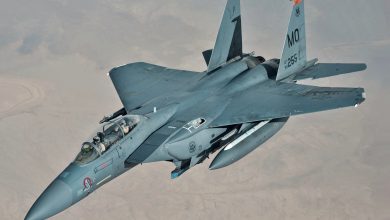
The U.S. team in Islamabad was unusually senior. Vance led the delegation alongside Special Envoy Steve Witkoff and Jared Kushner — a combination that represented a significant political investment by the Trump administration in reaching a deal, according to CBS News. The Iranian side was led by Foreign Minister Abbas Araghchi. Pakistan’s Prime Minister Shehbaz Sharif and Army Chief General Asim Munir served as intermediaries throughout, facilitating exchanges between the delegations. Pakistan even scrambled PAF fighter jets including JF-17s and F-16s to provide an escort for the Iranian delegation’s travel to Islamabad, according to Wikipedia’s documented record of the ceasefire process.
The talks were described by Baqaei as “the longest single negotiating session with the U.S. in the past year,” according to NBC News. Vance stayed in Pakistan beyond his original schedule, extending his visit to participate in what stretched into a second day of negotiations. The very fact that both sides remained at the table for 21 hours suggests the talks were more substantive than the final outcome implies — but not substantive enough to bridge the fundamental differences on nuclear weapons and Hormuz.
What Happens to the Ceasefire Now
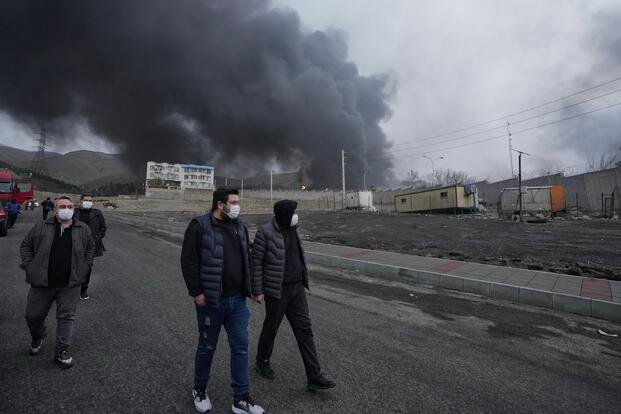
The breakdown of talks immediately cast doubt over the two-week ceasefire that began on April 7. As CNN noted, without a commitment from Iran to reopen the Strait of Hormuz, global energy supplies will continue to be constrained. Brent crude remains elevated. Hundreds of tankers remain anchored in the Persian Gulf, unable or unwilling to transit a waterway that Iran has mined and controlled since the war began 43 days ago.
The U.S. military, meanwhile, has not been idle during the ceasefire. Trump announced on Truth Social that all 28 of Iran’s mine-laying vessels had been sunk and that the U.S. was “starting the process of clearing out the Strait of Hormuz,” according to NBC News. U.S. Central Command confirmed that two guided-missile destroyers — USS Frank E. Petersen Jr. and USS Michael Murphy — had conducted mine-clearing operations in the Strait during the talks. Trump’s position, repeated throughout the day, was characteristically blunt: “We’ll see what happens. Look, regardless we win. Regardless what happens, we win. We totally defeated that country.”
Pakistan’s Foreign Minister Ishaq Dar urged both sides to maintain the ceasefire despite the failed talks, describing the 21-hour session as “intense and constructive” and calling on both parties to preserve the “positive spirit” of the negotiations, according to NBC News. Former State Department Middle East negotiator Aaron David Miller offered a more sober assessment to CNN, saying the Iranians “hold more cards than the Americans” and “are clearly in no hurry to make concessions,” suggesting Tehran appeared to be operating on a slower diplomatic timeline than Washington.
Analysis
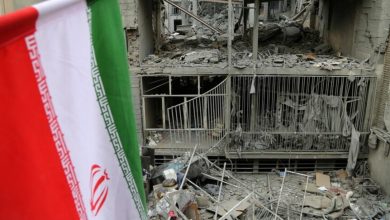
Twenty-one hours is a long time to talk and come away with nothing. It suggests both sides are serious enough to stay in the room but not serious enough — or not yet desperate enough — to make the concessions that a deal requires. Iran’s position is coherent if you understand it on its own terms: the regime survived 43 days of the most intensive air campaign since the Second World War, kept the Strait closed, killed 13 Americans, damaged 11 U.S. bases, and is still standing. From Tehran’s perspective that is not a position of weakness. It is a position from which you do not surrender your nuclear programme and your leverage over global oil supplies simultaneously in a single meeting in Islamabad. The U.S. position is equally coherent: Iran without a nuclear weapon and with an open Strait is the only acceptable outcome, and Washington will not pay for that with sanctions relief and war reparations that effectively reward 43 days of Iranian aggression. Both positions are rational. That is precisely why 21 hours was not enough — and why the ceasefire, for now, remains the only thing keeping the war from resuming.
Strategy Battles — Related Coverage
Editorial Verification
This report has been reviewed for factual accuracy and cross-referenced against official statements from both the U.S. and Iranian delegations, verified reporting from Anadolu Agency, CNN, NBC News, CBS News, and ABC News, and publicly available Iranian Foreign Ministry communications.
Approved for Publication
Marcus V. Thorne
Lead Editor, Strategy Battles
Sources
- Anadolu Agency — No Agreement Yet: US Vice President Vance Says Iran Has Chosen Not to Accept Our Terms (April 12, 2026)
- CNN — Day 43 of Middle East Conflict: Marathon US-Iran Talks in Pakistan (April 12, 2026)
- NBC News — No Agreement Between U.S. and Iran After 21 Hours of Talks, Vance Says
- CBS News — Vance Says No Deal Reached After Marathon Session of Direct Talks With Iranian and Pakistani Officials
- ABC News — Iran Live Updates: No Deal With Iran After 21-Hour Negotiations, Vice President JD Vance Says
- Emirates 247 — No Deal After 21 Hours of Iran Talks, Says U.S. Vice President JD Vance
©StrategyBattles.net 2026
This article is for news and analysis purposes only. It is based on publicly available news sources and military updates. All rights reserved. Original reporting may come from various open sources. Not for commercial reuse without permission.