Hormuz Flashpoint Day 66: US Sinks Six Iranian Boats as Ceasefire Fractures
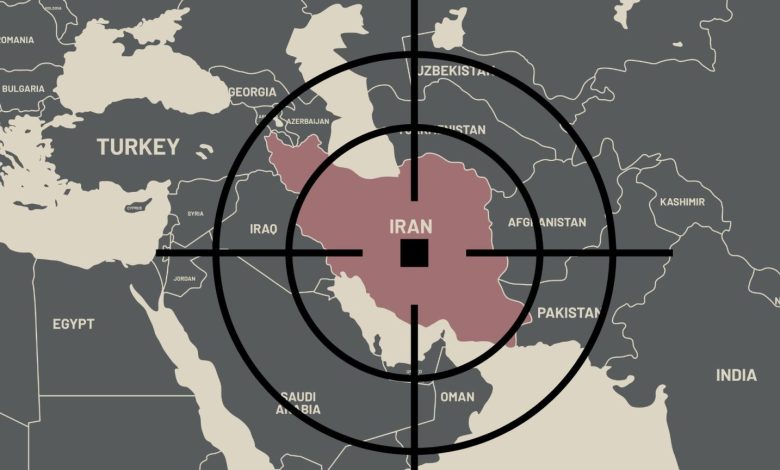
6 NATIONS
Targeted or struck 4-5 May
549+ BMs
Ballistic missiles fired at UAE since 28 Feb
DAY 66
2026 Iran War / ceasefire fraying
📍 Expanded Middle East Attack Map / 4-5 May 2026 / UAE, Bahrain, Kuwait, Qatar, Hormuz, Lebanon

Expanded Middle East attack map, 4-5 May 2026. All six targeted nations shown with MGRS references. Datum WGS84, Multi-UTM Zone. Map: Strategy Battles / OSINT.
📍 STRAIT OF HORMUZ
MGRS: 40RCT 53600 43800
26.55°N 56.30°E
Naval confrontation zone. 6 IRGC fast boats sunk; Iranian cruise missiles intercepted. Project Freedom Day 1: 2 ships transited. UTM Zone 40R.
📍 FUJAIRAH OIL ZONE, UAE
MGRS: 40RCT 54200 27800
25.12°N 56.34°E
Drone penetrated air defences, ignited fire at oil facility. 3 Indian nationals wounded. 12 ballistic missiles + 3 cruise missiles + 4 drones intercepted by UAE defence systems. UTM Zone 40R.
📍 MANAMA, BAHRAIN
MGRS: 39RVR 59400 88400
26.07°N 50.55°E
Bahrain declared the renewed strikes “a dangerous escalation.” Home of US Navy 5th Fleet HQ, previously struck multiple times since Feb 28. UTM Zone 39R. Cross-check: Manama airport 39RVR 56900 86600.
📍 KUWAIT CITY, KUWAIT
MGRS: 38RNV 89500 25100
29.37°N 47.97°E
Kuwait condemned Iran’s “reprehensible aggression” and separately condemned the drone strike on an Emirati tanker in the Strait of Hormuz. Kuwait’s oil installations and airport have been targeted throughout the war. UTM Zone 38R.
📍 AL UDEID AB / DOHA, QATAR
MGRS: 39RXP 63200 00600
25.30°N 51.18°E
Qatar condemned the UAE strikes and announced school closures. Al Udeid hosts the largest US air base in the Middle East, previously struck by Iranian missiles with no casualties. UTM Zone 39R.
📍 BINT JBEIL, SOUTH LEBANON
MGRS: 36SYC 64200 57900
33.12°N 35.43°E
Active IDF vs Hezbollah ground combat. IDF 98th Division near full control. UTM Zone 36S. Cross-check: Tyre 36SYC 57100 59900.
🔴 Breaking: Multi-Nation Strikes
The six-country barrage: what Iran hit and where
The escalation triggered by Project Freedom was not a bilateral US-Iran confrontation in isolation. As US forces moved to open the Strait of Hormuz at grid reference 40RCT 53600 43800 (26.55°N, 56.30°E), Iran simultaneously opened a wider barrage against its Gulf Arab neighbours. The UAE, Bahrain, Kuwait, Qatar, Saudi Arabia, and Israel were all drawn into the attack envelope on 4 and 5 May 2026, marking one of the broadest single-day escalation events since the opening week of the war on 28 February. The coordinated nature of the strikes underlined Iran’s consistent doctrine throughout this conflict: any unilateral US action to break the Hormuz closure would be met with pressure applied across the entire region simultaneously.
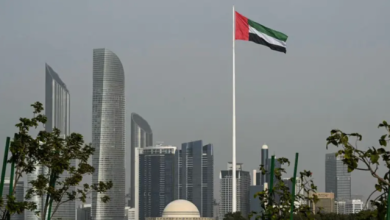
The UAE bore the heaviest weight of the renewed barrage. Gulf News reported that Emirati air defence systems intercepted 12 ballistic missiles, 3 cruise missiles, and 4 drones launched from Iran on 4 May alone. Since the war began on 28 February, the UAE’s systems have dealt with a cumulative total of 549 ballistic missiles, 29 cruise missiles, and 2,260 drone attacks according to the UAE Ministry of Defence. One drone penetrated the defences and struck the Fujairah Oil Industry Zone at 40RCT 54200 27800 (25.12°N, 56.34°E), igniting a fire and wounding three Indian nationals. All UAE schools and nurseries switched to remote learning from 5 May until 8 May. CNN separately reported that Israel had secretly deployed an Iron Dome air defence system to assist UAE defences, a significant escalatory signal of the deepening Israel-UAE security relationship established only six years ago.
UAE Foreign Ministry : Statement on X, 4 May 2026
“Targeting commercial navigation and using the Strait of Hormuz as a tool of pressure or economic blackmail constitutes acts of piracy by the Iranian Revolutionary Guard and poses a direct threat to the stability of the region.”
🔴 Bahrain, Kuwait, Qatar
The wider Gulf in Iran’s crosshairs
Bahrain, host to the US Navy’s 5th Fleet headquarters in the Juffair district at grid reference 39RVR 59400 88400 (26.07°N, 50.55°E), condemned the renewed Iranian escalation as “a dangerous escalation that threatens the security and stability of the region.” Bahrain has been one of the most intensely targeted of the Gulf states throughout the war, having absorbed 132 ballistic missiles and 234 drones before mid-March alone according to open-source tracking. The 5th Fleet, which coordinates all US naval operations in the region including the Project Freedom convoy escorts, remains on elevated readiness.
Kuwait, at grid reference 38RNV 89500 25100 (29.37°N, 47.97°E), issued a sharp condemnation, calling Iran’s actions “reprehensible aggression” and separately condemning the drone attack on an Emirati oil tanker in the Strait of Hormuz. Kuwait’s oil infrastructure and airport have been targeted repeatedly since 28 February, with one child already killed by drone debris earlier in the conflict. Kuwait’s oil installations host critical Kuwaiti Petroleum Corporation facilities that Iran has repeatedly targeted as part of its strategy of applying economic pain to US-aligned Gulf states. Qatar at Al Udeid Air Base, MGRS 39RXP 63200 00600 (25.30°N, 51.18°E) condemned the UAE attacks strongly, closed its own schools, and expressed solidarity with Abu Dhabi. Qatar, despite hosting the US’s largest Middle East air base and being previously struck by Iranian missiles, has walked a particularly delicate line as a mediator-adjacent state throughout the war.
Saudi Arabia joined the condemnation chorus, expressing full support for the UAE’s right to “preserve its sovereignty, security and territorial integrity,” while also calling for de-escalation. Riyadh’s Foreign Ministry condemned Iran’s targeting of “civilian and economic facilities” in the UAE. Jordan’s Foreign Minister Ayman Safadi condemned what he described as a “brutal attack” in a direct call with UAE Foreign Minister Sheikh Abdullah bin Zayed, according to Jordan’s official Petra news agency. European Commission President Ursula von der Leyen called Iran’s strikes on the UAE “a clear violation of sovereignty and international law,” adding that security in the Gulf “has direct consequences for Europe.” Canada, Germany, and the UK also issued condemnations and urged Tehran to return to the negotiating table.
Kuwait Ministry of Foreign Affairs : Statement, 4 May 2026
“The use of drones in this hostile act represents a direct threat to the safety of maritime navigation and the security of international waterways.”
🔵 Hormuz Naval Confrontation
Project Freedom meets Project Deadlock: what the numbers reveal
At the Strait of Hormuz, grid reference 40RCT 53600 43800 (26.55°N, 56.30°E), CENTCOM commander Admiral Bradley Cooper confirmed that two American-flagged merchant vessels completed the first transit under Project Freedom on 4 May, protected by guided-missile destroyers, more than 100 aircraft, armed helicopters, drone assets, and 15,000 personnel. Six Iranian fast attack boats attempting to interdict the commercial ships were sunk by US helicopter gunfire. Iranian cruise missiles fired at the US destroyers and merchant vessels were shot down. A South Korean-operated vessel anchored in the strait reported an explosion and fire, with no injuries confirmed. Two additional cargo vessels were reported ablaze off UAE waters by the British Maritime Trade Operations Centre.
On 5 May, Defense Secretary Pete Hegseth and Chairman of the Joint Chiefs General Dan Caine told a Pentagon news conference that the ceasefire remained in effect, with Caine describing Tuesday as a “quieter” day. Hegseth stated the Iranian attacks had not reached “major combat operations” threshold. The US-approved transit route runs through Omani territorial waters to the south rather than Iran’s northern corridor, where the IRGC vets ships and, according to US officials, extracts payments. Iran’s IRGC denied any commercial ships had successfully transited. Risk analyst Torbjorn Soltvedt of Verisk Maplecroft summarised the commercial reality with precision: the initiative alone was not going to open Hormuz, because the insurance market must also believe the strait is safe. Iran’s parliament speaker Mohammad Bagher Qalibaf separately signalled Tehran had not yet “fully responded” to the US Hormuz operation, suggesting further escalation remained on the table.
🟡 Lebanon: Bint Jbeil and the Disputed Ceasefire
Ground combat continues while diplomacy circles
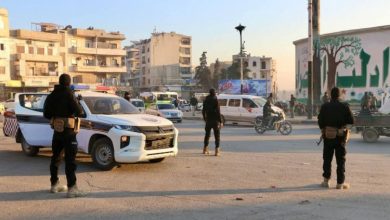
Southern Lebanon remained a live combat zone. At Bint Jbeil, grid reference 36SYC 64200 57900 (33.12°N, 35.43°E), the IDF’s 98th Division reported near full control of the town following sustained urban combat against Hezbollah. Hezbollah continued to claim ongoing clashes and drone and rocket launches into northern Israel, with each side accusing the other of violating the 16 April Lebanon truce framework. Lebanon’s own government banned Hezbollah’s military activities and demanded the group place its weapons under state control, while simultaneously condemning Israel’s occupation and offensive operations south of the Litani River. Israel and the US maintain the ceasefire does not cover Lebanon; Pakistan and Iran insist it does. That contradiction has never been resolved and continues to fuel fighting that has now killed more than 2,500 people in Lebanon and 40 in Israel from Iranian and Hezbollah strikes since the war’s start.
🟢 Diplomacy
Iran’s 14-point proposal and the dual-track reality
Through Pakistan’s mediation, Iran submitted a 14-point peace proposal to Washington, calling for war termination on all fronts including Lebanon, US military withdrawal from the surrounding region, sanctions removal, release of frozen assets, and a new Hormuz transit mechanism. Iran’s Foreign Minister Araghchi confirmed the US had responded, while also declaring that “Project Freedom is Project Deadlock” and warning both the US and UAE against being “dragged back into a quagmire.” Trump publicly described Iran’s proposal as unlikely to be acceptable, before he had reviewed it. The ceasefire, extended indefinitely on 21 April, remains formally in place according to US officials, even as ships are fired upon and oil facilities burn. Iran’s parliament speaker Qalibaf warned that Iran had not yet fully responded to Project Freedom, a statement widely read as a threat of further escalation if Washington pushes the Hormuz operation beyond its current limited scope.
⚠ SINGLE SOURCE: Iran 14-point proposal details via Tasnim / Iranian state media only. Independent confirmation pending.
Strategy Battles Assessment
Iran is not fighting the US: it is fighting the entire US-aligned Gulf order simultaneously
The most important strategic fact to emerge from 4-5 May is not the Hormuz confrontation itself but the simultaneity of the broader barrage. Iran struck the UAE and signalled Kuwait, Bahrain, Qatar, and Saudi Arabia in the same operational window as the Hormuz confrontation. This is not coincidence. Iran’s consistent doctrine since 28 February has been to make the entire Gulf-based US military and economic architecture feel the cost of the war, not just the two direct combatants. By pressing the UAE, Kuwait, Bahrain, Qatar, and Saudi Arabia simultaneously, Iran is doing something specific: it is trying to erode US basing rights across the region and make Gulf governments calculate whether their alignment with Washington is worth the sustained damage to their infrastructure, economies, and populations.
The Iron Dome deployment to the UAE, confirmed by CNN citing Axios, is the most significant counter-move in this layer of the conflict. It signals that the Israel-UAE Abraham Accords relationship has now produced a direct military security guarantee in conditions of live war, a development with consequences that will outlast this specific conflict regardless of how the ceasefire resolves. It also tells Iran that its strategy of pressuring the Gulf states is being countered not just by American air defences but by Israeli ones, extending Israeli military reach into the Gulf in a manner that would have been unthinkable five years ago.
On the diplomatic track, Iran’s 14-point proposal and continued firing in the same 24-hour window is the clearest possible signal that Tehran is trying to establish the most advantageous negotiating position before accepting any deal. Qalibaf’s warning that Iran has not yet fully responded to Project Freedom is the critical variable to watch. If Iran escalates further at Hormuz, specifically against a US warship rather than commercial vessels, the ceasefire fiction collapses entirely and the US faces a decision about whether to resume the full war or accept an effectively closed strait as a permanent feature of the settlement. The next 72 hours at the strait are the most consequential of this conflict since the ceasefire was declared on 8 April.
Strategy Battles Related Coverage
Editorial Verification
UAE attack details (12 BMs + 3 cruise + 4 drones intercepted; Fujairah oil zone fire, 3 WIA; 4 shelter alerts; schools closed): verified Gulf News, The National (UAE), CNN, NPR, AP, CBS News (4-5 May 2026). UAE cumulative strike totals (549 BMs, 29 cruise, 2,260 UAVs): UAE Ministry of Defence via Gulf News. Bahrain condemnation “dangerous escalation”: verified CNN and Al Jazeera. Kuwait condemnation and tanker attack in Hormuz: Kuwait MFA statement via Gulf News. Qatar school closures and condemnation: CNN and Gulf News. Saudi Arabia condemnation and de-escalation call: CBS News, Al Jazeera, AP/AFP. Jordan FM Safadi call: Jordan Petra news agency via Al Jazeera. EU Commission President von der Leyen statement: Gulf News. Iron Dome to UAE: CNN citing Axios. Hegseth and Caine “ceasefire not over”: NPR, 5 May 2026. Qalibaf “not yet fully responded”: NPR, 5 May 2026. Bint Jbeil IDF 98th Division: CBS News and Wikipedia Lebanon war timeline. Iran 14-point proposal: Tasnim/Iranian state media only, purple tag applied. Araghchi “Project Deadlock”: CNN and CBS News verified.
MGRS datum: WGS84 / UTM Zones: 40R (Hormuz, Fujairah), 39R (Bahrain, Qatar), 38R (Kuwait), 36S (Bint Jbeil) / Cross-check references: Manama Airport 39RVR 56900 86600 / Tyre Lebanon 36SYC 57100 59900.
All claims independently attributed and verified to open sources where possible.
Approved for Publication
Marcus V. Thorne
Lead Editor, Strategy Battles
©StrategyBattles.net 2026
This article is for news and analysis purposes only. Based on publicly available news sources and military updates. All rights reserved. Not for commercial reuse without permission.