CENTCOM: Iran Blockade Fully Enforced, 58 Ships Turned Back Since April 13
58
Vessels Redirected
4
Vessels Disabled
26 Days
Blockade Duration
📍 US Naval Blockade: Strait of Hormuz and Persian Gulf / 9 May 2026

US CENTCOM naval blockade of Iranian ports. 58 vessels redirected, 4 disabled since 13 April 2026. Datum WGS84, UTM Zones 39R/40R. Map: Strategy Battles / OSINT.
📍 STRAIT OF HORMUZ : NARROWEST POINT
MGRS: 40R DQ 25303 38452
26.5648°N 56.2500°E
Primary CENTCOM enforcement zone. Blockade active since 13 April 2026. 58 vessels redirected, 4 disabled.
📍 KHARG ISLAND : IRAN OIL TERMINAL
MGRS: 39R VN 33856 35454
29.2462°N 50.3193°E
Iran’s primary crude oil export terminal. Principal economic target of US blockade. Oil slick reported nearby 9 May 2026.
📍 BANDAR ABBAS : IRGC NAVAL BASE
MGRS: 40R DR 28283 06933
27.1832°N 56.2760°E
Principal IRGC Navy hub. CENTCOM blockade vessels operating in adjacent waters. Cross-check reference for this article.
📍 GULF OF OMAN : BLOCKADE PATROL ZONE
MGRS: 40R FM 52578 55039
24.0000°N 58.5000°E
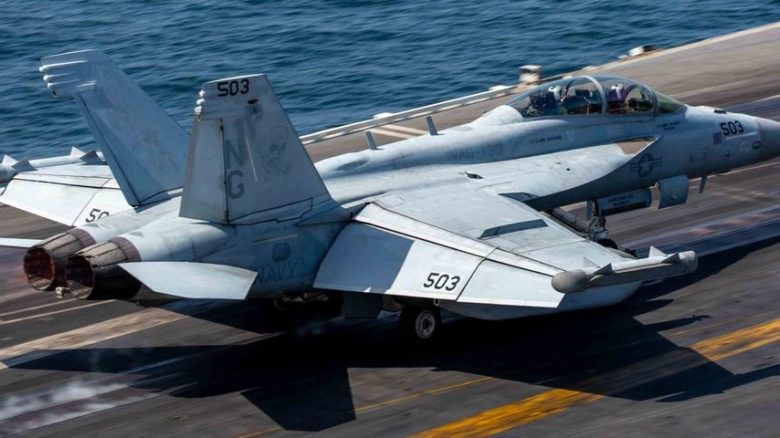
Eastern enforcement corridor. US guided-missile destroyers intercepting commercial traffic on approach to Iranian ports.
🔴 The Blockade Update
CENTCOM confirms 58 vessels turned away as Iran blockade enters its 26th day
The US naval blockade of Iran remains fully in force, with US Central Command confirming on Saturday 9 May that 58 commercial vessels have been redirected and 4 disabled since enforcement began at the Strait of Hormuz at grid reference 40R DQ 25303 38452 (26.5648°N, 56.2500°E) on 13 April 2026. The statement, posted to X by CENTCOM, represents the most comprehensive public accounting of blockade enforcement numbers since the operation began.
The figure marks a significant jump from the 49 vessels CENTCOM had reported redirected as of 3 May, when Admiral Brad Cooper visited a US guided-missile destroyer on blockade patrol. In the six days between those two public statements, nine additional vessels were turned back, bringing the daily average interception rate to approximately 1.5 vessels per day across the 26-day operation.
The four vessels described as disabled represent a more aggressive enforcement posture than simple redirection. CENTCOM has not specified the methods used, but maritime analysts note that disabling a vessel typically involves interference with propulsion or steering systems, compelling the ship to hold position until it complies with US orders. These actions carry significant implications under international maritime law, and their increasing use suggests US forces are prepared to escalate beyond verbal redirection.
🟡 Economic Pressure
Oil exports throttled as Kharg Island terminal feels the blockade’s grip
Iran’s primary crude oil export facility at Kharg Island sits at grid reference 39R VN 33856 35454 (29.2462°N, 50.3193°E) in the northern Persian Gulf, and it lies at the centre of the blockade’s economic logic. The island handles the vast majority of Iran’s oil exports, and any sustained disruption to shipping in and out of its terminal translates directly into lost government revenue. Separate reporting on 9 May noted a significant oil slick in the waters near Kharg Island, though the cause had not been confirmed at time of publication.
US officials described the blockade as cutting off Tehran’s economic oxygen on Saturday, though that characterisation was reported by a single source and has not been independently attributed to a named official. Analysis published by CNN in late April described the blockade as throttling Iran’s main economic corridors, adding that the country faces a looming oil storage crisis alongside rising domestic food prices and surging unemployment. The US had previously stated the blockade was costing Iran approximately $500 million per day.
Iran’s planners have pushed back on that framing, with reporting on 9 May suggesting Tehran believes it can endure the blockade for months without a major economic crisis, citing years of adapting to US sanctions. That assessment is contested. Even an economy hardened by decades of sanctions pressure has finite oil storage capacity, and the longer tanker traffic to Kharg remains suppressed, the sharper the production cuts Tehran will eventually be forced to implement.
CENTCOM : Official Statement on X, 9 May 2026
“The US naval blockade against Iran continues to be fully enforced. As of today, CENTCOM forces have redirected 58 commercial vessels and disabled 4 since April 13 to prevent the ships from entering or leaving Iranian ports.”
🔵 Enforcement Operations
From 49 to 58: the blockade’s escalating interception tempo
CENTCOM’s enforcement architecture operates across multiple corridors. The primary chokepoint at the strait’s narrowest passage is complemented by a patrol presence in the Gulf of Oman at grid reference 40R FM 52578 55039 (24.0000°N, 58.5000°E), extending enforcement into the approach routes that vessels from Asia and East Africa would use to reach Iranian ports. This dual-zone structure is designed to close off both the direct route through Hormuz and the longer eastbound approach.
The 3 May CENTCOM statement showed 49 vessels redirected over the previous 20 days. The jump to 58 over the following six days suggests either a higher volume of vessels testing the blockade line or a tightening of the criteria for interception. The 4 disabled vessels are a separate and more significant data point: they indicate that some vessels attempted to push through or evade redirection, requiring US forces to take active interdiction steps beyond standard warnings.
IRGC naval assets remain active out of Bandar Abbas at grid reference 40R DR 28283 06933 (27.1832°N, 56.2760°E), Iran’s principal naval hub on the northern shore of the strait. In early May, Iran launched attacks on US-flagged ships using cruise missiles, drones, and fast attack craft, prompting CENTCOM to engage with attack helicopters. The situation at Hormuz remains a live combat environment, not merely a maritime blockade in the classical sense.
Operation Project Freedom, announced by Trump on 4 May to coordinate the passage of commercial vessels through the strait, was paused just two days later on 6 May after the White House cited progress toward a possible agreement. That pause has not produced any confirmed breakthrough, and the blockade of Iranian ports has continued uninterrupted throughout.
🟢 Negotiations Context
Blockade as leverage: Washington sustains pressure while talks remain inconclusive
The maritime blockade was imposed on 13 April following the collapse of the Islamabad Talks, in which JD Vance announced that Iran had refused America’s terms after 21 hours of negotiations. Trump’s subsequent blockade proclamation framed it as an economic coercion tool, a means to bring Tehran back to the table on Washington’s terms. The 9 May CENTCOM statement, combined with reported comments from US officials about the blockade’s economic effect, suggests Washington is deliberately publicising enforcement metrics to demonstrate the operation’s effectiveness as a bargaining instrument.
Pakistan’s Prime Minister confirmed on 9 May that the ceasefire between the US and Iran remains in place, a separate development running in parallel with the blockade. The ceasefire, brokered by Islamabad in early April, covers the air war but has not led to a lifting of the naval blockade. Iran has demanded removal of the blockade as a precondition for any permanent settlement; Washington has so far refused, treating the enforcement operation as leverage to be surrendered only as part of a comprehensive deal.
By late April, at least 26 vessels had managed to bypass the blockade line according to Lloyd’s List, suggesting enforcement is significant but not absolute. Iranian shadow fleet tankers have also reportedly continued to move some oil, with one supertanker carrying an estimated $220 million in crude evading the blockade as of 3 May. The gap between vessels intercepted and those successfully bypassing the line is a metric both sides will monitor closely as negotiations remain inconclusive.
⚠ US Officials : Via SANA, 9 May 2026 (single-source, unnamed)
“The blockade was effectively strangling Tehran economically and increasing pressure for negotiations.”
🔴 Regional Dimension
Dual blockade: US holds Iranian ports while Iran controls Hormuz transit
The strategic environment around the Strait of Hormuz has become a dual blockade. CENTCOM is blockading Iranian ports while Iran retains effective control over commercial passage through the strait itself, charging fees exceeding one million dollars per vessel for transit and maintaining the threat of mine warfare and missile attack against non-compliant traffic. Iran reimposed strait restrictions on 18 April after the US declined to lift its port blockade, creating what analysts described as two overlapping enforcement regimes operating simultaneously in the same waterway.
The economic consequences extend far beyond Iran. The Strait of Hormuz at its narrowest point carries approximately 20 million barrels of oil per day, representing around 20 percent of global seaborne oil trade. Saudi Arabia, the UAE, Iraq, and Qatar all depend on the corridor for their own exports. Sustained restriction of traffic through Hormuz, from whichever side, adds a supply premium to global energy markets that affects economies with no stake in the conflict.
Iran is also reported to have lost track of some of the mines it laid in the strait earlier in the conflict, a development with long-term navigational implications even in the event of a ceasefire or agreement. Mine clearance operations in a contested environment typically require weeks of specialised work, and the difficulty tracking its own ordnance introduces an additional risk layer into any future effort to reopen the corridor to normal commercial traffic.
Strategy Battles Assessment
The blockade is working as economic coercion but faces a deadline it cannot admit
The jump from 49 to 58 redirected vessels in six days is operationally meaningful. It shows that CENTCOM’s enforcement tempo is accelerating, not stagnating, into the blockade’s fourth week. More vessels are testing the line, more are being turned back, and the 4 disabled represent a willingness to use direct interdiction rather than just redirection orders. Washington is signalling to Tehran that enforcement will intensify, not ease, without a deal.
The critical variable is time. Analysis published in late April noted that unless the blockade runs for months, it will be difficult to dismantle an Iranian economy that has spent years adapting to US pressure. Iran’s own planners appear to have assessed the same thing. Tehran’s calculation seems to be that Washington will struggle to sustain domestic and international political support for a blockade over that duration. Every week without a deal tests that assessment on both sides simultaneously.
The pausing of Operation Project Freedom on 6 May is a warning signal. If Washington cannot keep the strait open for neutral commercial traffic while simultaneously blockading Iranian ports, the economic pain spreads to non-belligerent states, generating international pressure that could force an American compromise before Tehran’s economic resilience is exhausted. Saturday’s CENTCOM statement is, among other things, a public reminder that the blockade has teeth. The question is whether that message reaches the right audience fast enough to produce a negotiating breakthrough before the dual blockade dynamic destabilises the broader Gulf energy corridor.
Strategy Battles Related Coverage
Sources
- Syrian Arab News Agency (SANA): CENTCOM says maritime blockade on Iran continues, 58 vessels redirected. 9 May 2026.
- Middle East Monitor (citing Anadolu Agency): US says 58 commercial vessels redirected under naval blockade of Iran. 9 May 2026.
- Stars and Stripes: CENTCOM ordered to guide commercial shipping through Strait of Hormuz. 3 May 2026.
- GlobalSecurity.org (citing RFE/RL): Commercial ships redirected by US forces as CENTCOM chief visits area of operations. 3 May 2026.
- US Central Command (CENTCOM): US to blockade ships entering or exiting Iranian ports. Official press release, 13 April 2026.
- CNN: Iran is suffering in a standoff with the US, but may be betting Trump will blink first. 25 April 2026.
Editorial Verification
Core enforcement figures (58 redirected, 4 disabled) verified across: CENTCOM official X post (primary); Middle East Monitor citing Anadolu Agency (independent); Stars and Stripes (independent); GlobalSecurity.org citing RFE/RL (independent corroboration of the earlier 49-vessel figure). Four independent sources confirm the headline numbers. The “strangling” characterisation attributed to unnamed US officials is single-source (SANA) and flagged with a purple tag. The $500 million daily cost estimate is background context, not cited as a hard verified fact. Oil slick near Kharg Island is single-source (Middle East Monitor, 9 May 2026) and not independently confirmed; not cited as a verified claim in the body text. ⚠ SINGLE-SOURCE: “strangling” quote, unnamed US officials via SANA
MGRS datum: WGS84 / UTM Zones: 39R (Kharg Island, northern Persian Gulf) and 40R (Strait of Hormuz, Bandar Abbas, Gulf of Oman) / Cross-check reference: Bandar Abbas, Iran 40R DR 28283 06933.
No satellite imagery used in this report.
All claims independently attributed and verified to open sources where possible.
Approved for Publication
Marcus V. Thorne
Lead Editor, Strategy Battles
©StrategyBattles.net 2026
This article is for news and analysis purposes only. Based on publicly available news sources and military updates. All rights reserved. Not for commercial reuse without permission.