RSF Commander ‘Savannah’ Arrives in Khartoum After Defecting, Deepening Sudan Paramilitary Crisis
Threat Level Assessment
LEVEL 3 OF 5, DEVELOPING
Bottom Line Up Front
Brigadier General Ali Rizqallah, known as “Savannah,” arrived in Khartoum on or around 16 May 2026, days after announcing his departure from the Rapid Support Forces in a video posted on 11 May. His arrival effectively confirms he has joined the Sudanese Armed Forces, making him the third senior RSF commander to defect since October 2024. Multiple independent outlets confirm the defection was preceded by a covert journey from Darfur in which Rizqallah evaded RSF checkpoints, and analysts say Sudanese army intelligence orchestrated the crossing through sting operations and financial incentives. The RSF has dismissed him publicly but faces a structural problem: each defection strips tribal and command legitimacy from a force that depends on both.
Key Judgments
Savannah’s arrival in Khartoum constitutes a de facto alignment with the Sudanese Armed Forces regardless of his public framing. Five independent outlets confirm the defection video of 11 May 2026. The National and Sudan Tribune both report he reached Khartoum after a covert overland journey from Darfur. No contrary account from any credible source places him still within RSF command structures.
The defection wave is institutionally organised rather than spontaneous. The National reports analyst Sami Saeed describing patient sting operations by Sudanese military intelligence combined with financial incentives. The pattern across all three defections since 2024 shows pre-war ties between senior commanders being exploited, coordinated covert exfiltration routes, and rapid integration of defectors into the army’s active order of battle. This is not individual conscience; it is a structured campaign.
Whether the defection rate will inflect RSF battlefield capability in Darfur and Kordofan in the near term. Analysts interviewed by The National caution that the RSF retains control of the entire Darfur region and continues long-range drone strikes as far as Port Sudan and Khartoum. Field cohesion and tribal loyalty in the RSF’s Darfuri Arab heartland remain intact. Defections that demoralise do not automatically degrade operational output.
3
Senior RSF Defections Since Oct 2024
4+
Years of War, Since Apr 2023
14M+
Displaced Since Apr 2023
9
Kaikal Family Members Killed, RSF Drone Reprisal
📍 RSF Command Defection Map / Sudan / May 2026

RSF command defection geography, Oct 2024 to May 2026. Dashed amber line shows Savannah’s approximate covert overland route from East Darfur to Khartoum. Datum WGS84, UTM Zone 36P (Sudan east) / 35P (Sudan west). Map: Strategy Battles / OSINT.
📍 KHARTOUM CITY CENTRE, SUDAN
MGRS: 36P VC 05279 01375
15.5007°N 32.5599°E
Sudanese capital. Savannah’s declared destination after departing Darfur. Army General Command is based here. Cross-check reference for MGRS grid orientation.
📍 ED DAEIN, EAST DARFUR
MGRS: 35P MN 00597 06764
11.4660°N 26.1380°E
Approximate area of Savannah’s prior command in East Darfur. RSF-held territory from which his covert journey to Khartoum originated.
📍 EL OBEID, NORTH KORDOFAN
MGRS: 36P SV 09838 05903
13.1829°N 30.2176°E
Sudanese army’s main stronghold in North Kordofan. Savannah led RSF operations across this region. Defector Bashara al-Huwaira’s former area of operations.
📍 WAD MADANI, AL JAZIRAH
MGRS: 36P WA 05604 09213
14.4010°N 33.5199°E
State capital, Al Jazirah. Abu Aqla Kaikal’s former RSF command area. RSF drone struck his family home approximately 40km east of this point on 3 May 2026.
SITREP Timeline : RSF Command Defections, Oct 2024 to May 2026
🔴 The Defection
A Covert Journey from Darfur and a Public Statement That Said Very Little
Brigadier General Ali Rizqallah, known in RSF command circles and across open-source Sudan reporting as “Savannah,” arrived in Khartoum (grid reference 36P VC 05279 01375, 15.5007°N, 32.5599°E) on or around 16 May 2026, confirmed by Asharq Al-Awsat and cross-corroborated by The National. His journey out of RSF-held Darfur was covert: sources told The National that he deceived his superiors by indicating he was travelling toward the front lines in Kordofan, then changed course toward Khartoum and evaded several RSF checkpoints using what sources described as expertise in battlefield deception accumulated across years of RSF field command.
His formal break with the RSF was announced on 11 May in a video posted to social media. Rizqallah kept his language deliberately ambiguous: he stated he was aligning himself with the Sudanese people and left in pursuit of peace and stability, while explicitly denying reports that he had joined the Sudanese Armed Forces. Dabanga Radio TV Online quoted him as saying cryptically that “more is to come.” His arrival in the capital five days later rendered the formal denial functionally irrelevant. Observers and the Asharq Al-Awsat report both read Khartoum as the answer to the question his video refused to answer.
Neither the Sudanese Armed Forces nor the RSF issued an official statement about his arrival. The RSF had already moved to manage the reputational damage by labelling him a “defeated general” via Telegram, and pro-RSF social media platforms circulated footage purporting to show fighters from his former unit rejecting the defection. Whether those fighters remain under RSF command or have followed their former commander is not resolved in available open-source reporting.
🟡 Who Savannah Is
East Darfur Field Commander, Foreign Fighter Recruiter, and Fourth Year of War Survivor
Rizqallah’s trajectory is characteristic of the fractured loyalties that define Sudanese paramilitarism. Sudan Tribune reports he was previously part of an armed faction that was integrated into the Sudanese Army in 2013, then detained alongside prominent tribal figures under the al-Bashir government before joining the RSF when the civil war opened on 15 April 2023. Within the RSF he held the rank of brigadier general and was a senior figure in East Darfur, operating from the general area around Ed Daein (grid reference 35P MN 00597 06764, 11.4660°N, 26.1380°E). He is described across multiple sources as a leading field commander in Kordofan operations and was known for his role in recruiting fighters from Chad and Niger to supplement RSF ranks.
Asharq Al-Awsat’s earlier reporting on Rizqallah, before the defection, places him as one of the RSF commanders who in early 2026 criticised the internal administration of the force, citing what he described as favouritism toward the Dagalo family and discriminatory treatment of wounded fighters from non-Arab units. Those audio recordings, circulated in Sudanese media networks, indicated the defection had been prefigured by months of internal grievance before the public announcement.
Major General Al-Nour Ahmed Adam, known as al-Qubba, who had himself defected from the RSF in April 2026 and was the first to reach Khartoum in the current defection sequence, described Savannah to local media as one of the most prominent field commanders in the RSF, and predicted that his integration into the army would represent a material addition to the armed forces. Al-Qubba also signalled that the coming days would see further departures, framing the current moment as a structural inflection rather than a series of individual decisions.
Brigadier General Ali Rizqallah (“Savannah”) : Defection Video Statement, 11 May 2026
“Today, Monday, May 11, 2026, I announce my total departure from the [Rapid] Support Forces. We are neither advocates of war nor advocates of peace. More is to come.”
🔵 The Defection Architecture
Army Intelligence, Financial Incentives, and Pre-War Relationships as the Mechanism
The three defections since October 2024 share a common structural signature that analysts say is not coincidental. Sami Saeed, a US-based Sudanese analyst quoted by The National, describes the process as patient sting operations by Sudanese military intelligence combined with financial incentives. Pre-war ties between RSF senior commanders and their army counterparts, built during the period when both institutions were nominally co-governing Sudan under the 2021 coup arrangement, have been systematically exploited to open channels. Each of the three defectors reached the army via a covert exfiltration route, with Kaikal leveraging his fighters’ Al Jazirah network, al-Qubba moving to Dongola in the Northern State, and Rizqallah running the longest and most dangerous crossing through RSF checkpoint territory from Darfur to Khartoum.
Analyst Amin Ismail Magzoub, a retired Sudanese army general quoted by The National separately, links the defection readiness to spreading corruption within the RSF and growing discontent over the casualty toll of three years of sustained fighting. Rizqallah’s pre-defection audio recordings about unequal treatment of wounded fighters and Dagalo family favouritism speak directly to the internal grievance layer that financial and intelligence overtures from the army are designed to activate. The pattern across all three cases suggests the army is not waiting for RSF commanders to reach out: it is identifying targets, building relationships, and engineering the exit.
The RSF’s response pattern is also now established. Al-Qubba was stripped of rank and sentenced to death in absentia within days of his defection. Kaikal’s family home was struck by drone within a month of his crossing, killing nine family members. The reprisal template serves two institutional purposes simultaneously: it punishes the defector’s remaining social network and it signals to other RSF commanders contemplating the same move that the cost of crossing is not borne only by themselves.
⚠ The Strategic Limits of Defection
RSF Retains Darfur, Drone Range, and Arab Tribal Loyalty Despite the Losses
The defections are real. Their strategic weight is contested. The RSF controls the entire Darfur region, an area roughly the size of France, after seizing the army’s last foothold there with the fall of El Fasher in October 2025. In Kordofan, the main current battlefield, and in the Blue Nile state near the Ethiopian and South Sudanese borders, RSF and allied anti-government rebel forces maintain active operational presence. The RSF’s arsenal of long-range drones has demonstrated the ability to strike Port Sudan on the Red Sea coast, Khartoum, and deep into army-held territory. Losing three senior commanders does not degrade that strike capability.
Furthermore, the RSF’s political base rests on the tribal loyalty of the major Arab communities in Darfur, who view the force as their vehicle against decades of marginalisation by the northern Sudanese elite in Khartoum. That tribal bedrock has not defected. The commanders who have crossed over come predominantly from non-Arab or peripheral tribal networks within the RSF, not from the core Rizeigat constituency that provides the RSF its deepest manpower and political legitimacy. The army’s pro-RSF media characterisation of the defections as proof that the balance of power is tipping may be correct directionally but is likely premature quantitatively.
What the defection wave has demonstrated, more clearly than any battlefield communique, is that the RSF’s command structure is permeable. Commanders who sat across the table from army generals during the 2021 to 2023 transitional period retain relationships that cannot be un-built. The army appears to understand this and is systematically working those relationships. Whether Savannah’s arrival in Khartoum triggers further departures, as al-Qubba predicted, or prompts the RSF to harden its internal security posture in ways that make future crossings far more costly, is the operational question that the next several weeks will answer.
Source Reliability Matrix
NATO grading: REL A (reliable) to F (unreliable). CRED 1 (confirmed) to 6 (cannot judge).
CRED 2
Pan-Arab regional paper, established Sudan bureau. Primary source for arrival in Khartoum and al-Qubba statement. No independent corroboration yet for exact arrival date.
CRED 1
Established English-language Gulf outlet with active Sudan desk. Confirms defection and Khartoum journey on 11 May. 14 May article details army intelligence sting operations. Strong corroborating source.
CRED 1
Established Sudanese specialist outlet. Confirms defection video and background on Rizqallah’s history including foreign fighter recruitment role in East Darfur.
CRED 2
Dutch-based Sudan-focused media outlet. Quotes defection video text directly. Corroborates on-record statement and adds Rizqallah’s cryptic “more is to come” quote.
CRED 4
Single-source expert analysis. US-based Sudanese analyst. Assessment of army intelligence sting operations and financial incentives is attributed to this source only and cannot be independently corroborated from open sources.
Strategy Battles Assessment
The RSF command layer is leaking, and Khartoum has demonstrated it knows how to turn leaks into a flow: whether that flow is fast enough to alter the battlefield in Darfur is the question that matters.
✓ What We Know
Three senior RSF commanders have defected to the Sudanese Armed Forces since October 2024: Abu Aqla Kaikal (October 2024), Major General Al-Nour Ahmed Adam “Al-Qubba” (April 2026), and Brigadier General Ali Rizqallah “Savannah” (May 2026). All three crossed via covert routes. Kaikal played a material role in the army’s recapture of Al Jazirah and Khartoum. The RSF has responded with death sentences in absentia and at least one confirmed drone strike on a defector’s family. The RSF retains full control of Darfur and continues long-range drone operations.
? What We Do Not Know
The exact operational contribution Savannah will make to the SAF order of battle, if any. Whether fighters from his former unit will follow him or remain under RSF command. The scale of the financial component of the army’s recruitment operation and how widely it is being applied across RSF command structures. Whether the “further defections” predicted by Al-Qubba materialise in days, weeks, or not at all. The RSF’s current internal security response and whether it has begun monitoring or detaining commanders with known pre-war army ties.
☉ What To Watch
Whether the RSF strikes another defector’s family in the coming weeks, confirming the reprisal template is now standard policy. Whether a defector from the RSF’s core Rizeigat command structure, rather than from peripheral tribal networks, follows: that would represent a qualitatively different fracture. Whether the army formally integrates Savannah’s fighters into SAF order of battle, which would indicate the crossing brought operational assets not just a single commander. Whether Sudanese army operations in Kordofan accelerate, potentially indicating the defectors are providing current intelligence on RSF positions and logistics.
Strategy Battles Related Coverage
Sources
- Asharq Al-Awsat, “Defector ‘Savannah’ Arrives in Khartoum, Deepening RSF Crisis,” Ahmed Younes, 16 May 2026
- The National, “Senior RSF Commander Switches Sides in Sudan’s Civil War,” 11 May 2026
- The National, “Army Stings and Monetary Incentives Behind RSF Defections in Sudan,” 14 May 2026
- Sudan Tribune, “Senior RSF Commander Al-Savanna Defects from Paramilitary Group,” 11 May 2026
- Dabanga Radio TV Online, “RSF Commander El Safana Announces Defection ‘To the Sudanese People’,” 11 May 2026
- Asharq Al-Awsat, “Defections Hit Sudan’s RSF: Has the Breakup Phase Begun?,” 13 May 2026
- The National, “Sudan Drone Strike Kills 17 Family Members of Senior Defector,” 4 May 2026
- Sudan Tribune, “Senior RSF Commander in North Darfur Defects to the Sudanese Army,” 11 April 2026
Editorial Verification
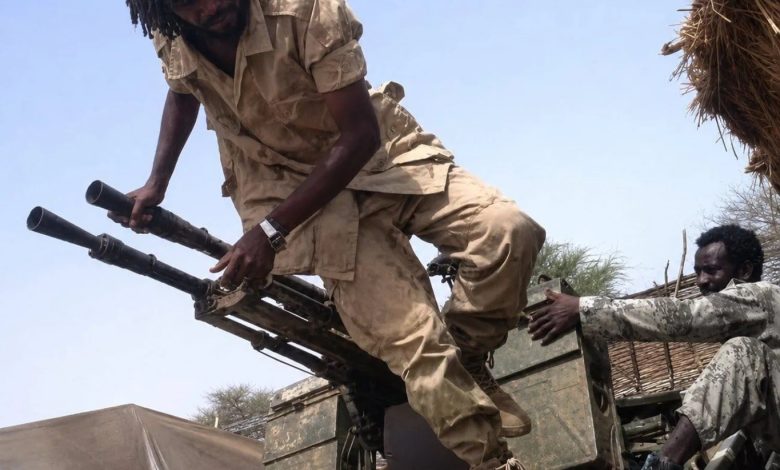
Savannah’s defection video (11 May 2026) is confirmed by five independent outlets: Asharq Al-Awsat, The National, Sudan Tribune, Dabanga Radio TV Online, and African Perceptions. His arrival in Khartoum is sourced to Asharq Al-Awsat (16 May) and cross-confirmed by The National (11 May, which reported he was believed to have reached Khartoum). The account of the army intelligence sting operations and financial incentives is attributed solely to US-based analyst Sami Saeed via The National; flagged as single-source expert analysis. Al-Qubba’s statement about Savannah is sourced to Asharq Al-Awsat citing local media; cross-corroboration for this specific statement was not found in available open sources and is therefore treated as single-source. The drone strike on Kaikal’s family home is confirmed by AFP wire, The National, Sudan Tribune, Ahram Online, and TRT Afrika across five independent outlets. The IOM displacement figure of approximately 14 million total displaced (internal plus cross-border) is corroborated by IRC, Al Jazeera, and NPR citing IOM and UN data; the Aawsat article’s “nearly four million who fled to neighbouring countries” aligns with IOM’s April 2026 reporting. Civilian casualty estimates vary significantly across sources: Asharq Al-Awsat cites “around 150,000 civilians,” while NPR references unofficial estimates of “as many as 400,000.” Both figures are unverifiable in the absence of independent survey access to conflict zones and are noted as estimates only. The image used in this article is a screengrab from Savannah’s 11 May 2026 defection video as published by Nabaa media. The Nabaa watermark is visible in the frame. The distinctive dreadlock profile matches the separately circulated Asharq Al-Awsat field photograph, providing a visual cross-reference between the two images. The screengrab is treated as authenticated to the defection video; it has not been independently verified via reverse image search or InVID tools.
MGRS datum: WGS84 / UTM Zone: 36P (Khartoum, Kordofan), 35P (Darfur) / Cross-check reference: Khartoum city centre 36P VC 05279 01375 (15.5007°N, 32.5599°E)
No satellite imagery has been used in this report.
All claims independently attributed and verified to open sources where possible.
Approved for Publication
Marcus V. Thorne
Lead Editor, Strategy Battles
FILE SB-2026-0516-006 // CLEARED
©StrategyBattles.net 2026
This article is for news and analysis purposes only. Based on publicly available news sources and military updates. All rights reserved. Not for commercial reuse without permission.