Israel Conducts Over 70 Airstrikes Across Central and Western Iran in Intensifying Campaign Against Military Infrastructure

Why This Moment Matters
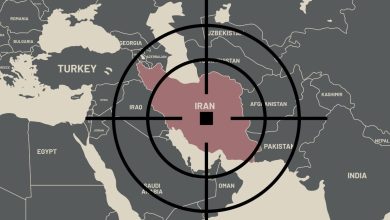
Friday’s strike package reflects the evolution of the Israeli and U.S. air campaign from its opening phase — which focused on decapitating Iran’s leadership and suppressing its air defenses — into a sustained, methodical effort to dismantle the entire Iranian defense industrial base. The IDF has now struck over 1,700 assets of Iran’s military industry since the war began on February 28, with military officials stating that thousands of additional targets remain on the list. The goal, as articulated publicly by IDF Chief of Staff Lieutenant General Eyal Zamir, is to remove not just the immediate Iranian military threat to Israel, but to degrade Tehran’s capacity to rebuild and rearm for what he described as “the foreseeable future.”
“The IDF continues to strike the firepower and defense infrastructure of the Iranian terror regime throughout Iran.”
— Israeli Defense Forces official statement, April 3, 2026
Background and Chronology
The IDF’s air campaign has proceeded in distinct phases since Operation Epic Fury launched on February 28. In the opening 24 hours, Israeli and U.S. forces struck Iran’s leadership compound — killing Supreme Leader Ali Khamenei along with dozens of senior military and government officials — while simultaneously launching massive waves of strikes against Iran’s air defense network. Within one day, the IDF reported achieving aerial superiority in parts of Iranian airspace, enabling large-scale strikes in Tehran and other cities at reduced risk to Israeli pilots. The military subsequently reported taking out more than 100 Iranian air defense systems and approximately 120 detection systems, claiming air supremacy over most of Iran’s airspace.
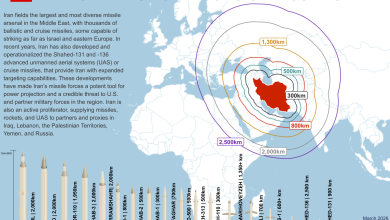
The second phase, announced by IDF Chief of Staff Zamir around March 5, shifted the campaign’s focus from establishing air superiority to systematically targeting Iran’s defense industrial base — the factories, research centers, and supply chains that produce ballistic missiles, drones, air defense systems, naval weapons, and other military equipment. By day 16 of the conflict, the IDF reported that approximately 70 percent of Iran’s estimated 500 ballistic missile launchers had been destroyed or disabled, a figure broadly corroborated by the Center for Strategic and International Studies, which noted a pronounced decline in Iranian missile launches consistent with large-scale launcher attrition.
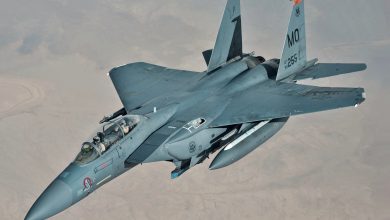
The IDF has also eliminated key command figures throughout the campaign. Ballistic missile chief Makram Atimi was killed in a strike in the Kermanshah area, along with several of his battalion commanders. The commander of the Iranian Armed Forces’ Oil Headquarters, Jamshid Eshaqi, was also eliminated — the IDF describing him as the financial arm of Iran’s military-industrial complex and a key conduit for funding Tehran’s regional proxy network, including Hezbollah, Hamas, and the Houthis. On March 4, an Israeli F-35 shot down an Iranian Yak-130 fighter jet over Tehran in air-to-air combat — the first time an F-35 had ever downed a crewed aircraft and the first Israeli aerial kill since 1985.
Friday’s wave of 70-plus strikes represents the continuation of that sustained pressure campaign, focusing on the remaining ballistic missile launcher sites in central and western Iran, IRGC Aerospace Force UAV storage facilities, and the remnants of Iran’s air defense network — systems Iran has continued to operate even as their number and effectiveness have been progressively reduced by weeks of relentless targeting.
Key Facts
- 70+ — IDF airstrikes conducted across central and western Iran in the past 24 hours, April 3, 2026
- 1,700+ — total Iranian military-industrial assets struck by the IDF since February 28
- 70% — estimated share of Iran’s ballistic missile launchers destroyed or disabled by Day 16 of the war (IDF / CSIS)
- 100+ — Iranian air defense systems taken out since the campaign began (IDF)
- 2,500 — total strikes conducted by Israeli pilots in the campaign’s first week alone (IDF Chief of Staff, March 5)
- 87% — estimated share of Bahrain’s Patriot interceptor stock expended as of March 29 (JINSA)
- 75% — estimated share of UAE and Kuwait Patriot interceptor stocks expended by the same date
- 1,368 — people killed in Lebanon since the Israel-Hezbollah conflict began on March 2
Iran Strikes U.S.-Linked Sites in Jordan, Kuwait and Bahrain
While Israel prosecuted its strike campaign over Iran, Tehran was simultaneously pressing its own offensive across the Gulf. Iran’s military issued its 53rd operational communiqué of the conflict on Friday, announcing a fresh wave of strikes against strategic sites it described as linked to U.S. forces in Jordan, Kuwait and Bahrain, and warning that any further attacks on Iranian territory would trigger a “compound response” exceeding anything its adversaries had yet anticipated.
In its formal statement, the Iranian army said it had targeted “vital objectives” providing logistical support to American forces. In Jordan, Iran said it struck locations used to store equipment and house U.S. personnel. In Kuwait, it claimed to have hit the deployment site of a mechanized battalion from a U.S. armoured brigade at Camp Arifjan — one of the most significant U.S. Army logistical hubs in the Middle East, and a site that has been repeatedly targeted since the conflict began. On March 1 alone, six U.S. soldiers were killed in a single Iranian drone strike near the base. In Bahrain, Iran said it struck the Alba aluminium plant — the world’s largest aluminium smelter — characterizing it as a strategic partner supporting U.S. defence-related industries.
The strikes on Alba carry particular economic weight. The facility operates with a total production capacity exceeding 1.62 million metric tonnes per year and had already initiated a controlled shutdown of 19 percent of its capacity before Friday’s attack, unable to ship metal through the Strait of Hormuz. Two employees sustained minor injuries, and the company confirmed it was assessing damage to its facilities. The UAE’s Emirates Global Aluminium, struck in a related Iranian operation days earlier, reported significant damage to its Al-Taweelah site in Abu Dhabi, with six employees injured. Aluminium prices have surged to four-year highs as a direct result of the sustained campaign against Gulf industrial infrastructure.
The strikes form part of Iran’s “True Promise 4” operation — the 90th wave announced under that banner — framed by Tehran as a direct and proportionate response to U.S.-Israeli strikes on Iranian steel facilities in Isfahan and Khuzestan, and the destruction of the B1 Bridge in Karaj. Iran’s targeting of heavy industry reflects a deliberate dual-track strategy: one track aimed at the military, the other at the economic foundations of Gulf prosperity, signalling to Gulf governments that no sector is shielded from the consequences of hosting U.S. forces.
Perhaps the most alarming underlying data point is the accelerating depletion of Gulf air defense interceptor stockpiles. Analysts at the Jewish Institute for National Security of America estimated that as of March 29, the UAE and Kuwait had each expended roughly 75 percent of their Patriot missile stocks, while Bahrain had launched up to 87 percent of its available interceptor supply. These systems take years to manufacture and cannot be quickly replenished — raising the prospect that Gulf air defenses may face critical capability gaps if the conflict continues at its current intensity for weeks or months longer. For further detail on Iran’s Gulf strike campaign, see our full report: Iran Strikes U.S.-Linked Sites in Jordan, Kuwait and Bahrain.
Analysis
The IDF’s sustained campaign against Iranian military infrastructure is proceeding with a logic that is both methodical and, in operational terms, coherent: destroy the launchers before Iran can use them, eliminate the factories before they can rebuild, and maintain air supremacy long enough to work through a target list that numbers in the thousands. By the metrics the IDF has chosen to publish, the campaign is achieving its stated objectives — 70 percent of missile launchers gone, air defense networks decimated, key commanders eliminated. From a purely operational standpoint, the air campaign has achieved a level of sustained access over Iranian territory unprecedented in modern warfare.
Yet military success in the air does not automatically translate into the political outcomes the Trump administration has claimed to seek. The IDF can degrade Iranian military capacity indefinitely — but it cannot, through airstrikes alone, reopen the Strait of Hormuz, install a new Iranian government, or compel Tehran to accept a settlement. Former CIA Director Bill Burns has described the broader campaign as a “war of choice,” expressing deep concern about its long-term destabilizing effects on the region and on the Iranian regime’s internal trajectory. Those concerns resonate with former Iranian Foreign Minister Mohammad Javad Zarif, who this week publicly called on Tehran to pursue a negotiated exit — a sign that the pressure is being felt, even if Iran’s public posture remains one of defiance.
The Gulf states, absorbing Iranian fire on a daily basis while watching their air defense stockpiles thin, face an increasingly difficult position. They did not choose this war, were not consulted before it began, and are now paying its heaviest civilian and economic costs alongside Iran itself. Friday’s strikes — over 70 in a single day over Iran alone, combined with fresh attacks on Gulf soil — are a reminder that the tempo of military operations shows no sign of easing. The harder question, unanswered by any party to the conflict, is what the day after looks like.
Sources
- Strategy BattlesIran Strikes U.S.-Linked Sites in Jordan, Kuwait and Bahrain in Escalating Campaign Against Gulf Infrastructure
- Kurdistan 24 — Over 70 Airstrikes Conducted Across Central, Western Iran, IDF Reported
- Strategy Battles — Iran Strikes U.S.-Linked Sites in Jordan, Kuwait and Bahrain
- The Times of Israel — IDF Planning 3 More Weeks of Operations to Systematically Degrade Iran’s Defense Industry
- Center for Strategic and International Studies — Assessing the Air Campaign After Three Weeks: Iran War By the Numbers