CENTCOM Reports No Breaches on First Day of Iran Maritime Blockade
0
Breaches Day One
6
Ships Turned Back
10,000+
US Personnel
814
Vessels Stranded in Gulf
$150m
Iran Daily Oil Loss
$435m
Estimated Iran Daily Loss — WSJ
🟢 CENTCOM Statement
Day One — CENTCOM Declares Zero Breaches as Six Merchant Vessels Comply
The U.S. Iran maritime blockade 2026 took effect at 10 a.m. ET on Monday April 13, after weekend peace talks in Islamabad collapsed without a deal. By the end of the first 24 hours, U.S. Central Command declared the opening phase a success — reporting zero breaches of the blockade. Six commercial merchant vessels turned back toward the Gulf of Oman after encountering the enforcement operation, complying without incident.
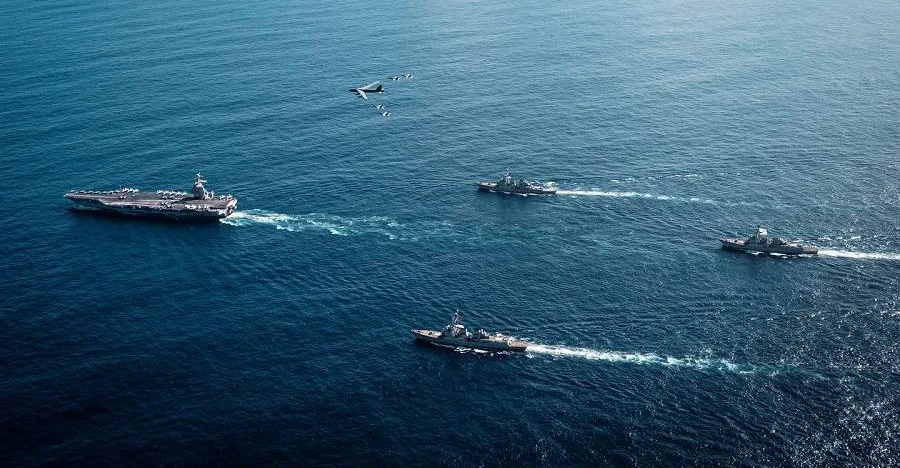
More than 10,000 U.S. Sailors, Marines, and Airmen along with over a dozen warships and dozens of aircraft are executing the mission to blockade ships entering and departing Iranian ports. During the first 24 hours, no ships made it past the U.S. blockade and 6 merchant vessels… pic.twitter.com/dpWAAknzQp
— U.S. Central Command (@CENTCOM) April 14, 2026
CENTCOM confirmed the operation involves more than 10,000 U.S. sailors, Marines and airmen, supported by over a dozen warships and dozens of aircraft. The command stated the blockade is being enforced against vessels of all nations entering or departing Iranian ports and coastal areas — including all Iranian ports on the Arabian Gulf and Gulf of Oman. Critically, CENTCOM specified that U.S. forces will not impede freedom of navigation for vessels transiting the Strait to and from non-Iranian ports — a distinction that would prove significant within hours.
🔴 The First Test
The Crack in Day One — Rich Starry and the Sanctioned Tanker Problem
While CENTCOM’s statement was accurate — no vessels heading to Iranian ports broke through — the picture was more complicated than a clean headline suggested. A U.S.-sanctioned Chinese-owned tanker named Rich Starry, formerly known as Full Star, became the first vessel to transit the Strait of Hormuz since the blockade began. The ship, carrying approximately 250,000 barrels of methanol loaded at the UAE’s Hamriyah port and operated under a false Malawi flag with Chinese crew, was sanctioned by the U.S. in 2023 for alleged ties to Iran’s energy export network.
The transit was not straightforward. Minutes after the blockade took effect, Rich Starry broadcast a “drifting” status off the coast of Qeshm Island and appeared to stall. It turned back during a first attempt near the island — then reversed course again and completed the transit hours later in a second run. MarineTraffic and VesselFinder both confirmed it had cleared the Strait into the Gulf of Oman. Crucially, Rich Starry was not heading to an Iranian port — meaning under CENTCOM’s own stated enforcement parameters, it was technically not subject to interdiction. The question it raised is whether ships linked to Iran’s shadow fleet can continue to exploit that distinction.
Vessels That Crossed or Attempted the Strait — Day One
- Rich Starry — Medium-range tanker. Malawi-flagged, Chinese-owned and crewed. U.S.-sanctioned since 2023 for Iran ties. Carrying 250,000 barrels of methanol. Stalled near Qeshm Island, turned back on first attempt, completed transit on second attempt. First vessel to exit Gulf since blockade began. Destination: non-Iranian port
- Elpis — Methanol carrier. U.S.-sanctioned for brokering sale and transport of Iranian petroleum. Departed from Iranian port of Bushehr. Crossed the Strait heading east. Its transit from an Iranian port without apparent interception raised questions about enforcement of the grace period
- Murlikishan — Oil tanker, formerly MKA. U.S.-sanctioned for transporting Russian and Iranian oil. Entered the Persian Gulf inbound — heading to Iraq to load fuel oil. Not carrying cargo at time of transit. Inbound, not Iranian port-bound
- Peace Gulf — Panama-flagged medium-range tanker. Heading to Hamriyah port, UAE. Typically moves Iranian naphtha to non-Iranian Middle Eastern ports for export to Asia. Not covered by blockade terms
- Ostria — Botswana-registered tanker. Attempted transit, turned back 41 minutes after the blockade deadline — changed destination from Oman to UAE. Did not complete crossing
🟡 Context
The Stakes — What This Blockade Is Actually Trying to Do
The Iran maritime blockade 2026 was ordered by Trump directly after the Islamabad talks collapsed on April 12 — posted on Truth Social and targeting every vessel that had paid a toll to Iran. The strategic logic is straightforward: during the 40-day war, Iran earned approximately $9 billion from crude exports — a figure that actually exceeded its pre-war daily profits, according to energy intelligence company Kpler. The blockade is intended to cut off that revenue stream. Kpler estimates the blockade, if enforced effectively, could cost Iran approximately $150 million per day in lost oil revenue. The Wall Street Journal’s broader estimate of Iranian losses reached $435 million per day when wider economic disruption is included.
The context of the Strait itself makes this enforcement challenge acute. Before the war began on February 28, approximately 140 ships passed through the waterway each day. Since the two-week ceasefire was agreed on April 8, a maximum of 14 a day have travelled through. As of April 13, 814 vessels were stranded in the Gulf — including 141 bulk carriers, 89 product tankers, 83 chemical tankers and 69 crude tankers. Approximately 190 million barrels of Iranian crude are currently at sea, with most destined for China. Around 50 million barrels are west of Singapore and 140 million east of it, per Kpler analysis.
VP JD Vance framed the blockade bluntly on Fox News: “If the Iranians are going to try to engage in economic terrorism, we’re going to abide by the simple principle that no Iranian ships are getting out, either.” The White House has instructed the Navy to use “the same system of kill” applied in Caribbean and Pacific drug interdiction operations.
🔵 International Reaction
China Calls It “Dangerous” — Oil Falls Below $100 as Talks Loom
China’s Foreign Ministry responded swiftly, with spokesman Guo Jiakun describing the U.S. blockade as “dangerous and irresponsible” — warning it would deepen the conflict and jeopardise the safety of navigation through the strait. China urged all parties to respect the current ceasefire and remain committed to dialogue and peace talks. The statement did not address whether Chinese-flagged or Chinese-owned vessels were actively transiting the strait.
Oil markets gave a cautious signal. Brent crude — which has risen approximately 40% since the war began and posted its largest-ever monthly gain in March at $103.97 a barrel — dipped below $100 on Tuesday morning to $98.6, down 0.8% on the day. U.S. Energy Secretary Chris Wright told the Semafor World Economy conference that oil prices would likely keep rising until “meaningful ship traffic” gets through the blockaded strait — which he anticipated would occur “sometime in the next few weeks.” After that point, he said, prices would peak.
On the diplomatic track, CNN confirmed U.S. and Iranian officials are still in communication — and U.S. officials are discussing details for a potential second in-person meeting following the Islamabad collapse. Trump separately signalled renewed talks in Islamabad could happen within two days. The blockade, in this reading, is as much a pressure mechanism ahead of a second round of negotiations as it is a permanent enforcement posture.
Strategy Battles Assessment
Day one was operationally clean by CENTCOM’s own definition — six ships turned back, no Iranian port-bound vessels broke through. But the Rich Starry transit exposed the enforcement gap that will define this blockade’s effectiveness going forward. Iran’s shadow fleet — sanctioned vessels flying flags of convenience, running with Chinese crews, carrying cargoes loaded at UAE intermediary ports — does not fit neatly into a “vessels entering or departing Iranian ports” enforcement parameter. If sanctioned tankers can continue moving Iranian-origin goods through non-Iranian routing, the economic pressure the blockade is designed to apply will be significantly diluted.
The Elpis case is the sharper issue — a vessel that departed directly from the Iranian port of Bushehr passed through the Strait without apparent interception. Whether that reflects a grace period, an enforcement gap or a deliberate operational decision is not yet clear. What is clear is that the blockade’s credibility will be measured not in the first 24 hours, but in whether sanctioned and shadow fleet vessels are actively interdicted in the days ahead.
Strategy Battles — Related Coverage
Sources
- U.S. Central Command (@CENTCOM) — Official X Statement, April 14, 2026
- Shafaq News — CENTCOM Reports Zero Breaches in First Day of Iran Maritime Blockade (April 14, 2026)
- The National — US-Sanctioned Tanker Passes Through Strait of Hormuz Despite Blockade (April 14, 2026)
- Al Jazeera — Sanctioned Tankers Transit Strait of Hormuz Amid US Blockade (April 14, 2026)
- CNN — Live Updates: US Eyes Potential Second Round of Talks with Iran as Blockade Takes Hold (April 14, 2026)
- Newsweek — Iran War Live Updates: Strait of Hormuz Traffic Despite US Blockade (April 14, 2026)
- Windward Maritime AI — April 14, 2026: Iran War Maritime Intelligence Daily
- Wikipedia — 2026 Strait of Hormuz Crisis (continuously updated)
Editorial Verification
This report has been reviewed for factual accuracy and OSINT compliance. The CENTCOM statement is sourced directly from the official @CENTCOM X post confirmed by multiple named outlets. Vessel tracking information for Rich Starry, Elpis, Murlikishan and Peace Gulf is cross-referenced across MarineTraffic, VesselFinder, LSEG, Kpler and Windward Maritime AI data. Revenue loss figures are attributed to Kpler and the Wall Street Journal respectively. This is original editorial analysis by Strategy Battles and does not reproduce any single source.
Approved for Publication
Marcus V. Thorne
Lead Editor, Strategy Battles
©StrategyBattles.net 2026
This article is for news and analysis purposes only. It is based on publicly available news sources and military updates. All rights reserved. Original reporting may come from various open sources. Not for commercial reuse without permission.