REGENT Squire Seaglider Autonomous Test Flight Full Military Technology Breakdown
Analyst Summary
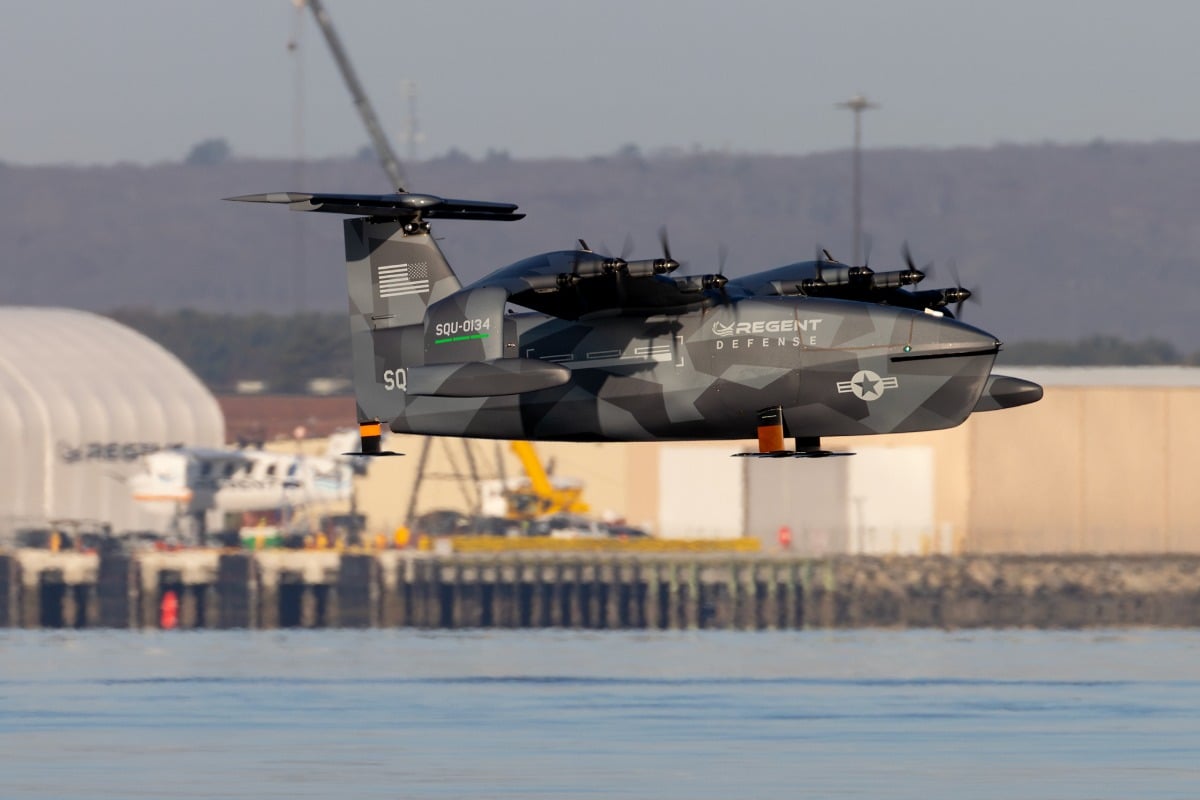
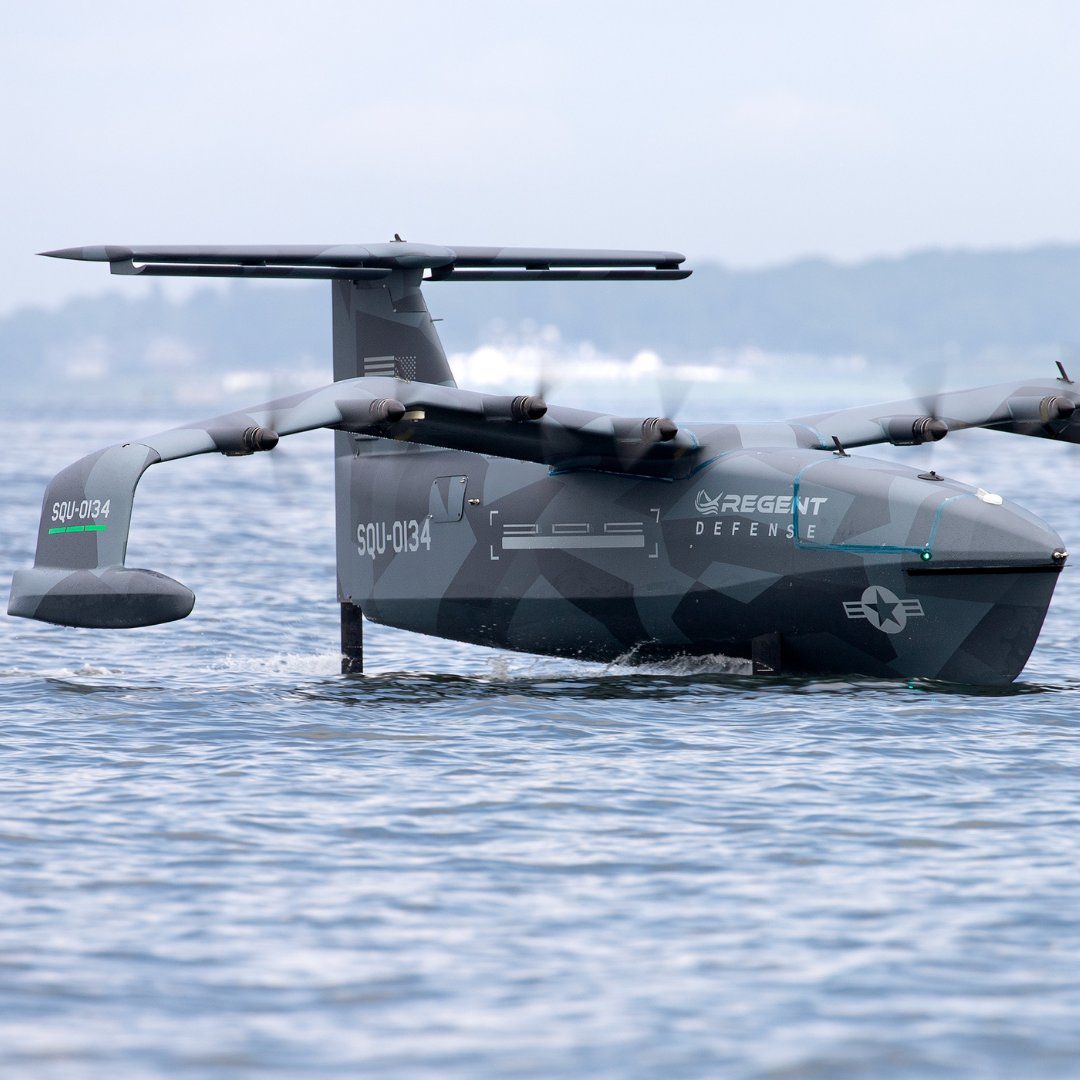
REGENT Squire Seaglider autonomous test flight operations are now active in Rhode Island as part of a 2026 sea trial campaign that has drawn direct attention from the U.S. Secretary of War and the Marine Corps Warfighting Laboratory. The Squire is a fully autonomous unmanned surface and aerial vehicle — a wing-in-ground effect craft that transitions between floating, hydrofoiling, and low-altitude flight above the waterline — built for contested logistics, ISR, and medical evacuation in maritime environments where conventional platforms face unacceptable risk. This breakdown covers the physics, the three operational modes, full specifications, confirmed mission set, U.S. military interest, and an honest assessment of limitations.
13 ft
Length
18 ft
Wingspan
80 kts
Top Speed
35 kts
Foil Speed
100+ nm
Range
50 lb
Payload
🟢 Section One
What Is the REGENT Squire Seaglider — And Why It Matters
REGENT Squire Seaglider autonomous test flight operations are confirming that this platform is closer to operational military readiness than most Western defence audiences have tracked. The Squire is not a boat, not a drone, and not an aircraft in any conventional regulatory or engineering sense. It is a wing-in-ground effect vehicle — a Seaglider — designed to operate in the aerodynamic regime between the surface of the water and one full wingspan above it. Understanding that flight physics is fundamental to understanding why the U.S. military is interested.
Wing-in-ground effect occurs when a wing flies within approximately one wingspan of a surface. The compressed air cushion generated between the wing and the water provides dramatically increased lift for the same power input — the same principle that allows pelicans to skim ocean surfaces for vast distances with minimal effort. Soviet military engineers built massive ekranoplan craft exploiting this effect in the 1970s. What REGENT has built is a modern, all-electric, fully autonomous version optimised for military mission sets — compact enough to be containerised, fast enough to outrun conventional surface vessels, and low enough to the water to evade most long-range radar systems, according to Defence Blog.

The Squire operates across three distinct phases. It begins floating on water like a conventional vessel. It then accelerates onto hydrofoils — underwater fins that lift the hull clear of the surface, eliminating drag and enabling speeds up to 35 knots. Finally at sufficient velocity it transitions into low-altitude wing-in-ground effect flight, skimming just above the waterline at up to 80 knots. In this final mode it operates above sonar detection and below the horizon of most long-range radar systems — a low altitude, low signature operating profile that REGENT Defense describes as central to its military utility, according to Army Recognition.
🔵 Section Two
2026 Test Flight Campaign — Current Status
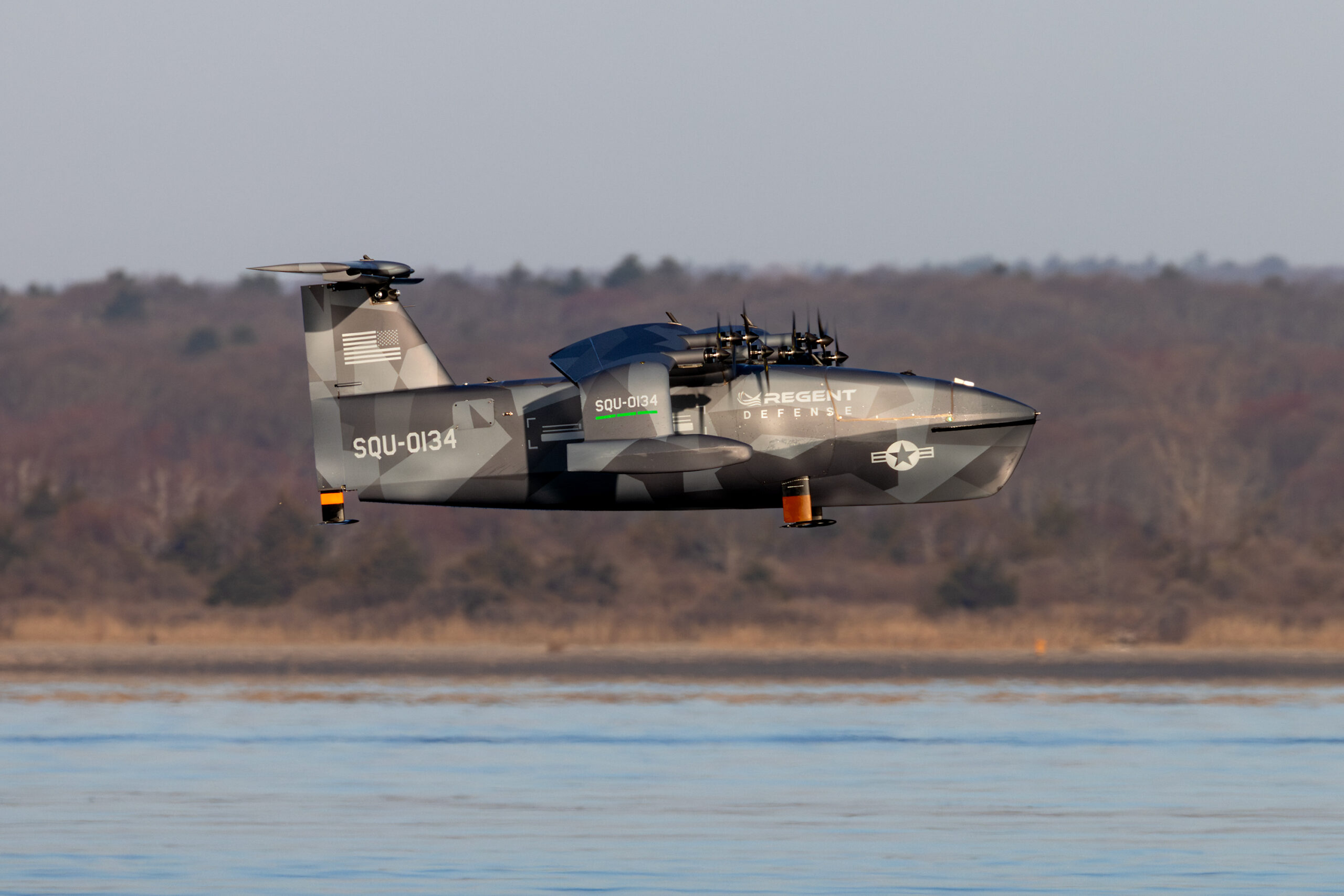
REGENT launched its 2026 sea trial campaign in March at its North Kingstown, Rhode Island facility, running concurrent testing of both the crewed Viceroy prototype and the autonomous Squire drone, according to Defence Blog. The 2026 campaign follows a winter period of engineering improvements, data analysis, and simulation development. By April 6, REGENT confirmed the Squire sea trials were actively expanding the operational envelope with each successive test run, as reported by REGENT. The U.S. Coast Guard — which regulates Seaglider vessels as Type A Wing In Ground Effect maritime craft — formally cleared the Squire prototype for active water testing following rigorous safety preparation, according to Maritime Executive.
REGENT co-founder and CTO Mike Klinker described the testing methodology: “Sea trials are where breakthrough engineering is tested, refined, and proven. Every hour on the water, every simulation, and every data point helps us validate our systems, improve performance, ensure high safety standards and reinforce our robust technical moat,” as reported by eVTOL Insights. First customer deliveries of Seaglider vessels are expected in 2027.
Watch — REGENT Squire Seaglider Sea Trials 2026
Latest test footage available at regentcraft.com and REGENT’s official YouTube channel.
🟡 Section Three
Full Specifications — Everything Confirmed on the Platform
| Specification | Confirmed Value | Operational Significance |
|---|---|---|
| Length | 13 feet | Containerisable — rapid forward deployment without port infrastructure |
| Height | 5.5 feet | Low profile for concealed storage and launch |
| Wingspan | 18 feet | Generates ground effect aerodynamic lift cushion in flight mode |
| Top speed (ground effect) | 80 knots (92 mph) | Outpaces all conventional unmanned surface vessels |
| Hydrofoil speed | 35 knots (40 mph) | Transition phase between hull float and flight mode |
| Operational range | 100+ nautical miles | Covers most Pacific island chain inter-position distances |
| Payload | 50 lbs | Internal bay 14″L x 14″W x 12″H — 2,400 cu in total volume |
| Operating altitude | Within one wingspan of surface | Above sonar — below most long-range radar horizons |
| Runway required | None | Launches from any water surface — no port infrastructure dependency |
| Crew | Zero — fully autonomous | Classified as Unmanned Surface and Aerial Vehicle (USA-V) |
| Propulsion | Electric — 8 wing-mounted motors | Zero emissions — reduced acoustic signature vs conventional vessels |
| Regulator | U.S. Coast Guard | Type A Wing In Ground Effect (WIG) maritime vessel — not an aircraft |
| U.S. Marine Corps contract | $15 million confirmed | Expanded contract with Marine Corps Warfighting Laboratory |
🔴 Section Four
Military Mission Set — What the Pentagon Wants It For
The Squire was presented to U.S. Secretary of War Pete Hegseth on February 9 at the Seabee Museum in Quonset, Rhode Island. Hegseth, according to Defence Blog, specifically highlighted capability gaps in contested logistics and counternarcotics missions — stressing the need for emerging defence companies to deliver deployable systems at speed. REGENT Defense General Manager Tom Huntley explained the core operational requirement: “Modern forces are increasingly dispersed across maritime zones where traditional logistics platforms are too large, visible, and vulnerable. Commanders need a discreet, persistent way to resupply units in these high-threat areas without dependence on vulnerable infrastructure or support assets,” as reported by Defence Blog.
Squire — Confirmed Military Mission Applications
- Contested logistics: Autonomous resupply of fuel, ammunition, food, and medical supplies to dispersed island or coastal units — no port infrastructure, no crew exposure
- Medical evacuation (MEDEVAC): Rapid autonomous casualty extraction across water — removes helicopter requirement in contested airspace for short-range MEDEVAC
- ISR: Low-altitude persistent maritime surveillance below radar detection thresholds at speeds conventional USVs cannot match
- Anti-submarine warfare: Sensor package deployment for ASW monitoring — confirmed by Airframer citing REGENT Defense
- Counternarcotics: High-speed maritime interdiction at ranges and speeds exceeding conventional patrol craft — highlighted by Secretary Hegseth
- Special operations support: Low-signature delivery of personnel, equipment, or communications relay packages to isolated forward positions
🟡 Section Five
Tactical Assessment — Strengths and Confirmed Limitations
The Squire’s core tactical proposition combines four characteristics that no single existing platform delivers simultaneously: speed exceeding all conventional unmanned surface vessels, infrastructure independence requiring no runway or port, a low radar and acoustic signature below most detection thresholds, and full autonomy removing the crew from the risk equation entirely. For distributed maritime operations across the Pacific island chain — exactly the scenario U.S. INDOPACOM is planning for — these four characteristics together address a genuine and documented capability gap.
The limitations are equally real. The 50-pound payload is modest — sufficient for medical supplies, communications equipment, small arms ammunition, or ISR sensor packages, but incapable of moving heavy logistics at scale. The 100-nautical-mile range, competitive for the platform class, restricts sustained operations in the most expansive Pacific scenarios. And the platform’s low-altitude flight regime — the source of its radar-evasion advantage — makes it sensitive to sea state degradation. Heavy swells and high waves constrain or can prevent wing-in-ground effect operations entirely. REGENT has not published detailed sea state operating limits, and this remains the primary unresolved question in the 2026 test campaign.
“Since we launched REGENT Defense, we’ve seen incredible traction with the U.S. Department of Defense and allies and partners around the world, from Taiwan to the Philippines.”
— Billy Thalheimer, Co-founder and CEO, REGENT Craft, reported by NextGen Defense
The reference to Taiwan and the Philippines is not incidental. Both are central to the contested maritime scenarios INDOPACOM is actively planning. REGENT has secured $10 billion in global commercial orders, $100 million in investor funding from Lockheed Martin, Founders Fund, and Japan Airlines, and a confirmed $15 million Marine Corps Warfighting Laboratory contract, according to Army Recognition.
Analyst Assessment
The REGENT Squire Seaglider autonomous test flight campaign is not a startup demonstration. It is a Secretary of War-briefed, Marine Corps-contracted, Lockheed Martin-backed programme solving a real operational problem that has no elegant existing solution. Contested maritime logistics in a Pacific island-chain conflict is a genuine vulnerability — large ships are visible and targetable, conventional drones lack range and payload, helicopters are exposed in contested airspace. The Squire offers something fast enough to be tactically useful, autonomous enough to remove the human from the risk equation, and low-signature enough to operate where conventional platforms cannot. Whether it delivers on those claims across all sea states is precisely what the 2026 test campaign is determining. Watch the sea state data when it eventually emerges — that will tell you whether this platform is a genuine operational capability or a well-funded demonstration.
Strategy Battles — Related Coverage
Editorial Verification
This report has been reviewed for technological accuracy and cross-referenced against REGENT Defense published specifications, Defence Blog, Army Recognition, Maritime Executive, Airframer, and eVTOL Insights. All performance figures are manufacturer-stated. Tactical analysis is the original assessment of Strategy Battles.
Approved for Publication
Marcus V. Thorne
Lead Editor, Strategy Battles
Sources
- Defence Blog — New U.S. Autonomous Squire Seaglider Conducts Test Flight
- Defence Blog — REGENT Builds Squire Autonomous Seaglider Drone (February 14, 2026)
- Defence Blog — U.S. Military Eyes REGENT’s Revolutionary Autonomous Seaglider (February 28, 2026)
- Defence Blog — REGENT Launches Sea Trials for Seaglider Prototypes (March 11, 2026)
- Army Recognition — REGENT Squire Seaglider USA-V (February 16, 2026)
- Maritime Executive — U.S. Coast Guard Clears REGENT Squire Seaglider Prototype for Testing
- REGENT — Watch the Latest Testing of REGENT Defense Seaglider Drone Squire (April 6, 2026)
- Advanced Air Mobility International — REGENT Defense Introduces Seagliders for Military Maritime Operations
©StrategyBattles.net 2026
This article is for news and analysis purposes only. It is based on publicly available news sources and open-source military technology reporting. All rights reserved. Original analysis may not be reproduced without permission.