Mali Insurgent Attacks Bamako, Kati and Kidal Hit in Nationwide Assault
5+
Cities Attacked
Bamako, Kati, Kidal, Gao, Mopti/Sevare
Dawn
Attack Launch Time
Before 05:20 GMT, April 25
2
Armed Groups Involved
JNIM (al-Qaeda linked) + FLA (Tuareg)

Attack locations across Mali — 25 April 2026. Map: Strategy Battles / AFP / Reuters / AP sources
🔴 The Assault
Dawn Raids Across Five Cities — Mali’s Worst Coordinated Strike in Years
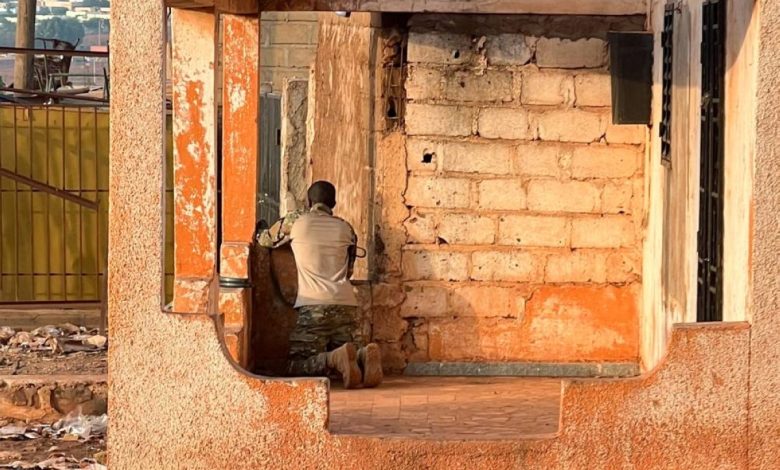
Shortly before 05:20 GMT on Saturday 25 April 2026, two powerful explosions and sustained automatic weapons fire erupted near Kati, the main military base on the outskirts of Bamako that houses the residence of junta leader General Assimi Goita. What began as a localised attack in the early darkness quickly revealed itself to be something far larger: a simultaneous, multi-city offensive striking at the heart of the military government.
A United Nations security note confirmed what witnesses on the ground were reporting: “simultaneous complex attacks” in Kati, near Bamako’s international airport, and in the northern and central cities of Mopti, Gao, and Kidal. The Malian army issued a statement acknowledging that “terrorist groups, not yet identified, early this morning targeted certain points and barracks in the capital and the interior.” It called on the population to remain vigilant.
The al-Qaeda-linked Group for the Support of Islam and Muslims (JNIM) later claimed responsibility via its website Azallaq, stating the attacks on Bamako’s airport and four other cities were carried out jointly with the Azawad Liberation Front (FLA), the Tuareg-led separatist coalition. This joint claim, if accurate, represents a significant and dangerous convergence between jihadist and ethnic separatist forces that analysts have long warned was emerging.
🔴 The Capital
Bamako Airport Under Fire — Goita’s Hometown Rocked, Defence Minister’s Home Destroyed
An Associated Press journalist in Bamako heard sustained heavy weapons and automatic rifle fire coming from Modibo Keita International Airport, some 15 kilometres from the city centre, with a helicopter clearly visible circling above surrounding neighbourhoods. Passengers attempting to reach the airport found themselves, in the words of one traveller, “almost inside the combat zone.” The airport was closed.
In Kati — where Goita makes his residence — residents described being woken before dawn by gunfire and explosions. A resident told AFP the residence of Defence Minister General Sadio Camara had been struck by a powerful blast that destroyed most of the building. Camara’s entourage subsequently insisted he was not present at the time and was safe. Social media footage, verified by AFP, showed militant convoys moving through Kati’s deserted streets in trucks and on motorcycles as residents watched fearfully from their homes.
The whereabouts of junta chief Goita himself were unknown as fighting continued. The army issued a second statement asserting “the situation is under control” and that “several terrorists have been neutralised and equipment destroyed,” though shooting and helicopter activity continued for hours after this claim. By midday, army helicopters were observed conducting strikes above Bamako and near the airport, according to AFP.
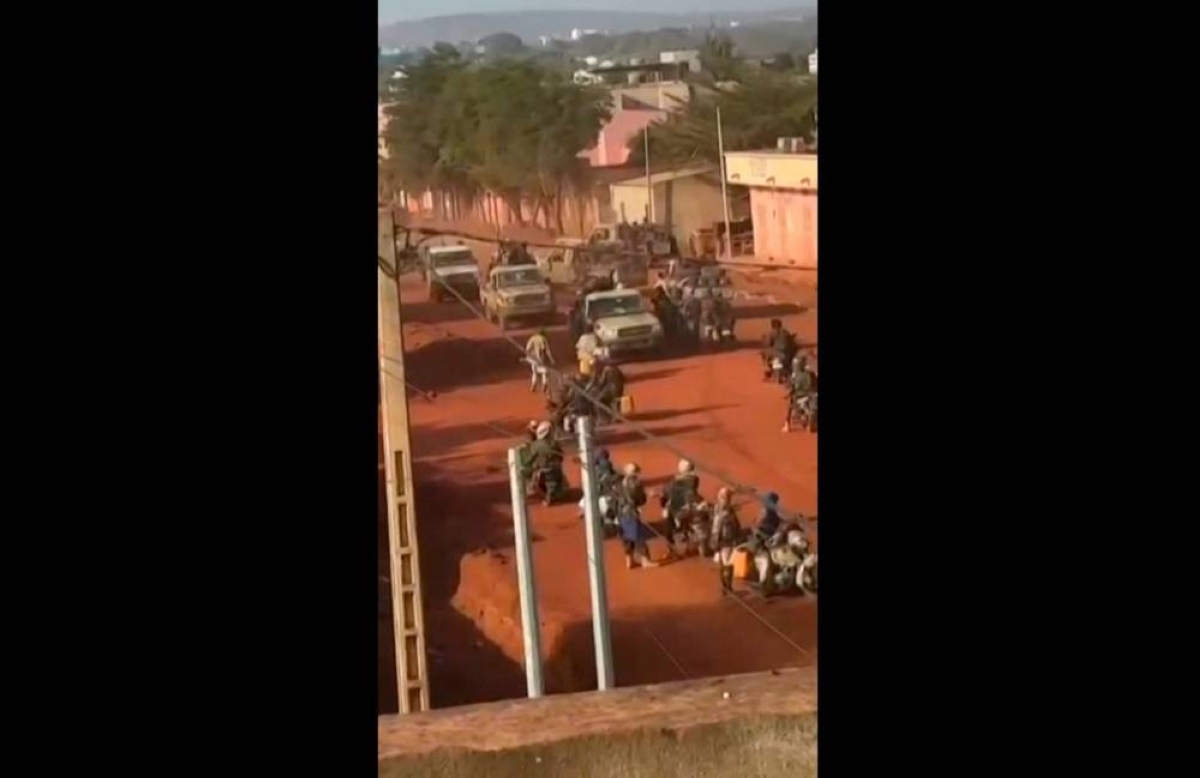
UGC footage verified by AFP showing armed militants moving through the streets of Kati, hometown of junta leader General Assimi Goita. Photo: AFP / UGC
🟡 Kidal — CLAIM UNVERIFIED
FLA Claims Kidal Has Fallen — A Symbolic City the Junta Prized as Proof of Control
CLAIM UNVERIFIED. FLA spokesperson Mohamed Elmaouloud Ramadane told AFP: “Our FLA troops control Kidal — most of Kidal. The governor of Kidal has taken refuge with his men in the former camp of MINUSMA,” referring to the former UN peacekeeping mission. He posted a photograph on Facebook he said showed a military camp in Kidal previously occupied by what he called “Russian mercenaries” and the Malian army. A video subsequently emerged appearing to show Tuareg rebels inside the governor’s office; France 24 was unable to independently verify its source.
A former mayor of Kidal, speaking to the Associated Press by telephone from anonymity out of fear for his safety, confirmed that gunmen had entered the city, taken control of some neighbourhoods, and were engaged in exchanges of fire with the army. The strategic significance of Kidal cannot be overstated. Heni Nsaibia of ACLED noted it was the site of a “symbolic military victory in 2023 that has been central to the government’s narrative of regaining territorial control.”
Kidal was a former FLA stronghold. Its recapture by the Malian army and Russian Wagner forces in 2023 was celebrated as a turning point in the junta’s anti-insurgency campaign. If the FLA’s claim is confirmed, it would represent a complete reversal of that narrative and an enormous symbolic defeat for General Goita.
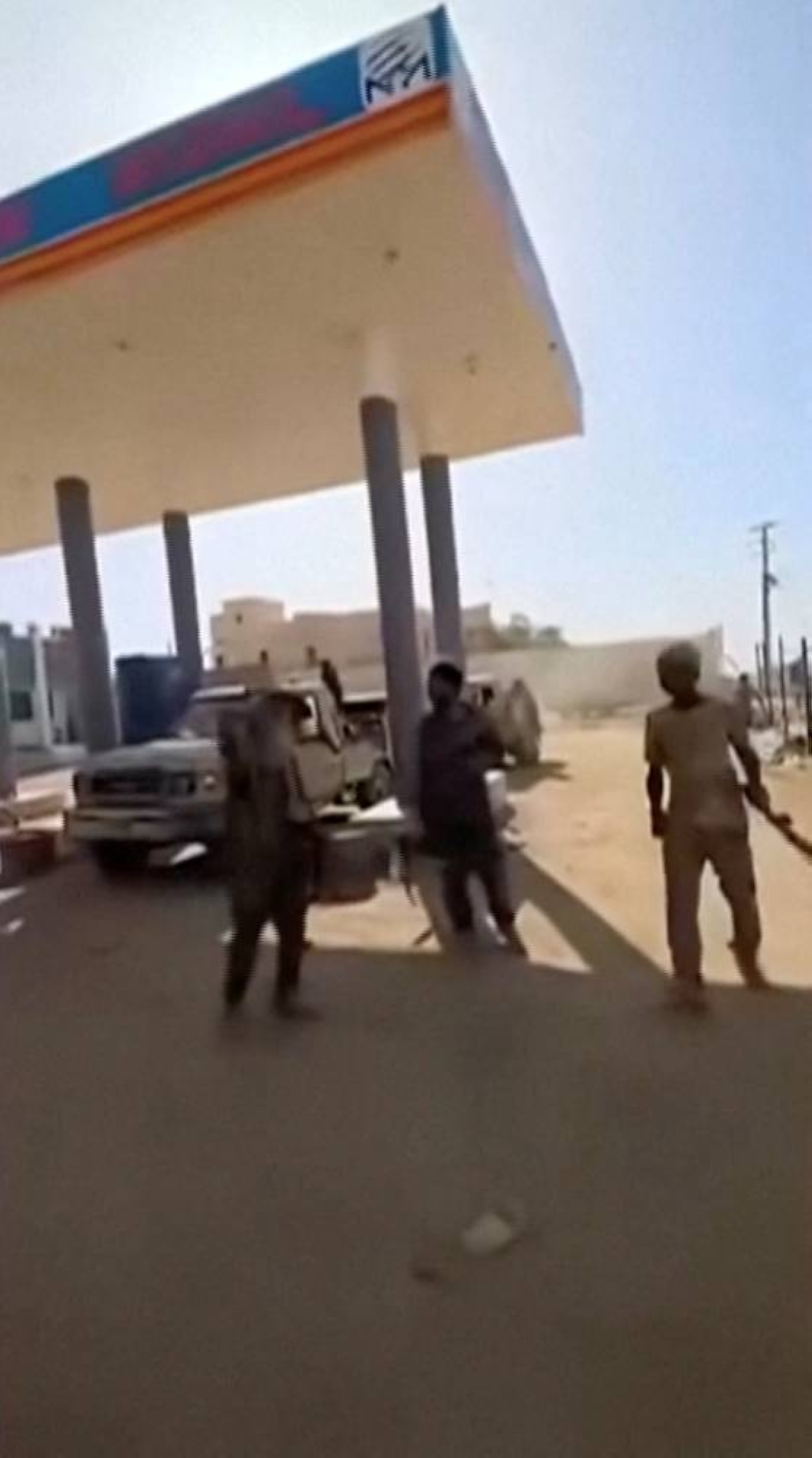
Armed members of an unidentified group seen gathering in Kidal — screen grab obtained from social media. Photo: Reuters
🔵 The Russian Factor
Wagner’s Exit and the Africa Corps Drawdown — A Security Vacuum Exploited
Russia’s Wagner Group ended its involvement in Mali in June 2025, transitioning into the Africa Corps, an organisation under the direct control of the Russian Defence Ministry. Al Jazeera reported that witnesses had learned Russian personnel were “fighting in Bamako, around the airport, where they have one of their headquarters” during Saturday’s attacks, indicating that Africa Corps presence remains active in the country.
However, Al Jazeera also noted a significant concern: because of intensifying pressure on the Russia-Ukraine front, some Russian personnel are being pulled out of Mali. This drawdown is directly affecting Mali’s security capacity. The junta’s decision to expel French forces and UN peacekeepers — and replace them with Russian private military contractors — left the country exposed precisely when that substitute security architecture began to hollow out.
Since September 2025, JNIM had been aggressively targeting fuel tanker convoys heading into Bamako, bringing the capital to a standstill at the height of the crisis last October. The group was systematically weakening the junta’s logistical and economic position before launching this direct assault on its military infrastructure.
Andrew Lebovich — Clingendael Conflict Research Unit
The coordinated attacks on Mali’s capital of Bamako represent a “dramatic setback” for the junta-led government.
Ulf Laessing — Konrad Adenauer Foundation, Sahel Programme
“This looks like the biggest co-ordinated attack for years.”
🟡 Context
A Decade of Crisis — From French Partnership to Junta Isolation
Mali’s security crisis began in 2012 following the collapse of Muammar Gaddafi’s Libya, which flooded the Sahel with weapons and fighters. JNIM and Islamic State-aligned groups exploited ethnic tensions and state weakness to build a persistent insurgency across the country’s vast interior. The military used the ongoing crisis to justify coups in both 2020 and 2021, bringing General Goita to power.
The junta subsequently expelled French forces and the UN’s MINUSMA peacekeeping mission, severing ties with Western partners and pivoting toward Russia. In July 2025, Goita was granted a five-year presidential term by military authorities, renewable without election. Mali has since aligned itself with Niger and Burkina Faso — both also under military rule — in the Alliance of Sahel States.
Tens of thousands of Malians have been displaced by the years of conflict. Gold and other mineral resources give the country strategic importance. Saturday’s attacks demonstrate that despite years of Russian military support, the junta has failed to meaningfully suppress either the jihadist insurgency or the separatist rebellion in the north.
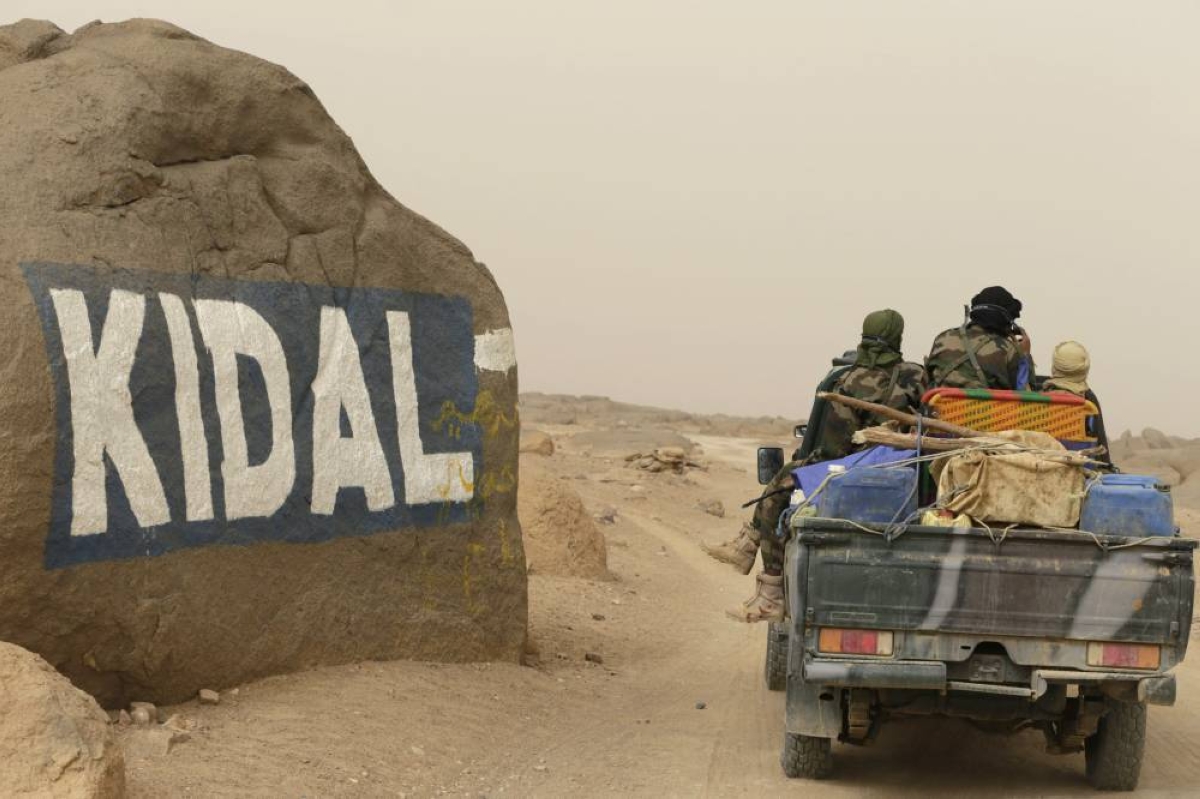
Malian soldiers arriving in Kidal in 2013 — a city now claimed by rebel forces over a decade later. Photo: AFP
Strategy Battles Assessment
Saturday’s assault is not simply the largest coordinated attack on Mali in years — it is the product of a strategic convergence that analysts warned was forming but the junta appeared unable to prevent. The joint JNIM-FLA operation breaks a long-standing pattern in which jihadist and Tuareg separatist groups pursued parallel but distinct campaigns. Their merger as an operational force, even if informal and tactical, dramatically multiplies the threat the Malian state faces.
The choice of targets matters. Striking simultaneously at the airport, at the junta chief’s hometown base of Kati, at the defence minister’s private residence, and at Kidal — the symbolic jewel of the army’s 2023 campaign — signals a highly sophisticated, intelligence-led operation designed to destabilise the regime on every level at once: militarily, politically, and symbolically. This is not a guerrilla ambush. It is an attempt to shake the government’s foundation.
The Africa Corps drawdown — driven by Russia’s mounting losses in Ukraine — has exposed the critical fragility of the junta’s security model. Goita bet his government’s survival on Russian military patronage after expelling France and the UN. That patronage is now thinning precisely when it is needed most. Whether Saturday’s attacks represent the opening of a sustained offensive or a high-profile demonstration of capability, the fundamental message is the same: the junta does not control Mali. It controls a shrinking perimeter.
Strategy Battles — Related Coverage
Islamabad Collapses: Vance Says Iran Refused America’s Terms After 21 Hours
Iran Rejected U.S. Demands — Trump Orders Naval Blockade of Strait of Hormuz
Iran’s Spy Purge: 50 Arrested Across 16 Provinces for Mapping Missile Targets
Sources
- AFP/Reuters — “Insurgents attack military bases across Mali, closing main airport,” Gulf Times, 25 April 2026
- Al Jazeera — “Gunmen stage simultaneous attacks across Mali, army says,” 25 April 2026
- France 24 — “Mali live: Army clashes with ‘terrorist’ groups, Kidal captured, Tuareg rebels say,” 25 April 2026
- Associated Press / The Hill — “Islamic militants and separatists claim simultaneous attacks across Mali,” 25 April 2026
- The Africa Report — “Mali: Heavy fighting erupts in Bamako as rebels seize northern stronghold of Kidal,” 25 April 2026
- Wikipedia — “2026 Mali Attacks,” updated 25 April 2026
- ACLED — Heni Nsaibia, Senior West Africa Analyst, via AFP/Gulf Times, 25 April 2026
- Konrad Adenauer Foundation — Ulf Laessing, Sahel Programme Head, quoted via AFP, 25 April 2026
Editorial Verification
Attack locations in Bamako, Kati, Gao, Mopti and Sevare confirmed by multiple independent wire services and on-ground AFP correspondents. JNIM claim of responsibility confirmed via Azallaq website (single-source; corroborated by joint FLA statement). FLA claim of Kidal seizure is unverified by independent reporters at time of publication — based solely on FLA spokesperson statements and FLA-released footage. Goita’s whereabouts unconfirmed. Camara’s home destruction confirmed by multiple witnesses; his safety confirmed by his own entourage only (single official source). Africa Corps drawdown reporting sourced to Al Jazeera witness accounts, not confirmed by Russian authorities. All Russian territorial claims within article are labelled accordingly.
Approved for Publication / Marcus V. Thorne — Lead Editor, StrategyBattles.net — 25 April 2026
©StrategyBattles.net 2026. All rights reserved.
This article is produced for informational and analytical purposes. Claims attributed to armed groups are not independently verified unless stated. Strategy Battles does not advocate for any party to this conflict.