Sudan Security Council Orders Crackdown on Armed Groups Inside Khartoum
Threat Level Assessment
LEVEL 3 OF 5, DEVELOPING
Bottom Line Up Front
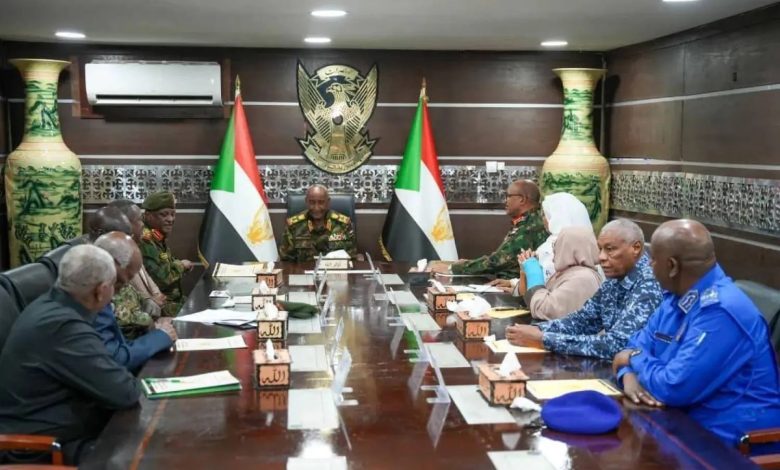
Sudan’s Security and Defense Council, chaired by General Abdel Fattah al-Burhan, ordered tighter controls on the movement of armed personnel, combat vehicles, and so-called security cells inside cities and markets on 20 May 2026. The directive follows a documented pattern of looting, arbitrary detention, and street violence attributed to army-aligned fighters in areas the Sudanese Armed Forces have retaken from the Rapid Support Forces, with Khartoum, Al Jazirah, and adjacent states most frequently cited. The order is an implicit official acknowledgment that the security cell system, created to hunt RSF collaborators in recaptured neighbourhoods, has generated abuses that have become a political liability for the Transitional Sovereignty Council. Whether the directive translates into enforcement, or functions as a public-facing deflection, remains the operative question.
Key Judgments
The Security and Defense Council’s order is an implicit admission of systemic disorder in SAF-held urban areas. The council’s own language references “disorder” attributed to armed forces and army-aligned groups, and videos evidencing incidents have circulated widely enough to prompt a formal ministerial response. Two independent outlets confirmed the directive, leaving no ambiguity about whether the meeting and its decisions occurred.
The security cells are structurally difficult to regulate because they aggregate multiple force types with divergent chains of command: regular army, police, intelligence, and popular resistance fighters operate under the same cell umbrella without unified oversight. Human Rights Watch documented arbitrary detention, torture, and custodial deaths by these cells between June 2025 and February 2026. A ministerial directive from Khartoum does not automatically translate into command compliance at the neighbourhood level in Omdurman, Khartoum North, or Al Jazirah.
Whether critics’ claims that security cells function as extensions of Islamist organisations tied to the former al-Bashir regime are accurate. The Transitional Sovereignty Council has strongly denied any institutional link to the National Congress Party or the Muslim Brotherhood. The sociological composition of popular resistance groups in different neighbourhoods varies considerably, and no open-source data fully resolves the ideological-versus-opportunist split in cell membership.
3+ Yrs
Sudan Civil War Duration
25+
Women Sentenced to Death by Cells
400
Women Released by Al-Burhan, Jan 2026
14M+
Displaced Persons (Majority Khartoum)
📍 Sudan: Key Locations Referenced in Security and Defense Council Order, 20-21 May 2026

Datum WGS84, UTM Zone 36P. All city coordinates approximate from open-source published coordinates. Map: Strategy Battles / OSINT.
📍 KHARTOUM CITY CENTRE
MGRS: 36PVC4985223384
15.5877°N 32.5322°E
SAF and TSC seat of power. Security and Defense Council meeting held here 20 May under al-Burhan’s chairmanship. SAF retook Khartoum from RSF in March 2025.
📍 KHARTOUM NORTH (BAHRI)
MGRS: 36PVC5132030273
15.6500°N 32.5458°E
Primary location for documented SAF-aligned looting incidents per Sudanese Alliance for Rights. Shambat, Al-Halfaya, Al-Safiya, and Kafouri neighbourhoods explicitly cited in civil society reporting.
📍 OMDURMAN
MGRS: 36PVC4418230289
15.6500°N 32.4792°E
Security cell abuse documented here by HRW: April 2025 incident cited by a police officer integrated into a cell in Omdurman, describing mistreatment of a civilian woman accused of RSF collaboration.
📍 WAD MADANI, AL JAZIRAH STATE
MGRS: 36PWA5604692149
14.4011°N 33.5199°E
Capital of Al Jazirah State. Residents in the state have complained of security abuses in army-controlled areas following SAF reestablishment of control. One of the states explicitly named in the Aawsat report.
SITREP Timeline : Sudan Security Cell Disorder, April 2023 to May 2026
🔴 The Order
Khartoum’s Highest Military Body Puts Its Own Forces on Notice
At grid reference 36PVC4985223384 (15.5877°N, 32.5322°E), in the capital Khartoum, Sudan’s Security and Defense Council convened its regular weekly session on Tuesday 20 May 2026 under the chairmanship of General Abdel Fattah al-Burhan, President of the Transitional Sovereignty Council and Commander-in-Chief of the Sudanese Armed Forces. The resulting press statement, delivered by Defence Minister Lt. Gen. Hassan Daoud Kabroun, crossed a threshold the council had previously avoided: it formally acknowledged that armed personnel and military vehicles operating inside cities and markets had become a problem requiring regulation, and it directed the relevant authorities to fix it.
The directive had three components. First, authorities were instructed to regulate the movement of armed individuals and combat vehicles inside urban areas and marketplaces. Second, the council ordered the establishment of formal rules governing the operation of security cells at the district level, specifically covering procedures for identifying those accused of collaborating with the Rapid Support Forces and conducting investigations into them. Third, Kabroun emphasised the council’s standing position on adherence to law, respect for human rights, and the obligation to provide essential services, including electricity and water, to citizens returning to recaptured areas.
The use of the phrase “disorder” in official framing is notable. Sudan’s military leadership rarely uses language that implies criticism of its own forces in public statements. The trigger for the unusual language, as the Aawsat reporting makes clear, is the circulation of videos on social media showing armed personnel engaging in behaviour that residents in recaptured areas describe as looting, arbitrary arrest, and intimidation. Independent verification of all the accounts has not been possible given the ongoing conflict, but the volume and consistency of the reports, spanning multiple cities and multiple state administrations, gives them a credibility that cannot easily be dismissed.
🟡 Security Cells
What Security Cells Are, and Why They Are Hard to Control from Khartoum
Security cells emerged as an informal administrative structure once the SAF began recapturing towns and neighbourhoods from the RSF in 2024. In a context where the civilian police force had largely collapsed or been displaced, and where RSF sleeper cells and informant networks were a genuine operational concern for the military, security cells provided a rapid-deployment mechanism. They drew from the army, the intelligence services, the police where available, and crucially, from the popular resistance fighters: civilian militias who had taken up arms in support of the SAF but who operate outside formal military command structures and without the discipline requirements those structures impose.
In Omdurman at grid reference 36PVC4418230289 (15.6500°N, 32.4792°E), a police officer integrated into a security cell described to Human Rights Watch what he witnessed in April 2025: cell members entered a woman’s home armed, dragged her out, struck her, and placed her in a vehicle, accusing her of RSF collaboration. HRW’s broader documentation covered seven former detainees, nine relatives of detainees, and eleven lawyers and activists interviewed between June 2025 and February 2026, with reports spanning Khartoum, Al Jazirah, Gedaref, Red Sea, and Northern states. The pattern was consistent: ethnicity, neighbourhood of residence, or prior presence in RSF-controlled territory were treated as sufficient grounds for detention.
Critics quoted in social media commentary, referenced by Aawsat without direct attribution, have characterised the cells as extensions of Islamist organisations affiliated with the former al-Bashir regime, alleging they are used to eliminate political opponents rather than genuine RSF collaborators. The Transitional Sovereignty Council has consistently rejected that framing, with al-Burhan stating publicly that the SAF has no institutional ties to the Muslim Brotherhood or the National Congress Party. The question of cell composition at the neighbourhood level, where local popular resistance commanders may have their own factional loyalties, is not answerable from open sources at this time.
🔵 The Wider Picture
Looting, Arbitrary Detention, and the Governance Gap in Recaptured Cities
In Khartoum North at grid reference 36PVC5132030273 (15.6500°N, 32.5458°E), the Sudanese Alliance for Rights documented what it described as systematic looting once SAF forces entered neighbourhoods including Shambat Al-Aradi, Al-Halfaya, Al-Safiya, and Kafouri. Citizens attempting to prevent soldiers from taking their property were beaten, threatened with death, and in some cases shot. A retired brigadier general in the army was reported shot for protesting the theft. The SAR report characterised the looting not as isolated incidents by undisciplined individuals but as an entrenched practice in areas newly captured by the military.
The situation in Al Jazirah State, centred on Wad Madani at grid reference 36PWA5604692149 (14.4011°N, 33.5199°E), follows the same pattern. The Aawsat report specifically names Al Jazirah alongside Khartoum as states where residents have complained of what they describe as growing security abuses since the SAF’s reestablishment of control. The combination of armed presence, collapsed civilian infrastructure, and the psychological impact of years under RSF occupation creates conditions in which the distinction between military enforcement and criminal predation is difficult for civilians to draw and for journalists to verify.
The Sudan civil war, now in its fourth year since the April 2023 outbreak, has produced what multiple UN and international observers describe as a catastrophic humanitarian situation. The Global Centre for the Responsibility to Protect noted that the UN’s Fact-Finding Mission concluded the RSF committed crimes against humanity, war crimes, and genocide against non-Arab communities around El Fasher. More than 500 civilians were killed in drone strikes by both factions in early 2026 alone. Against that backdrop, the security cell problem inside SAF-held Khartoum represents a second, distinct governance crisis: an army that can retake territory but struggles to govern it without the abusive structures it has created to do so.
⚠ What The Order Does Not Say
Accountability, Enforcement, and the Gap Between a Directive and Its Implementation
The council’s order does not name specific commanders or units responsible for documented abuses. It does not establish an independent oversight mechanism. It does not specify penalties for non-compliance. It does not address the cases of women already detained or sentenced under security cell procedures. The Attorney General’s office, when written to by HRW in March 2026, rejected almost all findings of arbitrary detention and custodial deaths, acknowledging only one case in which criminal proceedings were described as ongoing, without naming the accused. That institutional posture, combined with the absence of enforcement language in the 20 May directive, makes it difficult to assess whether this week’s announcement represents a policy shift or a public-relations response to a social media problem.
Al-Burhan’s January 2026 release of 400 women from Omdurman prison, including those accused of RSF collaboration, demonstrated that personal executive authority can override the security cell system when the political will exists. Whether the same executive authority is being applied to the systemic problem, rather than a visible one-off gesture, is what the coming weeks in Khartoum, Omdurman, and Al Jazirah will show. The international community’s leverage here is limited: the war continues, the RSF remains a genuine security threat in parts of Darfur and Kordofan, and Western governments have little appetite for sanctions that might destabilise the only functioning military institution in Sudan further.
Lt. Gen. Hassan Daoud Kabroun, Sudan Defence Minister: Press Statement Following Security and Defense Council Meeting, 20 May 2026
“The council emphasized the importance of respecting the law, state sovereignty, and human rights, and instructed the relevant authorities to establish regulations governing the work of security cells at the local level, including procedures for identifying individuals accused of cooperating with the RSF and conducting the necessary investigations.”
Source Reliability Matrix
NATO grading: REL A (reliable) to F (unreliable). CRED 1 (confirmed) to 6 (cannot judge).
CRED 1
Pan-Arab newspaper of record. Named bylined correspondent (Ahmed Younes, Kampala). Defence Minister press statement quoted directly. Primary source for this report.
CRED 2
Sudan-focused independent news service. Independently corroborates the council directive and Kabroun statement. Consistent track record on Sudanese civil war coverage.
CRED 1
28 interviews conducted, methodology disclosed. Both TSC Chairperson’s office and Attorney General responded to written submissions. Used for security cell background only, not primary event sourcing.
CRED 2
Civil society organisation with stated advocacy orientation. Looting documentation in Khartoum North is specific, named, and consistent with HRW findings. Used for geographic and incident detail on Bahri, not for advocacy claims.
CRED 3
Referenced in primary source as the vehicle for circulating disorder videos. Individual accounts unverifiable. Relevance is that their volume triggered the council’s response, not that individual clips have been authenticated.
Strategy Battles Assessment
Khartoum can issue the order. The harder problem is that the security cell system was built precisely because formal command structures had collapsed, and a directive from the top does not automatically rebuild them from the neighbourhood up.
✓ What We Know
The Security and Defense Council met 20 May in Khartoum and issued a directive ordering tighter controls on armed movement in cities and new regulations for security cells. This is confirmed by two independent sources. HRW documented systematic abuses by cells across five states between June 2025 and February 2026. Al-Burhan released 400 detained women in January, demonstrating executive authority over cell outcomes when applied. The attorney general rejected most HRW findings, indicating that formal institutional accountability has not been initiated. Social media video of “disorder” triggered the political response.
? What We Do Not Know
Whether the 20 May directive will produce changes in cell behaviour on the ground, or whether it functions as a reputational deflection. The composition and command relationships of individual security cells at neighbourhood level across Khartoum, Omdurman, and Al Jazirah. Whether the accusations of Islamist affiliation within cells are accurate or are themselves a factional political narrative. The scale of ongoing detentions and whether the women released by al-Burhan in January represent a fraction or a majority of those held on collaboration charges.
☉ What To Watch
Whether any commander is formally censured or prosecuted in connection with documented abuses, which would signal that the directive has an enforcement mechanism behind it. Whether the attorney general’s office reverses its posture on the HRW findings in the wake of the council directive. Whether civil society organisations in Khartoum and Al Jazirah report any reduction in security cell incidents in the coming four to eight weeks. Whether international partners, including the Quad (US, Saudi Arabia, UAE, Egypt), attach any conditionality to their support based on the internal governance of SAF-held areas.
Sources
- Sudan’s Security and Defense Council Orders Curbs on Armed Movement Inside Cities, Asharq Al-Awsat, 21 May 2026
- Sudan Security Council Orders Tighter Controls on Armed Presence in Cities, Darfur24, 20 May 2026
- Sudan: Arbitrary Detention by Army, Security Forces, Human Rights Watch, 7 April 2026
- Looting at Gunpoint: Documenting Systematic Human Rights Violations in Khartoum State, Sudanese Alliance for Rights, April 2025
- Sudan Country Overview, Global Centre for the Responsibility to Protect, March 2026
Editorial Verification
The Security and Defense Council directive of 20 May 2026 is confirmed by two independent sources: Asharq Al-Awsat (named bylined correspondent, direct ministerial quote) and Darfur24 (same date, consistent content). The Defence Minister press statement is treated as CRED 1 for the primary event. Security cell abuse documentation is sourced to HRW (April 2026, 28 interviews, dual government response on record) and SAR (civil society, named neighbourhoods, corroborated by HRW pattern). The social media videos referenced in the primary reporting have not been individually authenticated by Strategy Battles; they are cited as the political trigger for the council’s response, not as verified evidence of specific incidents. The attorney general’s rejection of HRW findings is on record and is cited as the official government counter-position. All MGRS coordinates are converted from published lat/lon sources using WGS84 datum. City coordinates are from open-source gazetteer data, not GPS-verified in the field.
MGRS datum: WGS84 / UTM Zone: 36P / Cross-check reference: Khartoum city centre 36PVC4985223384 (15.5877N, 32.5322E), Wad Madani 36PWA5604692149 (14.4011N, 33.5199E)
No satellite imagery has been used in this report.
All claims independently attributed and verified to open sources where possible.
Approved for Publication
Marcus V. Thorne
Lead Editor, Strategy Battles
FILE SB-2026-05544564521-001 // CLEARED
©StrategyBattles.net 2026
This article is for news and analysis purposes only. Based on publicly available news sources and military updates. All rights reserved. Not for commercial reuse without permission.