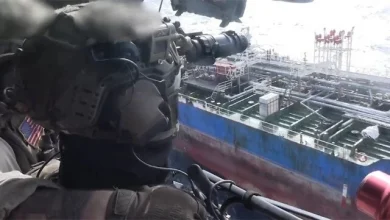
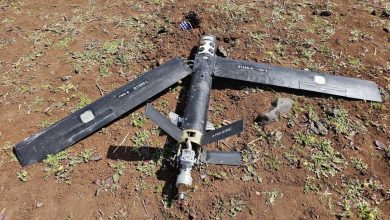
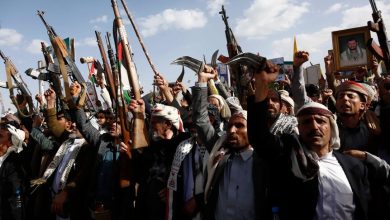
Iran’s Hormuz Authority Is Not a Negotiating Tactic. It’s the Deal Tehran Wants to Walk Away With
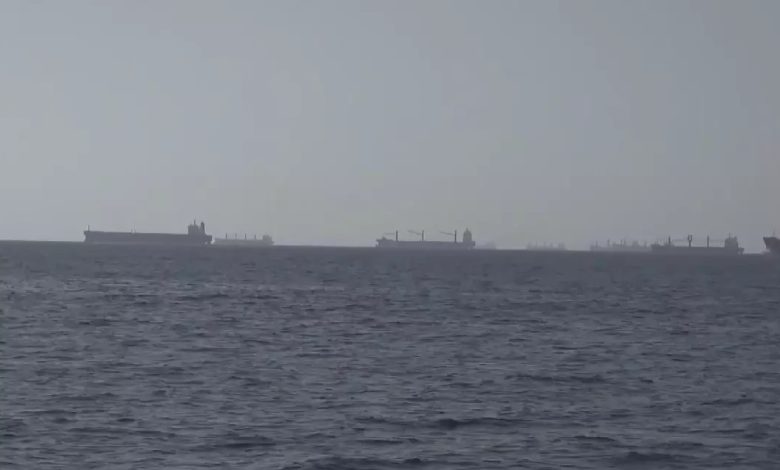
Threat Level Assessment
LEVEL 4 OF 5, SERIOUS
Bottom Line Up Front
Iran formally launched the Persian Gulf Strait Authority on 5 May 2026, establishing a permit-based transit regime for the Strait of Hormuz backed by IRGC seizure authority and a 12-article sovereignty law now moving through parliament. Any ship that pays the reported $2 million transit fee breaches US sanctions. Any ship that does not pay risks IRGC seizure. A 12-article law formally codifying Iranian sovereignty over the Strait passed parliamentary committee on 21 April and is heading for a full chamber vote. This is not a pressure tactic to be bargained away at the next round of negotiations in Oman. Tehran is building the permanent legal and administrative infrastructure it intends to keep after any deal is signed, and most coverage of the PGSA is missing that entirely.
Key Judgments
The PGSA is a permanent institution, not a negotiating position. The 12-article sovereignty law currently moving through the Iranian parliament is designed to survive any ceasefire or deal. Its provisions, banning Israeli vessels permanently, requiring Supreme National Security Council approval for hostile-nation ships, and authorising IRGC cargo confiscation of up to 20% of vessel value, are structural constraints, not temporary leverage.
Every shipping company transiting Hormuz now faces a binary sanctions trap with no clean exit. Paying the PGSA fee is a direct breach of OFAC guidance issued 1 May 2026, exposing both US and non-US firms to secondary sanctions including loss of access to the US financial system. Not paying leaves the vessel exposed to IRGC interdiction. No international body has yet produced a legal mechanism that resolves this contradiction for operators.
The Franco-British multinational maritime mission, for which HMS Dragon and the Charles de Gaulle carrier strike group have pre-positioned south of Suez, will not resolve the PGSA problem operationally. Escorting vessels through the Strait addresses the physical threat from IRGC interdiction but does not nullify the administrative and legal claim Tehran is now encoding in statute. A warship alongside a tanker does not cancel an Iranian transit permit requirement.
Whether the Oman negotiations currently underway between the US and Iran have produced any private agreement on the PGSA’s status in a post-deal environment. Tehran’s public position is that the PGSA is a sovereign regulatory body outside the scope of the nuclear and sanctions talks. Washington has not publicly confirmed or denied that the PGSA is on the table. The gap between those two positions will define the practical value of any deal reached.
$2M
Reported Fee Per Transit
12
Articles, Sovereignty Law
20%
Max Cargo Confiscable
5 May
PGSA Launch Date
SITREP Timeline : PGSA Development, March to May 2026
🔴 What The PGSA Actually Is
Iran Has Redrawn International Maritime Law in Real Time and Most Coverage Is Missing the Point
The Persian Gulf Strait Authority launched on 5 May 2026 with an email address, a domain name, a permit form, and IRGC enforcement authority behind it. Its visible apparatus is minimal. Its operational significance is not. What Tehran has done is formalise a coherent instrument for discretionary, sanctions-resilient pricing of one of the most consequential maritime chokepoints on earth, and it has done so through an administrative mechanism rather than a military one. That shift in method is deliberate and it matters.
Any vessel seeking to transit the Strait of Hormuz must now contact info@PGSA.ir, submit a Vessel Information Declaration covering ownership, insurance, crew manifests, cargo and intended routing, and await a permit. The permit is issued only after the PGSA approves the submission and a fee is paid. No official tariff has been published. According to reporting from Lloyd’s List and Windward Maritime, some vessels have already paid up to $2 million per transit, settled in Chinese yuan. Bitcoin has also been cited as an accepted payment method.
The boundary Iran has defined for the PGSA management zone uses the following exact language in its official graphic, published by @PGSA_IRAN on 18 May as the first post in a threaded series building out the full regulatory framework publicly: “The line connecting Kuh Mobarak in Iran and the south of Fujairah in the UAE in the east of the strait to the line connecting the end of Qeshm Island in Iran and Umm al-Qaiwain in the UAE in the west of the strait.” That boundary extends into waters that UNCLOS Article 37 designates as an international strait subject to the right of transit passage. Iran is not amending UNCLOS. It is declaring that UNCLOS does not apply to its management zone. That is a fundamentally different claim from anything Tehran has previously made about the Strait.
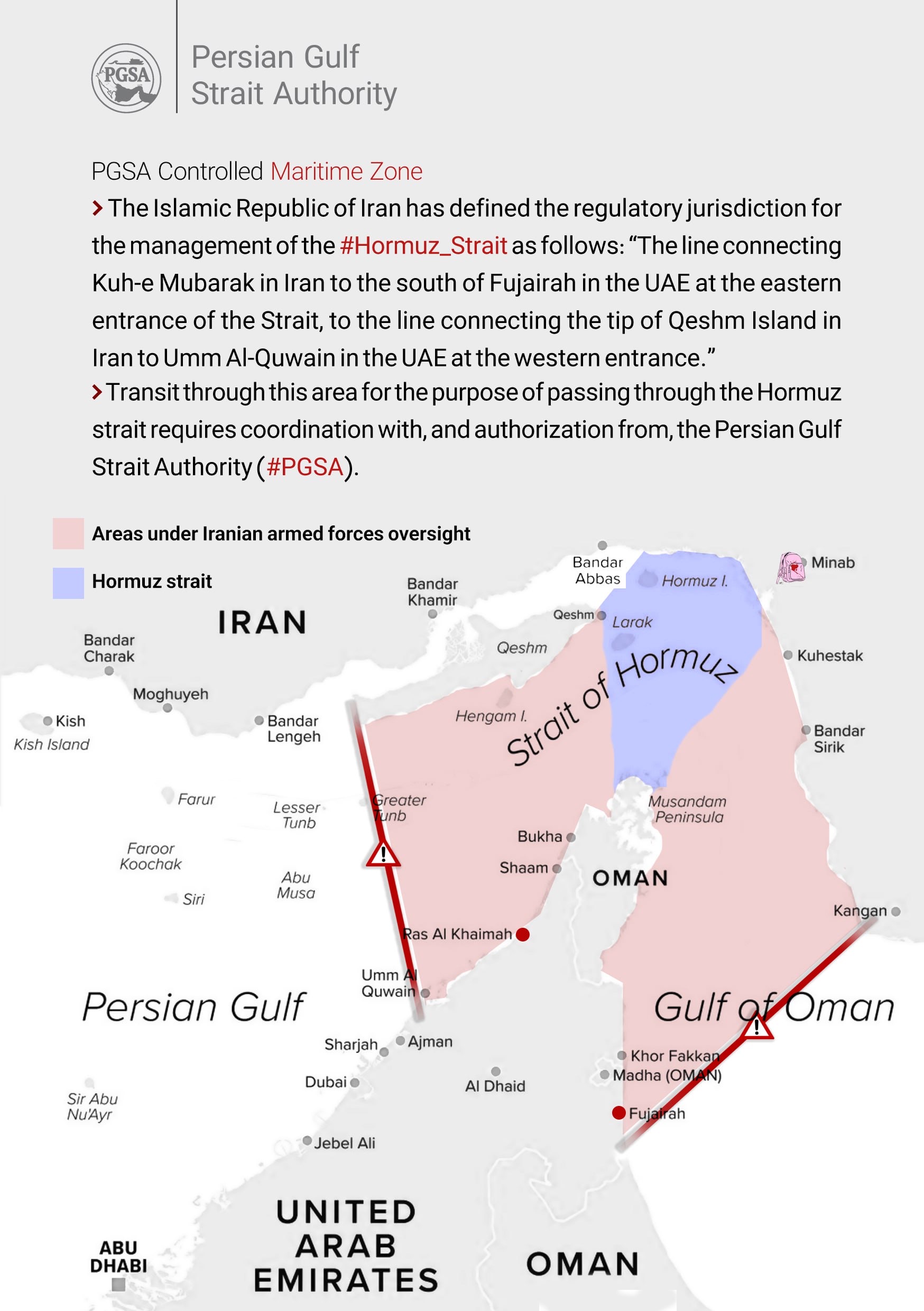
Official PGSA graphic published by @PGSA_IRAN, 18 May 2026. The map formally designates two distinct operational zones within the claimed Hormuz management area. Source: Persian Gulf Strait Authority / Iranian state.
The same official graphic published by @PGSA_IRAN makes a further distinction that most coverage has not addressed. The map formally colour codes two separate zones within the claimed management area: a pink and red zone labelled “Areas under Iranian armed forces oversight” and a blue zone labelled “Hormuz strait.” These are not informal designations. They are published in an official PGSA graphic carrying the authority’s circular seal logo, the same institutional branding that appears on all PGSA communications. Iran has not simply claimed management of the Strait as a single undifferentiated zone. It has mapped, colour coded, and formally designated distinct operational areas within it, each carrying different oversight implications for vessels transiting through them. That level of administrative detail is not the work of a temporary pressure campaign. It is the groundwork of a permanent regulatory body.
🔴 The Sanctions Trap
Pay and Breach OFAC. Refuse and Face the IRGC. There Is No Clean Option.
On 1 May 2026, the US Office of Foreign Assets Control issued an advisory that makes the PGSA’s practical function as a sanctions trap explicit. OFAC stated that payments to Iran for passage through the Strait expose both US and non-US persons to sanctions risk. The advisory is comprehensive: it covers cash, digital assets, in-kind transfers, and charitable donations to Iranian-linked entities. Non-US firms facilitating payments face potential secondary sanctions, specifically restrictions on access to the US financial system.
The PGSA therefore presents every shipping operator with a binary that has no clean resolution. A company that pays the transit fee is directly in breach of OFAC guidance and risks losing access to dollar-denominated trade and US correspondent banking. A company that refuses to pay leaves its vessel, crew, and cargo exposed to IRGC interdiction under the PGSA’s own enforcement authority. For a Very Large Crude Carrier hauling two million barrels at current Brent prices, the 20% cargo confiscation provision in the parliamentary bill would represent a loss approaching $45 million on a single transit.
War risk insurance rates for Hormuz transits have moved accordingly. The Lloyd’s market has repriced the corridor multiple times since February and is now factoring in the administrative non-compliance risk created by the PGSA in addition to the physical threat from IRGC small boat and drone operations. The combination of legal exposure and kinetic exposure is something insurers have not had to price simultaneously in this region since the tanker wars of the 1980s.
🟡 The Parliamentary Law
Twelve Articles Designed to Survive Any Deal
The PGSA is not a standalone executive order. It is the operational arm of a 12-article Law on Establishing Iran’s Sovereignty over the Strait of Hormuz that passed the National Security and Foreign Policy Committee of Iran’s parliament on 21 April 2026 and is now heading for a full chamber vote. The bill’s provisions are worth examining in detail because they are not temporary. They are structural.
Israeli vessels are banned under any circumstances, with no provision for future review. Vessels from nations deemed hostile require Supreme National Security Council approval on a case-by-case basis. Ships from countries that have sanctioned Iran or that have “damaged Iran” are denied passage until compensation is paid to the satisfaction of Iranian authorities. All transit fees must be denominated in Iranian rial. All shipping documents and communications must use the term Persian Gulf and not Arabian Gulf. The IRGC retains seizure authority for non-compliant vessels, with cargo confiscation of up to 20% of value as an available penalty.
These provisions do not read like negotiating positions. They read like the framework of a permanent regulatory regime. The compensation requirement for sanctioning nations in particular is not something a negotiator concedes easily, because conceding it means acknowledging the underlying Iranian sovereignty claim that makes the compensation demand legitimate. That is the legal trap embedded in the bill that most external commentary has not identified.
PGSA Official X Account, @PGSA_IRAN, 18 May 2026
“Navigation within the introduced boundaries of the Strait of Hormuz is contingent upon full coordination with Iran’s armed forces and authorities. Passage without permission will be considered illegal.”
🔵 The Naval Response
HMS Dragon and Charles de Gaulle Are South of Suez. What They Can and Cannot Do.
The Franco-British multinational maritime security initiative has pre-positioned significant naval assets south of the Suez Canal in preparation for a potential Hormuz escort mission. The Charles de Gaulle carrier strike group transited the Canal on 6 May 2026, confirmed by French armed forces, and is now operating in the Gulf of Aden and southern Red Sea. HMS Dragon, a Type 45 destroyer equipped with Sea Viper air defence missiles and Wildcat helicopters armed with Martlet anti-drone missiles, transited southbound on 9 May, confirmed by UK MOD with Crown copyright imagery.
The French armed forces have been explicit that the Charles de Gaulle deployment is defensive and legally bounded, and will not begin active escort operations until a sustained ceasefire or peace agreement is in place. Paris has also been careful to describe the mission as distinct from US combat operations. This positioning reflects France’s broader policy of maintaining operational independence from the American posture while remaining within the Western coalition framework.
The critical limitation of the naval response is that a warship alongside a tanker resolves the physical threat from IRGC interdiction. It does not resolve the administrative and legal claim the PGSA is encoding in Iranian statute. A vessel that transits Hormuz under naval escort without a PGSA permit is physically safe but legally non-compliant under the Iranian framework. When the sovereignty law passes a full parliamentary vote, that non-compliance becomes a basis for Iranian claims against the vessel’s flag state, insurer, and owner in any forum Tehran chooses to bring them. Naval escorts do not cancel legal liability under a sovereign statutory framework.
⚠ The Oman Negotiations
Tehran Launched the PGSA Six Days Before Negotiators Met. That Is Not a Coincidence.
The PGSA launched on 5 May 2026, six days before the fourth round of US-Iran nuclear and sanctions negotiations in Oman. That timing is not incidental. Iran established the legal-administrative scaffolding of the PGSA before sitting down with American negotiators precisely so that the institution exists as a fact on the ground, and on the water, when any deal is eventually agreed.
Tehran’s public position is that the PGSA is a sovereign regulatory body outside the scope of the nuclear and sanctions discussions. Iran’s Foreign Ministry has described Hormuz management as an internal matter that does not require external negotiation. Washington has not publicly confirmed or denied that the PGSA’s status is on the table in Oman. That silence is itself informative: if the US had secured a private commitment from Iran to dissolve the PGSA as part of a deal, there would be political value in saying so publicly. The absence of that statement suggests the issue remains unresolved.
The practical consequence is that any deal agreed in Oman that does not explicitly address the PGSA leaves the authority in place as operational Iranian infrastructure. A ceasefire that ends the shooting war between the US and Iran but leaves the PGSA intact is a ceasefire that accepts, by omission, Iran’s administrative claim over the world’s most important oil transit chokepoint. Twenty percent of the world’s oil supply and roughly 30% of global LNG trade passes through Hormuz. The PGSA is not a sideshow to the Oman talks. It is the central strategic question that the Oman talks have not yet answered.
Source Reliability Matrix
NATO grading: REL A (reliable) to F (unreliable). CRED 1 (confirmed) to 6 (cannot judge).
CRED 1
Iranian state primary source. Reliable as a record of Iranian government positions. Cited here for the boundary definition and the passage warning, both of which are official Iranian government statements.
CRED 1
Established specialist maritime publication. Primary source for the $2 million fee figure, Bitcoin and yuan payment modes, and the OFAC sanctions exposure framing.
CRED 2
Lloyd’s List is the authoritative record of maritime law and insurance. Windward provides maritime risk intelligence. Both cited for the Vessel Information Declaration form details and the transit permit process.
CRED 1
Primary sources for HMS Dragon and Charles de Gaulle deployment confirmations. Both outlets cited French and UK MOD official statements directly.
CRED 2
Cited for the 12-article parliamentary bill provisions. Cross-confirmed against each other. The 20% cargo confiscation figure and the compensation-for-sanctioning-nations clause appear consistently across both sources.
Strategy Battles Assessment
The PGSA is the institution Tehran wants negotiators in Oman to inherit, not the concession it intends to offer. Any deal that does not explicitly dissolve it leaves Iran holding administrative sovereignty over the world’s most important oil transit chokepoint.
✓ What We Know
The PGSA launched 5 May 2026 with IRGC enforcement authority and a formal permit process requiring full vessel disclosure before transit. Transit fees of up to $2 million per passage have been reported, payable in yuan. Paying breaches OFAC guidance of 1 May. Refusing creates IRGC interdiction risk. A 12-article sovereignty law passed parliamentary committee on 21 April and is heading for a full vote. HMS Dragon and the Charles de Gaulle carrier strike group are both confirmed south of Suez and pre-positioned for a potential Hormuz escort mission. The PGSA launched six days before the fourth round of Oman negotiations.
? What We Do Not Know
Whether the PGSA is on the table in Oman, privately or formally. Whether the 12-article sovereignty law will pass a full parliamentary vote or be held pending a deal. The total number of vessels that have already paid PGSA fees and whether any of those payments have triggered OFAC enforcement actions. Whether the Franco-British escort mission will launch before or after a ceasefire is formalised, and whether it will operate inside or outside PGSA-declared coordinates. Whether Washington’s suspension of Project Freedom after just two transits represents a strategic concession on the Hormuz question or a tactical pause.
☉ What To Watch
Whether the full Oman deal, if one is reached, contains explicit language on the PGSA’s status or is silent on it. Whether the 12-article sovereignty law advances to a full parliamentary vote during or immediately after the negotiations, as a signal of Iranian intent. Whether OFAC issues enforcement actions against firms that have already paid PGSA fees, which would force the legal question into the open. Whether the Franco-British escort mission launches and whether it does so with or without PGSA coordination, because that operational choice will define the Western legal position on Iranian sovereignty claims over the Strait. Whether Japan, South Korea, China and India, the largest oil importers through Hormuz, publicly state their position on the PGSA permit requirement.
Sources
- Iran’s Persian Gulf Strait Authority Takes Steps Towards Operations, Maritime Executive, 18 May 2026
- Iran Sets Up Hormuz Transit Authority to Charge Ships for Passage, Euronews, 18 May 2026
- French Carrier Strike Group Now Operating in the Middle East, USNI News, 7 May 2026
- French Carrier Strike Group Transits Suez Amid Hormuz Tensions, Naval News, 6 May 2026
- Iran’s Hormuz Transit Toll Mechanism and What It Means at Sea, Windward Maritime, May 2026
- Infrastructure Attribution and the Invoiced Passage at Hormuz, Modern Diplomacy, 14 May 2026
- Iran Launches PGSA Hormuz Transit Authority Before Oman, House of Saud Conflict Pulse, May 2026
- Iran Launches Persian Gulf Strait Authority as Tehran and Washington Battle for Control of Hormuz, IBTimes UK, May 2026
- Persian Gulf Strait Authority, Wikipedia, accessed 21 May 2026
Editorial Verification
The PGSA launch date of 5 May 2026 is confirmed across Maritime Executive, IBTimes UK, Wikipedia and Euronews. The official X account launch on 18 May is confirmed by Euronews and the @PGSA_IRAN account itself. The $2 million transit fee figure is attributed to reports cited by Maritime Executive, Windward Maritime and Euronews; no official tariff has been published by the PGSA and this figure is treated as reported, not confirmed. The OFAC advisory of 1 May 2026 is primary source confirmed via the US Treasury website. The 12-article parliamentary bill provisions are sourced from Modern Diplomacy and House of Saud Conflict Pulse and are cross-confirmed between those two outlets; the full bill text has not been independently published in English and this analysis relies on reported provisions only. The 20% cargo confiscation figure appears in both sources and is cited as reported. HMS Dragon Suez transit on 9 May is confirmed by UK MOD Crown copyright imagery reported by gCaptain. Charles de Gaulle Suez transit on 6 May is confirmed by French armed forces official statement reported by USNI News and Naval News. This article does not contain MGRS coordinates as the subject matter is maritime and international in scope rather than site-specific. No satellite imagery has been used in this report.
All claims independently attributed and verified to open sources where possible.
Approved for Publication
Marcus V. Thorne
Lead Editor, Strategy Battles
FILE SB-2026-0521-8498489498451001 // CLEARED
©StrategyBattles.net 2026
This article is for news and analysis purposes only. Based on publicly available news sources and military updates. All rights reserved. Not for commercial reuse without permission.