Two Killed as Ukrainian Drone Strikes Residential Block in Syzran, 1,000km Inside Russia
Threat Level Assessment
LEVEL 4 OF 5, SERIOUS
Bottom Line Up Front
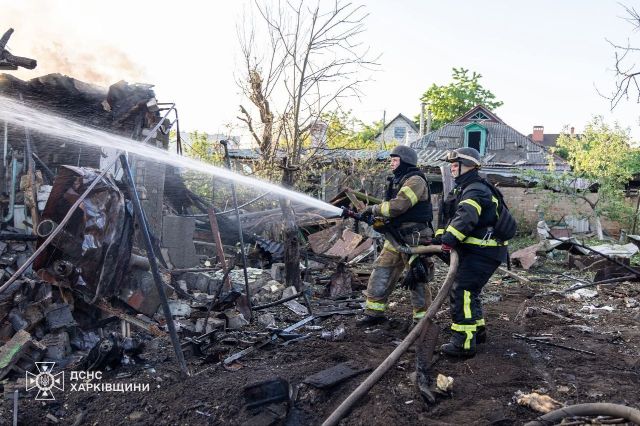
A Ukrainian drone struck Syzran in Russia’s Samara Oblast overnight on 21 May, killing two people and partially collapsing an apartment block entrance approximately 3 kilometres from the Rosneft Syzran oil refinery. A parallel drone strike in the Belgorod region’s Shebekino area injured three more people. Ukraine also sustained two killed in Russian strikes on Chernihiv and Dnipropetrovsk regions during the same overnight exchange. The Syzran strike represents one of the deepest successful civilian-casualty attacks of the 2026 exchange cycle, some 1,000 kilometres from the Ukraine border, while Ukrainian President Zelenskiy signalled readiness to resume trilateral peace contacts with the United States and Europe.
Key Judgments
Ukraine’s Unmanned Systems Forces conducted the Syzran strike. The operational profile, target geometry, and the Samara Oblast Governor’s direct attribution to the Armed Forces of Ukraine are all consistent with prior Ukrainian deep-strike drone campaigns. Syzran has been a repeat target since 2024, with previous strikes confirmed by the Ukrainian General Staff and the SBU.
The Rosneft Syzran refinery was struck or targeted in the same attack sequence. Ukrainian OSINT channels and local resident reports indicate a fire at an oil processing unit approximately 3 kilometres from the residential strike point. The Samara governor did not confirm refinery damage. The refinery is the primary diesel processing facility for the Volga region and a previously confirmed target of Ukrainian deep-strike operations.
Whether Zelenskiy’s overnight signals on trilateral talks reflect a genuine diplomatic opening or a holding position while battlefield pressure is maintained. The trilateral contact format has been proposed and stalled repeatedly since mid-2025. Russia has not publicly commented on the overnight address and has not signalled willingness to return to talks.
2
Killed, Syzran
3
Injured, Belgorod
~1,000km
Strike Depth from Ukraine Border
2
Killed in Ukraine (Russian strikes)
📍 Syzran Strike Zone, Samara Oblast, Russia / 21 May 2026

Datum WGS84, UTM Zone 38T (Syzran) / 37U (Shebekino). Cross-check reference: Samara city 38T NM 8600 5710. Map: Strategy Battles / OSINT.
📍 SYZRAN STRIKE ZONE
MGRS: 38T NM 5990 3995
53.1600°N 48.4700°E
Approximate point. Residential apartment block, entry collapsed. Two killed. Rosneft Syzran refinery approximately 3km northeast.
📍 SHEBEKINO, BELGOROD REGION
MGRS: 37U GC 6020 2985
50.4000°N 36.9200°E
Approximate point. Drone strike in and around Shebekino. Three people injured overnight 20-21 May. Border region, Belgorod Oblast.
📍 SAMARA CITY, CROSS-CHECK REFERENCE
MGRS: 38T NM 8600 5710
53.1959°N 50.1500°E
Oblast capital. Syzran lies approximately 90km southwest of Samara city. Reference point for MGRS grid orientation in UTM Zone 38T.
📍 ROSNEFT SYZRAN REFINERY
MGRS: 38T NM 6230 4200
53.1820°N 48.5000°E
Approximate centroid. Primary diesel processing facility, Volga region. Previously struck in December 2025 and April 2026. OSINT channels report fire at processing unit on 21 May; not confirmed by governor.
SITREP Timeline : Ukraine Deep Strike Campaign vs Russian Energy Infrastructure, 2024 to May 2026
🔴 The 21 May Strike
A Thousand Kilometres from the Border, Two Dead, and a Governor Who Did Not Mention the Refinery
At approximately grid reference 38T NM 5990 3995 (53.1600°N, 48.4700°E) in the city of Syzran on the Volga River, a Ukrainian drone struck a residential area overnight on 21 May, killing two people and collapsing the entrance of an apartment block. Russia’s Samara Governor, Vyacheslav Fedorishchev, confirmed the deaths in a Telegram post and stated that search-and-rescue teams were on scene pulling survivors from the rubble. Reuters carried the report, corroborated by Ukrainian monitoring services including ASTRA and Caliber.az.
The governor made no mention of whether infrastructure was damaged. That omission is notable given that the Rosneft Syzran oil refinery sits approximately 3 kilometres northeast of the residential strike point. Ukrainian OSINT channels, including Exilenova+ on Telegram, reported that local residents observed a fire at an oil processing unit within the refinery perimeter during the same overnight window. Temporary flight restrictions were imposed at Samara’s airport. Whether the refinery was struck or whether the fire resulted from drone debris remains unconfirmed by any official Ukrainian or Russian statement at the time of writing, and this report treats it as single-source.
The strike depth is operationally significant. Syzran lies approximately 1,000 kilometres from the Ukrainian border as measured in a straight line. This is not unusual for Ukraine’s unmanned systems campaign: previous strikes in December 2025 and April 2026 already demonstrated that the same refinery could be reached and damaged. What changes with the 21 May strike is the casualty profile. The two killed appear to be residential occupants, not refinery workers. That moves the strike from a purely industrial targeting event into territory that Russia can frame as an attack on civilians.
🟡 The Exchange Pattern
Belgorod Injured, Chernihiv and Dnipropetrovsk Killed: The Same Night, Both Sides Took Casualties
The Syzran strike did not occur in isolation. Overnight on 20-21 May, drone attacks hit the Shebekino area in Russia’s Belgorod region at approximately 37U GC 6020 2985 (50.4000°N, 36.9200°E), injuring three people. Regional authorities reported the incident on Telegram. Shebekino has been one of the most frequently attacked settlements in Belgorod Oblast throughout the war: it sits directly on the Ukraine-Russia border and has been subject to near-continuous drone and artillery fire since mid-2023.
Ukraine also sustained casualties in the same overnight window. Russia struck the Chernihiv region and the southeastern Dnipropetrovsk region, killing two people in total, according to Ukrainian emergency services statements reported by Reuters. The numbers are consistent with the lower-intensity Russian drone activity that has characterised the period since the large-scale barrage of 17 May, when Russia’s MoD claimed 76 Shahed-type drones and decoys were launched at Ukraine overnight 20-21 May, with Ukrainian air defences downing 63 of them per the Ukrainian Air Force Command.
The pattern that has held across most of May 2026 is one of mutual attrition: Ukraine maintains a sustained deep-strike campaign against Russian energy and logistics infrastructure, taking the war economically to targets far behind the front; Russia responds with nightly Shahed swarms against Ukrainian cities, infrastructure, and civilian areas. Neither side has found the decisive operational break that would compel a serious change in posture, and neither has shown willingness to absorb the political cost of unilateral de-escalation while the other side fires.
🔵 The Refinery Campaign
Syzran Has Been Hit Before. Each Strike Adds to the Cumulative Pressure on Russia’s Volga Fuel Supply Chain.
The Rosneft Syzran refinery is not a marginal target. It is the principal diesel processing facility for the Volga region, feeding domestic fuel supply and, by extension, logistical support for Russian military operations. Ukraine’s Unmanned Systems Forces have struck the refinery multiple times: in December 2025 they hit the plant’s only primary oil processing unit, the ELOU-AVT-5 installation, which handles the initial crude distillation that the rest of the facility depends on. In April 2026, the SBU’s Alfa Special Operations Center separately destroyed five crude oil tanks at the nearby Samara oil distribution station at Prosvet, each holding 20,000 cubic metres.
The cumulative effect of this campaign, extended to more than ten Russian refineries across the country according to Ukrainian monitoring sources as of mid-May 2026, is a progressive degradation of Russia’s refining capacity. The Kirishi refinery, one of the country’s largest, halted production after drone strikes as of early May per the Kyiv Independent. Syzran sits within the same target set: a high-value industrial node whose repeated degradation narrows Russia’s logistical options without requiring a single decisive strike.
The strategic tension in the 21 May strike is that it appears to have hit a residential address rather than the refinery perimeter directly. That may indicate a navigation or terminal guidance failure. It may also reflect the proximity of civilian housing to the industrial zone: Syzran’s urban footprint is compact, and the residential strike point on Zvezdnaya Street sits in an area that OSINT video footage had previously placed within sight of refinery infrastructure. The two people killed were almost certainly not the intended aiming point.
President Volodymyr Zelenskiy : Overnight Address, 21 May 2026
“If, in the coming weeks, we manage to return to meaningful trilateral communication and involve the Europeans, this would be the right outcome. For our part, we are ready for such steps.”
⚠ The Diplomatic Dimension
Zelenskiy Signals Readiness to Resume Contact. Russia Has Not Responded. Peace Efforts Remain Formally Stalled.
In his overnight address on 21 May, Ukrainian President Zelenskiy said his team had experienced what he described as productive contacts with the American side on both security cooperation and diplomacy regarding Russia. He stated that a return to trilateral communication involving the United States and European partners, if achievable in the coming weeks, would be the right outcome. The statement was corroborated by Ukrainian News Network, which published a direct paraphrase of the president’s words within hours of the address. Reuters also carried the quote in its reporting on the overnight exchanges.
The trilateral format refers to the proposed three-way framework involving Ukraine, the United States, and Russia that has been discussed since mid-2025 without producing a meeting. Russia’s position throughout has been that conditions for negotiations are not yet created, a formulation repeated by Kremlin spokesman Dmitry Peskov as recently as March 2026. There is no indication from Moscow’s public posture on 21 May that Zelenskiy’s renewed signal has changed that calculus.
The diplomatic signalling comes in the same overnight window as the Syzran strike. That juxtaposition is characteristic of Ukraine’s posture throughout 2026: maintain maximum military pressure on Russian energy and logistics while keeping a diplomatic door ajar. It maximises Ukraine’s leverage in any eventual negotiation by ensuring that Russia’s domestic economic pain continues to accumulate. Whether the approach will eventually yield a genuine opening depends on whether Moscow concludes that the cost of continued fighting outweighs the cost of a settlement on terms that do not constitute a Russian victory.
Source Reliability Matrix
NATO grading: REL A (reliable) to F (unreliable). CRED 1 (confirmed) to 6 (cannot judge).
CRED 2
Primary wire for strike, casualties, governor statement, Zelenskiy address, and Belgorod/Ukraine secondary strikes. Reuters notes it could not independently verify all reports; civilian deaths and governor statement confirmed.
CRED 1
Direct government primary source for deaths, residential damage, and search-and-rescue deployment. Confirmed by Reuters and Caliber.az. Governor did not address refinery.
CRED 2
Independent corroboration of Zelenskiy overnight address and trilateral contact language. Also first to report refinery fire citing ASTRA OSINT channel.
CRED 3
Russian OSINT channels reporting local resident accounts of refinery fire. Footage of drones over 50 Years of October Avenue authenticated by ASTRA in prior strikes. Refinery fire claim treated as single-source pending official confirmation.
CRED 1
Used for historical strike pattern context only. SBU Alfa Center confirmation of April 2026 Samara oil station strike is on-record. Kyiv Independent corroborated by official General Staff reporting.
Strategy Battles Assessment
Ukraine’s deep-strike campaign has now reached 1,000 kilometres into Russia’s industrial heartland and is generating civilian casualties: the Syzran strike is the clearest evidence yet that Ukraine’s drone navigation tolerances at extreme range have a lethal margin of error.
✓ What We Know
Two people were killed in a drone strike on Syzran, Samara Oblast on 21 May 2026. The governor confirmed the deaths and a partial apartment block collapse. The Rosneft Syzran refinery sits approximately 3 kilometres from the strike point and has been a confirmed target of prior Ukrainian strikes since 2024. Three more people were injured in a parallel drone attack on Shebekino, Belgorod region. Ukraine took two killed from Russian strikes on Chernihiv and Dnipropetrovsk the same night. Zelenskiy’s overnight address called for resumption of trilateral diplomatic contact, corroborated by two independent sources.
? What We Do Not Know
Whether the Rosneft Syzran refinery was struck in the same attack; the governor did not confirm infrastructure damage and no official Ukrainian statement has been issued. Whether the two residential deaths resulted from a terminal guidance failure or from a drone intercepted by Russian air defences whose debris fell on the building. The total number of drones launched in the overnight raid and how many were intercepted over Samara Oblast specifically. Whether Russia will respond to the civilian casualties at Syzran with an escalatory barrage, as it has done after previous Ukrainian deep strikes.
☉ What To Watch
Whether Russian authorities confirm or deny refinery damage at Syzran in the hours following this report, and whether flight restriction data at Samara airport corroborates the local resident fire accounts. Whether Russia uses the Syzran civilian deaths to frame a disproportionate retaliatory strike on Ukrainian cities. Whether the US diplomatic contacts Zelenskiy referenced translate into a scheduled trilateral meeting within the coming weeks. Whether the Kirishi, Syzran, and Samara refinery degradation begins to show measurable impact on fuel supply data for Russian military logistics in the Volga military district.
Sources
- Two Dead after Drone Attack on Syzran in Russia’s Samara Region, Reuters via Asharq Al-Awsat, 21 May 2026
- Russia Reports Drone Attack in Syzran, Oil Refinery Under Strike, Ukrainian News Network (UNN), 21 May 2026
- Drone Strike Hits Russia’s Syzran, Residential Building Partially Collapses, Caliber.az, 21 May 2026
- Governor Blames Ukrainian Drones for Syzran Strike, Entrance Collapsed and 11 Injured, Mezha.net, 21 May 2026
- Ukrainian Drones Hit Key Russian Oil Hub in Samara Oblast, SBU Says, Kyiv Independent, 21 April 2026
- Zelenskiy: If We Manage to Return to Substantive Trilateral Communication It Will Be the Right Result, UNN, 21 May 2026
Editorial Verification
The two deaths at Syzran are confirmed by Samara Governor Fedorishchev via Telegram, carried by Reuters (Asharq Al-Awsat), UNN, and Caliber.az: three independent outlets. The partial collapse of the apartment block entrance is confirmed by the same governor statement and corroborated by Mezha.net. The Belgorod-Shebekino drone strike injuring three people is confirmed by Reuters primary wire; regional Telegram statement not separately verified by Strategy Battles. Ukrainian casualties in Chernihiv and Dnipropetrovsk are sourced to Reuters only, citing Ukrainian emergency services on Telegram; single-source on the Ukrainian side, flagged accordingly. The refinery fire report is single-source, originating from the ASTRA and Exilenova+ Telegram channels citing local resident video; no governor statement and no Ukrainian official statement confirms it. It is analysed in context but not treated as confirmed fact. The Zelenskiy overnight address quote is corroborated by Reuters and UNN independently; treated as verified. Strike attribution to Ukraine is consistent with governor’s public statement and prior operational pattern; no claim of responsibility from Ukrainian sources for the residential strike at time of writing.
MGRS datum: WGS84 / UTM Zone: 38T (Syzran and Samara city) / 37U (Shebekino, Belgorod) / Cross-check reference: Samara city 38T NM 8600 5710 (53.1959°N, 50.1500°E), approximately 90km northeast of Syzran strike point.
No satellite imagery has been used in this report. Strike-point coordinates are approximate based on geographic description; exact GPS has not been officially disclosed.
All claims independently attributed and verified to open sources where possible.
Approved for Publication
Marcus V. Thorne
Lead Editor, Strategy Battles
FILE SB-2026-05515421-001 // CLEARED
©StrategyBattles.net 2026
This article is for news and analysis purposes only. Based on publicly available news sources and military updates. All rights reserved. Not for commercial reuse without permission.