Ukraine’s Soldiers Are Wearing AI Exoskeletons on the Battlefield
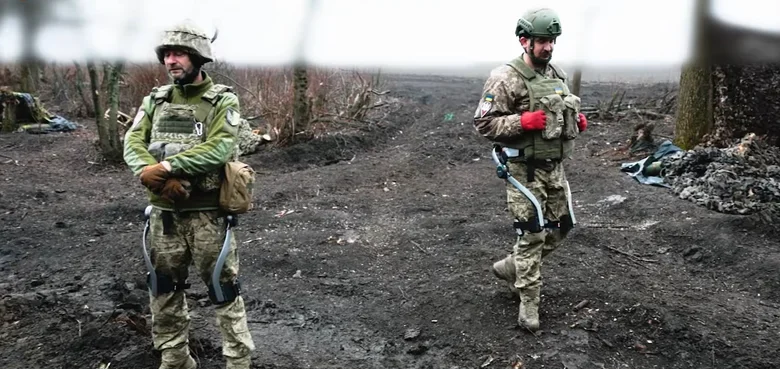
POKROVSK REGION, UKRAINE, April 6, 2026 — Ukraine’s 7th Air Assault Corps has released footage showing soldiers deploying AI-powered exoskeletons in active combat operations in the Pokrovsk region — and the device strapped to their legs is not a classified military prototype. It is a consumer product made by a Chinese manufacturer, retails for just under $1,000, and is available online. The development is the latest example of Ukraine’s distinctive approach to modern warfare: deploying off-the-shelf technology faster and cheaper than any conventional military procurement process could manage, and in doing so, turning a consumer gadget into a frontline military asset.
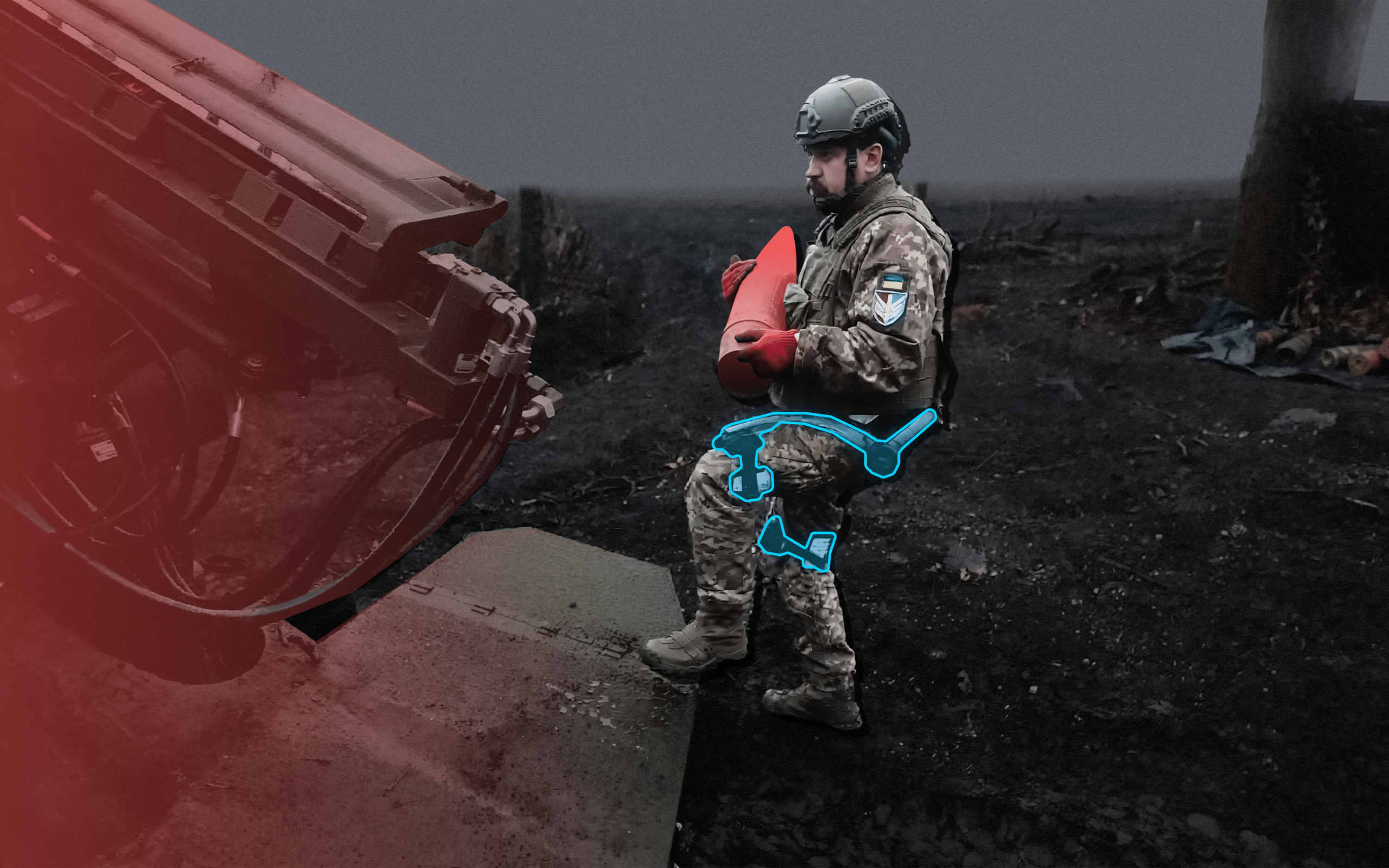
The footage, shared in a Facebook video by Ukraine’s 7th Rapid Reaction Corps of the Airborne Assault Forces, shows troops strapping mechanical waist and leg braces to their bodies before loading artillery shells into a CAESAR self-propelled Howitzer. The exoskeletons are being tested in both logistical and combat operations, according to the unit, as it repels a major Russian offensive in the Pokrovsk region. The video was first reported by BGR.
What the Exoskeleton Actually Does
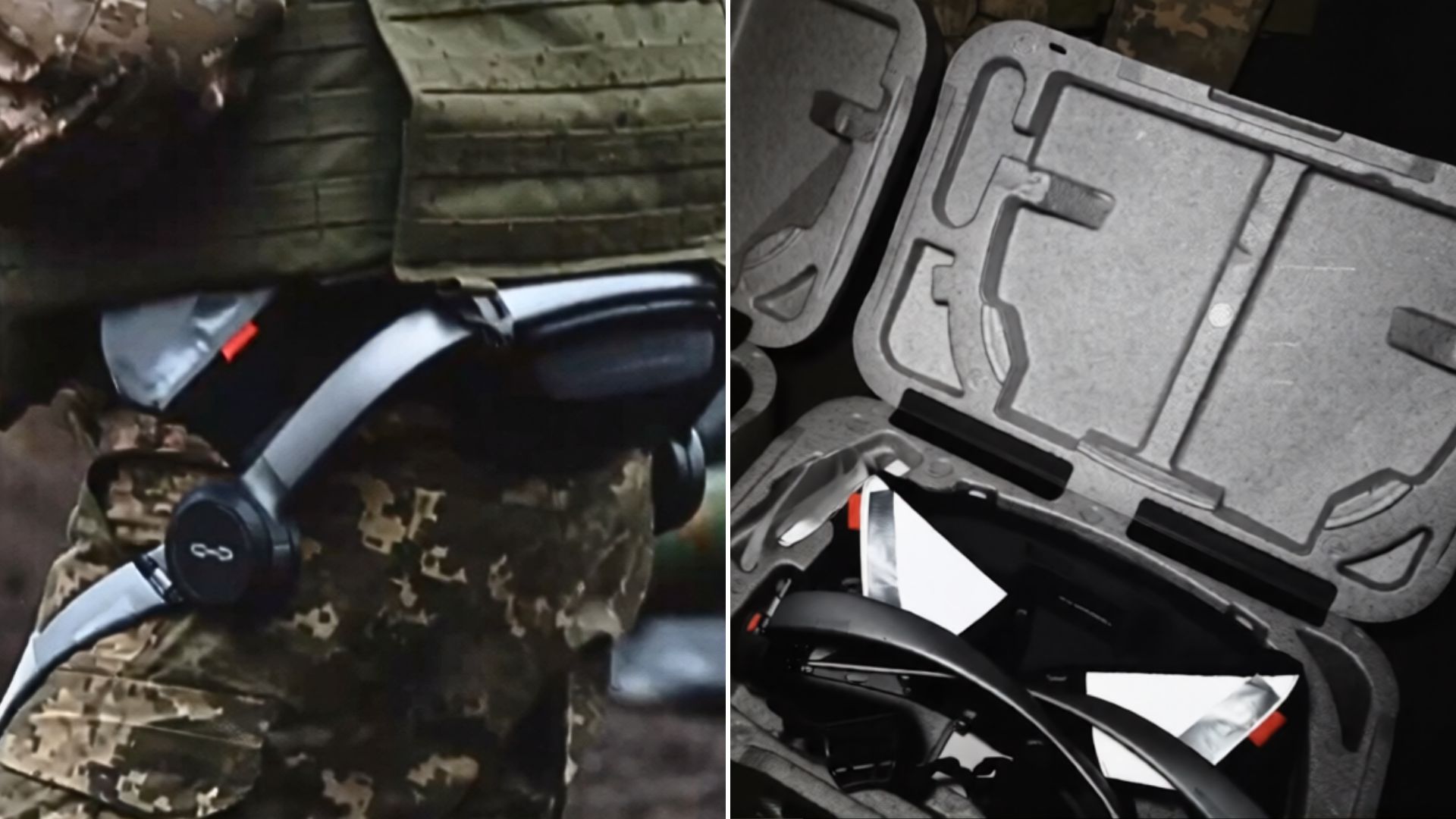
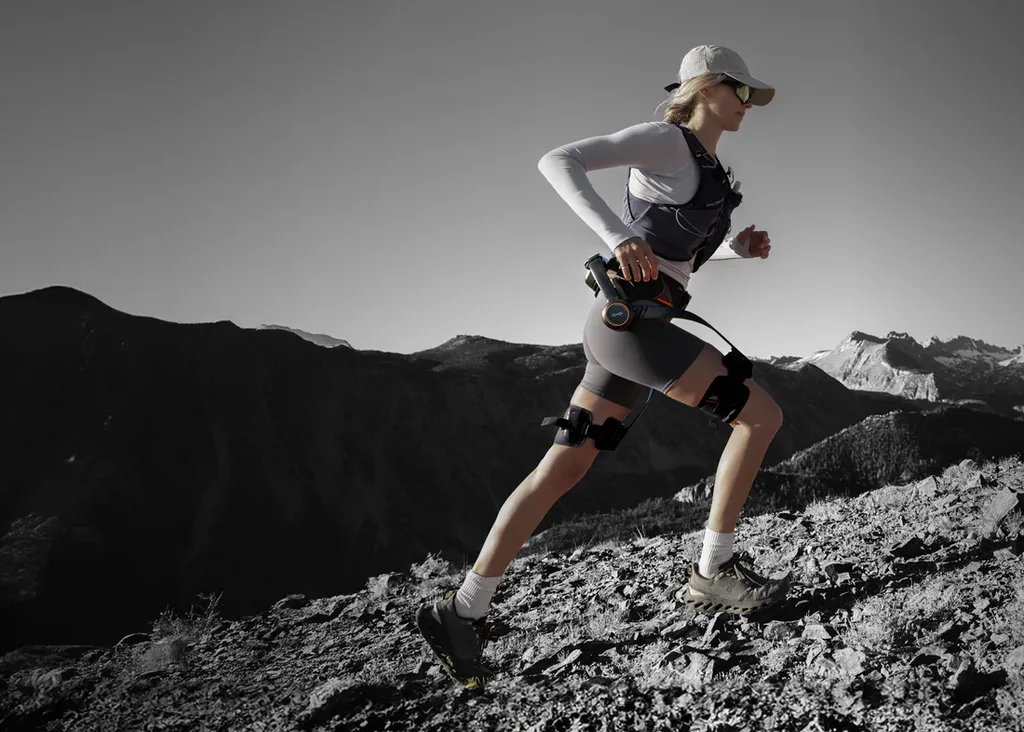
The device deployed by Ukraine’s 7th Corps appears to be the Hypershell X Pro — a product manufactured by Shanghai-based Hypershell and marketed to outdoor enthusiasts, hikers, and trail runners. The performance metrics cited by Ukrainian military personnel match exactly the specifications advertised on Hypershell’s commercial website. A spokesperson for Hypershell confirmed to Popular Science that the company did not refute the identification of its product in the footage, while stating that its exoskeletons are “designed for civilian use” and that the company does not “support or condone any military application” of its technology.
The device is constructed from carbon fibre, aluminium alloy, and stainless steel. It weighs just 4.4 pounds. It wraps around the soldier’s waist and thighs and uses artificial intelligence to adjust weight distribution to the wearer’s movements in real time. It offers ten operating modes — adjusted via a circular panel on the thigh — and comes with a companion mobile app that allows users to enable AI mode, customise power output, and fine-tune settings for different terrain and tasks. According to the Ukrainian press officer for the 7th Corps, Serhii Lefter, who spoke to Ukrainska Pravda, “the app allows for custom settings” including “enabling AI mode or adjusting power” — but the device can also function fully without the application.
“The exoskeleton reduces a soldier’s carrying load by 30 percent, increases foot speed to 12 mph, and operates for up to 10 miles on a single charge.”
— Ukraine’s 7th Rapid Reaction Corps, Facebook statement accompanying combat footage, April 2026
A $1,000 Answer to a $1.2 Million Problem
The contrast between Ukraine’s exoskeleton deployment and conventional military procurement is striking. In 2022, the U.S. military spent $1.2 million developing the prototype for its SABER exoskeleton programme. The Hypershell X Pro — apparently delivering comparable battlefield utility in at least some scenarios — retails for just under $1,000, as reported by BGR. That is a cost ratio of more than 1,200 to one.
This approach has become a defining characteristic of Ukraine’s military innovation since the war with Russia began in 2022. Rather than waiting years for purpose-built military systems to clear procurement processes, Ukraine’s units have consistently identified consumer and commercial technology that can be adapted for battlefield use and deployed it at scale within weeks. The drone programme is the most famous example — Ukraine’s world-leading FPV drone capability grew directly from the consumer drone racing community, with commercial components modified for strike missions. The exoskeleton deployment follows the same logic.
How Ukraine’s military obtained the Hypershell devices is not confirmed. However, BGR noted that Hypershell has launched several pilot programmes in Ukraine over the past two months, including partnerships with drone conglomerate DroneUA and wholesaler METRO. Colonel Vitaliy Serdyuk, the head of the 7th Corps’ Missile Forces and Artillery Department, praised the exoskeletons in the Facebook video for increasing soldier stamina, speed, and performance in demanding artillery operations.
The Technology Behind the Exoskeleton
The Hypershell X Pro is not a powered suit of armour in the Iron Man sense — it does not provide superhuman strength or ballistic protection. What it does is reduce the metabolic cost of carrying heavy loads and moving at speed over rough terrain. In a conventional infantry context this matters enormously. Artillery crews loading 155mm shells — each weighing approximately 100 pounds with propellant — over hours of sustained fire missions experience significant physical fatigue that degrades accuracy, reaction time, and mission endurance. An exoskeleton that offloads 30 percent of that carrying burden directly extends the effective combat endurance of each crew member.
The AI component is what makes the Hypershell approach different from earlier passive exoskeleton designs that simply used springs and levers to redistribute weight mechanically. The Hypershell X Pro’s AI engine analyses the wearer’s gait, terrain, and movement patterns in real time and adjusts the powered assistance accordingly — providing more support on uphill sections, reducing resistance during sprints, and adapting to different load profiles automatically. The ten operating modes allow soldiers to configure the device for different mission types: slower, high-load artillery work versus faster infantry movement between positions.
Hypershell X Pro — Key Specifications
- Manufacturer: Hypershell — Shanghai, China
- Weight: 4.4 pounds (2kg)
- Materials: Carbon fibre, aluminium alloy, stainless steel
- Load reduction: 30 percent of carrying burden
- Maximum assisted speed: 12 mph
- Range per charge: Up to 10 miles
- Operating modes: 10 — adjustable via thigh panel and companion app
- AI system: Real-time gait and load analysis — adjusts power distribution automatically
- Temperature rating: Extreme temperature capable
- Retail price: Just under $1,000
- Available: Consumer market — Amazon and Hypershell website
- Ukrainian deployment: Pokrovsk region — logistics and combat operations — 7th Air Assault Corps
- Comparison: U.S. SABER exoskeleton prototype cost $1.2 million in 2022
Ukraine’s Broader Techno-War Strategy
The 7th Air Assault Corps has built a reputation for exactly this kind of creative technological deployment. Ukrainska Pravda reported in March 2026 that the unit had also been training soldiers in anti-drone defences using VR headsets — another consumer technology being adapted for military use. A military official told Ukrainska Pravda that the exoskeleton is part of the corps’ broader “techno-air assault” capabilities — a deliberate strategic posture that treats the global consumer technology market as a procurement pipeline.
This approach has deep implications beyond Ukraine. The war has demonstrated that the gap between military-grade and consumer-grade technology is collapsing faster than defence procurement systems can track. Drone components sourced from electronics markets in Shenzhen are being used in weapons systems targeting tanks. AI software developed for video game physics engines is being adapted for autonomous navigation. And now a $1,000 consumer exoskeleton designed for trail running is reducing physical fatigue for artillery crews in one of the most intense active conflicts on the planet.
The militaries most likely to adapt successfully to this environment are those, like Ukraine, that have built cultures of rapid experimentation and tolerate the failure rates that come with deploying unproven technology in combat. Traditional procurement timelines — measured in years and billions — are increasingly irrelevant in a conflict environment where the technology landscape can shift in months.
What This Means for Future Warfare
As BGR noted, the U.S., China, and Russia have all pursued military exoskeleton programmes. Lockheed Martin secured a development agreement for its ONYX exoskeleton nearly a decade ago. These programmes have produced capable technology — but at costs and timelines that make rapid mass deployment difficult. Ukraine’s approach demonstrates an alternative model: identify commercially available technology that meets at least 70 percent of the military requirement, deploy it immediately, iterate based on field experience, and move on to the next iteration before the enemy can adapt.
The broader takeaway from Ukraine’s exoskeleton deployment is not the technology itself — it is the method. A Chinese consumer product designed for hikers is now reducing physical strain on Ukrainian artillery crews in active combat. The separation between the consumer market and the battlefield is not just blurring. In Ukraine, it has effectively disappeared.
Analysis
Every major military in the world is watching Ukraine’s technology deployment experiments with intense interest — and the exoskeleton story is one of the most revealing yet. Not because the technology is revolutionary. Exoskeletons have been in military development labs for decades. But because a frontline combat unit in an active warzone identified a consumer product on the open market, acquired it through commercial channels, and deployed it in combat operations faster than any formal procurement process could conceivably match. The U.S. military spent $1.2 million and years of development on its SABER prototype. Ukraine spent $1,000 and a few weeks. The question for every conventional military establishment is not whether consumer technology will continue to penetrate the battlefield — it already has. The question is whether their procurement and doctrine systems can adapt fast enough to take advantage of it rather than being outpaced by adversaries who can.
Strategy Battles — Related Coverage
Editorial Verification
This report has been reviewed for accuracy. Commercial product specifications have been verified against manufacturer data. Military deployment claims are sourced to official Ukrainian military statements.
Approved for Publication
Marcus V. Thorne
Lead Editor, Strategy Battles
Sources
- BGR — Ukraine’s Military Is Testing Exoskeletons That Look Like They Came From Edge Of Tomorrow (Alec Hively, April 6, 2026)
- Ukrainska Pravda — Interview with 7th Corps Press Officer Serhii Lefter on Exoskeleton Deployment
- Popular Science — Hypershell Statement on Military Use of Its Exoskeleton Technology
- 7th Rapid Reaction Corps — Official Facebook Video Showing Exoskeleton Deployment, April 2026
©StrategyBattles.net 2026
This article is for news and analysis purposes only. It is based on publicly available news sources and military updates. All rights reserved. Original reporting may come from various open sources. Not for commercial reuse without permission.