Russia Hammers Kharkiv as Peace Talks Stall and Ukraine Battles in the Shadow of the Iran War

Why This Moment Matters
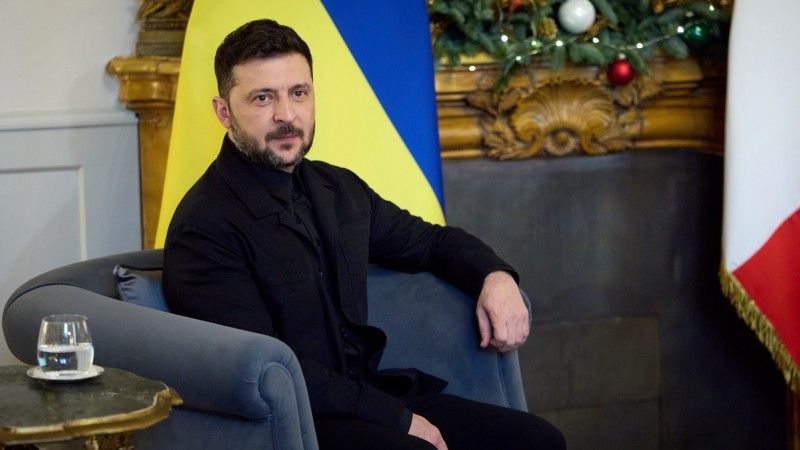
Ukraine’s war with Russia is now in its fifth year, yet it risks becoming what analysts and Ukrainian officials alike fear most: a forgotten conflict. With global attention consumed by the U.S.-Israeli campaign against Iran and the consequent closure of the Strait of Hormuz, the pressure on Washington to sustain its commitment to Kyiv is eroding at precisely the moment when Russia senses strategic advantage. President Volodymyr Zelensky has warned explicitly that a prolonged Iran war is “very good for Russia and very bad for Ukraine” — boosting Moscow’s oil revenues, diverting Western weapons, and loosening the political will that has underpinned Ukraine’s resistance since February 2022.
“I am sure Russia wants a long war [in Iran]. They have benefits: the U.S. is focusing on the Middle East and may decrease military help to Ukraine.”
— President Volodymyr Zelensky, interview with Axios, March 30, 2026
Background and Chronology
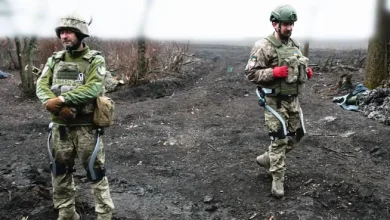
Russia launched its full-scale invasion of Ukraine on February 24, 2022, following years of hybrid warfare in the country’s east. What the Kremlin initially termed a “special military operation” expected to conclude within days has instead ground into one of the longest and most costly land wars in modern European history. As of April 3, 2026 — day 1,499 of the full-scale invasion — Russia’s total combat losses are estimated by Ukrainian military sources at approximately 1,301,260 personnel killed or wounded, with 1,230 additional casualties recorded in the past 24 hours alone.
According to data compiled by the Institute for the Study of War and analyzed by Russia Matters, Russian forces captured roughly 1,927 square miles of Ukrainian territory in the twelve months between April 2025 and March 2026 — an area roughly equivalent to half the size of Hawaii’s Big Island, or about 0.8 percent of Ukraine’s total territory. Yet the pace of advance slowed sharply in March: Russian forces lost 12 square miles of Ukrainian territory during the month of March 2026, compared to a gain of 46 square miles in the preceding four-week period. In the final week of March alone, Russia gained 17 square miles.
Ukraine’s energy infrastructure has been one of the primary victims of Russia’s sustained air campaign. Every power plant in Ukraine has been damaged since the full-scale invasion began, according to Zelensky’s own February 2026 assessment. Russia launched 15 large-scale strikes on Ukraine’s energy grid between December 2025 and February 2026 — more than three times the average rate of previous winters — leaving Kyiv’s 3.5 million residents without power for extended periods. Ukraine’s available generating capacity has fallen from 33.7 gigawatts at the start of the invasion to approximately 14 gigawatts as of early 2026, according to The Economist. An estimated 600,000 people have left Kyiv as a direct consequence of the power shortages, according to energy provider DTEK’s chief executive.
On the battlefield, Ukraine also struck back deep inside Russian territory. In a complex operation said to have taken over eighteen months to plan, Ukrainian forces launched drones targeting Russian strategic bombers at airfields across Russia, claiming to have hit 41 aircraft. U.S. defense officials assessed the figure was likely inflated, but acknowledged the operation was significant — with fewer bombers available, Russia’s capacity to launch the glide bombs and cruise missiles that have devastated Ukrainian cities and frontline positions would be meaningfully reduced.
The Diplomatic Impasse
Efforts to bring the war to a negotiated end have produced activity but no breakthrough. U.S.-brokered ceasefire talks were effectively put on hold following the outbreak of fighting between the United States, Israel, and Iran in late February 2026, diverting the Trump administration’s diplomatic bandwidth and strategic focus. Russia and Ukraine have met twice in Turkey for indirect talks, agreeing only on a prisoner swap, while the core issues — territory, security guarantees, and NATO membership — remain completely unresolved.
The Kremlin’s Dmitry Peskov formally rejected Zelensky’s proposal for an Orthodox Easter ceasefire, saying Ukraine must first withdraw its troops from the Donetsk region — a demand Kyiv has flatly refused. Russia controls approximately 80.5 percent of the Donetsk region, with Ukraine holding the remaining 19.5 percent, according to ISW data. Putin has insisted publicly that Russian forces are “advancing rather successfully” and that if Kyiv is not prepared to settle peacefully, Moscow will achieve its goals through military means.
Zelensky, for his part, has grown increasingly candid about his fears regarding the Trump administration’s approach. In an interview with Axios, he expressed concern that once the Iran conflict concludes, Washington will resume pressure on Kyiv to accept territorial concessions. “They don’t see another way to stop Putin other than withdrawing Ukrainian troops from our territory,” he said. “My concern is that nobody really values the danger of such a decision for our security.”
“The regimes in Russia and Iran are brothers in hatred and that is why they are brothers in weapons.”
— President Volodymyr Zelensky, address to the UK Parliament, March 2026
Key Facts
- 1,499 — days since Russia’s full-scale invasion of Ukraine began on February 24, 2022
- ~1,301,260 — estimated total Russian military casualties (killed and wounded) as of April 3, 2026, per Ukrainian military sources
- 250,000–300,000 — estimated Ukrainian military casualties (killed and wounded), per a late February 2026 estimate from a senior Western official
- 15,364 — Ukrainian civilians confirmed killed, according to the United Nations
- 14 GW — Ukraine’s remaining electricity generating capacity, down from 33.7 GW at the start of the invasion
- 1,927 sq miles — Ukrainian territory captured by Russia in the twelve months to March 31, 2026 (ISW data)
- 230 — combat engagements recorded along the frontline on April 2, 2026
- 35 — nations in the “Coalition of the Willing” that have pledged to support Ukraine post-ceasefire
The Coalition of the Willing and Security Guarantees
While frontline fighting continued unabated, European diplomacy has been focused on constructing a post-war security architecture for Ukraine. A summit of 35 nations — the so-called Coalition of the Willing — convened in Paris earlier this year, with Britain and France pledging to deploy troops to Ukraine and establish military hubs there in the event a ceasefire is reached. The United States agreed to lead a truce-monitoring mechanism involving drones, sensors, and satellites rather than ground troops.
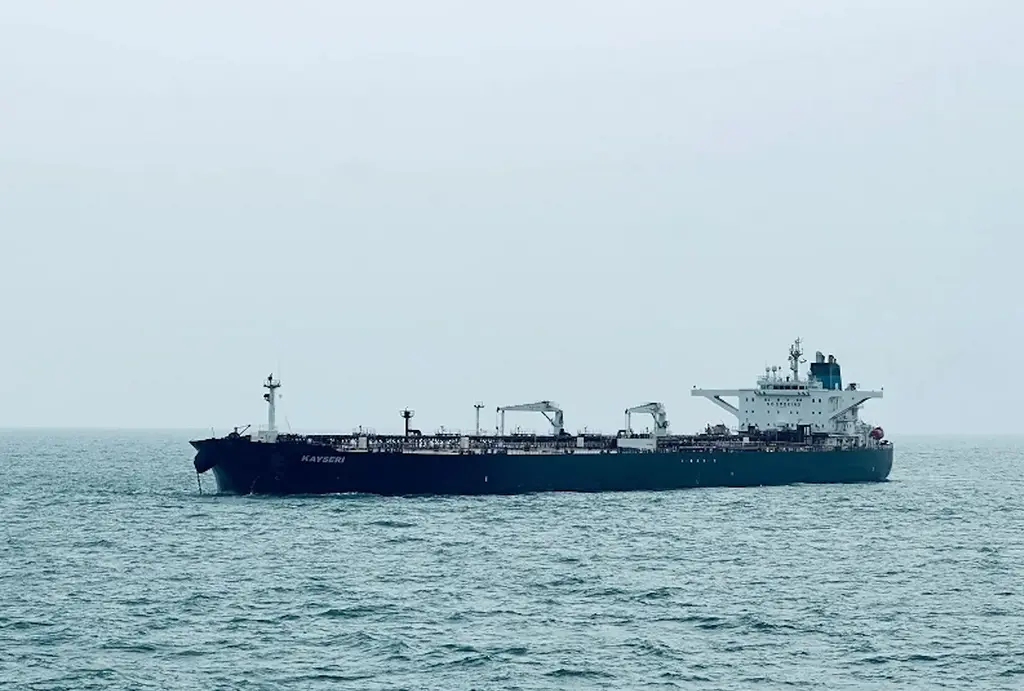
British Prime Minister Keir Starmer has explicitly framed the Ukraine war and the Iran conflict as interconnected, warning that “Putin can’t be the one who benefits from a conflict in Iran, whether that’s oil prices or the dropping of sanctions.” Starmer vowed that Britain would not allow the Middle East crisis to distract from the imperative of supporting Ukraine. U.S. Treasury Secretary Scott Bessent’s decision to temporarily allow the purchase of Russian oil stranded at sea — a move designed to ease global energy markets amid the Iran war — was met with fierce criticism from Zelensky and European leaders, who warned it was effectively replenishing Moscow’s war chest.
The Atlantic Council assessed bluntly that security guarantees for Ukraine, however robust on paper, are unlikely to compel Putin toward a peace settlement without significantly increased military and economic pressure. Putin, the Council argues, believes he is winning a war of attrition — with Ukraine’s manpower shrinking, Western resolve wavering, and Russian forces still advancing, however slowly. In this strategic calculus, time favors Moscow.
Analysis
The Ukraine war has entered one of its most diplomatically paradoxical phases: a conflict where a peace agreement is described by Western officials as “90 percent complete,” yet where Russia continues to bombard Ukrainian cities with record drone salvos and refuses to agree to even a temporary ceasefire. The Kremlin’s strategy appears deliberate — stall the talks, advance incrementally on the ground, and wait for political conditions in Washington and European capitals to shift in Moscow’s favor. The Iran war, whatever its outcome, has given Putin an unexpected gift: a distraction that reduces Western bandwidth, raises Russian oil revenues, and creates pressure on the Trump administration to show results on multiple fronts simultaneously.
Ukraine’s position is difficult but not hopeless. Its drone warfare capabilities have proven genuinely disruptive — striking Russian bomber fleets deep inside Russian territory, targeting oil refineries, and providing air defense expertise now in demand across the Gulf states battling Iranian drones. Zelensky has shrewdly leveraged this to maintain Ukrainian relevance at a moment when global attention is focused elsewhere. But relevance and survival are different things. Without sustained military aid, security guarantees with real teeth, and a U.S. administration willing to apply genuine pressure on Moscow, the risk is that Ukraine’s war ends not with a just settlement but with an exhausted capitulation dressed up as diplomacy.
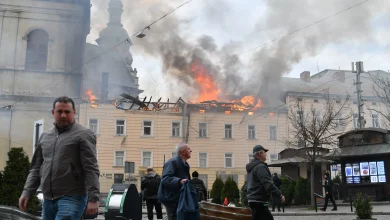
The strikes on Kharkiv on Friday morning are a reminder that for Ukrainians, the abstract language of peace negotiations collides daily with the concrete reality of ballistic missiles hitting apartment buildings before dawn. Until the gap between those two realities closes, the war continues — and with it, the mounting toll on a nation that has now been fighting for its survival for over four years.