EU’s Kallas Tells Gulf States: Security Help Must Go Both Ways
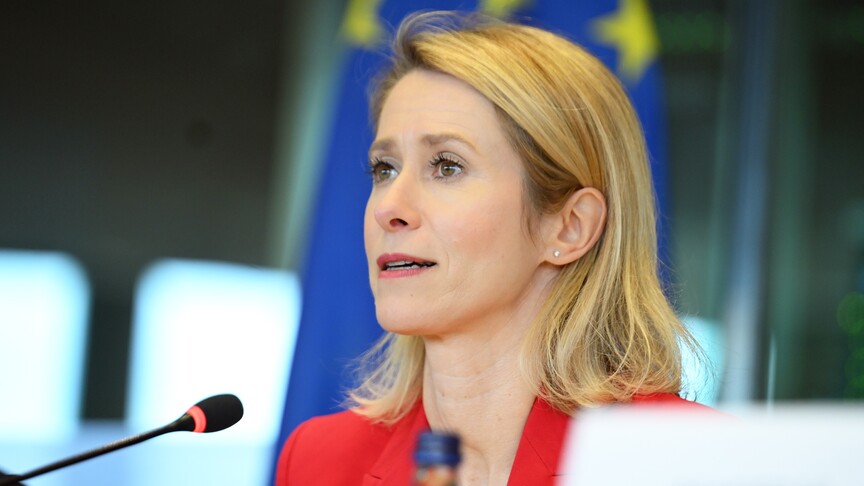
BRUSSELS / ANKARA, April 11, 2026 — The European Union’s foreign policy chief Kaja Kallas has issued a pointed diplomatic rebuke to Gulf states, telling CNN that Europe has not received meaningful support from Gulf countries over Russia’s four-year war against Ukraine — and that international security cooperation cannot flow in only one direction. The remarks arrive at a critical diplomatic juncture: forty days into Operation Epic Fury, with a fragile two-week ceasefire now in place and U.S.-Iran talks underway in Islamabad, the question of who carries the burden of global security is becoming impossible to ignore.
What Kallas Said — and What She Meant
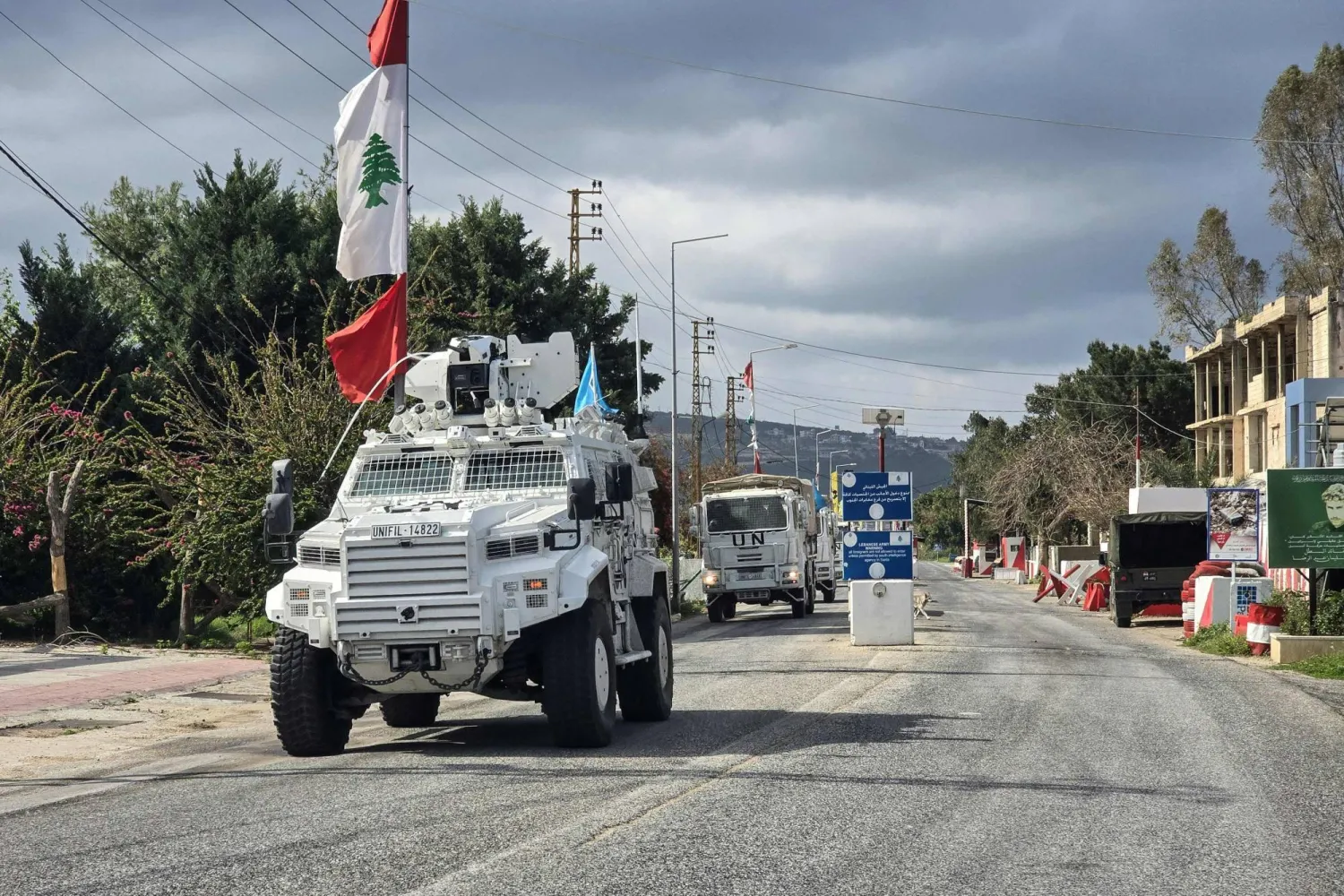
Speaking to CNN’s Becky Anderson, Kallas defended Europe’s record during the Iran-Israel-U.S. war while simultaneously putting Gulf states on notice. She pointed to Europe’s naval operations in the Red Sea under Operation Aspides, the deployment of air defence systems to the region, support for Lebanese armed forces, and backing for the Palestinian Authority as evidence of substantial European contribution. “I feel that this is really unfair,” Kallas said of the criticism that Europe had not done enough. “Of course we can all do more, but then the question is, we also have our security theatre in Europe. We have Russia’s war.”
The sharpest part of her remarks was directed squarely at Gulf capitals. Europe had not created the crisis in the Middle East, she said, and yet was being expected to carry a significant share of the response — while the Gulf states had offered nothing comparable to Europe when Russia launched its full-scale invasion of Ukraine in February 2022. “We haven’t seen really the Gulf countries helping us there, whereas it can’t be only one-way street,” Kallas said. The same point had been made in starker terms at an extraordinary EU-GCC meeting in early March, where Kallas told assembled ministers that Gulf support for Europe on Ukraine “has not been, really, a two-way street, but one-way street.” Her published remarks at that meeting, available via the European External Action Service, confirm this was not an off-the-cuff remark but a deliberate and prepared position.
“We have Russia’s war against Ukraine going on for four years. We haven’t seen the Gulf countries helping us there. It can’t be only one-way street.”
— Kaja Kallas, EU High Representative for Foreign Affairs and Security Policy, speaking to CNN, April 2026
The Broader Context: Two Wars, One Resource Pool
Kallas’s remarks are not simply diplomatic friction — they reflect a genuine and worsening strategic problem for Europe. The Iran war has created direct competition for the very military resources Ukraine most urgently needs. At her G7 Foreign Affairs Ministers press conference, Kallas was explicit about this, warning that “Moscow stands to gain from higher energy prices and the diversion of air defences from Ukraine to the Middle East,” according to her published remarks at the European External Action Service. Air defence systems — Patriot batteries, IRIS-T units, and interceptor missiles — are finite assets. Every system sent to defend a Gulf state from Iranian drones is a system not defending Kyiv.
The connection between the two conflicts is more direct than it might appear. As Kallas noted at the EU-GCC meeting, the same Iranian-designed Shahed drones that are striking Gulf states every night are the same drones attacking Ukrainian cities. Iran supplies Russia with the Shahed-136, which Russia deploys as the Geran-2 in mass nighttime strikes against Ukrainian infrastructure. Ukraine, having spent years developing its own drone interception capability, has accumulated expertise that is directly applicable to Gulf defence needs. Kallas said Gulf states had been “really surprised” at how much Ukraine could offer them in this area — and suggested that genuine defence cooperation between Kyiv and Gulf capitals could begin to make the relationship more reciprocal.
The Two-War Resource Dilemma — Key Facts
- Shared threat: Iranian Shahed drones are attacking both Ukrainian cities and Gulf states simultaneously — same design, same manufacturer
- Resource competition: Air defence systems needed in Ukraine are being diverted to Middle East — Kallas confirmed at G7 Foreign Ministers meeting
- Oil price impact on Russia: Brent crude at $109/barrel — up 50%+ since war began — directly increases Russian war revenues
- Ukraine’s offer: Kallas proposed Gulf states contact Zelenskyy directly about drone interceptor technology — Ukraine has produced and can share this knowledge
- Gulf support for Ukraine since 2022: Assessed as minimal — no significant military, financial or logistical contribution confirmed
- EU contribution to Middle East: Operation Aspides naval patrols in Red Sea, air defence deployments to Bahrain/Kuwait/Saudi Arabia, Lebanese armed forces support
Europe Did Not Create This — But Cannot Escape It
Kallas was careful to make a point that resonates beyond diplomacy. Europe neither started the Iran war nor asked for the Strait of Hormuz to be closed. The U.S.-Israeli decision to launch Operation Epic Fury on February 28 was made in Washington and Tel Aviv, without European consultation. The consequences — oil price spikes, diverted defence resources, increased Iranian drone production benefiting Russia — landed on European economies and on the Ukrainian battlefield. “Let’s be honest, we haven’t created the situation,” Kallas told Anadolu Agency.
Despite this, she maintained that Europe is contributing. Naval forces under Operation Aspides are protecting shipping lanes in the Red Sea. RAF aircraft have been deployed in a defensive role across the region, intercepting Iranian missiles over Jordan, Iraq, and Cyprus. The EU has coordinated consular evacuations across nine countries simultaneously. Kallas argued that framing European caution as abandonment is both inaccurate and counterproductive — particularly when Gulf states, who benefit directly from European naval protection, have offered nothing equivalent to Ukraine over four years of war.
NATO, Transatlantic Tensions and the Alliance Warning
Kallas also used the CNN interview to deliver what amounts to a quiet warning about the state of the Western alliance itself. She reiterated that NATO remains “the strongest defence alliance there is in the world” and that it must be kept that way — but added that internal disagreements and misunderstandings risk weakening it. “When we are not together, we are both weaker,” she said. The remark is pointed in the current context: the Trump administration has repeatedly criticized European NATO allies for insufficient defence spending while simultaneously making military decisions — including the launch of Operation Epic Fury — that have significant consequences for European security without European input.
Kallas invoked European military history as a counter to what she characterised as unfair American criticism, noting that European soldiers fought in Afghanistan and Iraq “because the US asked us to,” and that dismissing those contributions was “not true and not fair.” The remarks reflect a European establishment increasingly unwilling to absorb criticism quietly while bearing real security costs — and increasingly prepared to say so publicly.
The Islamabad Talks and What Comes Next
The immediate diplomatic backdrop to Kallas’s interview is the two-week ceasefire declared by President Trump on April 7, with U.S. and Iranian delegations meeting in Islamabad on Saturday April 11 for the most significant direct talks between the two countries since 1979, according to Anadolu Agency. Pakistan, Turkey, China, Saudi Arabia, and Egypt were credited with brokering the ceasefire. Europe was not part of that mediation framework — a notable absence that underscores how far the EU has been sidelined in the active diplomacy of a conflict that directly affects European interests.
Kallas confirmed that discussions are underway about a “Coalition of the Willing” for Persian Gulf security after a ceasefire is reached — a framework that could eventually draw European naval forces deeper into Gulf security arrangements. Whether Gulf states are prepared to offer anything comparable to Ukraine in return remains, for now, an open question.
Analysis
Kallas is making an argument that is long overdue and genuinely difficult to refute. Europe has spent four years carrying the primary burden of supporting Ukraine against Russian aggression — financially, militarily, and in terms of sanctions costs — while Gulf states have largely sat on the sidelines, maintained energy trade with Russia, and in some cases actively circumvented the sanctions regime. Now those same Gulf states, facing Iranian drone and missile attacks, expect Europe to extend its naval umbrella into the Persian Gulf with no questions asked and no reciprocal commitment offered. Kallas is right that this is not a sustainable arrangement. The sharper strategic point is this: rising oil prices caused by the Hormuz closure are directly funding Russia’s war machine. Every barrel of oil that does not flow through Hormuz pushes Brent crude higher, increases Russian export revenues, and makes it marginally harder for Ukraine to survive. The Gulf states and Europe share a common interest in ending both conflicts. Whether that shared interest can be converted into genuine mutual support is the diplomatic test that the Islamabad talks — and whatever comes after — will have to answer.
Strategy Battles — Related Coverage
Editorial Verification
This report has been reviewed for factual accuracy and cross-referenced against official EU External Action Service published statements, verified broadcast journalism, and Anadolu Agency reporting.
Approved for Publication
Marcus V. Thorne
Lead Editor, Strategy Battles
Sources
- Anadolu Agency — EU Says Gulf Allies Not Supporting Ukraine War Effort, Calls for Shared Responsibility (April 11, 2026)
- CNN — Day 41 of Middle East Conflict — Kallas Interview with Becky Anderson (April 9, 2026)
- European External Action Service — EU-GCC Extraordinary Meeting: Press Remarks by High Representative Kaja Kallas
- European External Action Service — G7 Foreign Affairs Ministers Meeting: Press Remarks by High Representative Kaja Kallas
- RBC Ukraine — Kallas Responds to U.S. Criticism Over Strait of Hormuz
- Turkiye Today — EU’s Kallas Says Criticism of Europe’s Role in Iran War is Unfair
©StrategyBattles.net 2026
This article is for news and analysis purposes only. It is based on publicly available news sources and military updates. All rights reserved. Original reporting may come from various open sources. Not for commercial reuse without permission.