Hasakah Bus Ambush: Two Syrian Soldiers Killed by Unidentified Gunmen on M4 Corridor
2 KIA
Syrian Army soldiers killed
M4
Highway corridor targeted
3 mo.
Since Damascus took Hasakah
📍 Hasakah countryside : al-Aliyah silos area : 11 May 2026

Ambush site sits between Ras al-Ain and Ain Issa along the M4 corridor, south-southwest of Hasakah city. Datum WGS84, UTM Zone 37S. Map: Strategy Battles / OSINT.
📍 AL-ALIYAH SILOS : AMBUSH SITE
MGRS: 37S FA 38612 25264
36.3625°N 40.5450°E
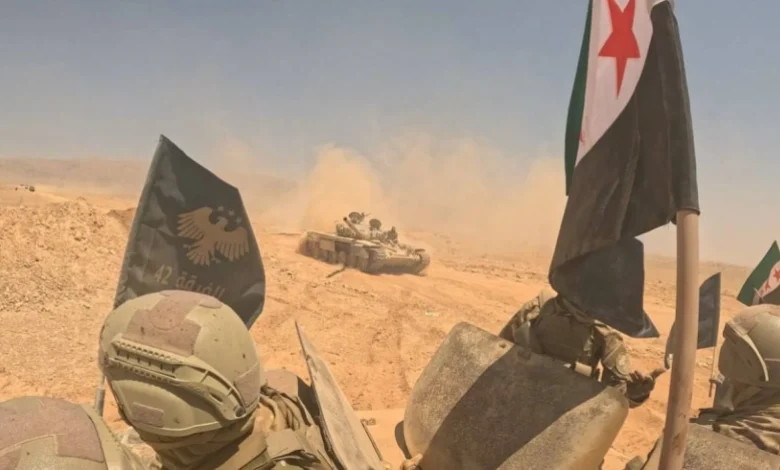
Unidentified gunmen opened fire on a Syrian Army transport bus west of the al-Aliyah grain silos along the M4 highway, killing two soldiers and wounding several others.
📍 HASAKAH CITY : PROVINCIAL CAPITAL
MGRS: 37S FA 56732 42130
36.5117°N 40.7503°E
Hasakah city, the provincial capital, came under Syrian government control in February 2026 after the SDF integration agreement. Used here as the geospatial cross-check reference.
📍 RAS AL-AIN : M4 WEST ENTRY
MGRS: 37S EA 95392 78766
36.8500°N 40.0700°E
Western terminus of the M4 corridor traversing Hasakah province. AFP cited a Syrian military source describing the bus as moving along the Ras al-Ain to Ain Issa highway.
📍 AL-SHADDADI : ISIS HISTORY ZONE
MGRS: 37S FV 57257 91681
36.0570°N 40.7460°E
Former Islamic State stronghold roughly 50 km south of the ambush site. Cited consistently in regional reporting as a sleeper-cell base of operations after the group’s 2019 territorial defeat.
🔴 The Ambush
Gunmen open fire on Syrian Army bus west of al-Aliyah silos
Unidentified gunmen ambushed a Syrian Arab Army transport bus on Monday at grid reference 37S FA 38612 25264 (36.3625°N, 40.5450°E), in open countryside west of the al-Aliyah grain silos in Hasakah governorate. The attackers struck along the M4 highway corridor that connects Ras al-Ain in northern Hasakah province to Ain Issa in Raqqa province, a route Damascus uses to move troops and logistics between the two former Kurdish-administered zones.
The Defence Ministry’s Media and Communication Directorate, in a statement carried by state news agency SANA, said two soldiers were killed and several others wounded when the bus came under fire. AFP, citing a Syrian military source speaking on condition of anonymity, gave a slightly different casualty breakdown of two killed and two wounded, and described the bus as a military transport struck along the Ras al-Ain to Ain Issa highway. The discrepancy on the wounded count is noted; no source has issued a revised official figure.
No group has claimed responsibility. SANA and AFP both used the formula “unidentified gunmen” or “unknown assailants,” and the military source told AFP that investigations were under way to identify the perpetrators. The al-Aliyah silos sit on the southern side of the M4, in terrain that has hosted Islamic State sleeper-cell activity for several years, but Strategy Battles cannot treat any attribution as confirmed until a claim is made or an investigation is closed.
Syrian Ministry of Defence, via SANA, 11 May 2026
“Unidentified gunmen opened fire on the bus west of al-Aliyah silos in the Hasakah countryside, resulting in the martyrdom of two soldiers and the injury of several others.”
🟡 The Context
Why this stretch of road keeps being chosen
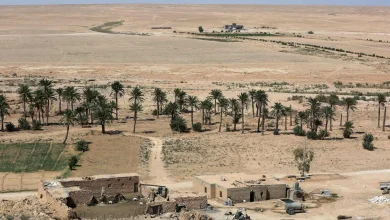
The terrain around the al-Aliyah silos, located near grid reference 37S FA 38612 25264, is exactly the kind of country that has historically favoured hit-and-run attacks. It is flat, lightly populated, dotted with grain infrastructure inherited from the autonomous administration, and crossed by a single arterial highway that armoured columns cannot easily flank. A transport bus is the softest target in any such convoy, and Syrian government forces have been moving them through this corridor in greater numbers since taking over from the SDF in February 2026.
That February transition itself created the security gap now being exploited. When Kurdish-led forces withdrew from facilities in northeast Syria during the January clashes with Damascus, including positions near the notorious al-Hol camp, several hundred Islamic State detainees and family members were reportedly able to walk out. The US military relocated up to 9,000 detainees to Iraq in the weeks that followed to prevent a resurgence, but the SDF, which had spent six years guarding these prisons, was no longer doing the counter-terror work it had been doing before.
Damascus assumed responsibility for that work in stages, formally joining the international coalition against the Islamic State in November as the body’s 90th partner. American forces themselves left the country entirely on 16 April 2026, when the last troops evacuated Qasrak base in the Hasakah region. The Syrian Army has therefore taken full ownership of a counter-insurgency mission in a province where the SDF, with US air support, was previously doing the heavy lifting.
Patterns of attack on Syrian forces in the broader area have been accelerating. The New Region reports that in late April, ISIS claimed responsibility for an attack that killed a Syrian soldier in the Aleppo countryside, the third such claim attributed to the group inside a month. In February, US Central Command said it had targeted 30 ISIS positions across ten operations in Syria, an indicator that even before the American withdrawal, the threat picture was active.
🔵 The Geography
The al-Aliyah silos and the M4 corridor explained
The al-Aliyah grain silos are part of a network of Soviet-era storage facilities along the M4 corridor in northern Syria, originally built to handle wheat from the al-Jazira agricultural region. According to Syrians for Truth and Justice, Aliya and the neighbouring al-Shirkrak silos were handed over to the Syrian government and Russian forces under a December 2019 deconfliction arrangement, while other silos in the corridor passed to Turkish-backed factions or remained with the autonomous administration. The silos at Aliya sit just south of the M4 itself.
For coordinate verification, Strategy Battles has cross-checked the ambush location against Hasakah city centre at MGRS 37S FA 56732 42130, the provincial capital roughly 25 km to the northeast of the strike point. Both fall within UTM Zone 37S using the WGS84 datum, and the relative bearing matches the SANA description of the attack occurring in the Hasakah countryside. Ras al-Ain at 37S EA 95392 78766 marks the western terminus of the M4 corridor referenced by the AFP source.
The corridor matters strategically because it is the only east-west axis available to government forces moving between former SDF-administered cantons without going further south through the desert. Any group seeking to interdict that movement only has to operate on a single highway. The silos themselves provide cover, line-of-sight on traffic, and a known landmark for coordinating an ambush. For the same reasons, this area was contested heavily between ISIS and the YPG in 2015 and 2016, and remained an active zone of sporadic IED and small-arms attacks throughout the SDF’s tenure.
⚠ The Attribution Question
Three candidate actors, no current claim
In the absence of a claim of responsibility, three actor sets are worth naming explicitly so readers can assess what is being argued in regional reporting. The most prominent in the cited coverage is the Islamic State, which has carried out similar small-arms attacks on transport in northeast Syria since 2019 and has been ramping operations against Damascus-controlled positions since February. The New Region cited ISIS sleeper-cell activity as the most likely explanation in its piece on the ambush.
A second candidate, raised in regional commentary but not by any of the named primary sources covering Monday’s incident, would be SDF-aligned or breakaway Kurdish elements opposed to the integration deal that brought Damascus into Hasakah city. Government and SDF forces have clashed periodically since the deal, including the deadly January suicide drone strike near al-Yarubiyah crossing that killed seven Syrian soldiers. Neither SANA nor AFP suggested SDF involvement on Monday, and we flag this candidate only because regional analysts have raised it on social media.
A third possibility, also unattributed, is a local tribal grievance or criminal armed group operating in the rural area. Northern Syria has seen tit-for-tat killings of this kind, often driven by disputes over land, smuggling, or the legacy of wartime alignments. Without a claim, all three sets remain candidates. Strategy Battles holds that the responsible position is to describe the attack precisely and resist the temptation to assign blame ahead of the investigation Damascus says is now under way.
Strategy Battles Assessment
An expected attack on an exposed corridor, but the longer Damascus stays unable to attribute it, the worse the political picture gets.
The tactical event is small: two soldiers killed in a small-arms ambush on a transport bus. Read narrowly, this is exactly what an under-resourced counter-insurgency mission looks like in flat open country a few months after a security handover. The strategic event surrounding it is larger. Damascus has taken on the security file that the SDF and the US-led coalition were running for six years, and the M4 corridor is one of the first places where the limits of that handover become visible.
Three observations frame what to watch. First, the absence of a claim is itself information. ISIS attacks elsewhere in Syria over the past month have generally been claimed promptly through the group’s media channels. A silent ambush either reflects an actor that does not want to be seen, an actor whose claim has not yet been issued, or an actor not interested in propaganda value. Each carries a different threat signature, and the Syrian investigation will eventually have to land on one.
Second, the operational vulnerability is the bus itself. The Syrian Arab Army inherited Soviet-era logistics doctrine that still moves troops in soft transports between fixed positions, often without armour escort, in terrain it does not yet fully control. Until that practice changes, the cost per kilometre of operating on the M4 will be set by the most patient cell willing to sit in a treeline for two hours and wait for a target.
Third, the political stakes for Damascus are higher than the body count suggests. The al-Sharaa government has staked its legitimacy on the proposition that a unified Syria can hold territory the SDF could not hold without American air cover. Each unclaimed, unanswered ambush erodes that proposition. If a pattern develops over the next sixty days, expect either a public ISIS claim that gives Damascus a political enemy to mobilise against, or quiet pressure on the Iraqi border to tighten the cross-border smuggling routes that feed sleeper cells south of the M4.
Strategy Battles Related Coverage
Sources
- SANA, “Two soldiers martyred in attack on army bus in Hasakah countryside,” 11 May 2026.
- Arab News / AFP, “Syria says two soldiers killed in attack in northeast,” 12 May 2026.
- The New Region, “Two Syrian soldiers killed in ‘armed attack’ near Hasaka: State media,” 11 May 2026.
- Syrians for Truth and Justice, background on Aliya silos and the M4 corridor (historical reference).
- Anadolu Agency, January 2026 reporting on SDF and Syrian Army clashes near al-Aliyah silos (historical context).
Editorial Verification
The Ministry of Defence statement via SANA describing two soldiers killed and several wounded is corroborated by AFP (cited via Arab News) and The New Region; treated as verified across three independent outlets. AFP’s anonymous Syrian military source gave the wounded figure as two; SANA used “several.” This discrepancy is noted explicitly in the body text rather than reconciled. No group has claimed responsibility; “unidentified gunmen” attribution is the language used by both SANA and AFP and is preserved here. The candidate-actor discussion in the attribution section is single-source analytical context and is flagged with a purple tag accordingly.
MGRS datum: WGS84 / UTM Zone: 37S / Cross-check reference: Hasakah city 37S FA 56732 42130
No satellite imagery acquisition was relied upon for this report; coordinates derived from gazetteered place names and the M4 corridor trace.
All claims independently attributed and verified to open sources where possible.
Approved for Publication
Marcus V. Thorne
Lead Editor, Strategy Battles
©StrategyBattles.net 2026
This article is for news and analysis purposes only. Based on publicly available news sources and military updates. All rights reserved. Not for commercial reuse without permission.