Israel Built Secret Iraqi Desert Base, Struck Iraqi Troops Who Nearly Found It
1 KILLED
Iraqi soldier, March incident
5 WEEKS
Reported active campaign window
5 to 7
Helicopters seen by shepherd
📍 Western Iraqi desert : alleged Israeli operational area, March 2026

Operational area inferred from open sources; the WSJ did not publish an exact site location. Datum WGS84, UTM Zone 38S primary, with Rutba in adjoining Zone 37S. Map: Strategy Battles / OSINT.
📍 Suspected Base, Operational Centroid
MGRS: 37S FR 87894 97621
32.5000°N 41.0000°E
Approximate centroid of the western Anbar desert operational area described by the WSJ. Exact site coordinates were not disclosed in the report.
📍 Shanana Area, March Incident Site
MGRS: 38S KA 17194 66552
32.2000°N 42.0000°E
Desert corridor between Karbala and Najaf where a shepherd reported helicopter activity in early March 2026, prompting the Iraqi 41st Brigade response.
📍 Rutba District, Chlabat Area
MGRS: 37S FS 19618 56228
33.0380°N 40.2810°E
Reported secondary helicopter landing zone close to the Saudi border, where four Iraqi border guard vehicles were burned according to a local Anbar official cited by Rudaw.
📍 Isfahan Rescue Reference, Iran
MGRS: 39S WS 62644 13127
32.6540°N 51.6680°E
Area where a U.S. F-15 was downed during the war and the crew was recovered by U.S. assets, with Israeli airstrikes reported by the WSJ as supporting the rescue.
🔴 The Wall Street Journal Disclosure
The Israel Secret Iraq Base: A Forward Outpost Built Before the War
The Israel secret Iraq base story broke on 9 May 2026 with a Wall Street Journal investigation by Tel Aviv correspondent Anat Peled. Citing people familiar with the matter, including senior U.S. officials, the WSJ reported that Israel established a covert military outpost in the western Iraqi desert in the operational box centred on grid reference 37S FR 87894 97621 (32.5000°N, 41.0000°E). The outpost was built shortly before the 28 February 2026 strike on Iran and operated with U.S. knowledge throughout the five-week air war. Ynetnews carried an English-language summary the same day, and a Reuters / Investing.com wire pickup followed within hours.
According to the report, the outpost served three functions. It was a forward logistics hub for Israeli air operations into Iran. It housed Israeli special forces. And it positioned combat search and rescue assets close enough to the battlefield to recover Israeli pilots if any were shot down. None were. The report frames the base as a hedge against a worst-case scenario that never materialised, but one that the Israeli air force was unwilling to fight without.
The geography matters. Western Anbar sits roughly halfway between Israeli airfields and the Iranian heartland. From an outpost in the desert near Rutba or Nukhaib, an Israeli rescue package can reach a downed pilot anywhere from western Iran to the Tehran corridor in a fraction of the time required from Israeli soil, and without crossing back through contested Syrian or Jordanian airspace. That is the operational logic the WSJ describes, and it is the reason the site was built before the war rather than improvised during it.
🟡 The Shepherd and the Helicopters
A Civilian Sighting Nearly Compromised the Base in Early March
The base nearly came undone within days of the war starting. The WSJ, citing Iraqi state media as well as its own sources, reports that in early March a local shepherd in the desert near grid reference 38S KA 17194 66552 (32.2000°N, 42.0000°E) saw unusual military activity, including helicopter flights, and reported it. The Iraqi army dispatched a force from the 41st Brigade to investigate. According to one official cited by the Journal, Israel drove the Iraqi unit away with airstrikes. Iraq publicly condemned the attack at the time, saying an Iraqi soldier had been killed.
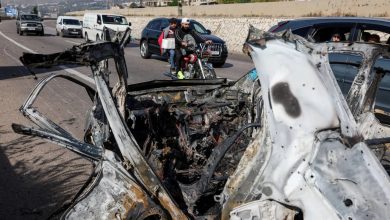
The contemporaneous reporting from the same incident tells a more granular story. On 4 March 2026, Iraqi News, Rudaw and the Iraqi Joint Operations Command described a clash in the Shanana area, roughly 40 kilometres from the Nukhaib subdistrict, in which a foreign force inserted by helicopter, between five and seven aircraft according to witnesses, fired on an Iraqi patrol approaching the landing site. One Iraqi soldier was killed and two were wounded. A second insertion was reported the same day in the Chlabat area near the Saudi border at grid reference 37S FS 19618 56228 (33.0380°N, 40.2810°E), where four Iraqi border guard vehicles were burned. At the time, Iraqi sources and intelligence officials told Rudaw and P.A. Turkey that the foreign aircraft were American.
The WSJ now repositions the same incident, or at least the strike component of it, as an Israeli operation. That is a substantial revision of the public record. Iraqi News listed the U.S. 41st Brigade context and quoted the Iraqi Security Media Cell, while Rudaw spoke to a high-level Karbala security source identifying U.S. special forces. Strategy Battles flags this as a single-outlet attribution change pending Iraqi government corroboration. Baghdad has not, at time of publication, publicly accepted the Israeli attribution.
Iraqi Joint Operations Command : Statement, 4 March 2026 (via Rudaw)
A Karbala Operations Command patrol on a desert search mission was hit by airstrike and gunfire at dawn, the command said, calling the incident “reprehensible and deplorable” and confirming one fighter killed and two wounded.
🔵 The Isfahan F-15 Episode
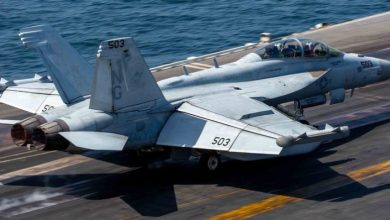
An American Crew Down, an Israeli Offer to Help, and Strikes in Support
The base was used at least once in support of an actual recovery, the WSJ reports, although for an American rather than Israeli crew. When a U.S. F-15 was shot down near Isfahan at grid reference 39S WS 62644 13127 (32.6540°N, 51.6680°E), Israel offered to retrieve the crew. American forces opted to handle the rescue themselves, but Israel did carry out airstrikes to suppress threats around the recovery, according to the report. Ynetnews previously covered the F-15 loss in a separate article in March, which the May 9 piece links back to.
The detail matters for two reasons. It establishes that the Iraqi outpost was integrated into the joint U.S. and Israeli air operations picture in real time, not merely a parallel Israeli effort. It also confirms that Washington had operational visibility into Israeli activity inside Iraq, including kinetic activity targeting Iraqi state forces. The WSJ characterises the base as built with U.S. knowledge, which under the customary law of armed conflict and the existing U.S. force agreement with Baghdad places significant diplomatic weight on the United States as well as on Israel.
⚠ What Cannot Be Verified
Single-Outlet Attribution and the Limits of the Public Record
Several elements of the WSJ account remain unconfirmed by Western OSINT at time of publication. The exact location of the base has not been published, and Strategy Battles has placed the marker at the operational centroid of the area implied by the open sources rather than at any specific structure. The transition of attribution for the 4 March strike from U.S. forces to Israeli forces is reported by the WSJ alone among English-language outlets, with Reuters, Times of Israel, Investing.com and the Jerusalem Post so far summarising rather than independently corroborating. Iraqi government investigators have not publicly issued findings.
Casualty figures also diverge. Investing.com summarises the WSJ as saying the strike killed one Iraqi soldier and wounded two, matching the Iraqi Joint Operations Command count from 4 March. The Ynetnews English article paraphrases the Journal as saying simply that an Iraqi soldier was killed. Both are consistent with the contemporaneous Iraqi numbers, and neither contradicts the other, but Strategy Battles has retained the more specific 1 killed, 2 wounded figure from the original Iraqi statement. We have not seen photographs or video of the base, and we have not seen satellite imagery confirming construction. The Israeli government has not publicly commented at time of publication.
Strategy Battles Assessment
A Forward Base in Anbar Is Plausible, the Attribution Shift Is the Real Story
The military logic of the alleged outpost is sound and consistent with how Israel has approached previous out-of-area campaigns. Operating combat search and rescue from inside friendly territory at the western edge of Iran’s strategic depth would significantly compress the rescue clock for any Israeli aircrew downed over central or western Iran. Five weeks of sustained air operations with no Israeli pilots lost may have been generous fortune, but it was also the result of an architecture that included a forward fallback. From a planner’s viewpoint, building such a node in advance of the war and dismantling it afterwards is exactly what doctrine would prescribe.
The harder question is the attribution shift. In March, every Iraqi-language source and every English-language outlet covering the Shanana clash named the United States. The 41st Brigade believed it was engaging Americans. Rudaw’s Karbala security source named U.S. special forces. The Iraqi Joint Operations Command did not, in the days that followed, publicly correct the record to name Israel. The WSJ’s revision now places the kinetic responsibility on Israel while keeping the U.S. on the hook for foreknowledge. If Baghdad accepts that revised version, the political fallout falls almost entirely on the Sudani government, which has spent months arguing that Iraqi sovereignty was violated by Washington. A finding that an undeclared Israeli base was operating inside western Anbar with U.S. acquiescence would be considerably worse for Iraqi politics than a unilateral American action.
Watch for three things. First, whether the Iraqi Ministry of Defence or the Joint Operations Command issues an updated finding naming Israel rather than the United States. Second, whether the Popular Mobilization Forces, who absorbed seven dead in the 25 March Habbaniyah strike, treat the WSJ piece as license to reopen the question of who was striking what in western Iraq during the war. And third, whether commercial satellite imagery from Sentinel-2 or Planet between February and April 2026 reveals construction signatures in the operational box that would corroborate or refute the WSJ account. Until then, the base is an allegation backed by one outlet’s sources, and the record stands accordingly.
Strategy Battles Related Coverage
Sources
- Anat Peled, “Israel Built Secret Iraq Base, Struck Forces That Nearly Exposed It,” The Wall Street Journal, 9 May 2026.
- “Report: Israel built secret Iraq base, struck forces that nearly exposed it,” Ynetnews, 9 May 2026.
- “Israel built secret Iraq base to support Iran war, WSJ reports,” Reuters via Investing.com, 9 May 2026.
- “Iraqi soldier killed in desert clash following foreign airdrop near Najaf,” Iraqi News, 4 March 2026.
- “US forces land in Iraqi western desert, clash with Iraqi troops, leave one dead,” Rudaw, 5 March 2026.
- “Fatal Clash in Anbar Desert: U.S. Special Forces Fire on Iraqi Army Patrol,” P.A. Turkey, 5 March 2026.
- “Middle East Special Issue: March 2026,” ACLED, 4 March 2026.
Editorial Verification
Anat Peled byline at the WSJ verified via Muck Rack and the WSJ author profile. Republication confirmed via Ynetnews (English) and a Reuters wire summary on Investing.com. The 4 March 2026 Shanana incident, including the helicopter sighting by a local shepherd, is independently confirmed by 3 contemporaneous outlets: Iraqi News, Rudaw and P.A. Turkey, all of which at the time named U.S. forces as the foreign actor. The reattribution of the strike component to Israeli forces rests on the WSJ alone among English-language outlets at time of publication and is flagged as single-outlet (purple). The Iraqi Joint Operations Command statement of 4 March was issued through the Karbala Operations Command and reported in Arabic and English by Rudaw and Iraqi News; we have used the English text as quoted in those outlets. The U.S. F-15 loss near Isfahan was previously reported by Ynetnews. The Israeli government and the office of the U.S. Department of Defence had not issued a public response to the 9 May WSJ report at time of publication. The 25 March 2026 Habbaniyah airstrike on the PMF, which killed seven, is referenced in the assessment for context only and is sourced to Reuters, Al Jazeera and the Jerusalem Post.
MGRS datum: WGS84 / UTM Zone: 38S primary (with Rutba district items in adjoining Zone 37S) / Cross-check reference: Karbala 38S MB 08901 09244 and Baghdad 38S MB 40985 86388.
No commercial satellite imagery has been independently used by Strategy Battles to confirm the base location at time of publication.
All claims independently attributed and verified to open sources where possible.
Approved for Publication
Marcus V. Thorne
Lead Editor, Strategy Battles
©StrategyBattles.net 2026
This article is for news and analysis purposes only. Based on publicly available news sources and military updates. All rights reserved. Not for commercial reuse without permission.