UKMTO Warning Ship Seized at Anchor 38 Miles from Fujairah, Heading for Iranian Waters
057-26
UKMTO Warning Reference
38 NM
Distance NE of Fujairah
0545 UTC
Report Time, 14 May 2026
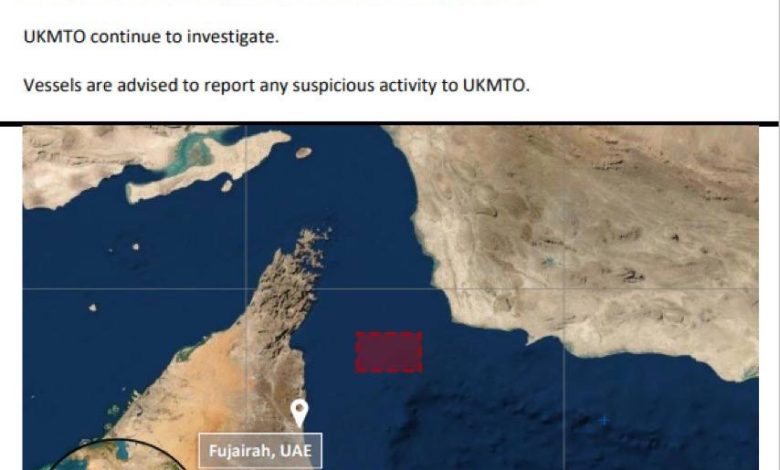
📍 Gulf of Oman / UAE coast: UKMTO 057-26 incident zone, 14 May 2026

Incident position is approximate, derived from UKMTO-reported distance and bearing from Fujairah. Datum WGS84, UTM Zone 40R. Map: Strategy Battles / OSINT.
📍 INCIDENT ZONE, GULF OF OMAN
MGRS: 40R DP 83437 27677
25.5664°N 56.8351°E
Approximate location 38NM northeast of Fujairah. Vessel taken at anchor by unauthorised personnel and directed toward Iranian territorial waters. UKMTO investigating.
📍 FUJAIRAH PORT, UAE (CROSS-CHECK)
MGRS: 40R DN 33602 77998
25.1164°N 56.3414°E
Fujairah Port, UAE. Major oil export hub and strategic anchorage area northeast of the Strait of Hormuz. Cross-check reference for MGRS calculations, UTM Zone 40R.
🔴 The Seizure
Ship Taken at Anchor, Crew Overridden, Vessel Directed Toward Iran
UK Maritime Trade Operations issued Warning 057-26 at 0545 UTC on 14 May 2026, reporting that a vessel at anchor had been taken by unauthorised personnel at grid reference 40R DP 83437 27677 (25.5664°N, 56.8351°E), approximately 38 nautical miles northeast of Fujairah, United Arab Emirates. The warning stated that the ship was now bound for Iranian territorial waters. UKMTO confirmed the report originated from the vessel’s Company Security Officer, meaning the alert was generated through the vessel’s own shore-side chain of command.
UKMTO stated it was continuing to investigate and advised all vessels in the area to report any suspicious activity through its watchkeepers channel. No vessel name, flag state or type was disclosed in the warning at the time of publication. The brevity of the advisory, combined with the ongoing investigation note, is consistent with UKMTO practice in the immediate aftermath of a confirmed or suspected seizure before all details are corroborated.
The position reported in the warning places the incident within the Gulf of Oman, in open international waters northeast of Fujairah Port. This is one of the most heavily trafficked anchorage zones in the region. Fujairah serves as the principal oil export transit hub for UAE crude that bypasses the Strait of Hormuz via pipeline, and its offshore anchorage area routinely holds dozens of vessels waiting to berth or transfer cargo.
🟡 Strategic Context
A Pattern of Seizures: How Iran Has Used Anchorage Zones as an Operational Hunting Ground
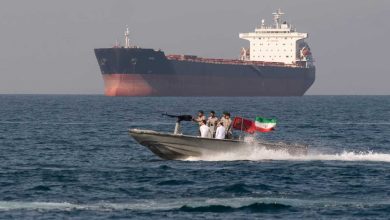
The incident reported in UKMTO 057-26 fits a documented pattern of Iranian seizure operations in the Gulf of Oman that has intensified since the onset of the 2026 Hormuz crisis. Iran’s Islamic Revolutionary Guard Corps Navy and the conventional Artesh Navy have both conducted boarding operations against anchored or slow-moving vessels in the waters northeast of Fujairah. In April 2026, IRGC naval units seized the container ships Epaminondas and MSC Francesca in the same general area, with Iran claiming the vessels had ignored warnings.
Vessels at anchor are particularly vulnerable. They lack the speed to manoeuvre away from approaching fast boats, they typically operate with a reduced bridge watch overnight, and their anchor chains restrict immediate departure. The anchorage zones northeast of Fujairah have historically held large numbers of tankers and bulk carriers waiting their turn at the port or conducting ship-to-ship transfers. That concentration of stationary targets has made the area a recurring flashpoint throughout the crisis.
On 8 May 2026, Iranian forces seized the sanctioned tanker Ocean Koi in the Gulf of Oman, with Iranian state media circulating footage of the Artesh Navy redirecting the vessel. Earlier that month, UKMTO reported a cargo vessel struck by an unidentified projectile in the Strait of Hormuz and a Panama-flagged ship hit at anchor near Ras Al Khaimah. The sequence underscores that IRGC and Artesh units are operating across the entire northeastern UAE coastal zone, not only in the strait itself.
UAE Ministry of Foreign Affairs : Statement on Fujairah-area Attack, May 2026
“Targeting commercial shipping and using the Strait of Hormuz as a tool of economic coercion or blackmail represents acts of piracy by Iran’s Revolutionary Guards Corps, and constitutes a direct threat to the stability of the region, and global energy security.”
🔵 UKMTO Operations
What UKMTO Warning 057-26 Tells Us: Reading the Alert Structure
UKMTO warnings carry specific structural information worth parsing carefully. Warning 057-26 is the 57th warning issued by UKMTO in calendar year 2026, reflecting the sustained pace of maritime security incidents in the region. The report source is identified as a Company Security Officer, meaning the alert was not generated by a naval or coastguard authority observing the incident externally, but by the vessel’s own shore-side security contact reporting the event directly to UKMTO’s watchkeepers in Portsmouth.
This sourcing detail matters operationally. It means the vessel’s communications were functional at the time the report was made, or that the CSO received a distress communication before contact was lost. UKMTO’s language, that the vessel “has been taken by unauthorised personnel whist at anchor and is now bound for Iranian Territorial Waters,” uses the present progressive tense, indicating the seizure was either in progress or very recently completed when the report was filed at 0545 UTC.
The absence of a vessel name in the warning is also consistent with UKMTO practice during active incidents. Publishing a vessel name before identities are confirmed risks misidentification and can complicate rescue coordination. UKMTO continued to investigate at the time of this article’s publication and had not issued an update. Iran had not issued a public response to the specific incident at the time of publication.
🔴 Wider Crisis
Fujairah Under Pressure: The Port That Cannot Afford to Be Closed
Fujairah occupies a unique position in the strategic geography of the 2026 Hormuz crisis. Because it sits on the Gulf of Oman coast rather than inside the Persian Gulf, it provides the UAE and Saudi Arabia with an oil export route that bypasses the Strait of Hormuz entirely. The Abu Dhabi Crude Oil Pipeline terminates at Fujairah, allowing Abu Dhabi crude to reach the open ocean without passing through Iranian-controlled chokepoints. This makes Fujairah not merely a commercial port but a strategic pressure-relief valve for the entire region’s energy exports.
Iran has responded to this reality with sustained pressure on Fujairah and its surrounding waters. In May 2026, a UAE-registered drone struck facilities at the Fujairah Oil Industries Zone within the port, injuring three Indian nationals and prompting an immediate response from UAE civil defence. Separately, UKMTO reported a tanker hit by projectiles 78 nautical miles north of Fujairah in the first week of May. The 14 May seizure, if confirmed as Iranian-directed, represents a further step in that pressure campaign, one that extends from air attack and projectile strikes to the direct boarding of stationary vessels in the anchorage zone.
The UAE Ministry of Foreign Affairs condemned earlier Iranian attacks on shipping as piracy and called for an unconditional reopening of the Strait of Hormuz. The UAE has not formally attributed the 14 May seizure at the time of this report, and Western naval forces had not confirmed the identity of the boarding party. The IMO, citing the welfare of an estimated tens of thousands of seafarers across the region, has called for genuine de-escalation rather than naval escort alone as a sustainable solution.
Strategy Battles Assessment
Iran Is Extending Its Maritime Campaign Beyond the Strait: The Anchorage Zone is Now the New Front Line
UKMTO 057-26 is operationally significant not simply as another incident in an already intense sequence, but because of its location. A seizure 38 nautical miles northeast of Fujairah is not a Strait of Hormuz operation. It is a Gulf of Oman operation, conducted against a vessel at anchor in open international waters well clear of the Iranian coast. If confirmed as Iranian-directed, it would indicate that Iran is no longer restricting its seizure campaign to the confines of the strait and its immediate approaches, but is projecting boarding capability further into the Gulf of Oman, directly threatening the anchorage areas that underpin Fujairah’s function as a bypass route for regional energy exports.
The selection of an anchored vessel is also tactically deliberate. Boarding a stationary ship at anchor in open water requires significantly less naval capability than intercepting one underway in a narrow strait. It is a lower-cost, lower-risk operation for Iran that nonetheless generates maximum psychological effect on the shipping industry. Every successful seizure of an anchored vessel raises the risk calculus for owners and operators considering whether to allow their ships to wait in the Fujairah anchorage zone at all. If vessels begin departing the anchorage to avoid the threat, Fujairah’s role as a staging area for the region’s energy trade becomes degraded without a single missile being fired at the port itself.
Strategy Battles assesses that the 14 May seizure, pending full confirmation and attribution, represents a deliberate geographic expansion of Iran’s maritime pressure campaign. The likely intent is to force shipping operators to choose between anchoring in a now-threatened zone or seeking alternative staging arrangements at greater cost and distance. Either outcome serves Iran’s strategic goal of maximising disruption to regional energy flows without triggering a direct US naval response that a more overtly military act might provoke.
Strategy Battles Related Coverage
Sources:
- UKMTO Warning 057-26, UK Maritime Trade Operations, 14 May 2026
- UN News: Uncertainty Continues Over Safety in the Strait of Hormuz, May 2026
- Seatrade Maritime: Tanker Hit in Strait of Hormuz Attack, May 2026
- Palaemon Maritime Security Report: 4-10 May 2026
- Wikipedia: 2026 Strait of Hormuz Crisis (incident log, updated 14 May 2026)
- Army Times / Reuters: US and Iran Launch New Attacks, 5 May 2026
- Al Jazeera: How Iran Raised Hormuz Stakes by Capturing Ships, April 2026
Editorial Verification
UKMTO Warning 057-26 (primary source): Single-source for this specific seizure incident, flagged with purple tag in OSINT badge. No vessel name or flag state confirmed at time of publication. The broader pattern of Iranian maritime seizures in the Gulf of Oman is corroborated by multiple independent sources including UN News, Seatrade Maritime, Al Jazeera, Army Times / Reuters, and Palaemon Maritime Security (2+ independent sources for contextual claims). UAE MoFA statement on Fujairah-area attacks: corroborated by Seatrade Maritime and Army Times / Reuters (2 independent sources, verified). Iran had not issued a public statement regarding UKMTO 057-26 at time of publication.
MGRS datum: WGS84 / UTM Zone: 40R / Cross-check reference: Fujairah Port 40R DN 33602 77998 (25.1164N, 56.3414E).
Incident coordinates are approximate, derived from UKMTO-reported distance (38NM) and bearing (northeast) from Fujairah. No satellite imagery used. MGRS cross-checked using the mgrs Python library (WGS84).
All claims independently attributed and verified to open sources where possible.
Approved for Publication
Marcus V. Thorne
Lead Editor, Strategy Battles
©StrategyBattles.net 2026
This article is for news and analysis purposes only. Based on publicly available news sources and military updates. All rights reserved. Not for commercial reuse without permission.