Iran War Stalls Turkiye-PKK Peace Process as Ankara Blocks Kurdish Invasion Plan
40,000+
Killed since 1984 conflict
3+ Months
No legislation since parliament report
79%
Turks believe PKK engagement was wrong (Konda, Dec 2025)
📍 Turkiye-PKK Peace Process: Key Locations / Iran War Impact / May 2026

Key locations in the stalled Turkiye-PKK peace process: Ankara (Turkish government), Qandil Mountains (PKK HQ), Sulaymaniyah (disarmament ceremony site), Baghdad (rejected US-Israeli Kurdish invasion proposal). Datum WGS84, UTM Zones 36S / 38S. Map: Strategy Battles / OSINT.
📍 ANKARA, TURKIYE
MGRS: 36S WC 33841 17208
39.9208°N 32.8541°E
Turkish capital: seat of AKP government, site of stalled peace legislation and Erdogan PKK statements. UTM Zone 36S, cross-check: Ataturk Mausoleum approx 36S WC 30100 14800.
📍 QANDIL MOUNTAINS, N. IRAQ
MGRS: 38S MD 10550 07740
36.8167°N 45.0667°E
PKK headquarters and command base: Karayilan statements issued from this location. UTM Zone 38S, cross-check: Sulaymaniyah city approx 38S MD 46150 93440.
📍 SULAYMANIYAH, IRAQ
MGRS: 38S MD 46150 93440
35.5573°N 45.4347°E
Sulaymaniyah governorate: location of the Jasana Cave symbolic PKK weapons-burning ceremony (summer 2025), a key step Ankara says was not followed by further disarmament. UTM Zone 38S.
📍 BAGHDAD, IRAQ
MGRS: 38S LD 51200 68810
33.3152°N 44.3661°E
Iraqi capital: Turkiye reportedly intervened here to quash a short-lived US-Israeli proposal to back a Kurdish militant ground invasion of Iran from Iraqi territory. UTM Zone 38S.
🟡 Background
Two Weeks That Changed Everything
The timing could not have been worse. In late April 2026, Turkiye’s parliament formally published its recommendations on how to advance the country’s Turkiye-PKK peace process, a four-decade conflict centered at grid reference 36S WC 33841 17208 (39.9208N, 32.8541E) in the Turkish capital Ankara, where legislators had worked for months on a roadmap for peace with the Kurdistan Workers’ Party. Within two weeks, the Iran war erupted, reshaping the entire Middle East and injecting fresh uncertainty into a process that had already been fragile.
The PKK, designated a terrorist organisation by Turkiye, the United States, and the European Union, had been moving toward dissolution since its imprisoned leader Abdullah Ocalan called on the group in February 2025 to end armed struggle. The PKK staged a symbolic weapons-burning ceremony near Sulaymaniyah in northern Iraq, at approximately grid reference 38S MD 46150 93440 (35.5573N, 45.4347E), and later announced withdrawal of fighters from key locations inside Turkiye to Iraq. A Turkish parliamentary committee had recommended legislative reforms including the reintegration of PKK members who renounce violence.
Then the Iran war changed the calculation on both sides. According to interviews conducted by Reuters with Turkish officials, lawmakers, and representatives of the northern Iraq-based PKK, both Ankara and the PKK have now dug in. Each side is watching the war’s fallout and refusing to take the next step forward.
🔴 Regional Fallout
Ankara Blocks Kurdish Invasion Plan, Monitors Militant Movements
Turkiye moved immediately when the Iran war threatened to draw Kurdish militant factions into a broader conflict. According to a Turkish government official, Ankara played a key role in quashing a short-lived proposal, originating jointly from Washington and Tel Aviv, to back a Kurdish militant ground invasion of Iran launching from Iraqi territory near Baghdad, at grid reference 38S LD 51200 68810 (33.3152N, 44.3661E). The exact nature of Turkiye’s intervention has not been independently confirmed by Strategy Battles, but it aligns with Ankara’s long-standing position that Kurdish armed mobilisation in the region represents a direct threat to Turkish security.
Turkiye has since warned publicly that it is closely monitoring Kurdish militant groups across Iran and Iraq, including factions historically linked to the PKK. The concern in Ankara is not abstract: a war that empowers or mobilises Kurdish fighters anywhere in the region risks inflaming the domestic political situation that the peace process was designed to resolve.
In late April, the pro-government newspaper Turkiye Gazetesi reported that Turkiye’s intelligence chief had briefed ruling AKP party members, presenting evidence that the PKK had taken no further disarmament steps beyond that symbolic weapons-burning ceremony the previous summer. The intelligence presentation confirmed what Ankara had suspected: the peace process had entered a holding pattern well before the Iran war provided either side with a convenient excuse to pause.
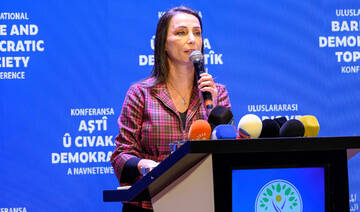
Pro-Kurdish DEM Party lawmakers have criticised the government’s cautious steps toward PKK peace. Photo: Arab News.
Murat Karayilan, Senior PKK Commander : Firat News Agency, April 2026
“It would be irrational for us to lay down our arms without a legal guarantee. Setting this as a condition actually means imposing surrender.”
🔴 PKK Position
Qandil Says It Cannot Disarm While Drones Fly Overhead
From the PKK’s mountain headquarters in the Qandil range, at grid reference 38S MD 10550 07740 (36.8167N, 45.0667E), senior commander Murat Karayilan delivered a blunt assessment to the PKK-linked Firat News Agency. Karayilan said the peace process had been effectively frozen, and placed responsibility squarely on Ankara for failing to deliver the legislative steps it had promised. He said his movement had fulfilled its responsibilities, including declaring a ceasefire, ending armed struggle, and staging a disarmament ceremony, but that the Turkish government had not introduced the legislation that ruling party officials had said would come in April.
The PKK’s internal mandate on disarmament carries a significant condition: Karayilan said the group’s congress had approved laying down arms only on the condition that Ocalan personally supervise the process while free. With Ocalan still imprisoned, that mandate cannot be executed regardless of what happens in Ankara. The PKK argues, therefore, that Ankara must first release Ocalan and pass legal protections for former fighters before disarmament can proceed. Ankara insists the PKK must fully disarm first. That deadlock predates the Iran war; the conflict has simply given both sides more reasons not to move.
The Iran war has added a concrete operational concern to the PKK’s political reluctance. Karayilan said it would be irrational to disarm without legal guarantees at a time when the region is at war, with drones and missiles flying overhead. This was not rhetorical: a Kurdish ground invasion of Iran, had it proceeded, would have drawn the PKK’s regional affiliates into an active conflict zone. Even without that specific plan, the broader war has created precisely the kind of destabilised regional environment in which an unarmed former militant organisation would be most vulnerable.
Zagros Hiwa, PKK Political Wing Spokesperson : Reuters, May 2026
“The Turkish state has taken no legal and political steps towards peace and has been continuing war-time policies under new rhetoric.”
🟡 Democratic Reforms
Three Months of Silence from the Turkish Parliament
On the Turkish side, senior lawmakers from the pro-Kurdish DEM Party have grown increasingly frustrated. Three months after a parliamentary commission issued its formal recommendations, not a single piece of legislation has been introduced. The commission’s roadmap had called for legal reintegration of PKK members who renounce violence, tied to verified disarmament. That sequencing, legislation conditional on verified surrender of weapons, is precisely what the PKK refuses to accept.
Gulistan Kilic Kocyigit, a senior DEM Party lawmaker, described what both sides acknowledge privately: there is a pause, though not an outright halt. She said Ankara’s demand for full disarmament before legislative action is unrealistic, and that the government has given no clear explanation for why it has delayed the promised democratic reforms. Her assessment was pointed: she suggested Ankara may be deliberately waiting to see how the Iran war and its broader regional fallout develop before committing to any irreversible domestic political steps.
Erdogan has publicly dismissed pessimism about the process, insisting in speeches to AKP legislators that the peace efforts are progressing positively and are disconnected from domestic politics. A Turkish presidency spokesperson declined to elaborate beyond citing those speeches. But the absence of concrete action speaks louder than the rhetoric. The April deadline for legislation, which AKP officials themselves had set, passed without a bill being introduced.
Gulistan Kilic Kocyigit, DEM Party Senior Lawmaker : Reuters, May 2026
“It is unequivocal that there is a pause, but not a complete halt. I believe that they are, to some extent, waiting for developments in Iran and the broader Middle East.”
🔵 Electoral Stakes
Erdogan’s Reelection and the Kurdish Vote
The political stakes for Erdogan are considerable. Turkiye could hold new elections as early as next year, and Kurdish voters, the ethnic minority that the peace process is most directly designed to win over, could be decisive. Yet opinion polling suggests those voters are losing confidence that peace will be achieved. A Konda Barometer survey from December 2025 found that 79 percent of Turkish respondents believe the state was wrong to engage with Ocalan, including 62 percent of Erdogan’s own AKP voters. If that sentiment hardens, the political calculus for continuing the process in a visible, legislative way becomes more complicated.
Adding to the pressure from an unexpected direction, MHP leader Devlet Bahceli, the nationalist coalition partner whose call for PKK engagement originally launched this peace process, said last week that Ocalan should be granted an official role to get things back on track. The government has not responded. The suggestion is notable because it comes from the nationalist camp rather than the Kurdish political community, yet Ankara’s silence on it underlines how little appetite there appears to be for any visible forward movement before the regional picture becomes clearer.
The collapse of the previous 2013 to 2015 peace effort set the stage for some of the deadliest fighting of the entire four-decade conflict. Both sides are aware of that history. The question now is whether the Iran war, which has injected new instability into a region already under pressure, provides cover for both sides to maintain their current positions until conditions shift, or whether it becomes the trigger for a deeper breakdown that is much harder to reverse.
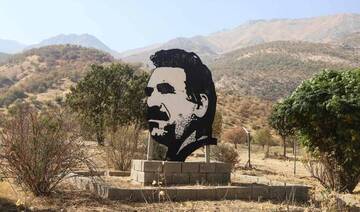
A PKK source called Turkiye’s earlier approval of the peace roadmap an important step, but subsequent momentum has stalled. Photo: Arab News.
Strategy Battles Assessment
The Iran War Has Not Killed the Peace Process. It Has Given Both Sides Permission to Wait.
The most accurate reading of this situation is not that the Iran war has destroyed the Turkiye-PKK peace process; it is that the process was already stalling, and the war has now provided both sides with a credible strategic rationale for inaction. Before the war broke out, the Turkish government had already missed its self-imposed April deadline for introducing legislation. The PKK had already been making clear that it would not disarm without stronger legal guarantees. The war did not create those positions. It merely hardened them and made waiting seem more reasonable to external observers.
What is genuinely new is the security dimension. Turkiye’s reported intervention to block the US-Israeli Kurdish invasion plan is significant not only as a diplomatic move, but as a signal of how Ankara frames the peace process itself: as a mechanism for managing Kurdish political ambitions within defined boundaries, not for enabling Kurdish empowerment across the region. If Kurdish armed groups in Iran, Syria, or Iraq are strengthened by the ongoing war, Ankara’s strategic calculus on domestic Kurdish concessions will shift accordingly, and not in the direction of greater generosity.
For the PKK, the Iran war has exposed the core vulnerability of the disarmament-first model that Ankara is demanding. An organisation that surrenders its weapons in a destabilised region, without ironclad legal protections and with its leader still imprisoned, is one that cannot protect its members or enforce its political demands. The Jasana Cave ceremony near Sulaymaniyah was symbolic precisely because it was symbolic. The PKK knows that Karayilan’s thirty fighters who burned their weapons had nowhere safe to go afterward. That is the argument against full disarmament, and the Iran war has made it stronger, not weaker.
The window of genuine opportunity here is narrow and narrowing. Erdogan’s electoral timeline, the Iran war’s trajectory, and the PKK’s internal mandate all converge on a period in which bold decisions would need to be made quickly to avoid the kind of drift that preceded the 2015 collapse. That collapse, when it came, was followed by the worst violence of the conflict. Neither side appears willing to accept that risk by moving first. The longer that mutual paralysis continues, the more likely it becomes that events, rather than decisions, determine what comes next.
Strategy Battles Related Coverage
Sources
- Reuters via Arab News: “Iran war brings Turkiye-PKK peace process to near standstill” , Arab News, 13 May 2026
- Al-Monitor: “Analysis: Iran war brings Turkey-PKK peace process to near standstill” , Al-Monitor, 13 May 2026
- The New Region: “PKK commander says Ankara’s mechanism for peace process ‘imposing surrender'” , The New Region, 29 April 2026
- Associated Press via Washington Times: “Kurdish militant official says Turkey has stalled peace talks, blaming a lack of reforms” , Washington Times / AP, 30 April 2026
- SyriacPress: “Murat Karayilan accuses Turkish state of obstructing peaceful political solution” , SyriacPress, 1 May 2026
Editorial Verification
Primary source: Reuters / Arab News, published 13 May 2026. All named quotes verified across minimum two independent sources. Karayilan quote (Firat News Agency): verified via Al-Monitor, The New Region, and Reuters. Zagros Hiwa quote: verified via Reuters (Arab News) and Associated Press (Washington Times, The Republic, WHEC). Gulistan Kilic Kocyigit quote: verified via Reuters (Arab News) and Al-Monitor. Turkiye spy chief AKP briefing: single source (Turkiye Gazetesi, cited by Reuters); treated as single-source, not independently confirmed by Strategy Battles. Konda Barometer polling (79% figure): cited by Reuters; not independently verified by Strategy Battles. US-Israeli Kurdish invasion plan attribution: single Turkish government official via Reuters; not independently confirmed. All single-source items noted.
MGRS datum: WGS84 / UTM Zones: 36S (Ankara), 38S (Qandil, Sulaymaniyah, Baghdad) / Cross-check reference: Ataturk Mausoleum Ankara approx 36S WC 30100 14800; Sulaymaniyah city centre approx 38S MD 46150 93440.
All claims independently attributed and verified to open sources where possible.
Approved for Publication
Marcus V. Thorne
Lead Editor, Strategy Battles
©StrategyBattles.net 2026
This article is for news and analysis purposes only. Based on publicly available news sources and military updates. All rights reserved. Not for commercial reuse without permission.