Pentagon Signs Deals to Buy 10,000 Low-Cost Cruise Missiles and Scale Blackbeard Hypersonic Production by 2029
10,000+
LCCM Cruise Missiles by 2029
500/yr min.
Blackbeard Hypersonic Missiles
5 Companies
New Entrant Framework Partners
🔴 The Announcement
Pentagon Signs Five Framework Agreements to Build Affordable Lethal Mass
The U.S. Department of War announced on 13 May 2026 that it has signed new framework agreements with five commercial defense companies to rapidly expand the military’s stock of affordable strike weapons. The agreements cover two parallel tracks: a Low-Cost Containerized Missiles program involving Anduril, CoAspire, Leidos, and Zone 5, and a separate hypersonic scale-up deal with defense startup Castelion for its Blackbeard missile system.
The announcement positions the Department to procure over 10,000 low-cost cruise missiles across the four LCCM portfolios in just three years, with production lots running from 2027 through 2029. Test missile purchases from all four LCCM companies are scheduled to begin in June 2026, launching an assessment campaign designed to culminate in a Military Utility Assessment by the sponsoring Service Components. This compressed timeline reflects a deliberate effort to match the speed of commercial industry rather than traditional defense acquisition cycles.
The LCCM program will be led by the Office of the Under Secretary of War for Research and Engineering, with the Army Program Acquisition Executive Fires serving as the transition partner and acquisition lead. The Air Force Program Acquisition Executive Weapons and the Test Resource Management Center are also integrated into the coordination structure, reflecting a multi-service commitment to the initiative.
🟡 The LCCM Program
Containerized Cruise Missiles: Four Companies, Firm-Fixed Prices, No Legacy Primes
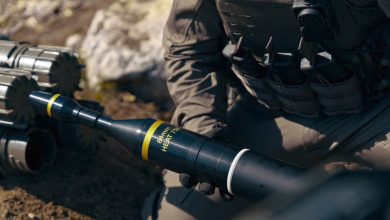
The Low-Cost Containerized Missiles program is built around a concept the Army has advocated for years: affordable, mobile strike weapons that can be deployed from standard shipping containers. By embedding cruise missiles in containerized systems, commanders gain flexibility of deployment without the logistical signature of traditional launcher platforms. The Department’s press release notes the agreements establish terms for future firm-fixed-price production contracts, locking vendors into cost and schedule accountability from the outset.
A key structural feature of the LCCM framework is the expectation that several vendors will reach production scale without direct Department investment. This reflects a new commercial partnership model that rewards private capital commitment, speed of delivery, and innovation rather than cost-plus contracts that have historically insulated legacy prime contractors from schedule and budget risk.
The four LCCM companies, Anduril, CoAspire, Leidos, and Zone 5, represent a deliberate diversification away from the small cluster of traditional missile primes. Anduril has already established itself as a leading provider of autonomous systems and has been expanding into missiles. The inclusion of smaller entrants like CoAspire and Zone 5 alongside an established firm like Leidos signals that the Department is widening the aperture of who can compete for high-volume munitions production.
Emil Michael : Under Secretary of War for Research and Engineering, 13 May 2026
“We will deliver affordable mass for our warfighters at unprecedented speed. In concert with establishing a clear demand signal, these Framework Agreements commit American industry to on-time, on-cost delivery and investment in R&D and facilities. This commercial style of partnership is fully aligned with Secretary Hegseth’s Acquisition Transformation Strategy.”
🔵 Castelion and Blackbeard
Hypersonic at Scale: 500 Blackbeard Missiles Per Year With Options to 12,000
The parallel Castelion agreement represents a separate but strategically linked bet on affordable hypersonic capability. Once Castelion achieves testing and validation, the Department will award a two-year multi-year procurement contract for a minimum of 500 Blackbeard missiles annually, with options to extend for up to five years. Reporting by Arab News and Reuters noted the Pentagon is also actively seeking authority and funding to purchase over 12,000 Blackbeard missiles across the full five-year window, a figure that dwarfs any prior hypersonic procurement ambition.
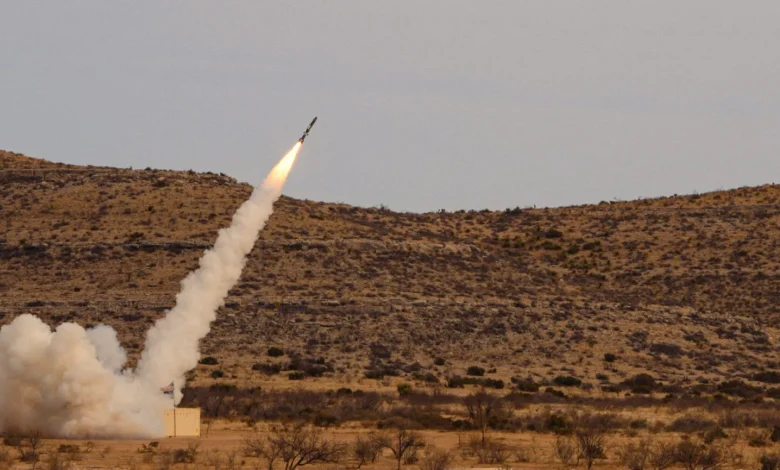
Blackbeard is Castelion’s first hypersonic strike weapon, engineered from inception for mass production rather than boutique development. The missile is designed for ground launch from HIMARS platforms as well as air launch from the F/A-18 Super Hornet under the Navy’s Multi-mission Affordable Capacity Effector program. Castelion completed more than 20 developmental flights before the October 2025 platform integration awards were announced, providing a validated flight record that supports the Pentagon’s willingness to move directly to procurement frameworks.
The company’s manufacturing infrastructure is already being expanded to support this demand. Castelion’s Project Ranger campus in Sandoval County, New Mexico, occupies 1,000 acres and is being built out with more than 220 million dollars of private capital to reach production capacity for thousands of Blackbeard rounds annually. The company raised 350 million dollars in Series B financing in December 2025, with investors including Andreessen Horowitz, Lightspeed Venture Partners, and Lavrock Ventures. The Department is actively seeking funding to accelerate Castelion’s facility expansion beyond what the market alone would justify.
Michael Duffey : Under Secretary of War for Acquisition and Sustainment, 13 May 2026
“Today’s announcement is the latest sign that our Acquisition Transformation Strategy is delivering on its promise to rebuild the Arsenal of Freedom. We are moving beyond the traditional prime contractors to expand our industrial base, accelerating testing timelines, and sending a clear, long-term demand signal to innovative new entrants.”
🔴 The Iran War Context
Munitions Demand Surge: $26 Billion in FY27 Procurement as Iran War Costs Pass $29 Billion
The timing of this announcement cannot be separated from the ongoing Iran war, which has placed intense pressure on U.S. munitions stockpiles and industrial base capacity. The Pentagon’s FY27 budget request, defended before the House and Senate Appropriations Subcommittees on 12 and 13 May 2026, allocates over 26 billion dollars for multi-year procurement contracts for critical munitions, a figure confirmed in written testimony by General Dan Caine, Chairman of the Joint Chiefs of Staff. The total estimated cost of the Iran war to the United States reached 29 billion dollars as of 12 May, according to Pentagon figures presented to Congress by Acting Comptroller Jules Hurst.
Secretary of War Pete Hegseth pushed back against characterizations of munitions depletion in public Congressional testimony, stating the military has sufficient munitions for current operational requirements. However, the pace of the procurement frameworks announced on 13 May reflects a clear institutional awareness that high-intensity conflict consumes precision-guided munitions at a rate traditional acquisition timelines cannot sustain. Both the LCCM and Blackbeard programs are explicitly structured to enable surge production when demand requires it.
Defense News reported ahead of the formal release that Reuters had reviewed the Department’s statement, noting the press guidance did not specify the individual weapons systems each LCCM company would deliver. The absence of per-platform disclosure is itself notable: it signals that the focus is on industrial capacity and throughput rather than attachment to specific weapon architectures, giving the Department flexibility to select the best-performing systems during the assessment phase starting in June.
🟢 Acquisition Transformation
The Arsenal of Freedom Model: Commercial Risk, Private Capital, Government Demand Signal
Both the LCCM frameworks and the Castelion agreement share a structural feature that distinguishes them from traditional Pentagon procurement: several vendors are expected to reach production scale using private sector capital, not direct Department investment. The Department’s role shifts from financier of development to guaranteed off-taker of production. This is a significant inversion of the traditional defense acquisition model, and it carries meaningful risk for the companies involved, since the firm-fixed-price structure leaves them exposed to cost overruns.
The framework agreements establish clear demand signals that allow companies to raise private capital against future procurement volumes. Castelion’s 350-million-dollar Series B was raised in December 2025 in anticipation of exactly this kind of government commitment. The model rewards companies that can attract commercial investment and move fast: it penalizes those dependent on government-funded development contracts at every stage of the process. This is a structural incentive compatible with the stated goal of outpacing rivals in munitions throughput.
The Hegseth Acquisition Transformation Strategy, referenced explicitly in both official quotes, is built around 23 Portfolio Acquisition Executives who are responsible for tracking programs from development through fielding. Performance is tracked publicly, a departure from the opacity that has historically allowed programs to slip without visible accountability. Whether this transparency framework changes contractor behavior at scale remains to be seen, but the structural intent is clear: speed, cost certainty, and measurable delivery.
Strategy Battles Assessment
The Real Test Is Not the Agreement: It Is Whether the Industrial Base Can Deliver at Scale Before the Next Crisis
The announcements of 13 May 2026 are important, but they are agreements, not missiles. The gap between signing framework documents and fielding 10,000 cruise missiles in standard shipping containers is wide, and the history of Pentagon procurement is littered with programs that moved quickly through the agreement phase and then stalled in testing, certification, or industrial ramp. The LCCM assessment campaign beginning in June will be the real diagnostic. If any of the four vendors cannot demonstrate adequate lethality, reliability, or logistical integration during the Military Utility Assessment, the vision of rapid mass production is set back. The design of the framework, with firm-fixed-price terms and no guaranteed development funding, means vendor selection pressure is high from day one.
The Castelion track is more advanced technically, but also carries higher stakes. Blackbeard is a hypersonic weapon, which means integration into carrier air wings and HIMARS fire control is more complex than containerized cruise missile deployment. The Navy’s willingness to put a $105 million integration contract on the F/A-18 in April 2026 suggests institutional confidence in the platform, but flight testing and safety certification for carrier-based hypersonic weapons are not trivial milestones. A slip in the testing cadence could push the 500-per-year minimum contract back by a year or more.
The broader acquisition model being tested here, private capital replacing government development funding, is sound in principle but fragile in practice if demand signals are ever revised. Castelion raised 350 million dollars on the expectation of a guaranteed off-take. If the political or strategic environment changes and that demand signal weakens, the company faces a serious capital recovery problem. This is not an abstract risk: the Iran war context that is accelerating these decisions today could also produce a ceasefire or negotiated arrangement that changes the procurement calculus within the three-year production window. The Department’s stated intent to seek authorization for 12,000 Blackbeard missiles over five years provides some insurance against short-term volatility, but Congress must first appropriate the funding. The FY27 budget hearings of 12 to 13 May make clear that the munitions line is receiving bipartisan attention, which is a favorable signal for near-term authorization.
Sources:
- U.S. Department of War: “Department of War Enhances Lethal Strike Capacity Through Partnership With New Entrants,” 13 May 2026
- Defense News: “Pentagon reaches agreements with defense firms on containerized missiles,” 13 May 2026
- Arab News / Reuters: “Pentagon strikes agreements with defense firms on containerized missiles,” 13 May 2026
- Army Recognition: “Pentagon Backs Castelion Blackbeard Hypersonic Missile with U.S. Army Integration Awards,” October 2025
- Defense Archives: “Castelion’s Blackbeard hypersonic missile selected for US Navy’s MACE program,” 2026
- The Defense Post: “US Navy Contracts Castelion to Integrate Hypersonic Missile Onto F/A-18,” 27 April 2026
- Castelion: “$350 Million Series B to Mass Produce U.S. Hypersonic Weapons,” December 2025
- Breaking Defense: “Castelion wins first platform integration contracts for Blackbeard hypersonic missile,” October 2025
- Defense News: “Pentagon seeks additional funding as cost of Iran war tops $29 billion,” 12 May 2026
- The Center Square: “Trump budget targets ‘valley of death’ with new military contractor accountability model,” May 2026
Strategy Battles Related Coverage
Editorial Verification
Primary source: Official U.S. Department of War press release (war.gov, 13 May 2026), independently verified against Reuters (via Arab News, Defense News, and Freedom 96.9), Mirage News, Breaking Defense, Army Recognition, Defense Archives, The Defense Post, Castelion’s own press releases, The Center Square, and DVIDS video record.
Emil Michael quote (“We will deliver affordable mass for our warfighters at unprecedented speed”): verified across a minimum of 5 independent outlets including Reuters, Defense News, Arab News, Mirage News, and Freedom 96.9.
Michael Duffey quote (“Today’s announcement is the latest sign that our Acquisition Transformation Strategy is delivering”): verified across the same set of outlets.
General Dan Caine $26 billion munitions testimony: verified via Defense News, The Center Square, and Dailyfly News citing written testimony to the House Armed Services Committee dated April 29, 2026.
Iran war cost figure of $29 billion: verified via Defense News citing Acting Comptroller Jules Hurst testimony before the House Appropriations Subcommittee, 12 May 2026.
Castelion Blackbeard specifications (HIMARS compatibility, F/A-18 integration, $300,000 target unit cost, 500 minimum annual production): verified via Breaking Defense, Army Recognition, The Defense Post, and Castelion’s own press releases.
Project Ranger manufacturing campus (Sandoval County, New Mexico, 1,000 acres, $220 million private investment): verified via Castelion press release (December 2025) and Axios (March 2026).
No MGRS coordinates apply to this article: the story covers a national procurement policy announcement with no specific geographic operational event.
MGRS datum: WGS84 / No UTM zone applicable to this non-geographic article / No coordinate cross-check required.
No satellite imagery was used. No unverified social media content was embedded. All named individuals hold confirmed official titles as verified through war.gov biographies and Congressional records.
All claims independently attributed and verified to open sources where possible.
Approved for Publication
Marcus V. Thorne
Lead Editor, Strategy Battles
©StrategyBattles.net 2026
This article is for news and analysis purposes only. Based on publicly available news sources and military updates. All rights reserved. Not for commercial reuse without permission.