U.S. Navy Awards Boeing $12 Million Contract to Develop Repair Procedures for MQ-25A Stingray Carrier Drone
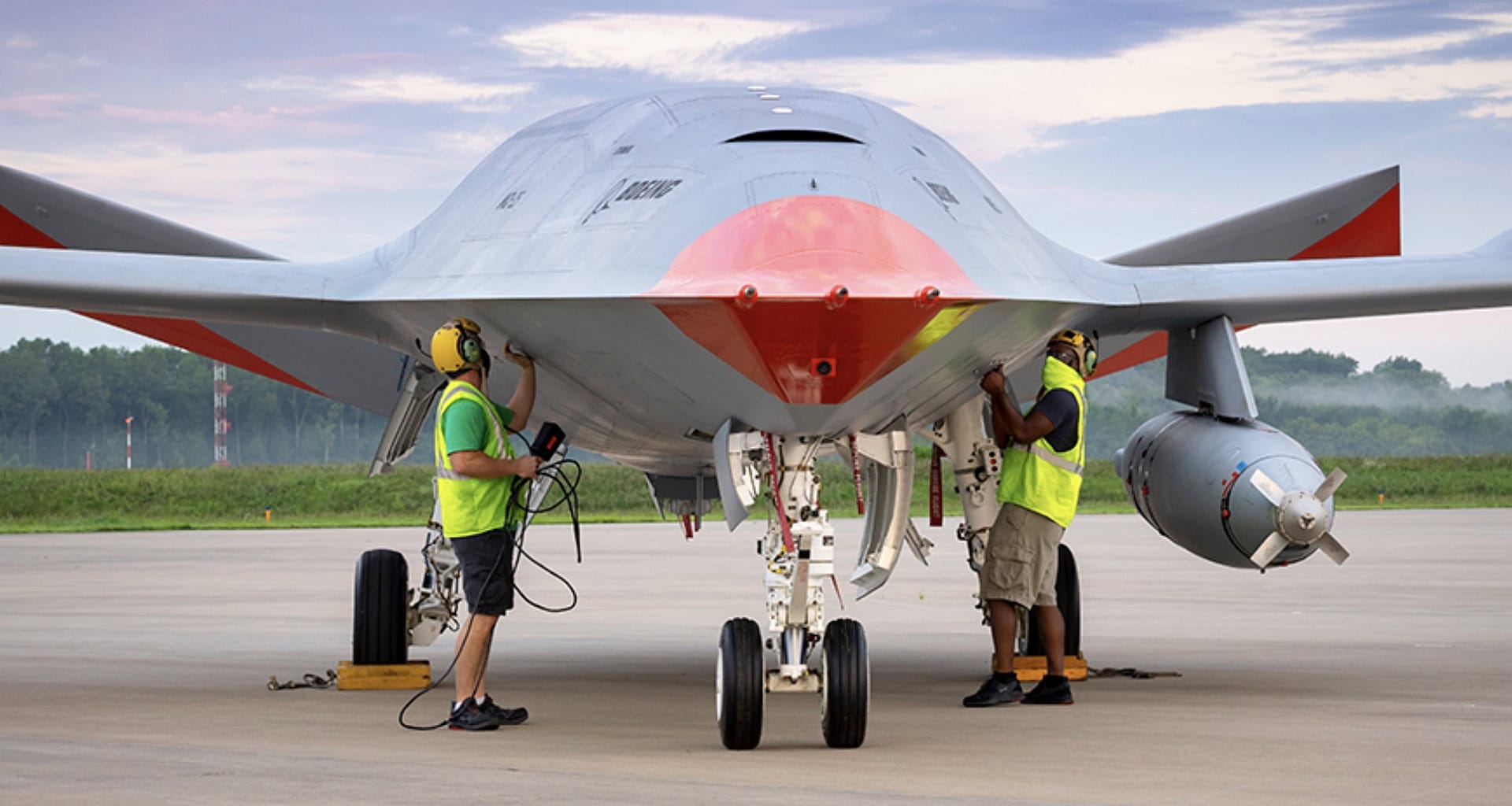
The award is not about building new aircraft. It is about something equally important — ensuring the Navy can maintain, inspect, and repair the Stingray airframes that already exist, giving the service the long-term sustainment framework it needs to operate the drone reliably and cost-effectively throughout its projected service life. As the MQ-25A programme moves progressively closer to operational deployment, the ability to keep aircraft flying through structured repair procedures becomes as critical as the aircraft’s performance in the air.
What This Contract Actually Does
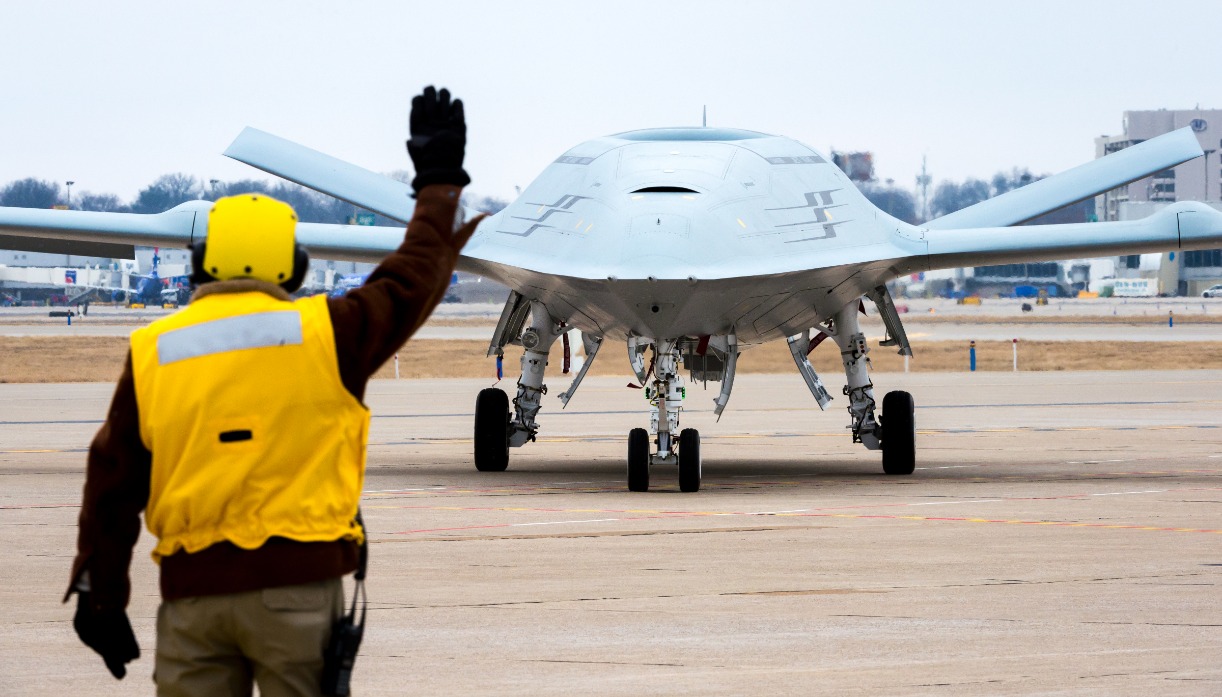
The $12 million award covers Phase I structural repair manual general development procedures for MQ-25A test aircraft. In practical terms, this means Boeing will develop the technical documentation and tested procedures that allow Navy maintenance crews to identify structural damage, assess its severity, and carry out authorised repairs on the airframes used for testing and development. This kind of work is unglamorous but foundational. Without a validated structural repair manual, maintenance crews have no approved path to fix damage to the airframe — meaning any aircraft that sustains structural impact or corrosion during testing would face lengthy grounding while bespoke repair approaches were developed from scratch.
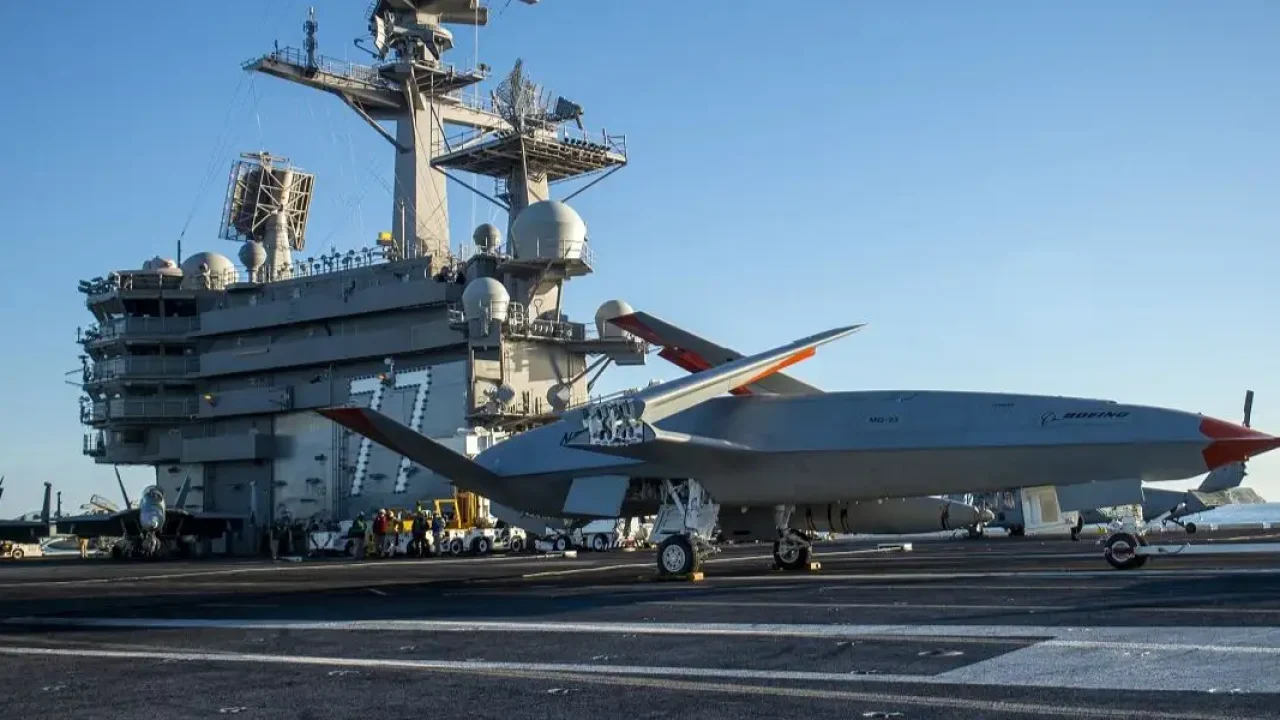
The contract also addresses corrosion mitigation, which is a particularly significant concern for an aircraft that will operate in the highly corrosive salt-air environment of a carrier flight deck. Aircraft carriers are among the most punishing operating environments for airframe integrity. The carrier deck is exposed to constant sea spray, jet exhaust, salt air and mechanical stress. Building corrosion mitigation into the maintenance framework from the testing phase gives the Navy a head start on what will be one of the ongoing sustainment challenges for the Stingray throughout its operational life.
Why the MQ-25A Stingray Matters
The MQ-25A Stingray is the most consequential unmanned aviation programme in the U.S. Navy’s current modernisation plan. Developed under the Carrier-Based Aerial-Refuelling System programme, the Stingray was selected in August 2018 when the Navy awarded Boeing an initial $805 million contract for four development aircraft. The programme has since grown substantially — a $657 million contract modification in 2024 added two more System Demonstration Test Aircraft, and an additional $115 million order covered initial spares and repair equipment. The Navy’s total procurement goal is 72 aircraft, with a programme value that could reach $13 billion.
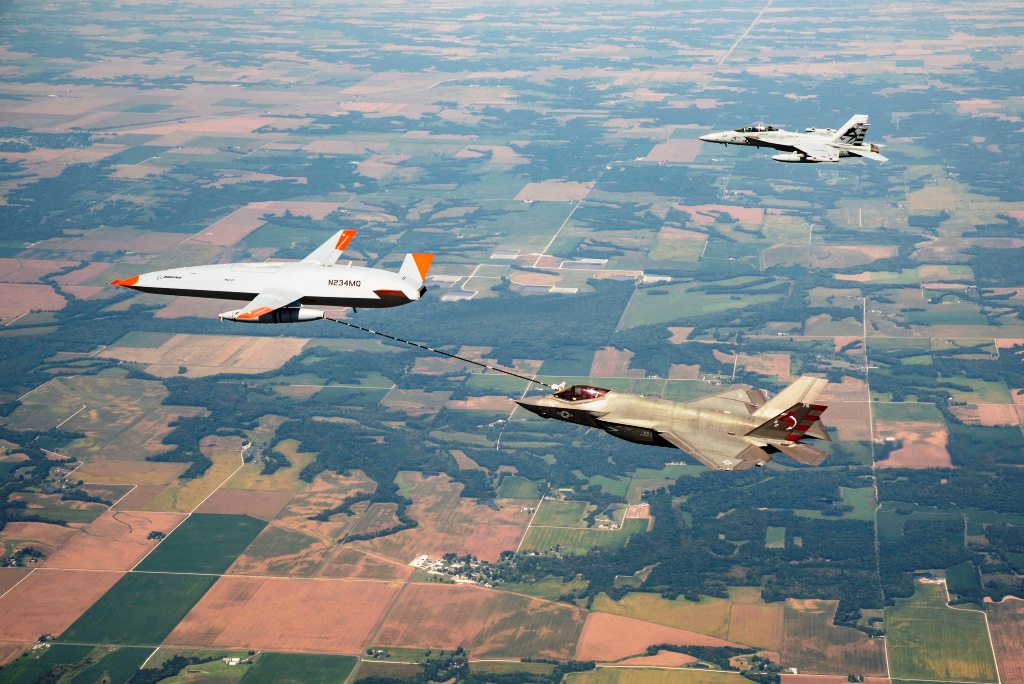
The Stingray’s core mission is to extend the operational reach of the carrier air wing by serving as an unmanned aerial tanker. Currently, that tanker role falls largely to the F/A-18 Super Hornet — a strike fighter being asked to fly fuel delivery missions instead of the combat roles it was designed for. The Super Hornet has an unrefuelled combat radius of roughly 450 nautical miles. With an MQ-25 transferring 15,000 pounds of fuel to four to six aircraft at a range of 500 nautical miles, the carrier air wing’s effective strike radius extends to beyond 700 nautical miles. That is not an incremental improvement — it is a fundamental change to the threat envelope a carrier battle group can cover.
“The MQ-25 can extend the Super Hornet’s unrefuelled combat radius to beyond 700 nautical miles.”
— Vice Admiral Mike Shoemaker, U.S. Navy
Programme Status: Where the Stingray Stands Now
The MQ-25A programme is currently in its testing and development phase. The Navy established Unmanned Carrier Launched Multi-Role Squadron 10, known as VUQ-10, at Naval Air Station Patuxent River, Maryland on October 1, 2022, where four MQ-25A aircraft are being used to develop maintenance and operations procedures. Two operational units — VUQ-11 and VUQ-12 — are planned for establishment at later dates. Initial operational capability was anticipated around 2026. The Navy plans to deploy the Stingray aboard active carrier battle groups once testing is complete and operational doctrine has been established.
Key milestones already achieved include the MQ-25A’s first flight on September 19, 2019. In December 2020, Boeing released video of the first flight of the aircraft with a Cobham aerial refuelling store externally mounted. In September 2021 the Stingray became the first drone to refuel a crewed Navy aircraft when it transferred fuel to a F/A-18 Super Hornet. It subsequently refuelled an F-35C Lightning II and an E-2D Advanced Hawkeye — demonstrating compatibility with the full range of carrier air wing aircraft types.
Why Repair Procedures Matter at This Stage
It might seem early to be developing repair manuals for a drone still in its testing phase. In reality, this is exactly the right moment. Structural repair manuals are developed using data generated during testing — the same impacts, stress cycles, and damage patterns that occur during flight test campaigns inform the approved repair procedures that maintenance crews will use throughout the aircraft’s life. Developing these procedures now, while the test aircraft are actively flying and accumulating data, means the Navy will have a validated repair framework ready when the Stingray transitions to operational service rather than having to develop it retrospectively.
The decision to address corrosion mitigation at the Phase I level also reflects lessons learned from other carrier-based programmes. Corrosion has historically been one of the most significant contributors to lifecycle cost in naval aviation. The F/A-18 Hornet and Super Hornet programmes, for example, have faced substantial corrosion-related maintenance costs throughout their service lives due to the salt-air environment of carrier operations. Building corrosion mitigation into the MQ-25A’s maintenance documentation from the ground up is a cost-management decision as much as a technical one.
The Bigger Picture: Unmanned Aviation and the Future Carrier Air Wing
The MQ-25A is the first in what the Navy expects to be a broader family of carrier-based unmanned aircraft. The original programme — known as the Unmanned Carrier-Launched Airborne Surveillance and Strike system, or UCLASS — was envisioned as a stealthy strike drone capable of penetrating enemy air defences. The mission was narrowed to aerial refuelling as the programme evolved, but the Navy has made clear that it views the MQ-25A as an entry point for a much larger unmanned capability. Rear Admiral Michael Manazir suggested that three Stingrays could fly alongside an F-35, providing both refuelling and sensor support — a glimpse of what a future mixed manned-unmanned carrier air wing could look like.
With 72 aircraft planned and a programme that could ultimately be worth $13 billion, the structural and repair framework being built under this $12 million contract is laying foundations that will be used for decades. The work being done in St. Louis between now and March 2028 will directly shape how the Navy maintains and operates its future carrier drone fleet — making this relatively modest contract a significant step in the long-term viability of one of American naval aviation’s most transformative programmes.
MQ-25A Stingray — Key Programme Facts
- New contract value: $12,074,613 — structural repair manual procedures and corrosion mitigation
- Contractor: Boeing, St. Louis, Missouri
- Work completion: March 2028
- Programme type: Phase I structural repair manual general development procedures for MQ-25A test aircraft
- Original development contract: $805 million awarded August 2018 for four prototype aircraft
- Total planned procurement: 72 MQ-25A aircraft
- Estimated total programme value: Up to $13 billion
- First flight: September 19, 2019
- First aerial refuelling of a crewed aircraft: September 2021 — F/A-18 Super Hornet
- Range capability: Extends carrier air wing combat radius from ~450 to 700+ nautical miles
- Fuel transfer capability: 15,000 lb of fuel to 4 to 6 aircraft at 500 nautical miles range
- Operating squadron: VUQ-10, NAS Patuxent River, Maryland (testing)
Analysis
Contracts of this size rarely generate headlines. Twelve million dollars is a rounding error in a programme that will ultimately cost $13 billion. But what this contract represents is something more important than its dollar value suggests — it is the Navy committing, in a formal and documented way, to the long-term sustainment of the MQ-25A programme. Programmes get cancelled. Technologies get abandoned. What keeps a programme alive through budget cycles and shifting strategic priorities is the accumulation of institutional investment: training pipelines, operational doctrine, supply chains, and above all, maintenance frameworks. This contract builds one of those cornerstones.
The MQ-25A is also arriving at a moment when its strategic value is more clearly understood than ever. The Iran war has dramatically demonstrated what happens when aerial refuelling capacity is constrained — F-15Es operating at the edge of their range in heavily defended airspace, rescue missions that barely reach the target area, and operational risk that compounds with every mile beyond the tanker’s reach. A carrier that can project its air wing 700 nautical miles rather than 450 is a fundamentally different instrument of power. The Stingray is how the Navy gets there. And the unglamorous work of developing structural repair manuals in St. Louis is part of how the Stingray gets to sea.