WE GOT HIM: How American Commandos, CIA Deception and Dozens of Warplanes Pulled Off One of the Most Daring Rescues in U.S. Military History Deep Inside Iran
WASHINGTON / TEHRAN, April 5, 2026 — He had been hiding alone in a mountain crevice for more than 36 hours, armed with little more than a pistol, a communication device and a tracking beacon. Iranian Revolutionary Guard forces were closing in, moving through the rugged peaks of southwestern Iran in large numbers, getting closer by the hour. Then American commandos arrived, aircraft dropped bombs to clear the area, and one of the most extraordinary combat search-and-rescue operations in the history of the United States military came to its conclusion. The missing weapons systems officer from a downed F-15E Strike Eagle is safe.
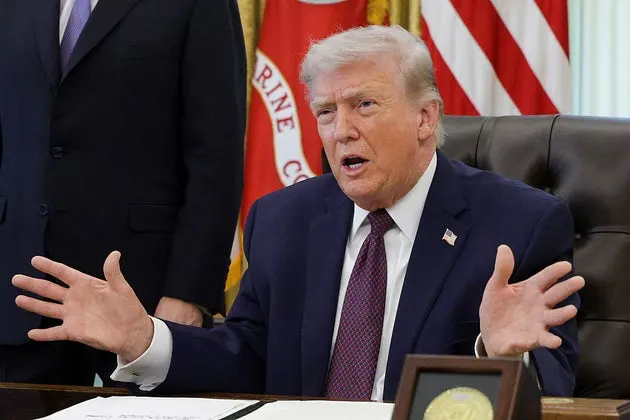
President Donald Trump confirmed the rescue early Sunday morning in a post on Truth Social. “WE GOT HIM!” he wrote. “My fellow Americans, over the past several hours, the United States Military pulled off one of the most daring Search and Rescue Operations in U.S. History.” The officer — described by Trump as “a highly respected Colonel” — was seriously wounded but will recover. He was brought out of Iran in broad daylight, with U.S. forces spending approximately seven hours over Iranian territory to retrieve him. Trump announced he will hold a formal press conference at the White House on Monday at 1pm alongside senior military commanders to detail the full operation.
For the full background on how the F-15E was shot down, Iran’s disinformation campaign around the crash, and the first 36 hours of the search, read our earlier coverage: Race Against Time: The Search for America’s Missing Airman Deep Inside Iran and Iran Claims Second U.S. F-35 Downed in Two Weeks as Pentagon Stays Silent.

Watch: The Rescue of the Missing U.S. Airman in Iran
36 Hours Behind Enemy Lines: What the Airman Endured
When the F-15E was shot down over Kohgiluyeh and Boyer-Ahmad province in southwestern Iran on Friday morning, both crew members ejected safely. The pilot was recovered quickly in an initial rescue operation. The weapons systems officer — a Colonel — landed in the rugged mountain terrain and immediately activated his survival training. Over the next 36 hours, wounded and alone deep inside Iranian territory with Iranian forces actively hunting him, he evaded capture through a combination of training, terrain and extraordinary resolve.
At one point he scaled the terrain to a ridgeline 7,000 feet above sea level, using the mountains themselves as cover. He found a crevice in the rock and concealed himself inside it. From there, with his communication device, he maintained contact with U.S. forces. His tracking beacon provided his location. But the Iranian Revolutionary Guard Corps had also sent significant forces into the area, working to close the net before American rescuers could reach him. It was, as one senior U.S. official described it to Axios, “a nightmare scenario” for the American military.
“This was the ultimate needle in a haystack — but in this case it was a brave American soul inside a mountain crevice, invisible but for CIA’s capabilities.”
— Senior Trump administration official briefing reporters on the CIA’s role in locating the missing airman, April 5, 2026

The CIA Deception Campaign That Bought Crucial Time
While U.S. special operations forces were preparing the rescue mission, the CIA launched a parallel operation that proved critical to the outcome. According to a senior Trump administration official who briefed reporters, the Agency spread word inside Iran that U.S. forces had already found the airman and were moving him on the ground for exfiltration. The disinformation was designed to confuse Iranian Revolutionary Guard commanders and redirect their search efforts away from the airman’s actual location.
While the deception was running, the CIA simultaneously used what the official described as “unique, exquisite capabilities” to search for and find the airman in his mountain crevice. The Agency shared his precise location with the Pentagon and the White House. President Trump, monitoring the situation from the Oval Office throughout Saturday and receiving constant updates from Defence Secretary Pete Hegseth, ordered an immediate rescue mission. CNN reported separately that American intelligence operatives worked to circulate the false information specifically among IRGC members — causing them to search in the wrong areas while the real operation was being launched. Trump and senior members of his national security team followed the rescue operation in real time from the White House Situation Room.
The Rescue Operation: Commandos, Airstrikes and a Forward Airstrip Inside Iran
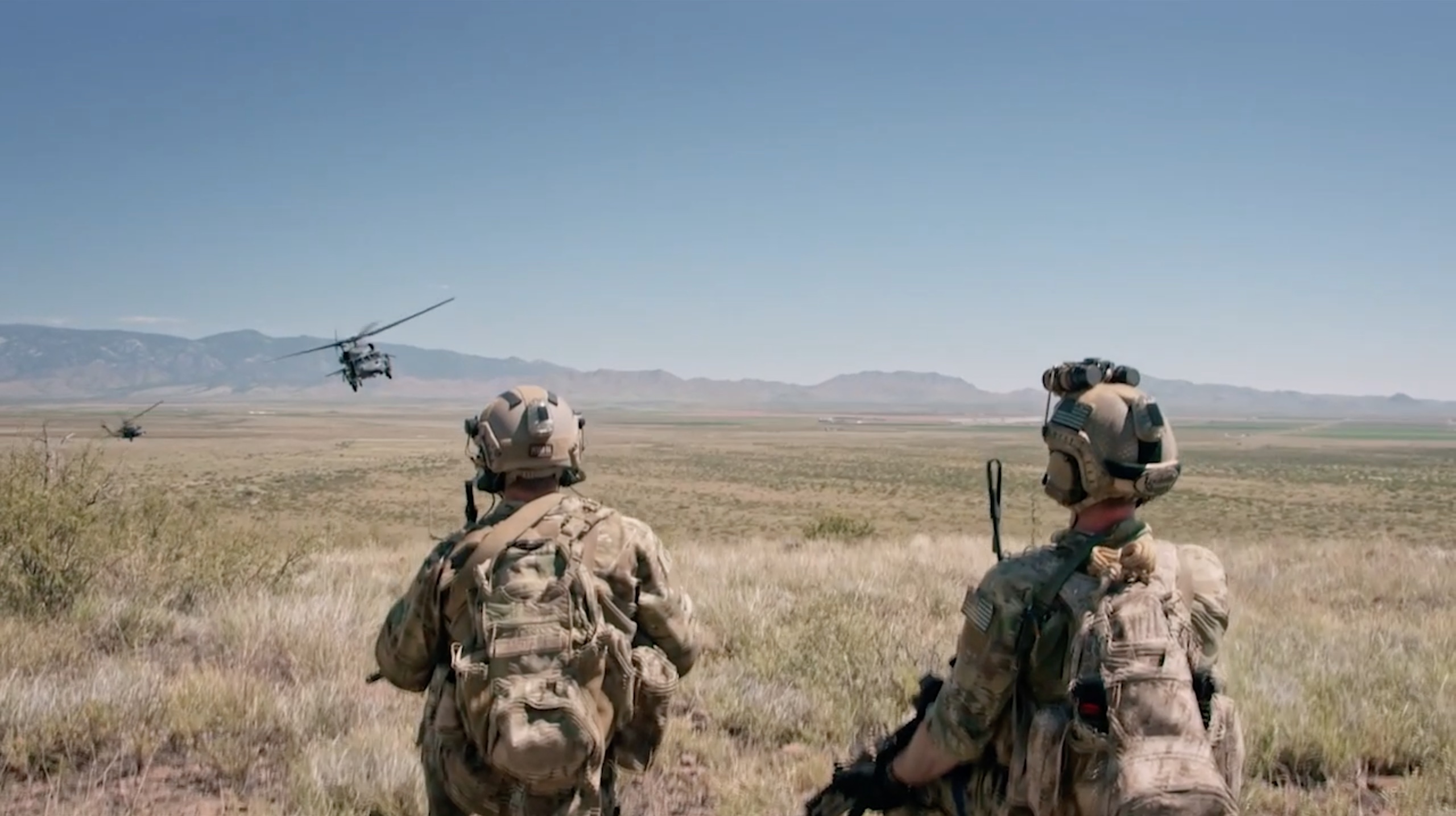
The operation that extracted the airman was one of extraordinary complexity and risk. A specialised commando unit was deployed with a high volume of air cover. U.S. Air Force jets conducted strikes against Iranian forces to prevent them from reaching the area, two U.S. officials confirmed to Axios. The New York Times reported that as U.S. forces converged on the downed airman, a firefight erupted. Hundreds of special operations troops were ultimately involved in the mission in various capacities.
Two aircraft — most probably MC-130J Commando II special operations transports that carried the extraction team — used a forward operating airstrip established inside Iran as a Forward Arming and Refueling Point. The landing zone was later geolocated by open-source analysts near Isfahan. U.S. forces spent approximately seven hours over Iranian territory during the mission. Trump described it as being conducted “in broad daylight” — a reflection of how urgently the operation needed to proceed given how close Iranian forces were getting to the airman’s position.
Trump’s Announcement: “WE GOT HIM”
Trump’s post on Truth Social in the early hours of Sunday morning confirmed the rescue in characteristically direct terms. The president described the operation as “one of the most daring Search and Rescue Operations in U.S. History” and said the airman — whom he identified as “a highly respected Colonel” — was “seriously wounded” but “will be just fine.” He said the airman had taken refuge “in the treacherous mountains of Iran” and was being “hunted down by our enemies, who were getting closer and closer by the hour.”
Trump also revealed that the White House had deliberately withheld confirmation of Friday’s rescue of the pilot in order to protect the ongoing second rescue operation. “We did not confirm” the pilot’s rescue, he explained, “because we did not want to jeopardize our second rescue operation.” He added that U.S. forces had been “monitoring his location 24 hours a day, and diligently planning for his rescue” throughout the 36-hour ordeal. Trump called the operation “an AMAZING show of bravery and talent by all” and praised it as historic, saying “this is the first time in military memory that two U.S. Pilots have been rescued, separately, deep in Enemy Territory.”
Strategy Battles rescue timeline — April 3 to 5, 2026.
Watch: Inside the CIA Deception Operation That Saved the Airman
Pakistan Ceasefire Talks, Hormuz Threats and the Wider War
The rescue came against a backdrop of rapidly escalating diplomatic and military pressure. On Saturday, Trump issued a 48-hour ultimatum to Iran to reopen the Strait of Hormuz or face devastating consequences, threatening strikes on Iran’s power plants and bridges. Iran’s General Ali Abdollahi Aliabadi responded that “the doors of hell will be opened to you” if Iranian infrastructure is attacked. Yet simultaneously, Pakistan’s Foreign Ministry confirmed that its efforts to broker a ceasefire are “right on track,” with Islamabad expected to host talks between the U.S. and Iran. Iran’s Foreign Minister Abbas Araghchi said Iranian officials “have never refused to go to Islamabad.” Mediators from Pakistan, Turkey and Egypt are working to bring both sides to the negotiating table, according to two regional officials.
Iran’s parliamentary speaker Mohammad Bagher Ghalibaf also issued a veiled threat to disrupt the Bab el-Mandeb Strait — the 20-mile wide waterway linking the Red Sea with the Gulf of Aden through which more than a tenth of global seaborne oil passes. Coming alongside the Hormuz closure, the suggestion that Iran could activate its Houthi proxies in Yemen to simultaneously threaten both chokepoints represents a significant escalation of the economic pressure Tehran is able to apply to global markets.
Key Facts — The Rescue of the F-15E Crew, April 3 to 5, 2026
- Airman rescued: Weapons systems officer, 494th Fighter Squadron, 48th Fighter Wing, RAF Lakenheath — identified as a Colonel
- Time behind enemy lines: More than 36 hours evading capture
- Maximum altitude reached: 7,000 feet above sea level in the Zagros mountains
- CIA role: Launched deception campaign inside Iran then used intelligence capabilities to locate airman and shared precise location with Pentagon and White House
- Rescue force: Hundreds of special operations personnel, dozens of aircraft including fighters conducting airstrikes on approaching Iranian forces
- Time over Iranian territory: Approximately seven hours
- Condition: Seriously wounded but expected to recover fully
- Pilot status: Rescued Friday — also safe and receiving medical treatment
- Iranian bounty: 10 billion tomans (~$76,000) — never collected
- Trump press conference: Monday April 6 at 1pm, White House Oval Office
- War casualties to date: 13 U.S. service members killed, 365 wounded
Analysis
The successful rescue of both F-15E crew members from inside Iranian territory is an extraordinary operational achievement — perhaps the most complex combat search-and-rescue mission conducted by American forces since the attempt to free hostages in Tehran in 1980. The combination of CIA deception, real-time intelligence, special forces extraction, air cover, airstrikes on approaching Iranian forces, and a forward operating strip established inside Iran is the kind of multi-domain, multi-agency operation that years of post-9/11 institutional investment have made possible. It worked. Both crew members are alive.
It is also worth noting what this operation reveals about Iran’s military situation. The IRGC knew the airman was in the mountains. They had forces in the area and were closing in. They had the public support of thousands of civilians searching the terrain for a $76,000 reward. And they still failed to capture him before American commandos arrived. That is both a testament to the airman’s training and survival skills, and a reflection of the degradation that five weeks of strikes have inflicted on Iran’s command coordination and response speed.
The war continues. Trump’s Hormuz ultimatum expires Monday. Pakistan and Turkey are quietly working to bring both sides to a table that neither has officially agreed to sit at. The rescue is a moment of genuine triumph for Washington — but the strategic deadlock that produced this crisis in the first place has not moved an inch.
Related Coverage on Strategy Battles
- Race Against Time: The Search for America’s Missing Airman Deep Inside Iran
- Iran Claims Second U.S. F-35 Downed in Two Weeks as Pentagon Stays Silent
Sources
- Asharq Al-Awsat — U.S. Service Member Missing After Iran Shot Down Fighter Jet Has Been Rescued
- CBS News — Missing U.S. Crew Member from Downed Fighter Jet Rescued in Iran
- Axios — Second Crew Member from F-15 Downed in Iran Rescued by U.S. Forces
- The Aviationist — U.S. Rescues Downed F-15E WSO Deep Inside Iran