War Shows No Sign of Abating as Iran, Israel, and Gulf States Trade Strikes Into Friday
Why This Moment Matters
The conflict, which began on February 28 when U.S. and Israeli forces launched coordinated strikes on Iran, has rapidly evolved into one of the most consequential military engagements in the modern Middle East. It has drawn in Gulf states, destabilized global energy markets, displaced hundreds of thousands of civilians, and placed the critical Strait of Hormuz — through which roughly one-fifth of the world’s traded oil ordinarily flows — under sustained Iranian threat. The International Energy Agency has characterized the disruption as the largest supply disruption in the history of the global oil market. The war’s ripple effects are being felt from Tokyo to London, and the absence of any serious ceasefire framework is drawing alarm from European capitals and Asian energy importers alike.
“Striking civilian infrastructure only conveys the defeat and moral collapse of an enemy in disarray.”
— Abbas Araghchi, Iranian Foreign Minister, writing on X, April 3, 2026
Background and Chronology
The war’s opening salvos on February 28 shattered a fragile regional equilibrium that had held for years under a combination of deterrence, diplomacy, and economic interdependency. Before that date, the Strait of Hormuz was open to normal shipping traffic. Within days of the conflict’s outbreak, Iran moved to choke the waterway, and the effects have been severe and compounding ever since.
By March, Iran had struck approximately two dozen commercial vessels. According to maritime data firm Lloyd’s List Intelligence, traffic through the strait has fallen 94 percent compared to the same period last year. Only two ships are confirmed to have paid a transit fee to Iranian authorities; others were granted passage based on bilateral agreements between Tehran and their flag states.
Saudi Arabia responded by rerouting roughly one billion barrels of oil away from the strait during March, according to maritime analytics firm Kpler. Iraq announced Thursday it had begun trucking oil overland through Syria — a costly and logistically strained workaround — to avoid the blocked passage entirely.
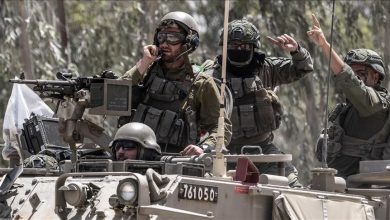
In Lebanon, the conflict has opened a parallel front. Israel launched a ground invasion targeting Iran-backed Hezbollah militants, and Israeli strikes killed 27 people in Lebanon over a single 24-hour period, according to the Lebanese Health Ministry. More than 1,300 people have died in Lebanon since fighting began there, with over one million displaced.
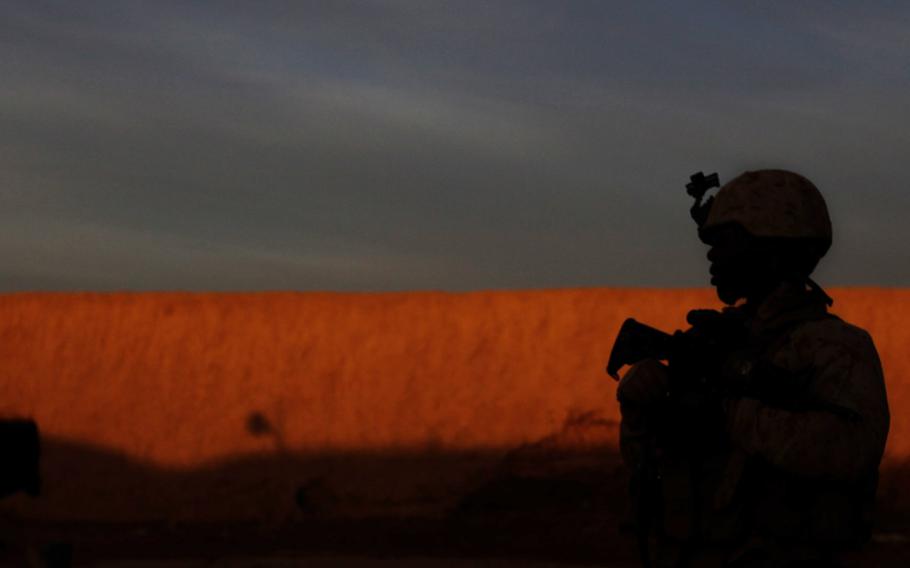
The human toll across the region continues to mount. Iranian authorities report more than 1,900 dead in Iran since the war began. Israel has recorded 19 civilian and military deaths, with an additional 10 soldiers killed in Lebanon. More than two dozen fatalities have been reported in Gulf states and the occupied West Bank. Thirteen U.S. service members have also lost their lives.
Trump Claims Victory; Iran Pushes Back
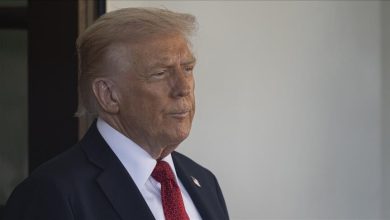
In a nationally televised address Wednesday night, President Trump declared that U.S. military operations had been so effective that Iran — once “one of the most powerful countries” in the region — is “really no longer a threat.” He celebrated footage of the B1 Bridge collapse, posting the video to social media with the message: “Much more to follow.”
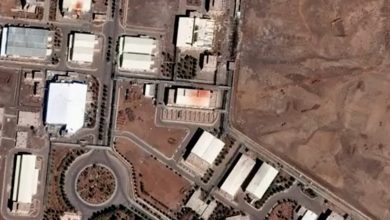
Iran moved swiftly to challenge that characterization. Lt. Col. Ebrahim Zolfaghari, a spokesman for Iran’s military, stated Thursday that Tehran maintains hidden weapons stockpiles, munitions reserves, and dispersed production facilities. He dismissed U.S. strikes on known sites as targeting infrastructure that is “insignificant” to Iran’s overall war capacity.
Iran’s Foreign Minister Abbas Araghchi framed the bridge strike as evidence of American and Israeli desperation rather than strategic dominance, writing that attacking civilian infrastructure “only conveys the defeat and moral collapse of an enemy in disarray.”
A Voice for Negotiation Emerges in Tehran
Amid the daily drumbeat of military communiqués from both sides, a notable dissenting voice emerged Thursday from within Iran’s own political establishment. Mohammad Javad Zarif, who served as Iran’s foreign minister from 2013 to 2021 and was a principal architect of the 2015 nuclear agreement, published an op-ed in the American journal Foreign Affairs calling on Tehran to seek a negotiated settlement.
Zarif argued that while Iran holds a strategic advantage — particularly through its control over the Strait of Hormuz — continuing to fight will only deepen the destruction of civilian life and infrastructure. He proposed that Tehran offer to cap its nuclear program and reopen the strait in exchange for comprehensive sanctions relief, and suggested Iran should also consider a mutual non-aggression pact with Washington.
“Iran should use its upper hand not to keep fighting but to declare victory and make a deal that both ends this conflict and prevents the next one.”
— Mohammad Javad Zarif, former Iranian Foreign Minister, Foreign Affairs, April 3, 2026
Zarif’s intervention is significant — it represents one of the first public calls for a deal from a prominent Iranian figure since the war began. Senior military and political officials in Tehran have consistently demanded that fighting continue until the United States is defeated. Iran and the U.S. have had no formal diplomatic relations since shortly after the 1979 Islamic Revolution.
Key Numbers
- 94% — drop in Strait of Hormuz shipping traffic since March 1, 2026, versus the same period last year (Lloyd’s List Intelligence)
- $111.54 — price per barrel of U.S. crude oil as of Friday, up roughly 50% since February 28
- 1,900+ — people killed in Iran since the war began
- 1,300+ — people killed in Lebanon; over 1 million displaced
- 35 — nations that joined Thursday’s multilateral call on securing the Strait of Hormuz
- 20% — share of globally traded oil that ordinarily transits the strait
- 13 — U.S. service members killed in the conflict
The Strait of Hormuz: A Global Choke Point
Britain convened a call Thursday with representatives of nearly 35 nations to discuss pathways to reopening the strait once active fighting ceases. British Foreign Secretary Yvette Cooper confirmed that military planners from an unspecified number of participating countries were separately working on operational scenarios, including potential mine-clearing operations and security escorts to reassure commercial shipping firms.
Despite the urgency, no nation appears willing to attempt a forced reopening while the war is ongoing. French President Emmanuel Macron, speaking during a state visit to South Korea, called a military intervention to secure the waterway “unrealistic” under current conditions. Macron’s remarks reflect a broader reluctance among U.S. allies to become directly entangled in the fighting, even as their economies absorb escalating energy costs.
Trump, for his part, has encouraged oil-dependent nations to assert themselves. In his Wednesday address, he urged countries that rely on Hormuz oil to “build some delayed courage” and take action — while making clear that the United States does not view this as its responsibility to execute unilaterally.
Japan and South Korea — the only Asian nations on Thursday’s call, despite being among the largest buyers of Gulf oil — face acute exposure to the disruption. The supply of jet fuel has also been curtailed globally, with consequences for international aviation that extend well beyond the immediate conflict zone.
Analysis
The war between the United States, Israel, and Iran has entered a phase that military strategists sometimes describe as a “culminating point” — where both sides continue striking, inflicting costs, and issuing declarations of progress, yet neither possesses the ability or apparent willingness to deliver a decisive, war-ending blow. Iran cannot defeat the U.S. and Israeli militaries directly; the U.S. and Israel have thus far been unable to force Iran’s capitulation or restore freedom of navigation in the strait by force alone.
Tehran’s most powerful instrument remains economic: its stranglehold on the Strait of Hormuz. As long as that leverage persists, Iran retains meaningful bargaining power regardless of damage sustained by its military infrastructure. The emergence of Zarif’s op-ed — however distant he is from current decision-making — signals that at least some within Iran’s political class recognize this leverage is finite, and that a negotiated exit may be preferable to an indefinite war of attrition against superior conventional firepower.
For the international community, the challenge is acute. Thirty-five nations can issue declarations and hold planning calls, but the strait will not reopen through diplomacy alone if Tehran decides to keep it closed. The coming weeks will test whether economic pressure, military signaling, and the weight of civilian suffering on all sides are sufficient to bring the parties toward a framework for de-escalation — or whether the conflict deepens further.