America Is Sending Thousands More Troops to the Middle East — Here Is What They Are, Where They Are Going, and What It Means
WASHINGTON, April 7, 2026 — The United States is deploying thousands of additional ground forces to the Middle East as Operation Epic Fury enters its fortieth day, significantly expanding its military footprint beyond the air and naval campaign that has dominated the conflict since February 28. The reinforcements — comprising elite Army paratroopers, two Marine Expeditionary Units, and division-level command elements — represent the largest U.S. ground force deployment to the region since the 2003 invasion of Iraq, according to reporting by Al Jazeera. The buildup is happening simultaneously with ceasefire negotiations — and military analysts say that is entirely deliberate.
7,000+
Additional Troops Deployed
2
Marine Expeditionary Units
2,000
82nd Airborne Soldiers
40,000
Total U.S. Forces in Region
What Forces Are Being Deployed and Where They Are Coming From
The reinforcement package consists of three distinct formations now converging on the Middle East from different directions. Each brings a different capability and each has a different strategic purpose, according to Al Jazeera’s detailed breakdown of the deployment.
The first formation is the 31st Marine Expeditionary Unit, built around the America-class amphibious assault ship USS Tripoli. Ordered out of its home port in Sasebo, Japan, on March 13, the group transited the Strait of Malacca and was confirmed at Diego Garcia in the British Indian Ocean Territory by March 23 before continuing toward the Gulf. The 31st MEU comprises approximately 2,200 Marines and sailors built around a reinforced infantry battalion with artillery, amphibious vehicles, and specialised support units. USS Tripoli — 261 metres long and displacing 45,000 tonnes — can operate as a light aircraft carrier for F-35B jump jets while simultaneously deploying amphibious landing craft. U.S. Central Command officially confirmed the 31st MEU’s arrival in Middle Eastern waters, according to Al Jazeera.
The second formation is the 11th Marine Expeditionary Unit, carrying approximately 2,500 Marines, which departed San Diego on March 18 and is currently inbound to the region. Together the two MEUs give the United States roughly 4,700 Marines and sailors with full amphibious assault capability in the Gulf — a force designed for rapid sea-to-land operations, raids, securing infrastructure, and evacuating personnel under fire.
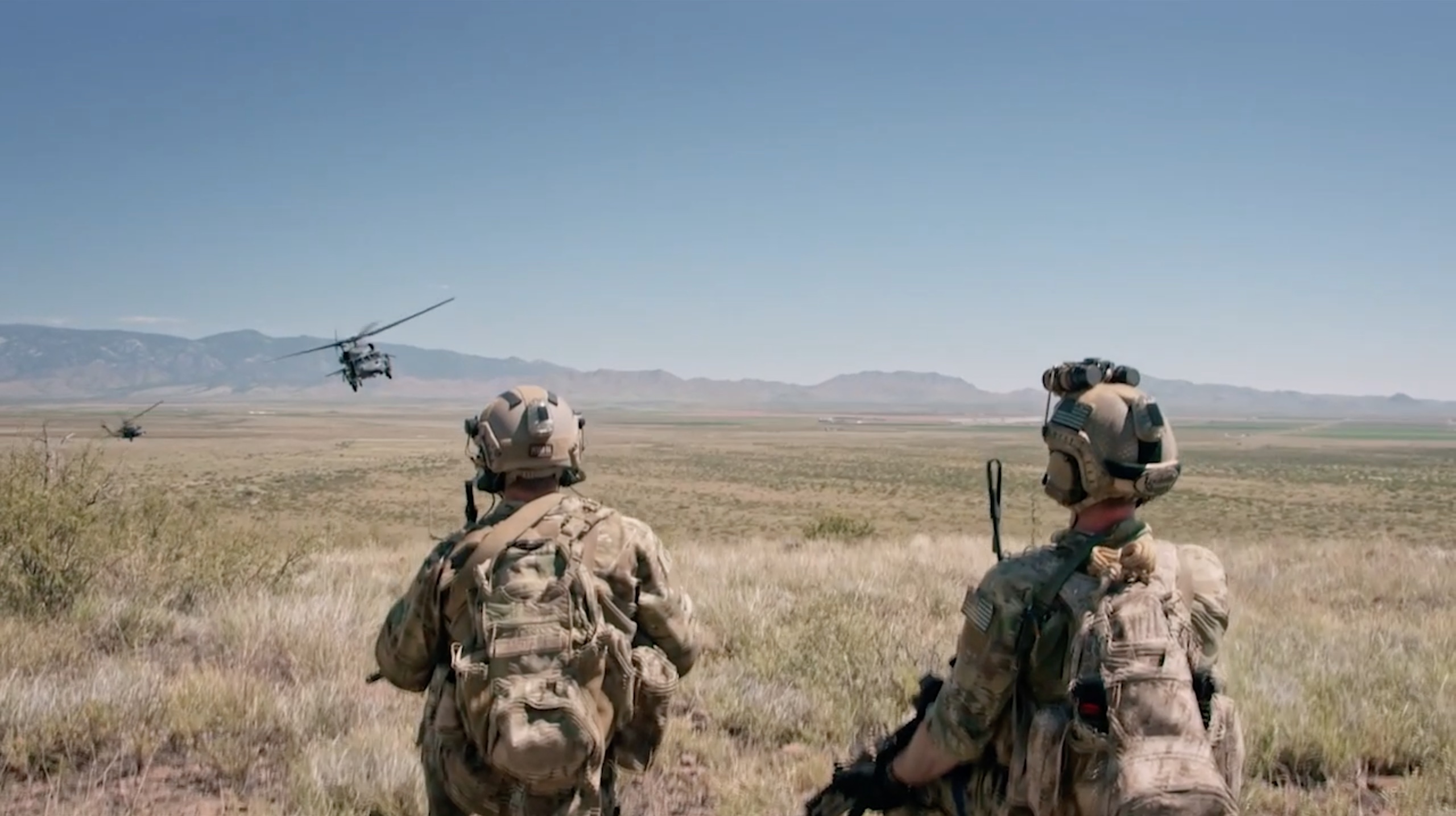
The third formation is a contingent of approximately 2,000 soldiers from the 82nd Airborne Division’s Immediate Response Force, based at Fort Bragg, North Carolina. The Pentagon issued written deployment orders authorising the move, confirmed by CNN citing two officials familiar with the matter. Deploying alongside the soldiers is Major General Brandon Tegtmeier, commander of the 82nd Airborne Division, and division staff — a command structure that significantly expands the ability to coordinate complex multi-unit ground operations.
U.S. Forces Deploying to the Middle East — Confirmed Units
- 31st Marine Expeditionary Unit — 2,200 Marines and sailors — departed Sasebo, Japan, March 13 — arrived Middle Eastern waters March 27 — centred on USS Tripoli — confirmed by CENTCOM
- 11th Marine Expeditionary Unit — 2,500 Marines — departed San Diego March 18 — currently inbound — centred on separate Amphibious Ready Group
- 82nd Airborne Division — Immediate Response Force — approximately 2,000 soldiers — Fort Bragg, North Carolina — deployment orders signed — Maj. Gen. Brandon Tegtmeier deploying with division staff
- Total additional ground forces: Approximately 6,700 to 7,000 troops
- Total U.S. forces in region: Approximately 40,000 — Defence Security Asia
What These Forces Are Capable Of
Understanding what these units can actually do is essential to assessing what the deployment means strategically. Marine Expeditionary Units are self-contained rapid-response forces designed for sea-based combat. They can conduct amphibious assaults — landing troops directly from ships onto beaches or port facilities — as well as raids on specific targets, evacuation of civilians and personnel under fire, and reinforcement of forward positions. Their presence dramatically expands U.S. options beyond the air and naval strikes that have defined Operation Epic Fury so far, according to Military.com.
The 82nd Airborne’s Immediate Response Force is optimised for something different — speed. It can be deployed by air and establish a ground presence in contested areas within hours of an order being given. The 82nd is not a heavy armoured force designed for sustained ground combat. It is a rapid insertion force, designed to seize and hold a discrete objective quickly, ahead of heavier forces arriving behind it. That distinction matters enormously when assessing what the deployment signals about U.S. intentions.
Retired U.S. Army Lt. Colonel Daniel Davis, a senior fellow and military expert at Defense Priorities, told CNBC that there were likely only 4,000 to 5,000 actual combat troops — or “trigger pullers” — in the deployment. “That is enough to seize a small target for a period of time. You’ve got to understand, even the 82nd Airborne Division, it’s an immediate reaction force to provide very quick reaction on the ground but only in advance of something bigger coming in behind that,” Davis said.
Ruben Stewart, senior fellow for land warfare at the International Institute for Strategic Studies, reached a similar assessment, telling CNBC that what is notably absent from the deployment package are “the heavy armoured units, logistics depth, and command structures required for a prolonged land war.” In practical terms, he said, this is a force that “can act quickly and selectively, but not one that could sustain operations deep inside Iran or over an extended period.”
What the Targets Could Be
Two possible objectives have dominated analyst and media discussion since the deployment was announced. The first is Kharg Island — Iran’s primary oil export terminal, located in the northern Persian Gulf, responsible for the vast majority of Iran’s crude oil exports. After U.S. warplanes struck Kharg Island in late March, Trump said in a Truth Social post that his forces had “obliterated” military targets there, warning that the island’s oil infrastructure could be targeted next if Iran did not reopen the Strait of Hormuz. The island is accessible from the sea and could potentially be seized by amphibious forces — though analysts note this would be “technically feasible but escalatory,” according to CNBC.
The second possibility is Iran’s nuclear material. U.S. Secretary of State Marco Rubio told a congressional briefing that the United States may need to physically secure nuclear material inside Iran. “People are going to have to go and get it,” Rubio said, without specifying who or when. Iran’s nuclear sites are located deep inland — a geography that makes a rapid amphibious or airborne seizure significantly more complex than a coastal operation. CNBC quoted analysts who assessed securing Iran’s nuclear material as “the least realistic” option with the current force given the need for “a far larger, sustained ground presence.”
“What is notably absent are the heavy armoured units, logistics depth, and command structures required for a prolonged land war. In practical terms, this is a force that can act quickly and selectively, but not one that could sustain operations deep inside Iran.”
— Ruben Stewart, Senior Fellow for Land Warfare, International Institute for Strategic Studies, speaking to CNBC
Coercive Leverage — The Real Strategic Logic
The most credible interpretation of the deployment — shared by multiple independent analysts — is that it is primarily a coercive tool rather than a genuine preparation for a full ground invasion. Stewart told CNBC that the relatively limited deployment was “best understood as a tool of coercive leverage” as the Trump administration seeks to increase its bargaining power and signal that it has options if diplomacy fails.
This reading is supported by the diplomatic context. Trump stated on Monday April 7 that the U.S. and Iran had reached 15 points of agreement in conversations aimed at ending the conflict, and that Iran would “very much” like to make a deal, according to CNN. Iran had previously denied any dialogue was taking place but an Iranian source told CNN that there was “outreach” between the two countries and that Iran was willing to listen to “sustainable” proposals. Simultaneously the Pentagon confirmed it was developing military options for what Axios described as a “final blow” in Iran that could include ground forces and a massive bombing campaign — options Trump had not yet authorised but had not ruled out.
The pattern is deliberate ambiguity: negotiate while building military pressure, keep Tehran uncertain about whether a ground operation is imminent, and use the uncertainty itself as leverage. Iran’s parliament speaker Mohammad Bagher Ghalibaf responded by warning that Iranian forces were “waiting” for U.S. troops to arrive on the ground, and that “all the vital infrastructure of that regional country will, without restriction, become the target of relentless attacks” if American forces cross into Iranian territory.
U.S. Forces Will Stay After the Ceasefire
A two-week ceasefire between the U.S., Israel, and Iran was declared by Trump on April 7, stepping back from earlier threats to destroy Iranian power plants and bridges. But the forces are not going home. Defence Secretary Pete Hegseth confirmed on Wednesday that American forces would be “hanging around” in the Middle East for the duration of the armistice, according to Navy Times. Hegseth noted that the U.S. had carried out more than 800 strikes against targets in the hours leading up to the pause. He added that if Tehran had refused the ceasefire, attacks would have expanded to “power plants, the bridges and oil and energy infrastructure.”
The message from Washington is unambiguous: the military pressure does not end with the pause in hostilities. The troops, the carriers, the Marines, and the paratroopers remain in position. The ceasefire is a negotiating window, not a withdrawal.
Analysis
The U.S. deployment to the Middle East is not a mystery if you read it through the lens of what the forces are actually capable of. You do not send two Marine Expeditionary Units and the 82nd Airborne’s Immediate Response Force to fight a sustained ground war against Iran. You send them to give the President of the United States a credible threat to hold over Tehran’s head while diplomats negotiate. The force is sized and structured for a rapid, discrete operation against a specific target — Kharg Island, a port facility, a nuclear site — not for an Iraq-style invasion. That makes the deployment simultaneously less alarming and more significant than it first appears. Less alarming because a full ground war is not imminent. More significant because the United States has now positioned itself to strike a strategic Iranian target on very short notice if talks collapse. Iran knows this. The ceasefire exists partly because Tehran understands it. That is what coercive military leverage looks like when it works.
Strategy Battles — Related Coverage
Editorial Verification
This report has been reviewed for factual accuracy and cross-referenced against official U.S. Central Command statements, verified defence journalism, and independent military analysis.
Approved for Publication
Marcus V. Thorne
Lead Editor, Strategy Battles
Sources
- Al Jazeera — War on Iran: What Troops Is the U.S. Moving to the Gulf?
- Al Jazeera — Iran War: What a Marine Expeditionary Unit Is
- CNN — More Than 1,000 U.S. Soldiers Preparing to Deploy to the Middle East
- CNBC — Three Attack Scenarios as U.S. Sends Thousands More Troops to Middle East
- Axios — Iran War Sees Trump Weigh Sending 10,000 More Troops to Middle East
- Military.com — U.S. Ground Forces Arrive in Middle East as Iran Conflict Escalates
- Navy Times — U.S. Forces Will Be Hanging Around Middle East After Iran Ceasefire, Hegseth Says
©StrategyBattles.net 2026
This article is for news and analysis purposes only. It is based on publicly available news sources and military updates. All rights reserved. Original reporting may come from various open sources. Not for commercial reuse without permission.