Drones Strike Iranian Kurdish Opposition HQ North of Erbil
Threat Level Assessment
LEVEL 3 OF 5, DEVELOPING
Bottom Line Up Front
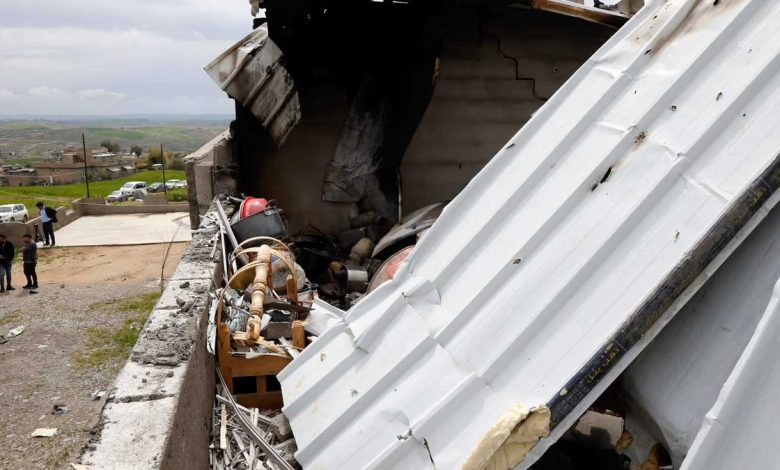
Two unmanned aerial vehicles struck the headquarters of an Iranian Kurdish opposition group north of Erbil on the afternoon of 15 May, security sources told Reuters. No casualties were reported. The strike is the fourth confirmed UAV attack on Iranian Kurdish opposition sites in the Kurdistan Region of Iraq inside 72 hours, following a triple raid Wednesday night on a separate camp roughly seven kilometres further north. Despite the 8 April US-Iran ceasefire, Iranian and Iran-aligned drone and missile attacks on the KRG have now passed 810 since the war began on 28 February, per the KRG Media Directorate.
Key Judgments
The strike is attributable to Iran. Pattern matching to the wider 810-strike campaign, the IRGC drone profile previously documented on 7 April by the Kurdish Counter Terrorism Department, and standing IRGC operational doctrine against exiled Kurdish parties all align. Reuters’ security sources do not name an originator, but no other regional actor has motive, geography, or capability for a sustained UAV campaign at this volume.
The current acceleration is targeting the Coalition of Political Forces of Iranian Kurdistan (CPFIK), formed 22 February, rather than randomly hitting opposition sites. PDKI reports 126 strikes on its own facilities alone since the war opened, with a clear focus on residential camps housing member families. The signal is suppression of a unified Iranian Kurdish political bloc, not infrastructure destruction.
Whether the 15 May strike was authorised by the IRGC directly or executed by an Iran-aligned Shi’ite militia in Iraq. The KRG ministerial position has been that both actors are involved across the 810-attack tally, and the Tehran-Baghdad command-and-control split for cross-border UAV operations is not publicly resolved.
2
Drones, 15 May Strike
4
Strikes in 72 Hours, KRG
810+
KRG Attacks Since 28 Feb
0
Casualties, 13 to 15 May
📍 Northern Iraq : Drone Strike Geography, 13 to 15 May 2026

Strike locations north of Erbil, with PDKI’s traditional Koya base shown for context. Strike points are approximate per public reporting. Datum WGS84, UTM Zone 38S. Map: Strategy Battles / OSINT.
📍 15 May Strike Zone, North Erbil
MGRS: 38S MF 08470 22697
36.3450°N 43.9800°E
Approximate point. Iranian Kurdish opposition group HQ. Two UAVs, no casualties. Specific site not disclosed by Reuters security sources.
📍 13 May Strike Zone, North Erbil
MGRS: 38S MF 12133 29871
36.4100°N 44.0200°E
Approximate point. Separate opposition camp. Wednesday 21:30 local time. Two drones per PDKI; arms depot per Reuters sources. No casualties.
📍 Erbil City, Cross-check Reference
MGRS: 38S MF 10934 05599
36.1911°N 44.0094°E
KRG capital. Strike zone sits roughly 17km north of city centre. Reference point for MGRS grid orientation.
📍 Haji Omran, Iran/Iraq Border
MGRS: 38S MF 90610 52446
36.6175°N 44.8950°E
Closest cross-border launch geometry for IRGC one-way UAVs into Erbil Governorate. Approximately 100km from strike zone.
SITREP Timeline : KRG Strike Pattern, Feb to May 2026
🔴 The 15 May Strike
Two Drones, A Named Headquarters, And Wire-Service Sourcing That Stops Just Short of Naming Tehran
At approximately grid reference 38S MF 08470 22697 (36.3450°N, 43.9800°E), in the agricultural belt that runs north of Erbil city toward the foothills of the Kurdistan Region, two unmanned aerial vehicles struck the headquarters of an Iranian Kurdish opposition group on 15 May. Reuters, citing security sources, reported the incident in the early afternoon local time. The wire stopped short of naming the specific group or the originator of the strike, and security sources did not initially disclose the targeted faction.
No casualties were reported. That is now a recurring detail in the post-ceasefire KRG strike pattern: drones reach their target, deliver an explosive payload, generate property damage, and leave with no fatalities. Whether this reflects accuracy constraints on the inbound platforms, dispersed personnel postures inside the camps, or genuine warning timing remains open. The IRGC’s preferred standoff weapon in this theatre, the Shahed-136 one-way attack drone, is a relatively crude system; precise discrimination between sleeping quarters and outbuildings would be unusual for it.
Wire-service reticence on attribution is itself informative. Reuters in mid-2026 is operating in a region where any explicit Iranian attribution carries diplomatic and legal weight; security sources speaking on background have institutional reasons not to formally accuse a state actor in the absence of recovered drone wreckage with serial numbers. That reticence does not equal genuine uncertainty. The KRG Counter Terrorism Department was explicit on 7 April that a separate drone strike on a family home in the Darashakran subdistrict was launched from Iran. The methodology, geometry, and target set on 15 May fits the same envelope.
🟡 Wednesday’s Triple Raid
A Residential Camp, An Arms Depot, And Two Accounts That Do Not Quite Overlap
Forty-eight hours before the headquarters strike, on the night of Wednesday 13 May at 21:30 local time, two drones hit a PDKI residential camp at approximately 38S MF 12133 29871 (36.4100°N, 44.0200°E). PDKI, in a statement reported by Rudaw Media Network, said the site houses families affiliated with the party and that it brings the group’s running total of strikes on its civilian facilities since the war’s outbreak to 126. Komala, separately, has reported 70 strikes since late February.
Reuters’ security sources, also reporting on Wednesday, described a strike targeting an arms and ammunition depot inside an opposition camp in the same area, with a separate confirmation of a second drone strike on yet another camp the same night. The two accounts may describe distinct strikes or two views of an overlapping operation. The wire-service framing emphasises the weapons depot. The PDKI framing emphasises the families. Both can be simultaneously accurate if the camp colocates personnel quarters with stored materiel, which is structurally common across the Iranian Kurdish opposition’s camp infrastructure in northern Iraq.
The framing question is not academic. If Tehran is hitting depots, the strikes can be cast as a counter-insurgency military operation. If Tehran is hitting family residences, the strikes look closer to political reprisal against an exiled diaspora. The targeted faction’s reading is the second; the security source reading lands the first. Open-source post-strike imagery, when it surfaces, will likely settle the question.
Kurdistan Regional Government, Media Directorate Statement, 25 April 2026
“Between 28 February and 20 April 2026, the Kurdistan Region was subjected to 809 attacks. These resulted in the deaths of 20 civilians and left 123 others injured.”
🔵 The Groups
PDKI, Komala, And A Coalition Tehran Has Decided To Treat As A Single Target Set
The Iranian Kurdish opposition has been based in the Kurdistan Region of Iraq for decades. The Democratic Party of Iranian Kurdistan, founded in Mahabad in 1945, runs its primary headquarters at Koya in Erbil Governorate, around 38S ME 66560 92940, with additional camps at Bahrka, Degala, and Girde Chal. Komala, founded in 1969, is split across three factions but is concentrated in the Zargwez area of Sulaymaniyah Governorate. The Kurdistan Freedom Party, PAK, operates from Pirde and Gomaspan. PJAK, with PKK affinity, holds positions further north.
On 22 February 2026, five of these parties announced the Coalition of Political Forces of Iranian Kurdistan, CPFIK, stating their objective as the overthrow of the Iranian government. Six days later, the 2026 Iran war began. The KRG’s tally that followed, 809 strikes by 20 April rising past 810 with the May raids, includes attacks attributed to both the IRGC directly and to Iraqi Shi’ite militias under the Popular Mobilisation Forces umbrella. The KRG figure is geographically heavy on Erbil province (477 of the 809), reflecting the concentration of PDKI bases there.
The Kurdistan Regional Government’s official position has been one of formal neutrality. It has not allowed its territory to be used as a launchpad for attacks against Iran, and Kurdish leadership has repeatedly censured Tehran while pressing Baghdad to act. The federal government’s response has been muted. The KRG Ministry of Peshmerga Affairs has warned that if Baghdad fails to act on the cross-border drone problem, the ministry will be compelled to adopt a different posture.
⚠ The Ceasefire Question
Tehran Did Not Sign A Ceasefire Covering The KRG
The 8 April Pakistan-mediated ceasefire between the United States and Iran ended the 40-day shooting war between the two states. It did not, however, include the Kurdistan Region of Iraq as a covered party. Tehran’s position, articulated repeatedly through Iranian Foreign Ministry channels and Friday-prayer statements through April and May, has been that Iranian Kurdish opposition groups in northern Iraq remain a national security threat. From Tehran’s perspective, strikes against PDKI, Komala, PAK and PJAK facilities are not breaches of an external ceasefire; they are continuations of an internal counter-terrorism campaign that simply happens to take place across an international border.
That framing has structural utility for Iran. It tests how far the United States is willing to enforce the ceasefire’s spirit beyond its letter, and it tests how far Baghdad is willing to assert sovereign authority over its own Kurdistan Region. So far, the answer to both is: not very far. The State Department’s Rewards for Justice Program on 5 May offered a $10 million bounty for Harakat Hezbollah al Nujaba leader Akram Abbas al Kabi, the fourth such reward in a month for Iran-aligned Iraqi militia leaders. It is the most visible counter-pressure on the Iraqi end of the strike chain, but it does not address the IRGC end of it.
Source Reliability Matrix
NATO grading: REL A (reliable) to F (unreliable). CRED 1 (confirmed) to 6 (cannot judge).
Primary wire, anonymous security sources
Government primary source for attack tally
Established KRG-based news service
Interested party, but consistent over time
Analytical secondary, citing primary sources
Background sourcing, identity withheld
Strategy Battles Assessment
The ceasefire bought silence between the United States and Iran. It bought nothing for the Kurdistan Region. Tehran has demonstrated, for 37 days running, that it considers the Iranian Kurdish opposition a separate file.
✓ What We Know
Two drones hit an Iranian Kurdish opposition headquarters north of Erbil on 15 May. Wednesday’s separate raid hit at least one camp in the same general area at 21:30 local. No casualties in either. The KRG has logged more than 810 attacks since 28 February, the great majority drones, with Erbil province bearing 477 of the first 809. The CPFIK coalition formed six days before the war and has been the strike pattern’s clearest organising principle.
? What We Do Not Know
The specific opposition group hit on 15 May and the exact site coordinates within the broader north-Erbil belt. Whether Wednesday’s depot account and the PDKI residential account describe the same strike or distinct strikes. The command split between IRGC direct action and Iraqi Shi’ite militia attacks across the 810-strike total. Whether the post-ceasefire tempo is sustainable for Tehran given the current Iranian economic posture, or whether attrition logic forces a pause.
☉ What To Watch
Whether the Ministry of Peshmerga Affairs activates the “different posture” it has been signalling since March. Whether the federal Iraqi government, now under new Prime Minister-designate Ali al Zaidi, takes any visible action against the militias inside the Popular Mobilisation Forces orbit that the State Department has been bountying. Whether the next strike escalates from materiel and structures to people. Whether US air defence assistance, currently focused on protecting US installations in the KRG, expands to civilian camps.
Strategy Battles Related Coverage
Editorial Verification
The 15 May strike is verified through Reuters wire (carried by Daily Beirut, US News, Times of Israel, MarketScreener, LBC, and Iran LiveUAMap). The 13 May strikes are verified through Reuters wire plus a direct PDKI statement carried by Rudaw Media Network including local time, drone count, and target framing. The 810-attack figure is sourced to a primary KRG Media Directorate statement of 25 April 2026 and is cross-confirmed by Rudaw, Welat TV, TheNewRegion, and FDD Long War Journal. The targeted group’s identity on 15 May remains attributed to background security sources only; this report does not name a specific party. Strike-point coordinates are approximate per public reporting; exact GPS points have not been disclosed and are not derivable from current open-source imagery. The IRGC drone-launch attribution is inferential, based on pattern matching with the 7 April KRG Counter Terrorism Department finding and the broader strike profile; no recovered wreckage has been independently catalogued in this report.
MGRS datum: WGS84 / UTM Zone: 38S / Cross-check reference: Erbil city centre 38S MF 10934 05599
No satellite imagery has been used in this report.
All claims independently attributed and verified to open sources where possible.
Approved for Publication
Marcus V. Thorne
Lead Editor, Strategy Battles
FILE SB-2026-0515-001 // CLEARED
©StrategyBattles.net 2026
This article is for news and analysis purposes only. Based on publicly available news sources and military updates. All rights reserved. Not for commercial reuse without permission.