Israel Strikes Hezbollah Sites Near Tyre as Ceasefire Talks Enter Day Two in Washington
512+
Lebanese killed since ceasefire 17 Apr
6
Villages issued evacuation orders, Tyre area
72 HRS
Until ceasefire expiry, Sunday 17 May
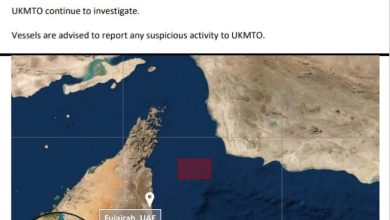
📍 IDF Strike Locations / Tyre District, South Lebanon / 15 May 2026

IDF strike sites and evacuation zones, Tyre district. Datum WGS84, UTM Zone 36S. Map: Strategy Battles / OSINT.
📍 TYRE (SUR), STRIKE AREA
MGRS: 36S YA 07140 60980
33.2704°N 35.2037°E
Coastal city of Tyre, declared primary strike zone for IDF Hezbollah infrastructure operations, 15 May 2026.
📍 TOURA VILLAGE, CONFIRMED STRIKE
MGRS: 36S YA 07780 57090
33.2350°N 35.2100°E
Village of Toura in Tyre district: IDF airstrike killed four people including two women and wounded eight, per Lebanese Health Ministry.
📍 NMAIRIYEH, EVACUATION ORDER
MGRS: 36S YA 20510 52700
33.1950°N 35.3420°E
One of six villages in Tyre province issued IDF forced evacuation orders prior to strikes on 15 May 2026.
📍 BINT JBEIL, IDF SECURITY ZONE
MGRS: 36S YA 26700 43990
33.1200°N 35.4300°E
Key town within Israel’s declared security zone in southern Lebanon; site of sustained IDF-Hezbollah clashes throughout the ceasefire period.
🔴 The Strike
IDF Opens Fire on Hezbollah Sites Around Tyre as Ceasefire Enters Final 72 Hours
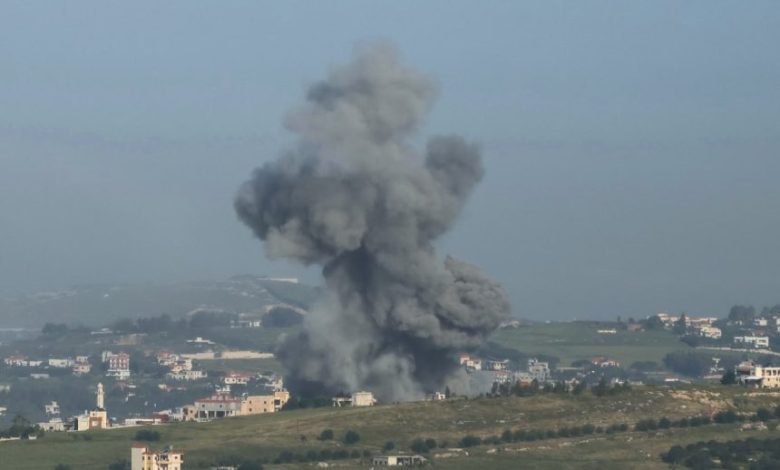
Israel’s military launched strikes against Hezbollah infrastructure in the Tyre district of southern Lebanon on Friday 15 May 2026, centred on grid reference 36S YA 07140 60980 (33.2704°N, 35.2037°E), the coastal city of Sur known in the West as Tyre. The Israel Defense Forces confirmed the operation in a formal statement, saying it had begun targeting “Hezbollah infrastructure sites in the area of Tyre in southern Lebanon.” An AFP correspondent on the ground reported witnessing at least two strikes hit locations near the city.
Hours before the strikes commenced, the IDF’s Arabic-language spokesperson, Col. Avichay Adraee, issued forced evacuation orders for six towns and villages in Tyre province, including Nmairiyeh, Tayr Felsay, Hallousiyyeh, Upper Hallousiyyeh, Toura and Maarakeh. Residents were instructed to move at least one kilometre from their homes into open areas. The sequence followed a pattern the IDF has used repeatedly since the ceasefire came into effect on 17 April: public warning, then strike.
The Lebanese Health Ministry confirmed that a strike on the village of Toura at grid 36S YA 07780 57090 (33.2350°N, 35.2100°E) killed four people, including two women, and wounded eight others. Lebanon’s state National News Agency also reported a separate strike near the southeastern village of Kfar Chouba that killed a Lebanese Civil Defense paramedic. Lebanon’s NNA reported additional strikes across other districts of the south, including areas not covered by the Israeli evacuation warnings.
IDF Spokesperson : Official Statement, 15 May 2026
“The IDF has begun striking Hezbollah infrastructure sites in the area of Tyre in southern Lebanon.”
🟡 The Diplomatic Context
Strikes Fall on Day Two of Washington Ceasefire Talks
The military escalation landed with deliberate or coincidental weight on the same day that Israeli and Lebanese envoys were convening for a second session of US-brokered negotiations in Washington. The first day of talks on Thursday had been described by a US State Department official as “productive and positive,” with both sides agreeing to continue through Friday. The ceasefire between Israel and Hezbollah, originally declared by President Donald Trump on 16 April, is set to expire in the early hours of Sunday 17 May unless a new extension is announced from the talks.
The Lebanese delegation is being led by Presidential Special Envoy Simon Karam, a Maronite lawyer and former ambassador to Washington. Israel’s side is headed by Deputy National Security Adviser Yossi Draznin, with senior military representatives also present. The talks represent the highest-level direct contact between Lebanon and Israel in decades. According to a regional diplomat cited by Mada Masr, both sides are expected to announce an extension of the ceasefire alongside the start of a broader political process under US sponsorship, though no agreement had been announced at time of publication.
Lebanon entered the talks with a clear public objective: secure a committed halt to Israeli strikes on the south before agreeing to any political framework. Lebanese Prime Minister Nawaf Salam, speaking to Al Arabiya on 10 May, set out three principles: reinforcing the ceasefire, establishing a timetable for Israeli withdrawal, and securing the release of Lebanese prisoners held in Israel. A senior Lebanese official told PBS NewsHour that Beirut is “relying heavily on the US administration” to provide leverage against Israel, believing Trump is “sincere” in wanting to help Lebanon rebuild.
🔵 Hezbollah Response
Hezbollah Rejects Talks, Launches Drones Into Northern Israel
Hezbollah fired back on the same day with what the IDF described as “a number of explosive drones” falling in several areas of northern Israel. The IDF stated no injuries were caused by the drone incursions into Israeli territory. Hezbollah has maintained a consistent operational posture throughout the nominal ceasefire period: targeting IDF troops inside southern Lebanon with FPV drone attacks, and periodically launching projectiles across the border into Israeli territory to signal that it retains offensive reach.
The group has explicitly and forcefully rejected Lebanon’s decision to hold direct negotiations with Israel. Hezbollah lawmaker Ali Ammar stated on Thursday that the Washington talks amounted to “free concessions” to Israel. The Iran-backed group has framed its ongoing fire as a legitimate response to what it characterises as Israeli violations of the ceasefire, stating that Israel’s continued occupation of southern Lebanese territory and its demolitions of homes and places of worship constitute the fundamental breach.
Al-Monitor reported, citing Al Jazeera’s correspondent in Tyre, that military activity had visibly intensified across the Tyre coastal zone over the 12 hours leading into Friday afternoon. “We’ve seen air strikes and artillery strikes throughout the day along the coast,” the correspondent said, describing the tempo as “a significant escalation compared to the past couple of days.” The Lebanese NNA reported drone strikes on locations south of Tyre that were not included in the Israeli evacuation warnings, raising questions about the targeting framework being applied.
Ali Ammar, Hezbollah MP : Statement, 14 May 2026
“The talks amount to free concessions to Israel.”
🔴 The Wider War
A Ceasefire in Name Only: The Casualty Count Since 17 April
The Lebanon war began on 2 March 2026 when Hezbollah fired rockets into northern Israel, two days after the United States and Israel launched operations against Iran. What followed was a sustained Israeli air campaign and ground invasion of southern Lebanon. The ceasefire declared on 16 April by President Trump reduced hostilities significantly but did not end them. Since the truce took effect, Israeli strikes have killed at least 512 Lebanese, with Al Jazeera reporting the figure climbing as of 15 May. Lebanon’s Health Ministry put the cumulative war death toll from 2 March at 2,896 killed and 8,824 wounded.
On the Israeli side, the IDF confirmed on 15 May that one soldier had been killed in southern Lebanon, bringing the total number of Israeli soldiers killed in clashes with Hezbollah since early March to 19, alongside two Israeli civilians inside Israel and a defence contractor killed in Lebanon. Israeli troops remain deployed in a self-declared security zone along the southern Lebanese border, with the IDF insisting it retains the right under the ceasefire agreement to act against “planned, imminent or ongoing attacks.”
According to an Egyptian diplomat cited by Mada Masr, Israel informed both Beirut and Washington from an early stage that it had no intention of halting operations against Hezbollah before the group was disarmed. Israel’s position: the ceasefire permits continued action against what it identifies as Hezbollah threats. Lebanon’s position: the strikes constitute a fundamental violation of any meaningful truce. The US has been threading a needle between both, pushing for a diplomatic framework that can paper over this gap long enough for a political process to take root.
🟢 The Hezbollah Disarmament Question
Fundamental Gap Between Israeli and Lebanese Positions Persists
At the centre of the Washington negotiations lies a fundamental disagreement that goes beyond schedule and territory. Israel has defined Hezbollah’s disarmament as a non-negotiable precondition for any lasting security arrangement. Prime Minister Benjamin Netanyahu stated when the April ceasefire was announced: “We want the dismantling of Hezbollah’s weapons, and we want a real peace agreement that will last for generations.” Lebanese officials have countered that disarmament is an internal Lebanese political question that cannot be settled at the negotiating table with Israel, and certainly not before an Israeli troop withdrawal.
Lebanese President Joseph Aoun has declined to meet or speak directly with Netanyahu at this stage. Aoun told Trump in a recent call that if he went to Washington and shook hands with Netanyahu and the talks later collapsed, it could generate serious domestic political blowback in Lebanon and, as one Lebanese official put it to PBS NewsHour, “discredit Trump.” The two countries have formally been in a state of war since Israel’s founding in 1948, and this round of talks represents the highest-level direct engagement in decades, drawing comparisons to the ill-fated May 17 Agreement of 1983.
Lebanon’s new government under Prime Minister Nawaf Salam has taken legal steps to restrict Hezbollah’s influence since coming to power, presenting itself to Washington as a credible partner willing to extend state sovereignty southward. But Hezbollah remains a powerful force in Lebanese politics, controls significant territory, and has made clear it will not be disarmed through external pressure alone. The tension between these trajectories, all playing out simultaneously while strikes continue around Tyre, defines why this ceasefire has remained a ceasefire only in name.
Strategy Battles Assessment
The Strikes Are the Message: Israel Is Negotiating From Altitude
The timing of Friday’s strikes is not incidental. Launching a confirmed air campaign against Hezbollah infrastructure in Tyre on the same morning that Lebanese and Israeli envoys sit down in Washington is a deliberate signal: Israel is not approaching these talks from a posture of compromise, but of continued military pressure. The IDF’s pattern throughout the ceasefire period, issuing evacuation orders, striking, documenting Hezbollah violations as justification, has functioned as a slow but methodical campaign to degrade Hezbollah’s southern infrastructure while the political clock runs down.
The casualty arithmetic since 17 April tells the clearest story. More than 512 Lebanese killed under a ceasefire that was supposed to halt the fighting. The Lebanese government, under enormous pressure to show diplomatic progress to its domestic audience, is simultaneously being asked to negotiate with an adversary that continues to kill Lebanese civilians. That the US has described these talks as “productive and positive” while Israeli jets were conducting strikes around Tyre reflects Washington’s fundamental dilemma: it needs both parties to sustain the process, which means it cannot publicly hold Israel to account for what Lebanon calls ceasefire violations.
The Hezbollah variable makes any settlement structurally precarious. Hezbollah has rejected the talks outright, retains the capacity to fire drones and rockets across the border, and continues to attack IDF positions inside Lebanon daily. Any ceasefire extension coming out of Washington on Sunday will face the same challenge the previous two extensions have faced: Israel claims the right to strike Hezbollah regardless of the truce, Hezbollah claims the right to resist regardless of the truce, and the Lebanese state sits between them trying to build a political framework without the leverage to enforce either side’s compliance. The Tyre strikes on 15 May 2026 are not an anomaly. They are the baseline.
Strategy Battles Related Coverage
Sources
- Israel Army Says Striking Hezbollah Sites in Tyre Area of South Lebanon, Asharq Al-Awsat / AFP, 15 May 2026
- Israel Strikes Lebanon as Talks in US Enter Second Day, Al-Monitor, 15 May 2026
- Lebanon and Israel Kick Off New Negotiations Amid Fighting with Hezbollah, PBS NewsHour / AP, 15 May 2026
- Israel-Lebanon Talks Held in Washington as Expiration of Ceasefire Nears, Al Jazeera, 15 May 2026
- Israel and Lebanon Meet for Third Round of Direct Talks in Washington, Euronews / AP, 15 May 2026
- Sources: Lebanon-Israel Meeting in Washington to Extend Ceasefire Without Securing Halt in Attacks on South, Mada Masr, 13 May 2026
- Lebanon to Press Israel to Cease Fire at Washington Talks, Reuters, 14 May 2026
Editorial Verification
IDF statement (“begun striking Hezbollah infrastructure sites in the area of Tyre”): verified across six independent outlets (Asharq Al-Awsat/AFP, Al-Monitor, PBS NewsHour/AP, Al Jazeera, Euronews/AP, Reuters). Lebanese Health Ministry casualty figures for Toura (four killed, eight wounded): verified across three independent outlets (PBS/AP, Al Jazeera, Al-Monitor). Ali Ammar (Hezbollah MP) statement on “free concessions”: verified across two outlets (Al-Monitor, Asharq Al-Awsat citing AFP). Ceasefire expiry date of Sunday 17 May: verified across five outlets. IDF soldier death toll of 19 since early March: single-source at time of publication (Al-Monitor citing IDF statement); corroborating outlets give slightly different cumulative figures depending on reporting window. Lebanese death toll since 17 April cited as 512+: sourced from Al Jazeera citing Lebanese Health Ministry, corroborated by PBS/AP (around 400+ figure, different reporting window). Figures presented with full attribution. MGRS datum: WGS84 / UTM Zone: 36S / Cross-check reference: Nahariya, northern Israel: MGRS 36S XA 06090 30660 (33.0050°N, 35.0950°E), a coastal city at the Israel-Lebanon border used as the southern zone anchor point. No satellite imagery used in this article. All claims independently attributed and verified to open sources where possible.
Approved for Publication
Marcus V. Thorne
Lead Editor, Strategy Battles
©StrategyBattles.net 2026
This article is for news and analysis purposes only. Based on publicly available news sources and military updates. All rights reserved. Not for commercial reuse without permission.