Former Israeli Official Proposes 12,000-Strong Mercenary Force as IDF Confronts 15,000 Troop Shortfall
Threat Level Assessment
LEVEL 2 OF 5, MONITOR
Bottom Line Up Front
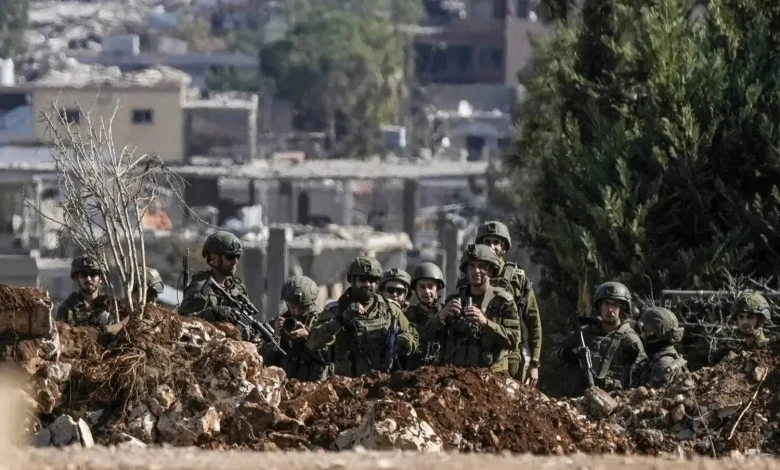
Former senior Israeli government official Shlomo Maoz has proposed recruiting 12,000 mercenary soldiers organised into four brigades to form an “Israeli Foreign Legion,” telling Maariv that the IDF already operates with 7,365 lone soldiers, nearly half of whom he describes as functional mercenaries. The proposal arrives as IDF Chief of Staff Lt. Gen. Eyal Zamir warns repeatedly that the military faces institutional collapse without thousands of additional troops, with the IDF spokesman placing the shortfall at approximately 15,000. The crisis is structurally unresolvable through domestic conscription alone: some 80,000 eligible ultra-Orthodox men refuse to serve, their political patrons in the Knesset are threatening to topple the government over any draft enforcement, and the multi-front war that began with the October 2023 Hamas attack continues to consume manpower at an unsustainable rate.
Key Judgments
The IDF manpower crisis is genuine and structural, not political posturing by military leadership. Chief of Staff Zamir has issued escalating warnings since January 2026, culminating in a reported security cabinet statement in March that the IDF would “collapse in on itself.” IDF spokesman Brig. Gen. Effie Defrin subsequently quantified the shortfall at approximately 15,000 troops, including 7,000 to 8,000 combat soldiers. These warnings are independently confirmed by the Times of Israel, Jerusalem Post, Ynet, and Daily Sabah via AFP.
Maoz’s foreign legion proposal will not be adopted in its current form, but it reflects a real trajectory in Israeli defence planning. The Jerusalem Institute for Strategy and Security published a formal paper in February 2026 proposing a “Mahal+” programme to expand foreign recruitment. The political cost of abandoning the “people’s army” identity is higher than the financial cost of $2.5 billion, but the direction of travel is clear: Israel’s domestic conscription base cannot sustain the current operational tempo without supplementation.
Whether Maoz’s specific financial and personnel figures are independently verifiable. His claims that 48% of Israel’s 7,365 lone soldiers are effectively mercenaries earning $4,000 per week through “secret” arrangements are single-source, originating from a single Maariv interview relayed by Asharq Al-Awsat. No independent IDF data or secondary sourcing currently corroborates these specific figures.
15,000
Troop Shortfall (IDF Est.)
7,365
Lone Soldiers (Per Maoz)
80,000
Eligible Ultra-Orthodox
$2.5B
Estimated Legion Cost
SITREP Timeline : IDF Manpower Crisis, Jan to May 2026
🔴 The Proposal
12,000 Mercenaries, Four Brigades, And An Open Secret Made Public
Shlomo Maoz, a former senior Israeli government official and economist, has proposed recruiting 12,000 mercenary soldiers into an “Israeli Foreign Legion” composed of four brigades operating under Israeli officers. Speaking to the Israeli daily Maariv in an interview published on 16 May 2026 and reported by Asharq Al-Awsat, Maoz presented the plan as a personal initiative inspired by Ukraine’s recruitment of approximately 10,000 foreign fighters from 75 nationalities, who receive an average of $4,000 per month from Kyiv.
The core of Maoz’s argument is that the IDF already relies on a foreign manpower stream it does not openly acknowledge. He told Maariv that the army currently fields 7,365 “lone soldiers,” a term referring to personnel who serve without family in Israel. Of these, Maoz said, 52% come from Jewish families living abroad and serve through established channels. The remaining 48%, he claimed, are functional mercenaries who serve through what he described as “secret” arrangements. These soldiers receive salaries equivalent to $4,000 per week, according to Maoz, drawn from the United States (30%), France (12%), Ukraine (7%), and a mix of Spain, Italy, Germany, Canada, and Britain.
Maoz estimated the total cost of a 12,000-strong mercenary force at approximately $2.5 billion, with each soldier costing between $8,000 and $10,000 per month in direct salary plus roughly half that again in state expenses. He framed this as manageable against Israel’s foreign currency reserves of $236 billion, equivalent to about 38% of gross domestic product. His proposal would recruit retired military officers from Eastern European countries in particular: fighters, snipers, tank operators, drone specialists, and, he said, even pilots.
🟡 The Crisis
A Chief Of Staff Who Has Run Out Of Euphemisms, And 15,000 Troops He Does Not Have
Maoz’s proposal did not emerge in a vacuum. IDF Chief of Staff Lt. Gen. Eyal Zamir has delivered a series of increasingly urgent warnings about the military’s manpower deficit since January 2026. In a letter to Prime Minister Netanyahu and senior officials that month, Zamir warned that the shortage of soldiers could harm military readiness in the near future and urged the government to extend mandatory service for men back to 36 months, after it was shortened to 30 months in August 2024.
The warnings escalated sharply. On 26 March, during the active phase of the Iran war, Zamir told the security cabinet that the IDF was “going to collapse in on itself,” a statement reported by Channel 13 and confirmed by the Jerusalem Post. He told ministers he was “raising 10 red flags” and demanded three pieces of legislation: a new conscription law, a reserve duty law, and a law extending mandatory service. IDF spokesman Brig. Gen. Effie Defrin then publicly quantified the gap: approximately 15,000 additional soldiers needed, including 7,000 to 8,000 combat troops. The IDF’s own institutional figure, used consistently in briefings from January through May, placed the urgent recruitment need at 12,000.
On 10 May, appearing before the Knesset Foreign Affairs and Defence Committee, Zamir repeated the demand in its starkest terms. He told lawmakers that the IDF needed more soldiers “immediately” and suggested amending the law on military reserves to allow the army to enlist reservists for longer periods according to operational needs. The head of the IDF’s Planning and Manpower Directorate, Brig. Gen. Shay Tayeb, warned that if the planned service reduction takes effect in January 2027, the army will lose thousands more combat soldiers. Reserve troops were already serving 80 to 100 days per year, a load Zamir described as unsustainable.
IDF Chief of Staff Lt. Gen. Eyal Zamir : Security Cabinet, 26 March 2026 (per Channel 13 / Times of Israel)
“I am raising 10 red flags in front of you. Right now, the IDF needs a conscription law, a reserve duty law, and a law to extend mandatory service. Before long, the IDF will not be ready for its routine missions and the reserve system will not last.”
🔵 The Haredi Standoff
80,000 Eligible, Zero Willing, And A Coalition Held Hostage
The domestic arithmetic that makes Maoz’s proposal thinkable is straightforward. Approximately 80,000 ultra-Orthodox men aged between 18 and 24 are currently eligible for military service but have not enlisted, according to the IDF’s own figures reported consistently across Israeli media throughout 2026. Their refusal is not individual: it is institutionally organised by the Haredi political parties, principally Shas (11 Knesset seats) and United Torah Judaism (seven seats), whose rabbinical leadership treats military service as incompatible with full-time Torah study.
The government’s response has been a bill, championed by Knesset Foreign Affairs and Defence Committee chairman Boaz Bismuth (Likud), that would nominally increase Haredi conscription through yearly quotas while continuing to grant sweeping exemptions to yeshiva students. The Deputy Attorney General, Gil Limon, told the committee in December 2025 that the bill would actually create “a negative incentive for enlistment” and roll back the tools available for military recruitment. The bill was shelved in March when the Iran war demanded rapid budget approval, but Bismuth announced its return on 31 March, claiming he was acting at the Chief of Staff’s request.
The political dynamics reached a new point of fracture on 12 May. After Netanyahu informed Haredi lawmakers that his coalition lacked the votes to pass the exemption bill in its current form, the Degel HaTorah faction announced it would push to dissolve the Knesset, forcing early elections. The faction’s spiritual leader, Rabbi Dov Lando, reportedly gave the instruction personally. Coalition allies, including National Security Minister Ben Gvir’s Otzma Yehudit party, urged restraint. Elections must be held by October 2026 regardless, but any advance would throw Netanyahu’s legislative agenda into disarray.
This is the political context in which Maoz’s proposal lands. If the single largest pool of military-age Israeli males is not going to serve, someone else has to. As Maoz told Maariv, the benefits of recruiting mercenaries “outweigh the symbolic costs.” That framing is worth pausing on. The word “symbolic” does a great deal of work. The IDF was founded as a conscript army explicitly designed to integrate Israel’s immigrant populations: Ashkenazi and Mizrahi, urban and rural, European and Middle Eastern, Jewish and Druze. Maoz himself described this history as the basis of the “people’s army” myth. His use of the word “myth” is itself the signal. If the architect of a policy proposal calls the founding principle a myth in the same sentence he proposes replacing it, the principle is already dead.
🟢 The Precedents
Ukraine’s 10,000, France’s Legion, And A Model Israel Has Already Partially Built
Maoz explicitly cited Ukraine’s foreign fighter programme as his model. Kyiv currently fields approximately 10,000 foreign fighters from 75 nationalities, with roughly 600 new mercenaries joining each month, paid an average of $4,000 per month. France’s Foreign Legion, the world’s oldest continuously operating professional foreign military unit, has served as the conceptual reference point for Israeli analysts since at least February 2026, when the Jerusalem Institute for Strategy and Security published a formal paper proposing a cautious expansion of the existing Mahal volunteer framework into a “Mahal+” track that would gradually broaden eligibility beyond Jewish volunteers.
The JISS paper, authored by senior fellows, acknowledged the IDF’s small population base and the structural exclusion of the Arab sector (approximately 20% of Israel’s population) from conscription, alongside the Haredi refusal. It proposed cautious expansion rather than a full foreign legion, noting the integration risks and the institutional reluctance to change. Maoz’s proposal is less cautious. He jumps directly to four brigades under Israeli officers, with a recruitment pool drawn from retired military professionals across Eastern Europe. His argument for linguistic feasibility is that millions of Israeli citizens already speak Russian, English, Spanish, and other languages as their mother tongue, making integration of foreign soldiers operationally viable.
Israel does already have partial infrastructure for this. The existing Mahal programme allows non-citizen Jewish volunteers to serve in the IDF on temporary contracts. Americans currently make up the largest contingent of foreign nationals serving in the IDF, followed by French and Russian nationals. What Maoz is proposing is not the creation of something new from nothing; it is the formalisation and massive expansion of something that already exists in a grey zone. His use of the word “secret” to describe the current pay arrangements for non-Jewish lone soldiers is the most provocative element of the interview. If accurate, it implies a parallel compensation structure that the IDF does not publicly acknowledge.
⚠ The Strategic Arithmetic
Seven Fronts, Settlement Expansion, And A Force Too Small For The Mission It Has Been Given
Maoz told Maariv that the government is waging an ongoing war on seven fronts while simultaneously pursuing further occupation, expansion, and the establishment of new settlements and outposts that all require protection. The settlement figure he cited, 134, has not been independently confirmed at that exact number. The closest verified data comes from Peace Now’s Settlement Watch, which documented the cabinet’s secret approval of 34 new settlements on 1 April 2026, reported by CNN, Reuters, and Democracy Now on 9 to 10 April. Peace Now separately recorded 86 new outposts established in 2025 alone. The Alliance for Water Justice in Palestine’s updated West Bank map counts 34 new settlements, 127 existing settlements, 122 unauthorised outposts, and 199 unauthorised settlement farms as of early 2026. Maoz may be aggregating several categories; the exact basis for his figure of 134 is not stated in the interview.
The broader strategic problem Maoz identifies is real, regardless of the precise settlement count. Peace Now’s own condemnation of the April settlement decision made the connection explicitly: settlements impose an “intolerable burden on the army” and undermine security. Each new outpost or settlement requires a military garrison, patrol routes, rapid-response teams, and often dedicated road infrastructure. The IDF’s Planning and Manpower Directorate has told lawmakers that even without new commitments, the army cannot sustain its current deployment profile with the troops it has. Adding garrison requirements for dozens of new civilian sites to an already overstretched force is not an abstract problem; it is a concrete draw on the same finite pool of soldiers that Zamir says is 15,000 short.
The multi-front war posture compounds the mismatch. Since the Hamas attack of 7 October 2023, the IDF has conducted sustained operations in Gaza, southern Lebanon, the West Bank, and Syria, and joined the United States in the war against Iran that began on 28 February 2026. The Iranian front added air defence, naval, and expeditionary commitments, while the defence budget expanded by NIS 28 billion ($9 billion) to NIS 140 billion in March. The budget can fund equipment and munitions. It cannot manufacture soldiers. That is the gap Maoz is trying to fill, and it is the gap Zamir keeps pointing to when he stands in front of lawmakers and says the IDF needs troops “immediately.”
Shlomo Maoz : Interview with Maariv, 16 May 2026 (via Asharq Al-Awsat)
“To fill this need, solutions outside the box must be explored.”
Source Reliability Matrix
NATO grading: REL A (reliable) to F (unreliable). CRED 1 (confirmed) to 6 (cannot judge).
CRED 2
Primary source for Maoz proposal. Single interview via Hebrew-language daily. Maoz’s specific figures (7,365 lone soldiers, 48% mercenaries, $4,000/week) are not independently verified.
CRED 1
Primary English-language Israeli outlet. Zamir’s warnings, 80,000 Haredi figure, and coalition crisis coverage confirmed by multiple reporters across multiple dates.
CRED 2
Key source for Zamir’s Knesset testimony and Defrin’s 15,000 figure. Hebrew-language reporting with independent editorial line.
CRED 1
Independent confirmation of Zamir’s “10 red flags” cabinet warning. Confirmed report via own IDF sources.
CRED 2
Established Israeli think tank. Policy analysis, not reporting. Provides institutional context for the foreign recruitment debate.
CRED 1
Israeli NGO with a well-documented track record on settlement monitoring. Advocacy organisation but data is consistently verified by independent outlets.
Strategy Battles Assessment
The IDF’s manpower crisis is structural, not political: it predates the Iran war, it will outlast any ceasefire, and Israel’s domestic conscription system cannot resolve it without either compelling 80,000 Haredi men to serve or importing soldiers from abroad. Maoz’s proposal is the first public articulation of the second option.
✓ What We Know
The IDF is short approximately 12,000 to 15,000 troops, a figure confirmed by the Chief of Staff, the IDF spokesman, and the Planning and Manpower Directorate across multiple briefings from January to May 2026. Some 80,000 eligible ultra-Orthodox men are not serving. The Haredi draft exemption bill is politically deadlocked: the coalition cannot pass it, and the Haredi parties are threatening to dissolve the Knesset over the delay. Maoz has published a formal proposal for a 12,000-strong mercenary force through Maariv. The JISS published an institutional paper exploring the same concept in a more cautious form in February. Reserve troops are serving 80 to 100 days per year, a rate the Chief of Staff has described as unsustainable.
? What We Do Not Know
Whether Maoz’s specific claims about existing lone-soldier pay and composition (48% mercenaries, $4,000 per week) are accurate; these are single-source from one interview. Whether the IDF’s institutional leadership has formally evaluated a foreign legion option or whether Maoz is operating purely as a private citizen. Whether the Degel HaTorah threat to dissolve the Knesset will materialise or is a negotiating posture. The exact basis for Maoz’s figure of 134 new settlements requiring protection. Whether Netanyahu’s reported shelving of the draft bill will hold through the election cycle or will be reversed under coalition pressure.
☉ What To Watch
Whether any serving IDF officer or government official endorses or formally responds to the Maoz proposal, which would signal institutional interest beyond the private-citizen stage. Whether the January 2027 mandatory service reduction takes effect as currently legislated, which would deepen the shortfall by thousands more troops. Whether the Israeli Supreme Court issues further rulings on Haredi conscription that force the government’s hand. Whether the October 2026 election produces a coalition willing to enforce universal conscription, or whether the next government inherits the same structural deadlock. Whether Ukraine’s foreign fighter programme experiences visible quality or reliability problems that would undermine the foreign legion model’s credibility.
Strategy Battles Related Coverage
Sources
- End of the ‘People’s Army’ Myth: Israel Weighs Resorting to Mercenaries, Asharq Al-Awsat, 16 May 2026
- Zamir said to warn cabinet that IDF will ‘collapse in on itself’ amid manpower shortage, Times of Israel, 27 March 2026
- Zamir warns Knesset that military urgently needs more soldiers amid multifront war, Times of Israel, 10 May 2026
- IDF chief warns lawmakers that army ‘will fall apart’ without additional soldiers, Ynet News, 10 May 2026
- Chief of Staff Eyal Zamir warns IDF will collapse due to lack of manpower, Jerusalem Post, 26 March 2026
- A Foreign Legion for the IDF? Addressing Israel’s Military Manpower Crisis After October 7, JISS, 22 February 2026
- Coalition to advance ultra-Orthodox draft exemption bill after pause due to Iran war, Times of Israel, 31 March 2026
- Israeli ultra-Orthodox party threatens to topple government over draft bill delay, Middle East Monitor, 12 May 2026
- Israeli government secretly approves over 30 new settler outposts, CNN, 9 April 2026
- NIS 19 Billion for Settlements, Peace Now, 27 March 2026
Editorial Verification
The IDF manpower shortfall (12,000 to 15,000 troops) is verified through four independent outlets: Times of Israel (multiple dates), Jerusalem Post (26 March 2026), Ynet News (10 May 2026), and Daily Sabah via AFP (26 March 2026). Chief of Staff Zamir’s “collapse in on itself” warning is verified through Channel 13, Jerusalem Post, and Times of Israel independently. The 80,000 eligible ultra-Orthodox figure is verified through Times of Israel, Ynet, and Middle East Monitor. The Degel HaTorah threat to dissolve the Knesset is verified through Haaretz, Times of Israel, and Middle East Monitor (all 12 May 2026).
SINGLE-SOURCE ITEMS: The Maoz proposal details (12,000 mercenaries, four brigades, 7,365 lone soldiers, 48% mercenary composition, $4,000/week salary, $2.5 billion total cost, 134 settlements figure) originate from a single Maariv interview reported by Asharq Al-Awsat on 16 May 2026. No independent corroboration for these specific figures has been located at time of publication. The JISS paper (February 2026) provides institutional context for the foreign legion concept but does not corroborate Maoz’s specific numbers.
CONFLICTING ACCOUNTS: The IDF’s stated shortfall ranges from 12,000 (used in Zamir’s briefings from January to March) to 15,000 (IDF spokesman Defrin, following the 10 May committee appearance). The discrepancy may reflect evolving operational needs or different counting methodologies (combat vs. total). Both figures are presented with attribution.
No geographic coordinates or MGRS grid references are used in this report. No satellite imagery has been used. This is a policy analysis article, not a geographic strike report.
All claims independently attributed and verified to open sources where possible.
Approved for Publication
Marcus V. Thorne
Lead Editor, Strategy Battles
FILE SB-2026-0516-045401 // CLEARED
©StrategyBattles.net 2026
This article is for news and analysis purposes only. Based on publicly available news sources and military updates. All rights reserved. Not for commercial reuse without permission.