Ukraine Drones Strike Yaroslavl Refinery and Push Toward Moscow, Two Days After Attack Killed Four Near Capital
Threat Level Assessment
LEVEL 4 OF 5, SERIOUS
Bottom Line Up Front
Ukrainian drones struck the Yaroslavl region northeast of Moscow on the morning of 19 May 2026, with the Slavneft-YANOS refinery area the apparent target, per Kyiv Independent reporting citing Governor Mikhail Yevrayev. Separately, Moscow Mayor Sergei Sobyanin stated on Telegram that four drones heading toward the capital were intercepted and downed. No casualties were reported in either incident. The 19 May strikes continue a pattern that peaked two days prior, on 17 May, when Russian air defences claimed to have destroyed 556 drones across Russian territory in 24 hours and 81 headed for Moscow specifically, in one of the largest Ukrainian attacks since the start of the full-scale invasion, which killed at least four people including three in the Moscow region.
Key Judgments
Ukraine is executing a sustained, deliberate campaign to degrade Russian oil refinery capacity within striking distance of Moscow. The YANOS refinery at Yaroslavl was also targeted in an earlier attack during Russia’s self-declared Victory Day ceasefire period (8 May), with a large fire confirmed at that time. Striking the same node repeatedly indicates a prioritised target list, not opportunistic attacks.
The scale of the 17 May attack (556 drones destroyed across Russia per the Russian Defence Ministry, 81 headed specifically for Moscow per TASS and Sobyanin) represents a quantitative escalation beyond previous swarm operations. The 19 May follow-on within 48 hours suggests Ukraine is exploiting a tempo window while Russian air defence logistics are under reload pressure, rather than spacing attacks to allow full reconstitution.
The precise damage state of the YANOS refinery from the 19 May strike. No independent post-strike imagery has been confirmed at time of writing. Russian authorities have not acknowledged refinery damage on 19 May, and Ukrainian authorities have not formally claimed the Yaroslavl strike. The Kyiv Independent report is sourced to local Russian officials and media rather than direct Ukrainian military statement.
4
Drones Downed Over Moscow, 19 May
81
Drones Downed Toward Moscow, 17 May
556
Total Drones Destroyed Across Russia, 17 May (24hr)
4
Killed in Moscow Region, 17 May
📍 Deep Strike Zone : Moscow Region and Yaroslavl Oblast, 17 to 19 May 2026

Datum WGS84, UTM Zone 37U. Strike locations approximate per public reporting. Map: Strategy Battles / OSINT.
📍 Yaroslavl, YANOS Refinery Area
MGRS: 37U EV 58200 37800
57.6261°N 39.8845°E
Slavneft-YANOS refinery complex. Drone strike reported 19 May 2026. Traffic restrictions imposed on M8 highway. No casualties confirmed. Also struck 8 May during Russia ceasefire period.
📍 Moscow City Centre, Cross-check Reference
MGRS: 37U DB 23700 74200
55.7558°N 37.6173°E
Russian capital. Four drones intercepted 19 May per Sobyanin. 81 intercepted 17 May per TASS. Yaroslavl lies approximately 230km northeast along the M8 highway.
📍 Khimki, Moscow Oblast
MGRS: 37U DB 17800 89200
55.8886°N 37.4440°E
Site of 17 May fatality. Woman killed when drone struck her home. Fire damage to residential property. Governor Vorobyev, Moscow Oblast, via Telegram.
📍 Sheremetyevo Airport, Moscow Oblast
MGRS: 37U DB 13600 98600
55.9736°N 37.4146°E
Russia’s largest airport. Drone debris fell on grounds during 17 May attack per airport statement. No damage. Flights unaffected. Confirms attack reach to immediate Moscow periphery.
SITREP Timeline : Ukraine Deep Strike Campaign, May 2026
🔴 The 19 May Strike
Yaroslavl Struck Again and Four Drones Downed Over Moscow, Forty-Eight Hours After the Largest Attack of the War
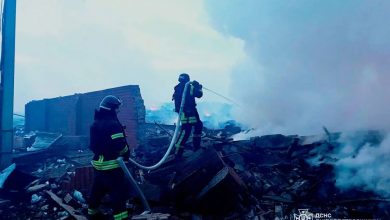
At approximately grid reference 37U EV 58200 37800 (57.6261°N, 39.8845°E), on the eastern approaches to the city of Yaroslavl and in the industrial zone where the Slavneft-YANOS refinery complex operates, explosions were reported on the morning of 19 May 2026. Yaroslavl Oblast Governor Mikhail Yevrayev confirmed the attack via Telegram, attributing it to Ukrainian drones and announcing traffic restrictions on the M8 federal highway connecting Yaroslavl to Moscow. Residents were urged to avoid the route or use alternative roads. The Kyiv Independent, citing local Russian media and official statements, reported the incident as apparently targeting oil infrastructure.
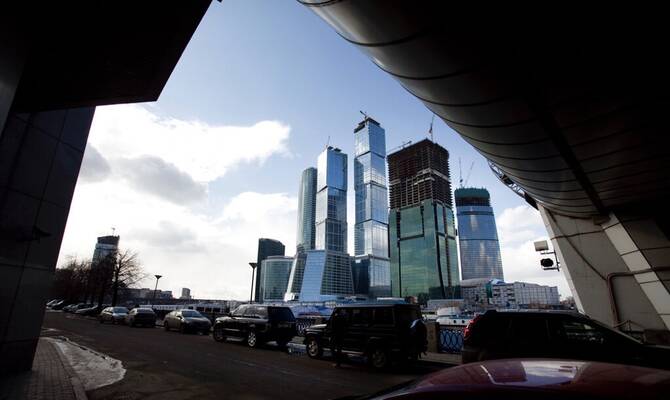
Simultaneously, or in close succession, Moscow Mayor Sergei Sobyanin published a Telegram post stating that four drones heading for the capital had been shot down by Russian air defences, citing falling debris as the consequence. Emergency services were deployed to the debris impact area. Sobyanin’s language mirrored the formulation he has used consistently across the current campaign: the drones were intercepted, falling debris required an emergency response, no significant damage was reported. No casualties were stated for either the Yaroslavl or the Moscow-directed incidents on 19 May.
The absence of Ukrainian Defence Ministry comment on the 19 May strikes at time of writing is consistent with Ukraine’s operational practice of withholding formal claim statements for deep strikes until post-mission assessment is complete or until political conditions favour public attribution. The Kyiv Independent’s sourcing is unambiguously Russian-official, which means the confirmed facts are those Russia has chosen to acknowledge publicly: the attack happened, the refinery zone was affected, and traffic was disrupted. What Russia’s public statement does not address is damage to refinery operations themselves.
🟡 The 17 May Mass Strike: Context for the Current Tempo
Four Killed, 81 Drones Toward Moscow, Debris on Sheremetyevo: The Benchmark Against Which 19 May Must Be Read
The 19 May events cannot be understood without the 17 May mass strike. In the overnight attack of 16 to 17 May, Ukrainian drones reached Moscow Oblast in unprecedented numbers: TASS, citing Mayor Sobyanin, reported 81 drones downed heading for the capital, marking one of the largest single-city air-threat events since Russia launched its full-scale invasion in February 2022. Russia’s Defence Ministry stated that 556 drones were destroyed across all Russian territory in the preceding 24 hours. At 37U DB 17800 89200 (55.8886°N, 37.4440°E), in the city of Khimki immediately northwest of Moscow, a drone struck a woman’s home, killing her. Two men died in the village of Pogorelki, roughly ten kilometres north of the capital, per Moscow Oblast Governor Andrei Vorobyev. A fourth fatality, an Indian national, was confirmed by the Indian Embassy in Moscow; his location was described as “the Moscow region,” and it was not immediately clear whether he was additional to or one of the three already reported.
Inside Moscow itself, 12 people were wounded in the nighttime strike, the majority near the entrance to the city’s oil refinery, per Sobyanin. He stated the refinery’s production infrastructure had not been damaged. At 37U DB 13600 98600 (55.9736°N, 37.4146°E), Sheremetyevo International Airport confirmed that drone debris had fallen on airport grounds without causing damage or affecting scheduled flights. The reach of debris to Russia’s largest commercial airport, while the attack was ostensibly directed at the capital and its refineries, underlines the spatial footprint of the swarm corridor.
Ukrainian President Volodymyr Zelenskyy confirmed the 17 May strikes in a post on X, describing them as “entirely justified” and noting the drones had flown more than 500 kilometres from Ukrainian territory. He framed the operation as Ukraine “overcoming” Russian air defence concentrations around the capital, and said the message to the Russian public was that “their state must end its war.” Nigel Gould-Davies, senior fellow at the International Institute for Strategic Studies, characterised the attack as retaliation for fierce Russian strikes on Kyiv in the days after the Victory Day ceasefire ended on 9 May.
Volodymyr Zelenskyy, Post on X, 17 May 2026
“Ukrainian long-distance sanctions have reached the Moscow region, and we are clearly telling the Russians: their state must end its war.”
🔵 The Refinery Campaign
YANOS Is A Recurring Node: Oil Infrastructure as Ukraine’s Strategic Revenue Target
The Slavneft-YANOS refinery at Yaroslavl at grid reference 37U EV 58200 37800 is not an incidental target. It is one of Russia’s largest oil processing facilities by throughput, and it sits on the M8 corridor that connects the industrial northeast of Russia to Moscow. Ukrainian long-range strike doctrine since 2024 has explicitly prioritised Russian oil and gas infrastructure on the logic that export revenue funds the war effort. Drones flying more than 700 kilometres from the Ukrainian border to reach Yaroslavl are not straying; they are navigating to a predesignated target node that has already been struck at least once in May 2026 alone.
The economic logic is reinforced by the pattern of attacks across Russia. NPR and multiple outlets noted that Ukrainian drones are regularly striking oil facilities deep inside Russian territory, sending visible smoke plumes and, in some cases, depositing toxic aerosols over Black Sea tourist destinations. Russia’s response has been to seek oil sanctions waivers from the United States; the Trump administration granted a second extension of Russia’s oil sanctions relief in mid-May, despite earlier Treasury Department statements suggesting otherwise. That extension, paradoxically, reduces the economic pressure of the refinery strikes somewhat, since Russian oil continues to find buyers under US-facilitated exemptions even as production infrastructure is degraded.
The political signal of striking Yaroslavl repeatedly runs parallel to the military-economic one. Yaroslavl is a historic Russian city 230 kilometres from Moscow. Attacks there are visible to the Russian public in a way that strikes on border oblasts are not. They carry the war inside the Russian geographic imagination, which aligns with Zelenskyy’s stated intent: that the Russian civilian and political population must understand the war is not a remote operation.
⚠ Air Defence Claims and What They Do Not Confirm
Russian Interception Numbers Are Unverified, but Even Accepted at Face Value They Tell a Difficult Story for Moscow
Russia’s stated drone interception figures across this campaign are extremely large and cannot be independently verified. A figure of 556 drones destroyed across Russia in a single 24-hour period on 17 May would, if accurate, represent a production and logistics achievement by Ukraine that substantially exceeds publicly known manufacturing estimates from six months prior. Independent analysts monitoring the drone war have consistently noted that Ukraine’s actual launch figures are obscured by Russian over-claiming of intercepts, while Ukraine’s own figures for drones launched are rarely officially stated for operational security reasons.
The more telling figure, precisely because it comes from Russian officials who have institutional incentives to minimise rather than exaggerate enemy success, is the casualty and physical damage count. Four people killed in or near Moscow. 12 wounded near a Moscow refinery. Debris on Sheremetyevo grounds. A house on fire in Khimki. These are the outcomes Russia has publicly acknowledged; they represent the floor of actual impact, not the ceiling. The 19 May follow-on, with its traffic closure on the M8 and Sobyanin’s debris acknowledgment, confirms the campaign is ongoing and that interception at the volumes claimed has not rendered Russian airspace over the capital impenetrable.
Source Reliability Matrix
NATO grading: REL A (reliable) to F (unreliable). CRED 1 (confirmed) to 6 (cannot judge).
CRED 2
Primary wire for 19 May Moscow-direction drone report. Brief; no byline detail on drone origin or specific targets. Sobyanin and Yevrayev Telegram posts cited. Reuters wire of record.
CRED 2
Primary source for Yaroslavl detail, YANOS targeting context, Yevrayev statement, and M8 highway traffic restriction. Sources stated as local Russian officials and Russian media. Kyiv Independent is a credible established outlet with clear editorial standards.
CRED 1
Primary sourcing for the 17 May mass strike: fatality figures, wounded count, Sheremetyevo debris, refinery proximity wounds. AP is the originating wire for the English-language casualty confirmed figures. Carried identically by NPR, US News, OPB, Fortune and others.
CRED 2
Source for 81-drone Moscow interception figure and 556-nationwide figure. Russian state media with structural incentives to both overclaim interceptions and underclaim damage. Figures treated as claims, not confirmed counts. Mayor Sobyanin’s Telegram posts are primary; TASS relay is secondary.
CRED 1
Primary source for the 8 May YANOS refinery fire during Russia’s ceasefire period. Meduza is an independent Russian-language outlet based in Riga; its reporting on Russian internal events is considered credible and independent of Kremlin editorial pressure.
Strategy Battles Assessment
Ukraine has shifted from episodic deep strikes to a sustained high-tempo campaign that Russia’s air defence is absorbing but not neutralising, and the Yaroslavl refinery node is being revisited because it is survivable for attackers and economically costly for Moscow.
✓ What We Know
On 19 May, Ukrainian drones struck the Yaroslavl region with the YANOS refinery area as the apparent target; Governor Yevrayev confirmed the attack and imposed highway restrictions. Mayor Sobyanin reported four drones downed near Moscow with debris impact requiring emergency services. On 17 May, the preceding mass attack killed four people in or near Moscow, wounded 12 more near a Moscow refinery, deposited debris on Sheremetyevo Airport, and prompted Russia’s Defence Ministry to claim 556 drone destructions nationwide in 24 hours. YANOS was also struck on 8 May during Russia’s declared Victory Day ceasefire. Zelenskyy has confirmed and publicly justified the campaign.
? What We Do Not Know
The actual damage state of the YANOS refinery from the 19 May strike. Whether Russian interception figures (81 toward Moscow, 556 nationwide on 17 May) reflect real launches or significantly overcounted intercepts. The actual Ukrainian drone-launch count for either 17 or 19 May. Whether the Indian national fatality on 17 May is additional to the three Moscow-region deaths confirmed by Russian regional officials or is one of the same three. The full extent of 19 May physical damage outside Yaroslavl.
☉ What To Watch
Whether Russia responds with escalated strikes on Ukrainian energy infrastructure or on Kyiv specifically, as it threatened after the 8 May attack during its own ceasefire. Whether satellite imagery or commercial analysis services confirm operational damage at the YANOS facility sufficient to reduce output. Whether the Trump administration’s continued Russian oil sanctions waivers come under domestic political pressure following visible attacks on Russian refinery capacity by a US partner. Whether the Indian government formally raises the fatality of the Indian national killed on 17 May with either Kyiv or Moscow; the Indian Embassy in Moscow has confirmed the death but the formal diplomatic channel is not yet resolved in public reporting.
Sources
- Reuters via Arab News: Russia downs drone headed for Moscow, mayor says, 19 May 2026
- Kyiv Independent: Explosions rock Russia’s Yaroslavl as Ukraine reportedly targets oil infrastructure in drone strike, 19 May 2026
- AP via NPR: Ukraine conducts large-scale drone strikes on Russia, killing 4 and wounding 12 others, 17 May 2026
- Meduza: Ukraine sends mass drone attack on Moscow as Russia’s unilateral ceasefire takes effect, 8 May 2026
Editorial Verification
The 19 May Yaroslavl drone attack is verified through two independent sources: Reuters wire (Arab News, 19 May) and Kyiv Independent (19 May), both citing Governor Yevrayev’s Telegram statement and local Russian media. Moscow Mayor Sobyanin’s four-drones-downed claim on 19 May is sourced from his Telegram post, carried by Reuters. The 17 May mass strike is verified across AP, NPR, US News, OPB, and Fortune; all trace to an AP wire filed 17 May, sourced to Russian regional governors Vorobyev (Moscow Oblast) and Vorobyev (Belgorod), Moscow Mayor Sobyanin, TASS, and Zelenskyy’s post on X. Casualty figures for 17 May (four killed, 12 wounded) are confirmed across at least five independent outlets all sourced to the AP wire and Russian official statements. The Indian national fatality is single-sourced to the Indian Embassy in Moscow statement only, and is flagged accordingly: final attribution pending whether he is additional to or one of the three confirmed Moscow-region deaths. YANOS refinery first-strike on 8 May is verified through Meduza (primary, Yaroslavl governor statement and local Russian media). Zelenskyy’s 17 May statement is sourced from his public post on X, corroborated by NPR and AP. Russian interception figures (81 toward Moscow, 556 nationwide) are Russian state claims relayed by TASS and Sobyanin Telegram; they cannot be independently verified and are presented as claims. No satellite imagery has been used in this report. Strike coordinates are approximate per public reporting; exact points have not been disclosed and the MGRS values presented are derived from city-grid positioning, not GPS confirmation from imagery.
MGRS datum: WGS84 / UTM Zone: 37U / Cross-check reference: Moscow city centre 37U DB 23700 74200
No satellite imagery has been used in this report.
All claims independently attributed and verified to open sources where possible.
Approved for Publication
Marcus V. Thorne
Lead Editor, Strategy Battles
FILE SB-2026-0519-0411401 // CLEARED
©StrategyBattles.net 2026
This article is for news and analysis purposes only. Based on publicly available news sources and military updates. All rights reserved. Not for commercial reuse without permission.