Iran Ceasefire Week Ends in Chaos: 357 Dead in Lebanon, Islamabad Talks Collapse and Trump Orders Naval Blockade
Executive Summary
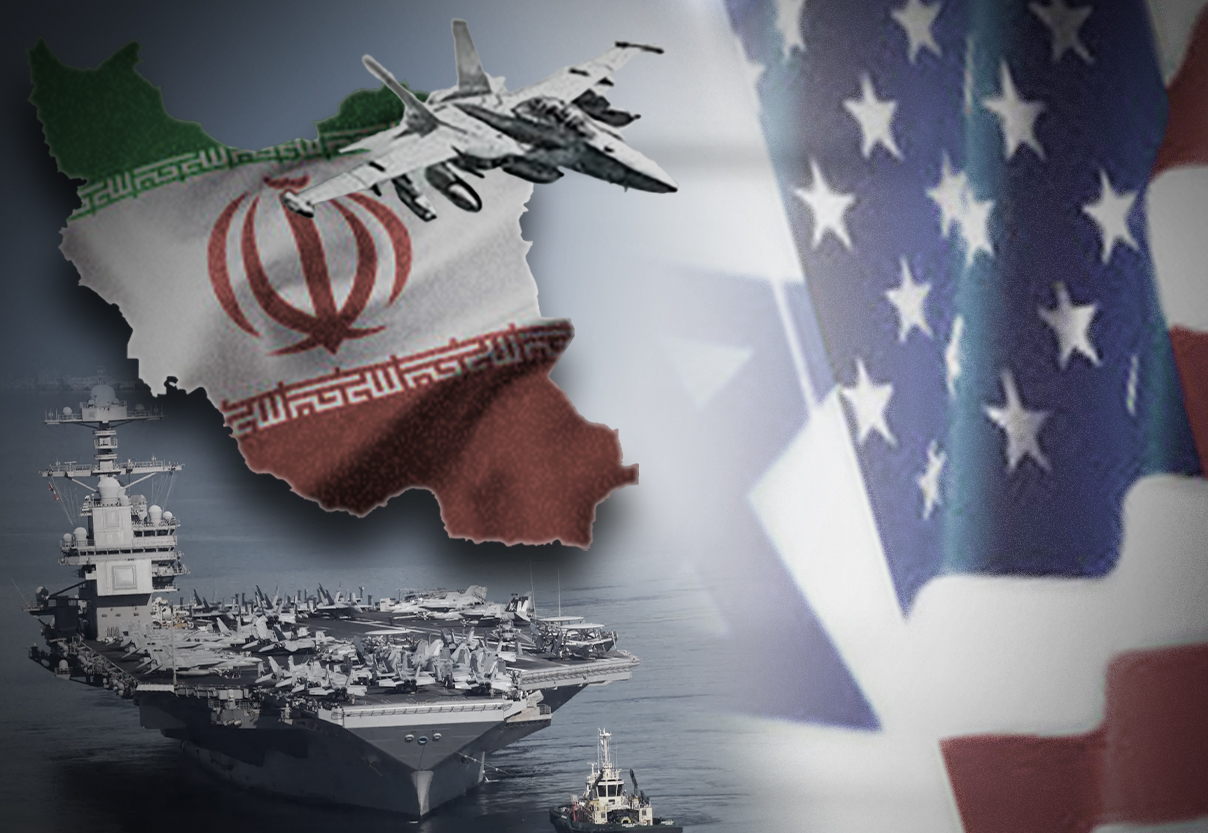
This Strategy Battles Middle East military intelligence report covers the seven days of April 6–12, 2026 — the most consequential week of the entire Iran war. A ceasefire was declared on April 8, immediately violated in Lebanon, diplomatically gutted in Islamabad, and answered with a naval blockade order — all within 96 hours. Lebanon experienced its deadliest single day of the conflict on Black Wednesday when Israel launched Operation Eternal Darkness, killing 357 people hours after the truce was announced. U.S.-Iran talks in Islamabad ran for 21 hours before collapsing without a deal on April 12. Trump immediately ordered a naval blockade of the Strait of Hormuz. Iran’s domestic security apparatus simultaneously launched its largest espionage sweep since the war began — arresting 50 people across 16 provinces for mapping missile targets for foreign intelligence services. The ceasefire has 10 days left. This report documents every active theatre in full detail.
357
Killed in Lebanon — Black Wednesday Apr 8
21 hrs
Islamabad Talks — No Deal Reached
50
Arrested — Iran Spy Sweep, 16 Provinces
200+
Israeli Targets Struck in Lebanon — Apr 11
2
U.S. Navy Destroyers — First Hormuz Transit Since Feb 28
1,950+
Total Killed in Lebanon Since March 2
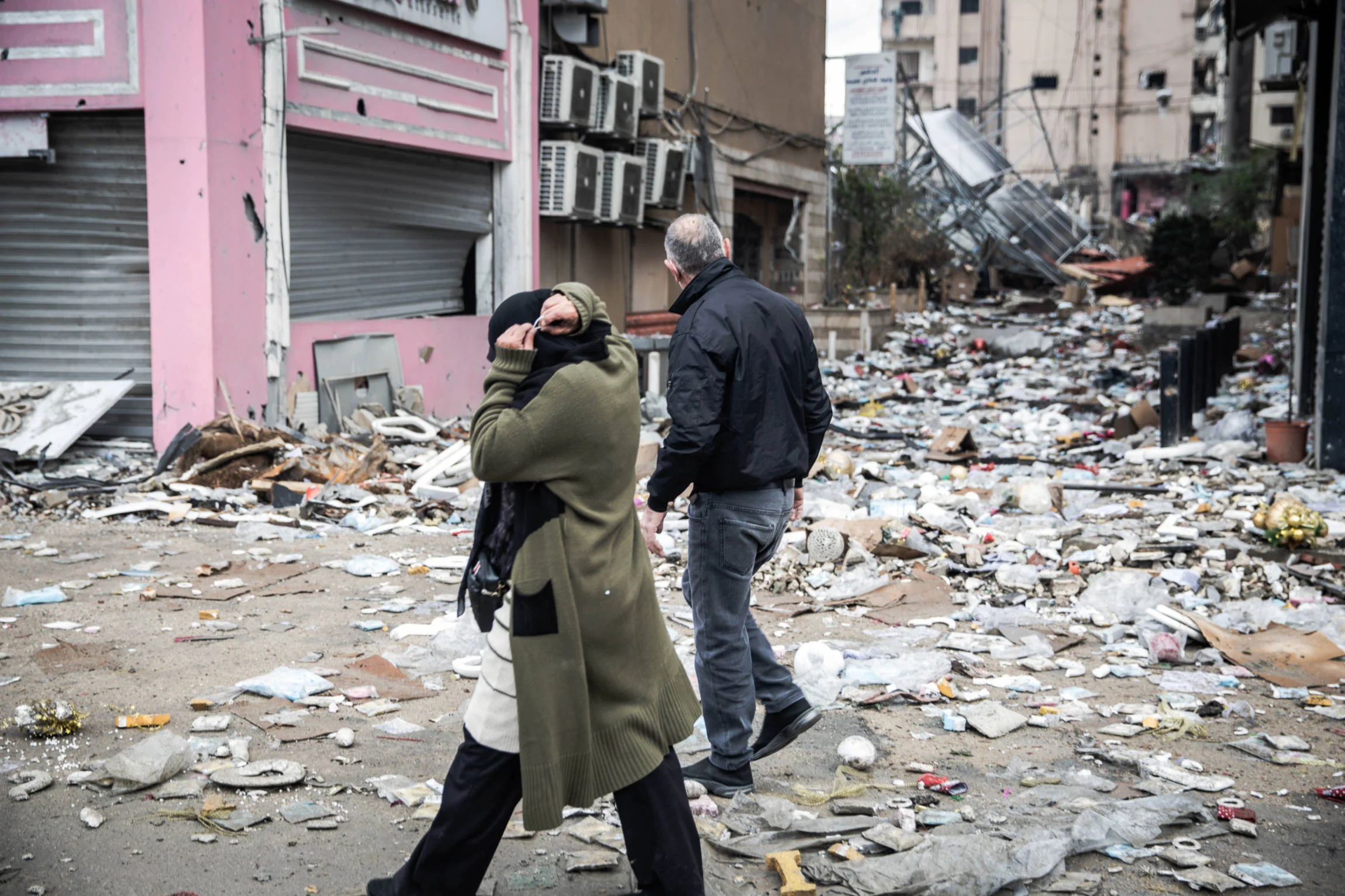
Beirut’s southern suburbs — the Dahiyeh district struck as part of Operation Eternal Darkness on April 8, 2026. Israel deployed 50 fighter jets and delivered approximately 160 munitions without prior warning, killing 357 people across five Beirut neighbourhoods and southern Lebanon in what Lebanon called Black Wednesday. Source: Wikimedia Commons.
🔴 Section One
Lebanon — Black Wednesday and the Week That Followed
Strategy Battles has been tracking the Lebanon theatre since Israel launched its ground campaign on March 2. This week marked the most devastating single day of the entire conflict. The week opened with steady IDF strikes across southern Lebanon and Beirut’s suburbs on April 6 — hitting Nabatiyeh, Burj Rahal and multiple towns across the south. Four people were confirmed killed in a car raid near Kfar Rumman. The IDF also acknowledged mistakenly killing a Lebanese Forces Christian political party official, stating it had intended to hit a Hezbollah operative.
Then came April 8 — the day Lebanon would call Black Wednesday. Hours after President Trump announced the U.S.-Iran ceasefire and just as Hezbollah signalled it was pausing attacks, Israel launched Operation Eternal Darkness. Fifty Israeli Air Force fighter jets delivered approximately 160 munitions, striking at least five central Beirut neighbourhoods without prior warning during evening rush hour. Over 100 targets were hit within ten minutes. The Lebanese Health Ministry recorded 357 killed and 1,223 wounded. A third of those killed were women and children. Lebanon’s President Aoun called it a massacre. The UN Secretary-General unequivocally condemned it. The U.S. government was notably silent.
Operation Eternal Darkness — April 8 Confirmed Strike Summary
- Aircraft deployed: 50 IAF fighter jets including F-35I Adir
- Munitions delivered: Approximately 160 — GBU precision-guided bombs and standoff weapons
- Targets hit: Over 100 — Hezbollah HQs, intelligence centres, Radwan Force sites, missile infrastructure, aerial and naval units
- Areas struck: Central Beirut (5 neighbourhoods without warning), southern Beirut / Dahiyeh, Sidon, Beqaa Valley, Tyre district
- Confirmed specific strikes: Shmestar cemetery, Beqaa Valley — airstrike hit during a funeral, killing 10 mourners; Adloun — three girls killed; ambulance struck near Tyre; Hiram Hospital staff injured (Doctors Without Borders confirmed)
- IDF claim: At least 180 Hezbollah militants killed
- Lebanese Health Ministry confirmed: 357 killed, 1,223 wounded
- Warning issued: None for central Beirut strikes
- Condemned by: UN, France, EU, Spain, Canada, Australia, China, Russia. U.S. government silent.
Strikes continued April 9 — killing at least seven in al-Abbassieh and hitting towns including Kafra, Jmaijmeh, Safad al-Battikh, Majdal Selem and Deir Antar. Artillery shelling damaged Haris. Four Lebanese Army soldiers were killed in strikes on April 8–9 — the first confirmed Lebanese military casualties of the conflict. The IDF claimed the killing of Ali Yusuf Harshi, a close aide to Hezbollah leader Naim Qassem, in an overnight Beirut strike.
On April 10, 13 Lebanese security personnel were killed in Nabatiyeh in what local authorities described as the largest Israeli assault there since the war began. Hezbollah, which had initially paused fire on April 8, resumed rocket launches on April 9 — firing approximately 30 rockets into northern Israel, most of which were intercepted or fell in open areas with no Israeli fatalities. On April 11, the IDF struck more than 200 Hezbollah-affiliated targets across Lebanon in a single 24-hour period. The Lebanon death toll from March 2 through April 12 stood at over 1,950 killed and 6,300 wounded. More than 200,000 people have fled Lebanon into Syria since the conflict resumed.
The Masnaa border crossing between Lebanon and Syria — which Israel had threatened to strike — closed for five days before reopening April 9. Both Lebanese and Syrian authorities denied Israeli claims it was being used for weapons smuggling. The World Food Programme described Lebanon’s food security situation as rapidly becoming a crisis.
🔴 Section Two
Iranian Missile and Drone Strikes — Ceasefire Week, April 6–12
Despite the April 8 ceasefire declaration, Iranian drone and missile operations continued into and beyond the announcement. In Strategy Battles’ assessment, the post-ceasefire strikes reflect the decentralised nature of IRGC drone doctrine — tactical units operating independently of strategic-level command decisions. Kuwait condemned drone attacks by Iran and its proxies on April 9, calling them a direct violation of its sovereignty and airspace. Bahrain intercepted two drones on April 6. Four drones were intercepted near Erbil in Iraqi Kurdistan on the same day. Saudi Arabia’s Ministry of Defence reported intercepting approximately a dozen drones over the Eastern Province.
| Date | Target / Location | Weapon | Outcome |
|---|---|---|---|
| Apr 6 | Saudi Arabia — Eastern Province | Ballistic missiles + drones | ~12 drones intercepted — debris near energy facilities |
| Apr 6 | Bahrain | 2 drones | Both intercepted — confirmed |
| Apr 6 | Erbil, Iraqi Kurdistan | 4 drones | All 4 intercepted — JINSA confirmed |
| Apr 6 | Israel — Shomrat (northern) | Hezbollah drone | Drone struck home — no fatalities |
| Apr 8 — post ceasefire | UAE — Palm Jumeirah / Habshan / Al Minhad Air Base | Shahed drones + 17 ballistic missiles + 35 UAVs | Shahed hit near Fairmont Palm Hotel — 4 injured; Fujairah oil terminal fires; Al Minhad Air Base (UK/AUS/UAE joint) targeted |
| Apr 9 | Kuwait — vital facilities | Drones — Iran and proxies | Kuwait FM condemned as sovereignty violation — damage confirmed |
| Apr 9–11 | Israel — northern communities | Hezbollah rockets — ~30 Apr 9 | Most intercepted or fell in open areas — no Israeli fatalities |
| Apr 11 | Sidon — Lebanese security personnel funeral | Strike — origin assessed as Israeli | 13 Lebanese security personnel killed |
The UAE’s total war accumulation as of April 9 reached 537 ballistic missiles, 2,256 drones and 26 cruise missiles engaged by its THAAD and Patriot air defence systems. Despite the ceasefire, Iran’s IRGC continued to condition Hormuz traffic — restricting access and demanding coordination with Iranian armed forces before any vessel could transit. By April 11, only a handful of commercial ships had crossed the strait since the ceasefire took effect four days earlier. Two U.S. Navy guided-missile destroyers made the first transit by American warships since February 28 on April 11 — the same day U.S. CENTCOM confirmed it had begun setting conditions to clear Iranian mines from the waterway.

Wreckage of a Shahed-136 one-way attack drone — Iran’s most widely deployed offensive platform during the 2026 Middle East conflict. A Shahed-type drone struck near the Fairmont The Palm Hotel on April 8, the same day the ceasefire was declared, demonstrating the system’s continued operational persistence. Source: Wikimedia Commons.
🟡 Section Three
21 Hours, No Deal — Islamabad Collapses and Trump Orders Naval Blockade
The Islamabad talks represented the first face-to-face, high-level meeting between U.S. and Iranian officials since the 1979 Islamic Revolution — a fact that makes their failure on April 12 one of the most significant diplomatic breakdowns of the conflict. The U.S. delegation led by VP JD Vance arrived on April 11 alongside Steve Witkoff and Jared Kushner. The Iranian delegation led by Parliament Speaker Ghalibaf and Foreign Minister Araghchi arrived earlier. Pakistan’s Prime Minister Sharif, Foreign Minister Dar and army chief Field Marshal Asim Munir participated directly in early joint sessions — a signal that Islamabad was determined to be more than a passive venue for the Iran negotiations.
After joint opening sessions, talks shifted to separate rooms with Pakistani intermediaries carrying proposals between delegations. Technical working groups convened on the Strait of Hormuz, nuclear provisions and sanctions relief. By midnight local time both delegations were still active. By dawn on April 12, gaps remained unresolved on two or three core issues, per Iran’s Foreign Ministry spokesman Esmail Baghaei. At approximately 7:08 a.m., Vance boarded Air Force Two and left Islamabad.
“The bad news is that we have not reached an agreement. And I think that’s bad news for Iran much more than it’s bad news for the U.S. They have chosen not to accept our terms.” — VP JD Vance, press conference, Islamabad, April 12, 2026.
What Each Side Said Failed
U.S. — Vance
Iran refused to commit to not developing nuclear weapons or the tools enabling rapid nuclear capability. Vance said the U.S. left its “final and best offer” on the table.
Iran — Ghalibaf / Baghaei
U.S. failed to gain Iran’s trust. Excessive and unlawful demands. Gaps over Lebanon guarantees, Strait of Hormuz control, $6B frozen assets and nuclear rights. Iran denied seeking a weapon.
Within hours of the collapse, Trump escalated on Truth Social — ordering the U.S. Navy to “immediately” begin blockading the Strait of Hormuz, instructing it to “seek and interdict every vessel in International Waters that has paid a toll to Iran.” Iran’s navy chief Shahram Irani called the blockade threat “ridiculous.” Ghalibaf, returning to Tehran, declared: “If they fight, we will fight. We will not bow to any threats.” The ceasefire remained technically in place, with 10 days to the April 22 deadline. Pakistan urged both sides to maintain it. Iran’s Foreign Ministry indicated it expected further contacts through Pakistani and regional channels.
For readers following the Strategy Battles Iran coverage — our earlier analysis of the Islamabad security setup, delegation compositions and pre-talk risk assessment is available in detail from our April 10 report. The week’s negotiating breakdown was, in our assessment, structurally predictable from the moment Israel launched Operation Eternal Darkness on April 8 and Iran re-closed the Strait in response. Read our dedicated breakdown: Islamabad Talks Collapse — Vance Says Iran Refused America’s Terms After 21 Hours of Negotiations.
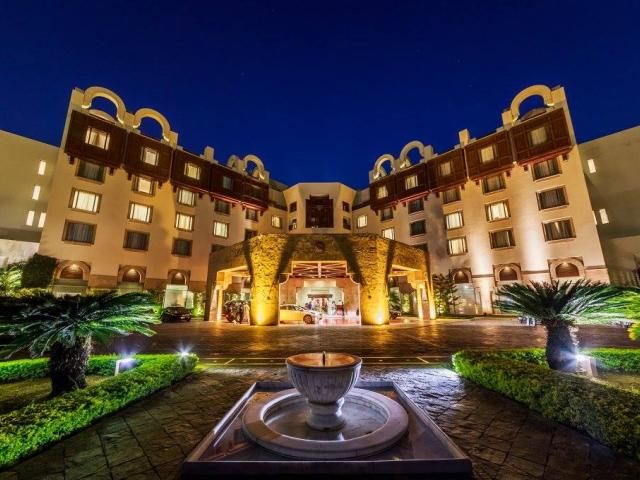
The Serena Hotel in Islamabad’s Red Zone — venue for the historic 21-hour U.S.-Iran peace talks that collapsed without a deal on April 12, 2026. The hotel was requisitioned and surrounded by over 10,000 security personnel operating under Pakistan’s Blue Book VVIP protocol. Source: Wikimedia Commons.
🔵 Section Four
Iran’s Internal Intelligence Purge — 50 Arrested in 16 Provinces
On April 12, Iran’s national police command FARJA announced the arrest of 50 individuals across 16 provinces in a coordinated security sweep targeting what it described as active foreign intelligence networks inside the country. The detainees were accused of preparing maps of strategic and sensitive locations — including checkpoints, troop deployment sites and infrastructure facilities — specifically to “determine fixed and moving coordinates for guiding precise missile strikes.” Satellite communication equipment, sophisticated electronic devices and weapons were confiscated in the raids.
Iranian state media described those arrested as mercenaries working for the United States and Israel. The operation is being prosecuted under a newly strengthened espionage law carrying the death penalty, with all assets of the convicted subject to confiscation. Strategy Battles Iran analysis of this development is available in our dedicated report: Iran Spy Purge — 50 Arrested for Identifying Missile Targets for Foreign Intelligence Services.
OSINT Context: The Scale of Iran’s Internal Intelligence War
The April 12 sweep is the latest wave of a much larger internal crisis. Iranian authorities confirmed over 1,000 arrests in March alone for espionage, filming sensitive sites and supporting adversary-linked networks. The UN Human Rights Office documented approximately 2,345 individuals arrested on national security charges since the war began as of April 1. The precision of U.S.-Israeli strikes on previously concealed IRGC positions throughout the 40-day conflict — including special forces positions inside Azadi Stadium and Imam Ali security units embedded in civilian buildings — is cited in the FARJA statement as evidence that human intelligence networks were actively mapping targets in real time throughout the campaign.
🟢 Section Five
Iraq and Syria — Militia Ceasefire, Embassy Attack and Ongoing Pressure
Following the April 8 U.S.-Iran truce, the Islamic Resistance in Iraq — the coalition of Iran-backed PMF factions — announced a two-week pause in operations against enemy bases across the region. Iraq simultaneously reopened its airspace, which had been closed since the conflict began. The ceasefire did not hold cleanly, however. A State Department official confirmed that U.S. Embassy Baghdad personnel came under multiple drone attacks by an Iraqi militia on April 9 — the day after the ceasefire — with Washington declining to specify which faction was responsible.
American journalist Shelly Kittleson, kidnapped from Baghdad by Kata’ib Hezbollah on March 31, was released on April 12 — the same day as the Islamabad collapse — on condition of her departure from Iraq. It was one of the few developments of the week that ended without further escalation.
In Syria, continued spillover from Lebanon defined the week. Israeli forces maintained pressure along the Golan Heights perimeter, accusing Syria of allowing Iraqi militias to transit its territory toward Israeli positions. The Masnaa/Jdeidet Yabous crossing closed for five days after an Israeli threat to strike it before reopening April 9. Artillery shells fired from Lebanon landed near Damascus suburbs during the reporting period. Syria maintained formal neutrality while condemning Israeli violations. More than 200,000 Lebanese refugees have entered Syria since March 2, straining Syrian infrastructure along a growing secondary humanitarian corridor.
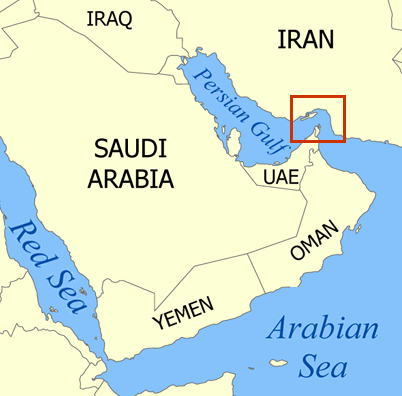
The Strait of Hormuz — 21 miles wide at its narrowest point. Trump ordered a U.S. naval blockade of the strait on April 12 following the Islamabad talks collapse. 230+ tankers remain stranded in the Gulf. Iran’s navy chief called the blockade threat “ridiculous.” Iran’s unlocated sea mines continue to prevent certified safe passage. Source: Wikimedia Commons.
🟡 Section Six
Weapons Systems — Notable Deployments and Performance This Week
Israel’s deployment of 50 F-35I Adir stealth fighters delivering 160 munitions across 100+ targets in under ten minutes during Operation Eternal Darkness demonstrated a compressed, high-tempo precision strike capacity at a scale not previously seen in the Lebanon theatre. The munition package is assessed to have included GBU-39 Small Diameter Bombs, GBU-31 JDAMs and standoff glide weapons — allowing simultaneous engagement of distributed target sets without sustained loiter time over target.
The Shahed-136’s continued effectiveness post-ceasefire — the Palm Jumeirah strike and Fujairah oil terminal fires both occurring on April 8 — confirms what Strategy Battles has assessed throughout the Middle East conflict: IRGC drone units operate with significant tactical autonomy below the strategic command layer. Ceasefire orders do not produce immediate cessation. The Shahed-136 carries a 50kg warhead, flies at low altitude and is extremely difficult to detect on radar at range, making it operationally persistent even in degraded launch environments.
The naval blockade order, if implemented, would require Arleigh Burke-class destroyers and potentially Virginia-class submarines for interdiction operations. The critical constraint remains mine clearance: all four U.S. Avenger-class mine countermeasures vessels were decommissioned and removed from the Gulf in September 2025 — five weeks before the conflict began. No allied MCM deployment to Hormuz has been authorised as of April 12. The blockade order is as much political signal as operationally executable directive at this stage. Full analysis: Iran Rejected U.S. Demands — Trump Orders Hormuz Blockade After Talks Fail.
Strategy Battles Assessment — Week of April 6–12
This was the week the ceasefire was born, tested to destruction in Lebanon, strained to breaking point in the Gulf, and then left technically alive but diplomatically gutted in Islamabad. The 10 days remaining before April 22 represent not a negotiating window but a cooling period during which both sides reassess positions through Pakistani channels and decide whether the cost of renewed conflict outweighs the impossibility of current terms.
Iran leaves this week with its negotiating leverage intact — the Strait still effectively closed, 230+ tankers stranded, oil prices elevated. The U.S. leaves with a blockade order it may struggle to execute, a ceasefire its ally Israel is actively undermining, and an inflation crisis now showing in monthly CPI data. The week’s most consequential intelligence development may not have been any single strike — but the domestic arrests inside Iran of 50 people who allegedly mapped missile targets for foreign services, revealing the depth of penetration that enabled 40 days of extraordinarily precise strikes on previously hidden IRGC positions across the country.
Strategy Battles — Related Coverage
Sources
- NPR — No Deal: U.S.-Iran Peace Talks in Islamabad Collapse (April 12, 2026)
- Al Jazeera — US and Iran Fail to Reach Deal After Marathon Talks (April 12, 2026)
- Euronews — Trump Orders Strait of Hormuz Blockade After Islamabad Talks Fail (April 12, 2026)
- Gulf News — VP JD Vance Says No Nuclear Deal After 21-Hour Pakistan Negotiations (April 12, 2026)
- The National — 21 Hours in Islamabad: How Talks Collapsed and What Happens Next (April 12, 2026)
- NBC News — After Collapse of Talks, the Path to Peace Is Less Clear (April 12, 2026)
- Wikipedia — 8 April 2026 Lebanon Attacks — Operation Eternal Darkness
- Wikipedia — 2026 Iran War Ceasefire (continuously updated)
- Wikipedia — 2026 Iranian Strikes on the United Arab Emirates
- Voice of Emirates — Iran Arrests 50 People on Charges of Espionage (April 12, 2026)
- Critical Threats / ISW-CTP — Iran Update Evening Special Report, April 1, 2026
- Al Jazeera — Fresh Israeli Attacks on Lebanon Threaten Ceasefire (April 9, 2026)
- JINSA — Operations Epic Fury and Roaring Lion Update, April 6, 2026
- Times of Israel — Israel Launches Fresh Strikes in Beirut (April 6, 2026)
- TIME — U.S. and Iran Fail to Reach Deal After Marathon Talks (April 12, 2026)
Editorial Verification
This report has been reviewed for tactical accuracy and OSINT compliance. All casualty figures are sourced to named verified outlets and cross-referenced across a minimum of two sources. Islamabad talks breakdown details are attributed to named statements by Vance, Ghalibaf and Baghaei. The espionage arrests are sourced to the FARJA official statement via Voice of Emirates, contextualised against Critical Threats / ISW-CTP counterintelligence reporting. The naval blockade order is sourced to Euronews’ confirmed Trump Truth Social post. All editorial assessments are clearly labelled as Strategy Battles analysis.
Approved for Publication
Marcus V. Thorne
Lead Editor, Strategy Battles
©StrategyBattles.net 2026
This article is for news and analysis purposes only. It is based on publicly available news sources and military updates. All rights reserved. Original reporting may come from various open sources. Not for commercial reuse without permission.