Russia North Korean Type-75 MLRS Unmanned — Full Weapons Breakdown

Analyst Summary
Russian forces have for the first time mounted the North Korean-supplied Type-75 107mm multiple launch rocket system directly onto unmanned ground vehicle platforms — including the NRTK Courier and Impulse — creating a crewless rocket artillery capability that can operate in the contested gray zone without exposing human operators to direct risk. The modification reduces tube count from 12 to 8, adds electric drive aiming for remote targeting, and introduces significant recoil instability. This analysis examines the system’s lineage, specifications, the tactical logic of the unmanned integration, its weaknesses, and what it means for Ukrainian forces on the front line.
107mm
Rocket Calibre
8.5km
Maximum Range
8 tubes
UGV Config (reduced from 12)
<15 sec
Full Salvo Cycle Time
2 types
Warhead Variants
ZERO
Crew Exposure Required
🟡 Section One
System Lineage — Where the Type-75 Comes From
The North Korean Type-75 is not a sophisticated modern weapons system. Its lineage runs backwards through decades of Cold War artillery development. It is a North Korean copy of China’s Type-63 multiple rocket launcher, which itself entered service in 1963 and was derived from the Soviet BM-14. The name “Type-75” was assigned by U.S. intelligence when analysts first observed the system in North Korean hands in 1975. That tells you most of what you need to know about its baseline — it is a 1960s weapons concept, built by a country with a 1970s industrial base, now being fielded in a 2026 drone-dominated battlefield, according to Technology.org.
The system fires 107mm unguided rockets in 12-tube configuration. It can deliver a full 12-round salvo in a matter of seconds, with an effective maximum range of approximately 8.5 kilometres. It is lightweight and easy to conceal — its small dimensions were the primary reason Russian forces selected it for the robotic platform integration, according to developers who explained that heavier 122mm systems overload the compact Courier chassis while the 107mm Type-75 fits within the platform’s permissible weight parameters.
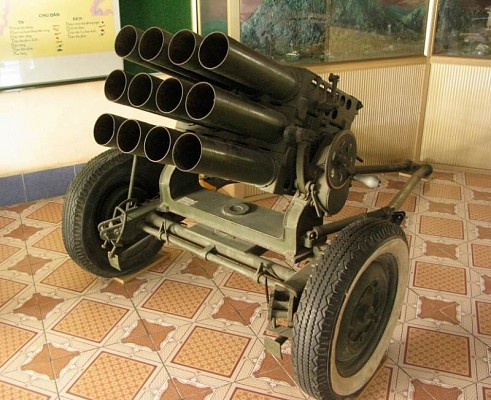
The Type-75 first appeared in confirmed Russian service in Ukraine in June 2025, according to Defence Express. Prior to that its presence was inferred from a significant event in May 2025 — a Ukrainian strike on the 51st GRAU arsenal of the Russian Ministry of Defence, which destroyed what analysts assessed was a substantial portion of the stockpiled 107mm rockets intended for the Type-75. The fact that confirmed battlefield sightings only began in June 2025 — after the arsenal strike — suggests the stock loss forced a delay in deployment. That same stockpile issue continues to shadow the system’s operational utility today. North Korea currently supplies approximately 40 percent of all ammunition consumed by Russian forces in Ukraine, according to The Defence Blog.
🔴 Section Two
The UGV Integration — What Russia Has Actually Built
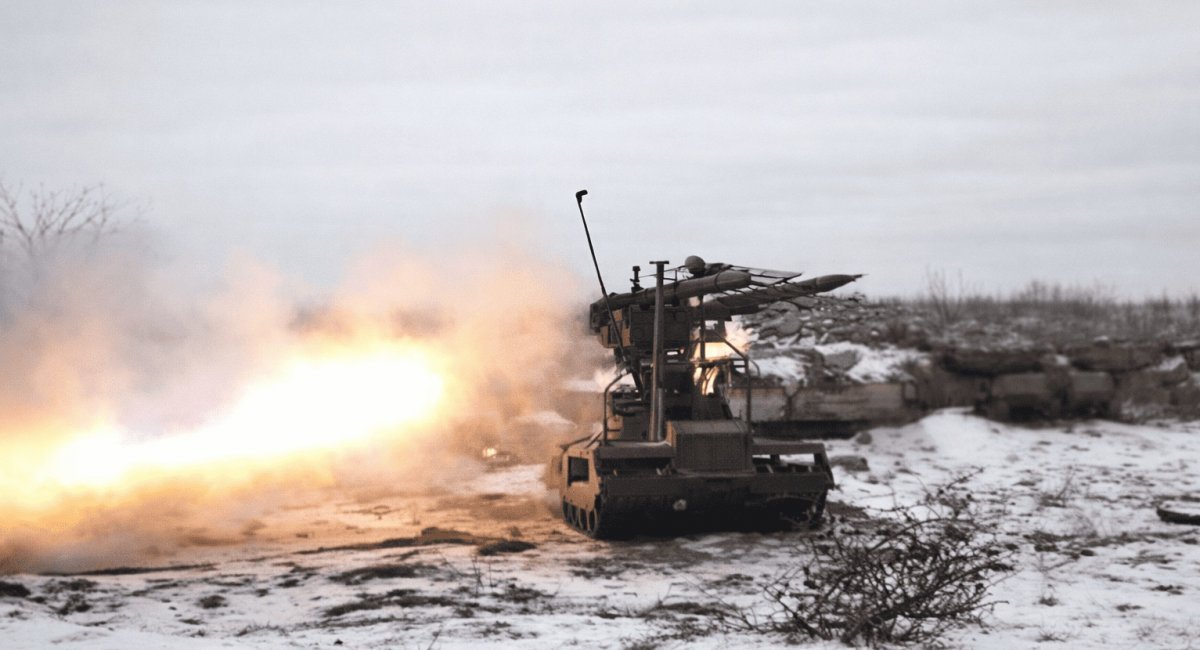
Russian sources released the first confirmed images and footage of the Type-75 mounted on unmanned ground vehicle platforms in April 2026 — specifically the NRTK Courier tracked UGV and the Impulse platform. This is the first known instance of the Type-75 being mounted directly on a robotic chassis rather than towed by one. Previously, UGVs like the Varan had been used purely as towing vehicles for the system, according to Defence Express.
The integration has involved two significant modifications to the standard Type-75 configuration. First, the tube count has been reduced from 12 to 8 by removing the upper row of launch tubes — a weight and balance decision driven by the platform’s load limits. Second, and more significantly, the launcher has been fitted with electric drives for aiming, enabling remote horizontal targeting adjustment from a safe distance. The launcher sits on a rotating platform, allowing operators to adjust azimuth without human presence at the firing point. Together these modifications transform a conventional towed MLRS into what analysts at Army Recognition describe as a “compact and low-signature launch node” capable of positioning closer to contested areas than any manned system could safely occupy.

Footage of the Courier-based Type-75 configuration shows the system completing its full 8-round salvo in under 15 seconds, according to reporting by Army Recognition. The Courier platform itself has been in operational deployment since late 2024, initially used for logistics transport, casualty evacuation, mine-laying, and engineering reconnaissance before being progressively adapted into combat roles. The Type-75 integration is the third confirmed weapons configuration for the Courier within a six-month period — following the Shmel thermobaric rocket system and the Bagulnik-82 robotic 82mm mortar, according to The Defense News.
Type-75 — Standard vs. UGV Configuration Compared
| Specification | Standard Towed | UGV-Mounted (Courier/Impulse) |
|---|---|---|
| Launch tubes | 12 | 8 (upper row removed) |
| Calibre | 107mm | 107mm (unchanged) |
| Maximum range | 8.5km | 8.5km (unchanged) |
| Crew required at firing point | Yes — exposed | Zero — fully remote |
| Aiming system | Manual | Electric drives — remote targeting |
| Platform stability | Wheeled chassis — moderate | UGV chassis — significant recoil sway |
| Firing mode | Full salvo capable | Single rounds — must stabilise between shots |
| Forward position capability | Limited — crew exposure risk | Gray zone capable — autonomous advance |
| If destroyed | Crew killed or captured | Equipment loss only — no crew casualties |
🔵 Section Three
Warhead Types — The Cluster Munition Threat
Russian forces are operating the Type-75 with two confirmed rocket types, according to Defence Express. The first is a standard high-explosive fragmentation round — designated RSZO-107-OF — with a pointed profile and conventional blast-fragmentation effect. The second is a cluster munition variant, and it is this second warhead type that most significantly elevates the threat posed by this otherwise limited system.
The cluster variant carries 15 submunitions per rocket. Each submunition is 36mm in diameter and weighs 284 grams, of which 43 grams is explosive. The self-destruct mechanism activates 15 seconds after impact if detonation has not occurred — creating a persistent unexploded ordnance hazard across any engagement area. Armour penetration is assessed at approximately 40mm, making the submunitions capable of defeating light armoured vehicles and personnel carriers as well as unprotected infantry. An airburst fuze is also documented in the system’s manual, enabling mid-air detonation to disperse the submunition pattern across a wider area, according to Defence Express citing the system’s technical manual.
The cluster munition capability is significant because it partially compensates for the Type-75’s most fundamental weakness — its poor accuracy. An unguided 107mm rocket at 8.5km range will not land on a precise point target. But a rocket that disperses 15 submunitions across an area at mid-altitude does not need to. The cluster variant converts a precision-limited system into an area-suppression weapon, and does so against a target set — infantry in the open, light vehicles, logistic convoys — that is entirely relevant to the current Ukraine front.
🔴 Section Four
Tactical Weaknesses — What the UGV Integration Has Made Worse
The unmanned integration does not solve the Type-75’s core problems. It makes some of them worse while introducing new ones. Defence Express analysts were explicit about this tension: the configuration worsens the system’s already limited accuracy while simultaneously making it more operationally threatening overall — an assessment that requires unpacking.
Recoil instability. The original wheeled chassis of the towed Type-75 provided meaningful firing stability, though even in that configuration accuracy was limited by the unguided rocket design. The UGV chassis — particularly on the Courier’s tracked platform — provides significantly less resistance to recoil. Footage shows the entire platform swaying substantially after each rocket launch. The practical result is that operators are forced to fire one rocket at a time, waiting for the platform to restabilise between shots. This extends the time on target and reduces the volume of simultaneous fire — partially negating the saturation advantage of an MLRS in its original configuration.
Short range in a drone-dominated environment. At 8.5km maximum range, the Type-75 is a relatively short-ranged system by contemporary MLRS standards. In the drone-saturated environment of the Ukraine front, where Ukrainian FPV drones can strike effectively at several kilometres range, a firing position close enough to engage targets at 8.5km is inherently within range of counter-drone strike. This is precisely the problem the UGV integration is designed to solve — by removing the crew from the equation — but it does not extend the system’s range, and a destroyed UGV still represents equipment loss and expended ammunition.
Ammunition stockpile constraints. Following the strike on the 51st GRAU arsenal in May 2025, Russian forces are assessed to have lost a substantial portion of the 107mm rocket stockpile intended for Type-75 systems, according to Defence Express. With North Korea as the sole supplier and resupply logistics running through a constrained pipeline, ammunition availability remains a limiting factor on how extensively the system can be deployed.
Type-75 UGV — Confirmed Weaknesses
- Range: 8.5km maximum — short for a modern MLRS — positions it within Ukrainian counter-drone strike range
- Accuracy: Unguided rockets — already limited — further degraded by UGV recoil instability
- Firing mode: Must fire single rounds and wait for platform stabilisation — cannot deliver true simultaneous salvo from UGV
- Tube reduction: 12 to 8 tubes — reduced ammunition payload per firing run
- Stockpile: 51st GRAU arsenal strike in May 2025 assessed to have destroyed substantial portion of 107mm rocket supply
- Electric drive integration risk: Russia has previously struggled with electric drive artillery automation — D-30 howitzer on robotic platform required human operators despite automation attempts
🟢 Section Five
Tactical Threat Assessment — Why It Is More Dangerous Despite Its Flaws
The apparent paradox — a system that is less accurate and fires fewer rockets per run is assessed as more dangerous in its UGV configuration — resolves when you understand the specific operational context of the Ukraine front in 2026. The threat from the Type-75 on a UGV is not about the system’s individual lethality. It is about what it enables operationally.
The fundamental problem facing any artillery system on the current Ukraine front is counter-battery fire and drone targeting. Ukrainian forces have built a sophisticated system of detecting, tracking, and striking Russian artillery positions — FPV drone strikes, loitering munitions, and counter-battery radar-guided artillery all converge on Russian firing positions rapidly after the first shot. In a manned system, this creates direct crew casualties and limits the willingness of Russian crews to advance into effective range. The UGV integration removes that constraint entirely. A Courier-mounted Type-75 can advance autonomously into the gray zone — the contested forward area that is particularly hazardous for human operators — fire its 8-round salvo, and withdraw, all without a single Russian soldier moving into the engagement zone, according to The Defence Blog. If the platform is destroyed by Ukrainian counter-fire during the mission, the loss is equipment only — no trained crew, no body to recover, no morale impact.
Army Recognition analyst Teoman Nicanci assessed the broader significance of the Courier weapons family in this context: “On a front where launch positions are hunted quickly and personnel exposure carries a high cost, that evolution deserves close attention because it points toward a broader shift in land combat: unmanned ground systems are starting to absorb a larger share of the fires mission itself,” according to Army Recognition.
Analyst Assessment
The North Korean Type-75 on a Russian UGV is not a system that will change the strategic picture of the Ukraine war. It is a system that illuminates where that war is going tactically. Russia is systematically moving the function of fire support — direct fire, indirect fire, thermobaric attack, mortar suppression — onto unmanned platforms that separate the firepower from the human operators who provide it. The Courier is becoming less a utility vehicle and more a modular fires robot, adapted progressively to absorb different portions of the combat mission. The Type-75 integration is the MLRS layer of that concept. Its weaknesses — poor accuracy, short range, recoil instability, reduced tube count — are real and significant. But they are secondary to the core operational proposition: a weapon that can enter the gray zone, fire, and leave without requiring a human to be anywhere near the danger. In a front line environment where Ukrainian drones can kill artillery crews within minutes of a first shot, the weapon that removes the crew from the equation is the weapon that changes the risk calculus — even if it is firing less accurately and with fewer tubes than the version it replaced.
Strategy Battles — Related Coverage
Editorial Verification
This report has been reviewed for technological accuracy and cross-referenced against open-source military technology reporting from Defence Express, Army Recognition, The Defence Blog, The Defense News, and The Armourer’s Bench. System specifications are verified against multiple independent sources. Tactical analysis is the original assessment of Strategy Battles.
Approved for Publication
Marcus V. Thorne
Lead Editor, Strategy Battles
Sources
- Defence Express — Russia Turns North Korean Type-75 Into Unmanned MLRS, Worsening Its Flaws, Increasing Threat (April 12, 2026)
- Army Recognition — Russia Integrates North Korean 107mm Rockets into Courier UGV (April 2026)
- The Defence Blog — Russia Pairs North Korean Rocket Artillery With Ground Drone
- The Defense News — Russian Forces Continue Experiments with NRTK Courier Unmanned Ground Platform
- Defence Express — Russia Received From North Korea Dangerous Type-75 MLRS With Mysterious Cluster Rockets
©StrategyBattles.net 2026
This article is for news and analysis purposes only. It is based on publicly available news sources and open-source military technology reporting. All rights reserved. Original analysis may not be reproduced without permission.