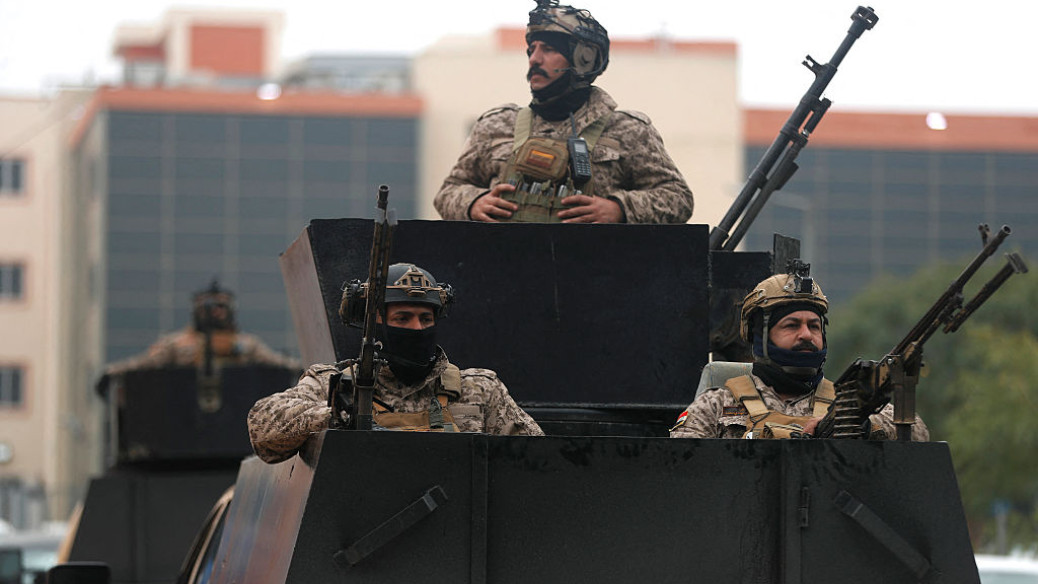
Hezbollah Drone Strikes Wound 8 Israeli Soldiers as IDF Closes In on Bint Jbeil Stronghold
8
IDF Soldiers Wounded — Hezbollah Drone Strike
100+
Hezbollah Killed — Bint Jbeil Operation (IDF Claim)
43
Hezbollah Operations — Sunday April 12
2,085+
Total Killed in Lebanon Since March 2
12
IDF Soldiers Killed in Lebanon Since March 2
10+
Hezbollah Drones Intercepted — April 13 Alone
🔴 The Strike
8 Israeli Soldiers Wounded — Hezbollah Explosive Drone Targets IDF Position
The Israeli army confirmed on Monday April 13 that eight of its soldiers were wounded when an explosives-laden drone struck their position in southern Lebanon. Two soldiers sustained moderate injuries and six received minor wounds, according to the official IDF statement reported by Anadolu Agency. The military did not specify the exact location of the strike within southern Lebanon.
The strike is part of a broader pattern of drone and rocket fire that has continued throughout the ceasefire period declared between the U.S. and Iran on April 8. The IDF confirmed it had intercepted more than 10 drones launched from Lebanon since Monday morning — targeting both northern Israeli communities and IDF forces operating inside Lebanese territory. The military stated that its air force “continues to remove threats” while carrying out active strikes against Hezbollah positions.
April 13 Drone Strike — Confirmed Details
- Target: IDF position, southern Lebanon — exact location not specified by IDF
- Weapon: Explosives-laden drone — Hezbollah one-way attack type
- Casualties: 2 soldiers moderately wounded, 6 lightly wounded — total 8 confirmed
- Additional Monday strikes: Hezbollah Merkava tank drone strike near a hospital in Mays al-Jabal (Hezbollah claim — unverified by IDF); drone strike on communications facility at Al-Alika barracks in the Golan Heights (Hezbollah claims direct hit — unverified independently)
- Drones intercepted by IDF — April 13: More than 10 confirmed
- Rocket impact: Woman lightly wounded in Nahariya after a Hezbollah rocket strike Monday afternoon — confirmed by IDF
- Source: IDF official statement via Anadolu Agency / Times of Israel
Monday’s drone strike brings the total number of IDF soldiers wounded in Lebanon since the campaign began on March 2 to well over 100, with 12 confirmed killed. Strategy Battles Lebanon coverage has tracked an escalating pattern of Hezbollah drone operations throughout the ceasefire period — with the group claiming 43 separate military operations against Israeli positions on Sunday alone, including drone attacks on troop gatherings in Al-Bayyada, Yaroun and Kfar Yuval, and rocket fire at Kiryat Shmona and the headquarters of Israel’s 146th Division.
🟡 Ground Operations
IDF Closes In on Bint Jbeil — 100+ Hezbollah Killed in Historic Stronghold
The IDF announced Monday that it has nearly completed the encirclement and capture of Bint Jbeil — one of Hezbollah’s most symbolically significant strongholds in southern Lebanon. The town holds historic weight as the site where Hezbollah’s former leader Hassan Nasrallah delivered his 2006 “victory speech” following the IDF’s withdrawal from Lebanon. Capturing it represents one of the most significant ground milestones of the current campaign.
Troops from the 98th Division — including soldiers from the Paratroopers, Commando and Givati Brigades — have surrounded Hezbollah military infrastructure in the Bint Jbeil area and launched focused ground operations over the past week. The IDF confirmed more than 100 Hezbollah operatives killed through close-quarters combat and aerial strikes, dozens of infrastructure sites dismantled, and hundreds of weapons located and seized. The Times of Israel confirmed a military official assessed it would take a few more days to complete operations in Bint Jbeil, with the aim of eliminating remaining operatives and locating the group’s remaining infrastructure in the area.
Bint Jbeil Operation — IDF Confirmed Assessment (April 13)
- Divisions committed: 98th Division — Paratroopers, Commando and Givati Brigades
- Status: Encirclement completed — offensive phase ongoing in remaining town neighbourhoods
- Hezbollah killed (IDF claim): More than 100 — close-quarters combat and aerial strikes combined
- Infrastructure destroyed: Dozens of Hezbollah sites dismantled
- Weapons captured: Hundreds of weapons located and seized — including from Bint Jbeil Governmental Hospital
- Stadium captured: Bint Jbeil stadium — where Nasrallah delivered his 2006 “victory speech” — seized by IDF forces
- Estimated completion: A few additional days — per IDF official statement
- IDF updated assessment of Black Wednesday strikes: Revised upward — now confirms 250+ Hezbollah operatives killed in April 8 Beirut, Beqaa and southern Lebanon strikes, based on continued intelligence monitoring
The IDF also reported that its campaign in Lebanon has now destroyed over 200 Hezbollah rocket launchers and killed over 250 Hezbollah artillery operators, including 15 commanders, since the conflict began. Lebanese sources on Sunday reported “fierce clashes” between Israeli forces and Hezbollah in Bint Jbeil, with IDF troops still working to clear the final neighbourhoods of the town.
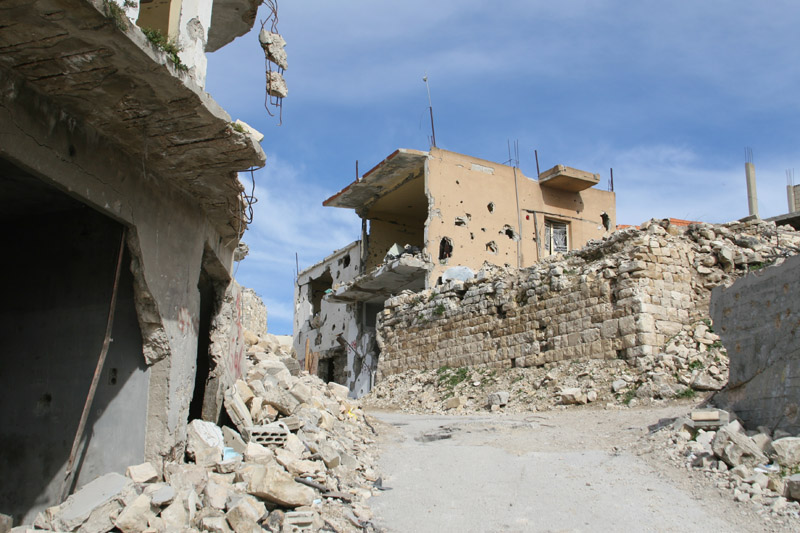
Bint Jbeil, southern Lebanon — a town of deep strategic and symbolic significance to Hezbollah, and the site of Hassan Nasrallah’s 2006 “victory speech.” IDF forces from the 98th Division completed its encirclement in April 2026, capturing the town’s stadium and claiming over 100 Hezbollah operatives killed. Source: Wikimedia Commons.
🔵 Weapons Analysis
Hezbollah’s Drone Arsenal — Types, Capabilities and Tactical Use in the Lebanon Theatre
The drone that wounded eight Israeli soldiers on April 13 is assessed to be consistent with Hezbollah’s established one-way attack drone inventory — a weapons category that the group has significantly expanded and diversified since the 2024 conflict. Strategy Battles Middle East weapons tracking has documented three primary drone types in Hezbollah’s current operational use.
| Drone / System | Type | Warhead / Range | Tactical Notes |
|---|---|---|---|
| Shahed-136 derivative (Iran-supplied) | One-Way Attack Drone (OWAD) | ~50 kg / 2,500 km range | Used for saturation attacks against fixed positions and infrastructure. Low radar cross-section at low altitude. Difficult to intercept in high-volume swarms. The same platform confirmed in UAE and Kuwait post-ceasefire strikes. |
| FPV (First-Person View) Drone — modified | Precision kamikaze drone | Small warhead / short range | Adapted commercial FPV drones fitted with RPG warheads or explosive charges. Used for close-range precision attacks on troop positions, vehicles and command posts. ISW-CTP confirmed Hezbollah use in southern Lebanon with large batteries extending range and RPG drop capability. |
| Fiber-optic guided suicide drone | Anti-jamming precision drone | Anti-armour warhead / short-medium range | Fiber-optic guidance makes it immune to GPS jamming and electronic warfare — a significant tactical advantage over standard drone types. First confirmed in use by IRI (Islamic Resistance in Iraq) against U.S. assets in March. Hezbollah is assessed to have this capability. The April 13 Merkava tank strike claim is consistent with this profile. |
| Mirsad-1 / Ababil derivatives (Iranian-origin) | Loitering munition / recon-strike hybrid | 45 kg / 150+ km range | Used for longer-range strikes into Israeli territory. The Al-Alika Golan Heights communications facility strike claimed April 13 is consistent with this range profile. Can loiter before striking, making interception timing harder to predict. |
The IDF’s interception of more than 10 drones in a single day on April 13 — combined with the successful strike that wounded eight soldiers — illustrates the volume-vs-penetration dynamic that has defined drone warfare in this conflict. Hezbollah launches enough drones to overwhelm point defences statistically. Even a single penetration in a high-value strike window, such as a troop position, can produce significant casualty and morale effects disproportionate to the drone’s cost.
🟢 Broader Context
Lebanon War Status — Casualties, Ceasefire and What Comes Next
Lebanese authorities reported on April 13 that Israeli attacks have now killed 2,085 people and wounded 6,762 since the war resumed on March 2, with more than one million people displaced across the country. Israeli strikes killed a further 34 people on April 13 alone, bringing the total close to 2,100, per Anadolu Agency’s confirmed reporting. The war continues despite the fragile U.S.-Iran ceasefire declared on April 8, which Israel has maintained does not apply to its campaign against Hezbollah.
UK Prime Minister Keir Starmer stated on April 13 that Israeli attacks on Lebanon “should stop now” — a direct public rebuke from a key U.S. ally. The UN Secretary-General simultaneously urged continued U.S.-Iran talks, respect for the ceasefire, and adherence to maritime law in the Strait of Hormuz. More than 80 Middle East energy facilities have been damaged in the war, with over one-third severely hit, per an IEA chief statement confirmed by Anadolu Agency.
Also on April 13, Iran confirmed it had rejected a U.S. proposal for joint management of the Strait of Hormuz — and Trump stated the U.S. would take Iran’s nuclear “dust” one way or another, signalling continued pressure even as no round of formal negotiations is currently scheduled. The two-week ceasefire expires April 22. No next round of talks has been set.
Strategy Battles Assessment
The drone strike wounding eight IDF soldiers on April 13 is tactically routine by the standards of this conflict — but strategically it confirms what Strategy Battles Iran and Lebanon tracking has consistently assessed: the ceasefire has produced no reduction in Hezbollah’s drone operational tempo. The group claimed 43 operations on Sunday alone. The IDF is simultaneously advancing on Bint Jbeil at ground level while absorbing drone fire from above. The capture of Bint Jbeil’s stadium — where Nasrallah declared victory against Israel in 2006 — is the most symbolically loaded single territorial milestone of the entire Lebanon campaign and will be used by the IDF as a marker of strategic achievement regardless of what happens at the diplomatic level. The Lebanon front and the Iran nuclear talks are now operating on entirely separate timelines, and neither is showing any sign of resolution before April 22.
Strategy Battles — Related Coverage
Sources
- Anadolu Agency — 8 Israeli Soldiers Wounded by Explosive Drone in Southern Lebanon (April 13, 2026)
- Times of Israel — IDF Says Close to Capturing Hezbollah’s Historic Bint Jbeil Stronghold (April 13, 2026)
- ANI / Tribune India — IDF Continues Strikes, Launches Ground Ops in Bint Jbeil (April 13, 2026)
- Anadolu Agency — Israeli Attacks Kill 34 More in Lebanon, Death Toll Nears 2,100 (April 13, 2026)
- Anadolu Agency — British PM Says Israeli Attacks on Lebanon Should Stop Now (April 13, 2026)
- Anadolu Agency — UN Chief Urges Continued US-Iran Talks and Respect for Ceasefire (April 13, 2026)
- Anadolu Agency — Iran Says It Rejected U.S. Proposal for Joint Management of Strait of Hormuz (April 13, 2026)
- Anadolu Agency — More Than 80 Mideast Energy Facilities Damaged in War (April 13, 2026)
- Wikipedia — 2026 Lebanon War (continuously updated)
Editorial Verification
This report has been reviewed for tactical accuracy and OSINT compliance. The drone strike casualty figures are sourced directly from the official IDF statement as reported by Anadolu Agency. Bint Jbeil operational details are cross-referenced between the Times of Israel and ANI / Tribune India. Hezbollah operational claims for Sunday’s 43 operations and the Merkava tank and Golan Heights strikes are attributed to Hezbollah’s Islamic Resistance and are labelled as unverified where independent confirmation is not available. Lebanese Health Ministry totals are cross-referenced against Anadolu Agency and Wikipedia’s confirmed timeline. All Strategy Battles editorial assessments are clearly labelled.
Approved for Publication
Marcus V. Thorne
Lead Editor, Strategy Battles
©StrategyBattles.net 2026
This article is for news and analysis purposes only. It is based on publicly available news sources and military updates. All rights reserved. Original reporting may come from various open sources. Not for commercial reuse without permission.