US Apache and Seahawk Helicopters Sink Six Iranian Boats as Project Freedom Opens With Combat in Strait of Hormuz
6
IRGC boats sunk
15,000
U.S. service members in operation
2
U.S.-flagged ships transited
📍 Strait of Hormuz : Project Freedom Day One / 4 May 2026

Strait of Hormuz, 4 May 2026. IRGC declared zone shown in red. Project Freedom corridor shown as dashed blue line. Datum WGS84, UTM Zone 40R. Map: Strategy Battles / OSINT.
📍 STRAIT OF HORMUZ : HELICOPTER STRIKE
MGRS: 40R DQ 25174 38630
26.5664°N 56.2487°E
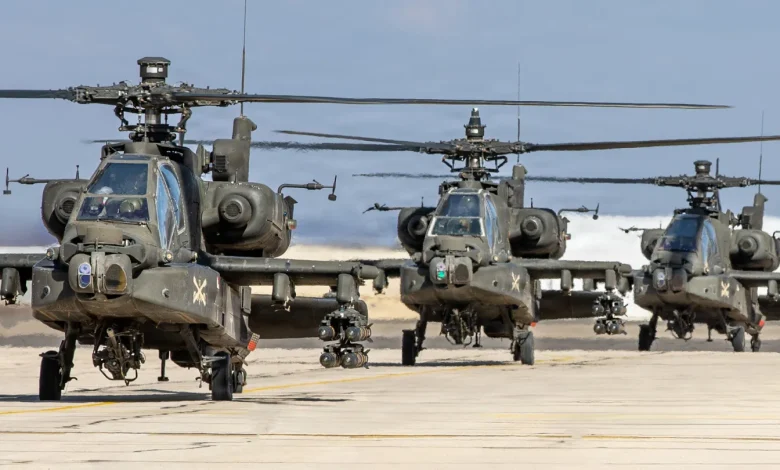
U.S. Navy MH-60S Seahawks and U.S. Army AH-64 Apaches destroy six IRGC fast attack boats on the morning of 4 May.
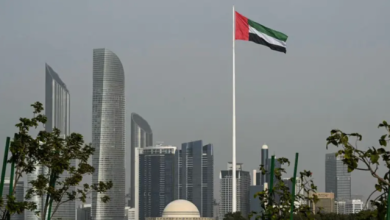
📍 FUJAIRAH OIL ZONE, UAE
MGRS: 40R DN 32107 79379
25.1288°N 56.3265°E
Iranian drone attack ignites major fire at the oil industry zone, moderately injuring three Indian nationals.
📍 BUKHA, OMAN (MUSANDAM)
MGRS: 40R DP 14937 92186
26.1465°N 56.1490°E
Residential building struck on the Musandam coast. Two expatriate workers moderately injured, four vehicles damaged.
📍 IRGC DECLARED ZONE LIMITS
Qeshm: 40R DQ 27755 80673
Kooh Mobarak: 40R EP 13426 20420
Western and eastern anchor points of the IRGC Navy area of control map published by Sepah News on 4 May.
🔴 The Helicopter Strike
Apaches and Seahawks sink six IRGC boats in the strait
U.S. Army AH-64 Apache attack helicopters and U.S. Navy MH-60S Seahawks destroyed six Islamic Revolutionary Guard Corps fast attack boats in the Strait of Hormuz on the morning of 4 May 2026, U.S. Central Command commander Admiral Brad Cooper told reporters in a press call. The engagement occurred at approximately grid reference 40R DQ 25174 38630 (26.5664°N, 56.2487°E), in the central strait between the Iranian coast and the Omani Musandam peninsula. It was the first day of Project Freedom, the U.S. naval initiative to escort commercial vessels through the Iranian-controlled waterway.
Both helicopter types are typically armed with AGM-114 Hellfire missiles for precision strikes against fast-moving sea targets, and the AH-64 carries a 30mm chain gun. Cooper did not specify which weapons were used or where the helicopters launched from. The Aviationist reported that AH-64s and MH-60S airframes had been observed in recent days carrying Hellfire loadouts in the region. Cooper said Iranian forces had also fired multiple cruise missiles and drones at U.S. and commercial vessels during the same operational window, all of which were defeated by what he called the “clinical application of defensive munitions.”
Two U.S. Navy guided-missile destroyers, USS Truxtun and USS Mason, transited the strait under what Fox News described as a sustained barrage of small boats, missiles and drones, backed by fighter aircraft and AH-64 Apaches. Neither destroyer was struck. Cooper noted that Iran historically deploys 20 to 40 small boats when harassing vessels in the strait, but only six appeared on 4 May, an attrition pattern Cooper attributed to the broader degradation of IRGC naval capability over the course of the war.
Adm. Brad Cooper : Commander, U.S. Central Command, 4 May 2026
“We have an enormous amount of capability and firepower concentrated in and around the strait, including AH-64 Apache and MH-60 Seahawk helicopters used just this morning to eliminate six Iranian small boats threatening commercial shipping. So we’re backing up commitment with action.”
🔴 The Strikes On UAE And Oman
Fujairah oil zone burns, Omani residential building hit
Iranian drones struck the Fujairah Oil Industry Zone in the United Arab Emirates at grid reference 40R DN 32107 79379 (25.1288°N, 56.3265°E), igniting what Emirati authorities described as a major fire and moderately injuring three Indian nationals working at the facility. Two Iranian drones also targeted a tanker affiliated with the Abu Dhabi state energy giant ADNOC as it transited the Strait of Hormuz, with no injuries reported. The UAE Ministry of Foreign Affairs called both incidents an “Iranian terrorist attack” and reserved the right to respond.
Across the strait in Oman, a residential building in the coastal town of Bukha at grid reference 40R DP 14937 92186 (26.1465°N, 56.1490°E) was struck the same day. The Oman News Agency reported that two expatriate workers were moderately hurt and four vehicles were damaged. Bukha sits on the Musandam peninsula, the Omani exclave that forms the southern shore of the strait, and is one of the closest Omani population centres to the Iranian coast.
A senior Iranian military official, speaking on state television and quoted by AFP, did not deny the strikes but said Iran had “no pre-planned programme to attack the oil facilities in question” and characterised what occurred as the consequence of “U.S. military adventurism.” The UAE foreign ministry described targeting commercial shipping in the strait as “acts of piracy by Iran’s Revolutionary Guard Corps.” Qatar’s foreign ministry separately condemned the attacks on the UAE as a breach of international law and called for the strait to be reopened without conditions.
🟡 The IRGC Map And Warning
Tehran publishes a chart of its declared zone of control
On 4 May, the IRGC Navy publicly released a map formally delineating the area of the Strait of Hormuz it claims to control. According to Iranian state outlets and confirmed by Xinhua, Türkiye Today and Iran International, the controlled zone is bounded to the west by a line drawn between the western tip of Iran’s Qeshm Island at grid reference 40R DQ 27755 80673 (26.9461°N, 56.2722°E) and the UAE emirate of Umm al-Quwain. To the east, the zone is bounded by a line between Iran’s Mount Mobarak (Kooh Mobarak) at 40R EP 13426 20420 (25.5009°N, 57.1336°E) and the southern coast of Fujairah.
IRGC spokesman Brigadier General Hossein Mohebbi said in a statement carried by Iranian state media and reported by Iran International, Press TV and the GlobalSecurity.org wire that the management of the strait was unchanged and that civilian and commercial vessels following the IRGC Navy’s transit protocols would remain “secure and safe.” Vessels in violation, he said, would be “forcefully stopped.” Major General Ali Abdollahi of the Iranian central military command, in a separate statement carried by AFP and the IRIB state broadcaster, warned that any foreign armed force, especially the U.S. military, attempting to enter the strait would be “targeted and attacked.”
The published map and the layered statements together represent Iran’s most formal cartographic assertion of sovereignty over the strait since the war began on 28 February 2026. They function as a public legal predicate for any future strikes Iran chooses to carry out against vessels operating under Project Freedom, allowing the IRGC to frame engagement as enforcement of declared protocols rather than as an act of war against a neighbour.
Brig. Gen. Hossein Mohebbi : IRGC spokesman, via Iranian state media, 4 May 2026
“There has been no change in the management process of the Strait of Hormuz. Any maritime movement that complies with the transit protocols issued by the IRGC Navy and takes place along the designated route with coordination will be secure and safe. Other maritime movements that violate the IRGC Navy’s declared principles will face serious risks. Violating vessels will be forcefully stopped.”
🔵 Project Freedom Order Of Battle
Two destroyers, 100 aircraft, 15,000 personnel, no allies
U.S. Central Command on 3 May described the order of battle for Project Freedom as comprising guided-missile destroyers, more than 100 land and sea-based aircraft, multi-domain unmanned platforms, and approximately 15,000 service members. Cooper named A-10, F-15, F-16, F/A-18, F-35 and EA-18 Growler fixed-wing aircraft as part of the package, alongside RC-135, KC-46 and KC-135 enabler airframes and the AH-64 and MH-60S helicopter force used in the 4 May strike. Two U.S.-flagged commercial vessels successfully transited the strait under the operation on day one, CENTCOM said in a public post.
No European or regional partner has joined the operation. French President Emmanuel Macron told fellow European leaders at a meeting in Armenia on 4 May that France would not take part in any military operation in a framework that to him seemed “unclear,” calling instead for a coordinated reopening of the strait by the United States and Iran. Britain and France had previously led efforts to assemble a multinational shipping protection coalition for the post-conflict period, but European capitals have refused to deploy assets while the war is ongoing.
CENTCOM also denied an Iranian Fars News Agency claim that a U.S. Navy frigate had been struck by two missiles near the strait, with CENTCOM spokesperson Captain Tim Hawkins telling CBS News the report was untrue. CENTCOM later issued a formal social media statement: “No U.S. Navy ships have been struck. U.S. forces are supporting Project Freedom and enforcing the naval blockade on Iranian ports.” Iran had not provided independently verifiable evidence of a successful strike on a U.S. warship at time of publication.
🟡 Diplomacy In Parallel
14-point Iranian proposal sits with the White House
In parallel with the military activity, Iran’s foreign ministry said it had submitted a 14-point peace plan focused on ending the war and that Washington had already responded via Pakistani mediators. President Donald Trump indicated over the weekend that he would likely reject the proposal because Iran “has not paid a big enough price.” Pakistan separately confirmed on 4 May that it had facilitated the transfer of 22 crew members from the U.S.-seized Iranian container ship Touska, describing the handover as a confidence-building measure. The Touska itself is to be returned to Iran after repairs.
Senior U.S. officials cited by Fox News chief national security correspondent Jennifer Griffin said the United States was “closer to the resumption of major combat operations than we were 24 hours ago” but that no orders had been given to end the ceasefire. Israeli outlet Israel Hayom reported that Israel was holding “feverish consultations” with Washington about a possible response to the Fujairah strike, with options including targeted attacks on launchers or a parallel strike on an Iranian energy facility. The Israel Hayom report cited three sources familiar with the matter and could not be independently corroborated by Western wire agencies at time of publication.
In Lebanon, Hezbollah Secretary General Sheikh Naim Qassem rejected the U.S.-brokered ceasefire on the same day, saying in a written statement that “there is no ceasefire in Lebanon, but rather continuous Israeli-American aggression.” Lebanon’s National News Agency reported clashes between Hezbollah and Israeli forces in the south on Monday. The Hezbollah statement timed alongside the Hormuz escalation suggests coordinated political messaging across the Iran-aligned axis. For the broader context on how this U.S. naval mission emerged from the breakdown of talks, see our coverage of the Hormuz blockade order.
Strategy Battles Assessment
Project Freedom is a managed escalation, not a humanitarian operation
The framing matters. President Trump described Project Freedom as a humanitarian gesture for ships running low on food. The order of battle tells a different story: 15,000 personnel, more than 100 aircraft, multiple guided-missile destroyers, Apache and Seahawk helicopters armed for surface attack, and a public CENTCOM statement that the operation enforces the naval blockade on Iranian ports. This is a combat operation conducted under a humanitarian label, and the engagement on day one confirms it. The IRGC sortied with six fast attack boats. All six were destroyed before they could close on commercial shipping. That is a kill ratio that does not happen accidentally and does not happen without prior intelligence on Iranian launch points and routing.
Iran’s response was equally calibrated. Tehran did not target U.S. warships with the volume or weapon types that would force an American counter-strike on Iranian soil. It struck the UAE and Oman instead, raising the political cost of the operation for Washington’s regional partners while keeping the door open for the diplomatic track represented by the 14-point proposal. The IRGC zone-of-control map released the same day is the legal scaffolding for whatever comes next: it lets Iran call any future engagement enforcement of its protocols rather than aggression against a neighbour. Both sides are now operating in a space where the ceasefire technically still holds but where every additional transit raises the probability of a single incident, mine, missile or boat, that breaks it. The pattern most likely to produce that incident is the one we saw on day one, repeated daily.
Strategy Battles Related Coverage
Sources
- CBS News : Project Freedom live updates and CENTCOM statements, 4 May 2026
- Fox News : USS Truxtun and USS Mason transit, 4 May 2026
- The War Zone (TWZ) : AH-64 and MH-60S sink six IRGC boats, 4 May 2026
- The Aviationist : MH-60S and AH-64 helicopter strike, 5 May 2026
- Task & Purpose : Apaches and Seahawks sink six Iranian small boats, 4 May 2026
- Iran International : IRGC Hormuz rules unchanged, Mohebbi statement, 4 May 2026
- Press TV : IRGC vows to forcefully stop violating ships, 4 May 2026
- Xinhua : IRGC unveils area of control map, 4 May 2026
- Türkiye Today : IRGC publishes Hormuz control map, 4 May 2026
- Al Jazeera : Iran war live, Hormuz threats, 5 May 2026
Editorial Verification
The 4 May helicopter strike on six IRGC boats is verified by CBS News, Fox News, TWZ, The Aviationist, Task & Purpose and CENTCOM’s own public communications, all citing Admiral Brad Cooper’s press call. The IRGC spokesman statement attributed to Brigadier General Hossein Mohebbi is verified across Iran International, Press TV, Xinhua, Türkiye Today, GlobalSecurity.org and Responsible Statecraft. The CBS News transliteration “Mohbi” was reconciled to the more widely reported “Mohebbi” used by state media. Major General Ali Abdollahi’s statement is verified between AFP (via CBS) and Global Governance News, both citing the IRIB state broadcaster.
The Israel Hayom report of “feverish consultations” between Washington and Israel about a possible strike on Iranian energy infrastructure is single-sourced via TWZ and is flagged as unverified pending Western wire pickup. The UAE-attributed identification of the targeted ADNOC tanker has not been published by name. Casualty figures of three Indian nationals at Fujairah and two expatriate workers at Bukha are confirmed by Emirati authorities and the Oman News Agency respectively. Iran has not issued a public denial of the strike on Bukha at time of publication.
MGRS datum: WGS84 / UTM Zone: 40R / Cross-check reference: Dubai International Airport 40R CN 35408 93986 (25.2532°N, 55.3657°E). Sentinel-2 satellite imagery was not used in this article. The IRGC area of control map referenced is the version published by Sepah News on 4 May 2026 and republished by Iranian and international wire agencies.
All claims independently attributed and verified to open sources where possible.
Approved for Publication
Marcus V. Thorne
Lead Editor, Strategy Battles
©StrategyBattles.net 2026
This article is for news and analysis purposes only. Based on publicly available news sources and military updates. All rights reserved. Not for commercial reuse without permission.