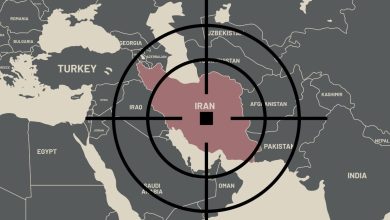
Rubio Declares Operation Epic Fury Over After 67 Days as US Launches Project Freedom in Strait of Hormuz
67 Days
Operation Epic Fury Duration (28 Feb to 6 May 2026)
2 Ships
US-Flagged Vessels Transited Hormuz Under Project Freedom (Day One)
15,000
US Service Personnel in Project Freedom Defensive Umbrella
📍 Strait of Hormuz Operational Zone / Project Freedom Corridor / US Blockade Zone / 6 May 2026

The Strait of Hormuz narrows to approximately 21 miles at its chokepoint between the Iranian shore at Bandar Abbas and the Omani Musandam Peninsula. Project Freedom corridor and US blockade enforcement zone shown. Datum WGS84, UTM Zone 40R. Map: Strategy Battles / OSINT.
📍 STRAIT OF HORMUZ NARROWS
MGRS: 40RDQ2530438663
26.5667°N 56.2500°E
Principal chokepoint of the strait, approximately 21 miles wide. Central to the Project Freedom transit corridor and ongoing ceasefire tension between US and Iranian forces.
📍 BANDAR ABBAS, IRGC NAVAL HQ
MGRS: 40RDR2737206938
27.1832°N 56.2668°E
Primary IRGC naval command and logistics hub on the Iranian shore. Principal staging point for small-boat operations, drone launches, and mine-laying activities directed into the strait.
📍 MUSANDAM PENINSULA, OMAN
MGRS: 40RDQ4512014561
26.3500°N 56.4500°E
Oman’s exclave forming the southern shore of the strait. Defines the southern boundary of the Project Freedom transit corridor and the narrowest navigable passage.
📍 US NAVY OPS ZONE, PERSIAN GULF
MGRS: 40RBN8975668078
26.0000°N 53.5000°E
Approximate centre of the US Navy operational zone within the Persian Gulf. Guided-missile destroyers, AH-64 Apache helicopters, and F-16 aircraft operating here in support of Project Freedom.
🔴 The Declaration
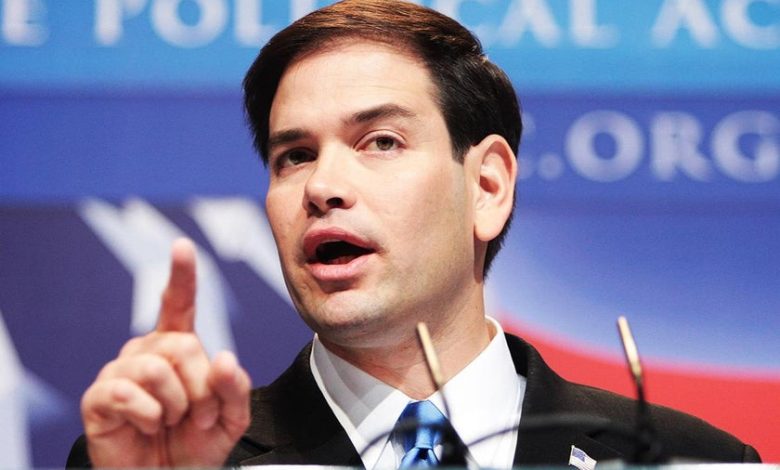
Rubio Closes the Book on Operation Epic Fury After 67 Days
Operation Epic Fury is over. Secretary of State Marco Rubio made the declaration at a White House briefing on 5 May 2026, 67 days after the US-Israeli offensive against Iran began. The strait narrows at grid reference 40RDQ2530438663 (26.5667N, 56.2500E) remains the operational flashpoint as the United States attempts to shift from a war footing to a contested maritime escort mission. “The operation is over. Epic Fury, as the president notified Congress. We’re done with that stage of it,” Rubio told reporters. “We achieved the objectives of that operation.”
The declaration followed a letter President Trump sent to congressional leaders on 1 May, formally stating that hostilities against Iran had been “terminated.” The notification was timed to the 60-day deadline imposed by the 1973 War Powers Resolution, which requires the president to seek legislative authorisation for a military conflict that extends beyond that threshold. By framing the ceasefire that has been in place since 8 April as a termination of hostilities, the administration argued the clock had effectively stopped, and no congressional vote was required.
Marco Rubio : US Secretary of State, White House Briefing, 5 May 2026
“The operation is over. Epic Fury, as the president notified Congress. We’re done with that stage of it. We achieved the objectives of that operation.”
🔵 Project Freedom
A Defensive Posture Across 21 Miles of the World’s Most Contested Water
In place of Epic Fury, the United States has launched Operation Project Freedom. Announced by Trump on 4 May, the mission deploys 15,000 US service personnel, over 100 land- and sea-based aircraft, Arleigh Burke-class guided-missile destroyers, AH-64 Apache helicopters, MH-60 Seahawk platforms, and multi-domain unmanned systems. US Central Command described the overall effort as “inherently a defensive operation,” with the stated goal of establishing what Rubio called a “protective bubble” for commercial vessels attempting to transit the strait. “This is not an offensive operation,” Rubio said. “There’s no shooting unless we’re shot at first.”
The first results came quickly. US Central Command confirmed on 4 May that two US-flagged merchant vessels had successfully transited the Strait of Hormuz. Danish shipping company Maersk confirmed that one of those ships was the Alliance Fairfax, operated by Farrell Lines, a Maersk subsidiary. The company stated the vessel completed the journey without incident and with all crew members safe. Before the war, approximately 130 ships passed through the strait daily. That figure has effectively collapsed for Western-aligned commercial traffic since late February 2026.
CENTCOM clarified that Project Freedom does not provide individual vessel escort. Instead, US forces have mapped a narrow corridor through the strait assessed to be relatively clear of mines and are maintaining overhead and maritime coverage along that route. Defence Secretary Pete Hegseth described the mission as “separate and distinct” from the ongoing military operation, and “temporary in duration, with one mission: protecting innocent commercial shipping from Iranian aggression.” Rubio framed it as the “first step” toward fully reopening the waterway and ending what he called Iran’s “economic arson.”
Pete Hegseth : US Defense Secretary, Pentagon Briefing, 5 May 2026
“Project Freedom is defensive in nature, focused in scope and temporary in duration, with one mission: Protecting innocent commercial shipping from Iranian aggression.”
🟡 The Ceasefire Question
A Truce in Name, a Standoff on the Water
The ceasefire Trump declared on 8 April has been extended but has not produced any negotiated agreement. Iran has not committed to ending its nuclear enrichment programme, has not recognised US demands, and continues to assert control over the strait. Rubio acknowledged that a US delegation led by Jared Kushner and Steve Witkoff was still attempting to determine what Iran would negotiate on. “We don’t have to have the actual agreement written out,” he said, “but we have to have a diplomatic solution that is very clear about the topics.” The diplomatic channel remains open but stalled.
Iranian commanders responded to the launch of Project Freedom with direct warnings. The commander of the IRGC-linked Khatam al-Anbiya Central Headquarters stated that any foreign military force approaching or entering the Strait of Hormuz would be attacked. Ebrahim Azizi, head of Iran’s parliamentary National Security Commission, declared Project Freedom a ceasefire violation. On 4 May, the day the operation launched, US and Iranian forces exchanged fire in the waterway. Reports from CBS, cited by Fox News, described two US destroyers, the USS Truxtun and USS Mason, coming under a barrage of Iranian small boats, missiles, and drones, backed by F-16 fighters and Apache helicopters. Neither vessel was struck. CENTCOM did not publicly confirm all elements of the engagement at time of publication.
Trump declined to define precisely what would constitute a ceasefire violation, telling reporters at the White House: “You’ll find out.” He has not ruled out resuming a bombing campaign if negotiations collapse or Iran breaks the truce. The administration’s position is that the absence of formal air and missile exchanges since 7 April constitutes a termination of hostilities for War Powers Act purposes, an interpretation rejected by multiple senators and independent legal scholars. For more background on the failed Islamabad negotiations that preceded this phase, see our earlier report on the collapse of the US-Iran talks.
⚠ The Shipping Reality
Two Ships Through. 130 Per Day Is the Pre-War Baseline.
Two successful transits represent a real first step, but the gap between two ships and 130 daily is enormous, and analysts who spoke to Breaking Defense were cautious about the near-term prospects. Major shipping companies remain reluctant to send vessels through a 21-mile corridor within range of Iranian missiles, drones, and sea mines. Passage insurance at commercial rates is effectively unavailable. Analysts noted that even a single strike on a transiting vessel would set the operation back sharply: a mine or drone hit can take a ship offline for months, and the liability exposure for shipowners and underwriters remains prohibitive regardless of US military coverage overhead.
The mine threat is a particularly complex problem. Reports cited in open-source analysis suggested Iran may have lost track of some of the mines planted in the strait during the early weeks of the conflict. If accurate, this would mean that even a fully cooperative Iran could not guarantee a clear passage through its own mined corridor. The US Navy bombed hardened Iranian anti-ship missile sites along the strait during the offensive phase and sank a reported 158 Iranian naval vessels. The IRGC’s surface fleet has been substantially degraded. But mines do not require a crew or command structure to remain dangerous, and the strait is narrow enough that a small number of unlocated devices poses a serious risk to any vessel attempting transit without sweeping.
Iranian Foreign Minister Abbas Araghchi dismissed the new operation entirely on social media, calling it “Project Deadlock” and arguing that “there is no military solution to a political crisis.” He added that talks were making progress through Pakistani mediation and that the US “should be wary of being dragged back into quagmire.” The signal is characteristically ambiguous: Tehran wants to appear open to negotiation while retaining effective economic leverage over the strait that it has held since the conflict began.
🟢 War Powers and the Legal Argument
An Administration That Rejects the Law It Claims to Comply With
Rubio’s Epic Fury declaration also carries a constitutional dimension. The secretary told reporters that the administration does not regard the 1973 War Powers Resolution as constitutional, while simultaneously stating that it complies “with elements of it for purposes of maintaining good relations with Congress.” It is a remarkable public position: to formally reject a law’s legitimacy while selectively applying it to avoid the political cost of a direct confrontation with the legislature. Rubio, a former US senator who voted on such matters, delivered that position without apparent hesitation.
Senate Democrats pushed back hard. Senator Tim Kaine of Virginia rejected the ceasefire-pauses-the-clock interpretation outright. Senator Adam Schiff argued that ceasing some uses of force while continuing others does not stop the legal countdown, noting that US forces remain actively engaged in and around the strait. Republican support for a formal war authorisation vote has not materialised. Several GOP members agreed with Hegseth that the ceasefire negated the deadline; others were simply unwilling to take a war-vote before midterm elections. The net effect is that the United States is conducting active military operations in the Persian Gulf without a formal congressional mandate, a status quo without precedent for a conflict of this scale.
Marco Rubio : US Secretary of State, White House Briefing, 5 May 2026
“We don’t acknowledge the law as constitutional. Nonetheless, we comply with elements of it for purposes of maintaining good relations with Congress.”
Strategy Battles Assessment
The Offensive Is Over. The Contest for the Strait Is Not.
Rubio’s declaration that Operation Epic Fury has ended is politically significant but strategically incomplete. The United States spent 67 days conducting the most intensive air campaign against Iran in its history, destroying major military and economic infrastructure, killing senior commanders, and dismantling a significant portion of the Iranian surface fleet. Yet the Islamic Republic did not collapse, did not capitulate, and retains effective de facto control of the most economically critical waterway in the world. That is the central strategic tension that Project Freedom cannot resolve by itself.
The shift to a defensive posture is tactically coherent given the risks: another major exchange of fire would strain the ceasefire to breaking point, potentially restart the bombing campaign, and pull the United States into a direct kinetic confrontation inside the strait that it has specifically avoided until now. But “defensive” in the Hormuz context is not a low-risk posture. The corridor is 21 miles wide. Iranian missiles, drones, and small boats demonstrated within hours of Project Freedom going live that they retain the ability to threaten traffic inside that envelope. Getting two ships through on day one is a result. Getting 130 ships through daily, which is the pre-war baseline, requires either Iran’s effective acquiescence or a degree of military dominance over the strait that the current operation does not yet establish.
The War Powers dimension adds a different kind of pressure. By formally declaring Epic Fury over, the administration resets its constitutional exposure in its own accounting. But it also implicitly acknowledges that what comes next, whether an extended defensive mission, a return to strikes, or a negotiated framework, will require a new legal and political foundation. If Trump resumes bombing when negotiations collapse, the 60-day clock starts again, and this time it starts with Congress and the public already 67 days into a war that was never formally authorised. Iran, meanwhile, is giving every signal that it believes it holds the stronger hand. The ceasefire holds, for now. What it holds in place is a standoff, not a settlement.
Strategy Battles Related Coverage
Sources
- Gulf News / AFP: Rubio says offensive stage of Iran war is over, 5 May 2026
- Al Arabiya / Reuters: Rubio says offensive stage of Iran war is over, 6 May 2026
- CNN Live Updates: Day 67 of Middle East conflict, Rubio says Operation Epic Fury over, 5 May 2026
- Time: Rubio says Epic Fury is over, as Strait of Hormuz tests ceasefire, 5 May 2026
- Times of Israel / Agencies: US says two American-flagged vessels successfully transited the Strait of Hormuz, 4 May 2026
- CNBC: Maersk ship transits Strait of Hormuz under US military protection, 5 May 2026
- Breaking Defense: Project Freedom unlikely to pay off in Strait of Hormuz right away, analysts say, 4 May 2026
- Fox News: Trump announces Project Freedom to guide ships through Strait of Hormuz, 4 May 2026
- Al Jazeera: Has the US-Iran ceasefire reset the clock on War Powers Act deadline? 1 May 2026
- CNN Politics: The law sets a 60-day limit on unauthorised wars. The US is blowing past it in Iran, 25 April 2026
- GMA News / AFP: Rubio says offensive stage of Iran war is over, 5 May 2026
Editorial Verification
Rubio quote “The operation is over. Epic Fury, as the president notified Congress. We’re done with that stage of it. We achieved the objectives of that operation”: verified across AFP (Gulf News, Al Arabiya, GMA News), Reuters (Al Arabiya, Times of Israel), CNN, Time (6 independent outlets). Rubio quote “We don’t acknowledge the law as constitutional. Nonetheless, we comply with elements of it for purposes of maintaining good relations with Congress”: verified across AFP (GMA News, Al Arabiya) and Reuters (2 independent outlets). Hegseth “Project Freedom is defensive in nature” statement: verified via AFP and CNN (2 independent outlets). CENTCOM Project Freedom operational details (15,000 personnel, 100-plus aircraft, destroyer deployment): CENTCOM public statement as reported by Times of Israel, Fox News, and Breaking Defense (3 outlets, all citing same official statement, treated as single-source official confirmation). Maersk Alliance Fairfax transit: confirmed by CNBC citing Maersk company statement. USS Truxtun and USS Mason engagement with Iranian forces: reported by Fox News citing CBS; CENTCOM did not publicly confirm all elements of this encounter at time of publication: flagged as ⚠ SINGLE SOURCE for specific vessel identification. Mine-loss claim (Iran losing track of mines): sourced from single secondary report; flagged as ⚠ SINGLE SOURCE pending corroboration. Iran had not issued a unified public denial of the specific engagement detail claims at time of publication.
MGRS datum: WGS84 / UTM Zone: 40R / Cross-check reference: Dubai, UAE, approximately 40RBN 56870 81120 (25.2048N, 55.2708E), used to confirm zone assignment for all four coordinate cards in the 40R band.
No satellite imagery used in this article.
All claims independently attributed and verified to open sources where possible.
Approved for Publication
Marcus V. Thorne
Lead Editor, Strategy Battles
©StrategyBattles.net 2026
This article is for news and analysis purposes only. Based on publicly available news sources and military updates. All rights reserved. Not for commercial reuse without permission.