Trump Sons’ Drone Startup Wins First Air Force Contract as Ethics Review Goes Undisclosed
~1 Year
Powerus Age at First Pentagon Order
$60M
Capital Raised by Powerus
$1.1B
Pentagon Drone Fund Powerus Is Targeting
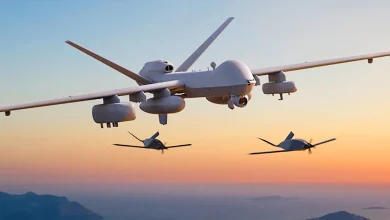
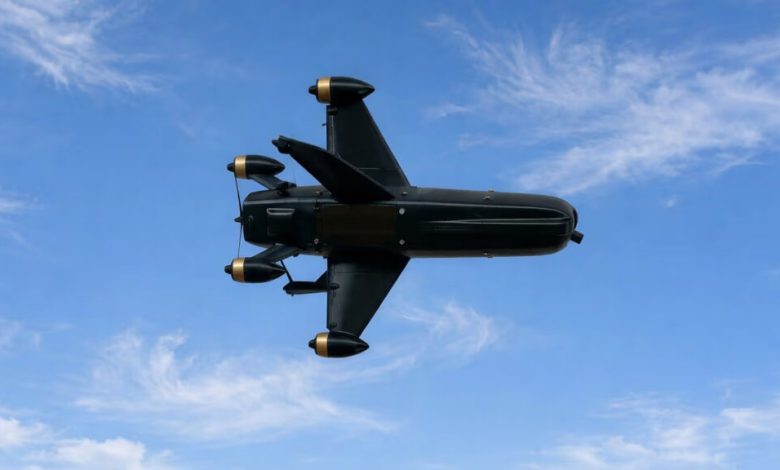
On 30 April 2026, Autonomous Power Corporation, trading as Powerus, announced that the U.S. Air Force had placed a limited procurement order for its Guardian-2 Interceptor systems following a demonstration at a facility in Arizona. The Guardian-2 is a low-cost, semi-autonomous counter-drone interceptor designed to defeat Group 1-3 small unmanned aerial systems, including the Iranian Shahed-type one-way attack drones now proliferating across the Middle East theater. The order is Powerus’s first sale of any weapons system to the U.S. military. The company declined to disclose the contract value, the quantity procured, or the competitive evaluation field. The Pentagon has disclosed none of those details either.
The operational requirement is real. Ukraine’s war has exposed a structural cost imbalance at the core of modern air defense: Shahed-type drones costing a few hundred dollars each force interceptor responses running tens of thousands per kill when using conventional missile systems. The Pentagon has been actively shifting procurement toward low-cost interceptor platforms to correct that imbalance. The Air Force’s interest in Guardian-2 fits directly inside that documented policy direction. That context does not resolve the questions surrounding this particular procurement. It makes answering them more important, not less.
A limited procurement order is not a program of record. Powerus acknowledged this explicitly in the forward-looking statements appended to its own press release. The Air Force has purchased a quantity of systems for further evaluation, not confirmed Guardian-2 for large-scale deployment. The technology may be exactly what the company claims. The evaluation process that concluded it was worth purchasing has not been made public.
Brett Velicovich, Co-Founder, Powerus, via Investing.com, 30 April 2026
“This is about saving American lives. The Guardian-2 works. The kill chain works.”
🟡 The Structure
Golf Courses, Nasdaq, and the Trump Investment Network Behind Powerus
Powerus was founded in 2025 by U.S. Army Special Operations veterans. In March 2026, Donald Trump Jr. and Eric Trump were named as notable investors through a merger agreement between Powerus and Aureus Greenway Holdings, a small Nasdaq-listed golf course operator with two courses near Orlando, Florida. The merged entity is expected to trade on the Nasdaq under the ticker PUSA when the deal closes, anticipated in summer 2026. The golf courses are described by the company as proving grounds for drone testing; their substantive role in the deal is as the listed vehicle that takes Powerus public without a conventional IPO, a structure known as a reverse merger.
The financial connections extend beyond the merger itself. Dominari Securities, the placement agent for the capital raise, is a subsidiary of Dominari Holdings, and both Trump sons have served on Dominari’s board of advisors since February 2025. Unusual Machines, a U.S. drone components manufacturer where Donald Trump Jr. is a shareholder and advisory board member, invested in the deal and separately received a purchase order from Powerus exceeding $5 million for counter-drone platform components, with deliveries beginning in April 2026. The result is a structure where the same individuals hold overlapping positions across the financing entity, the investment broker, and the primary component supplier to the company now receiving a Pentagon order.
Powerus has also raised $60 million from investors including Seoul-based Korea Climate and Governance Improvement Fund, which committed to purchasing $50 million in Powerus stock and pledged to support access to an allied-nation supply chain network. The company is simultaneously pitching its interceptor systems to Gulf states operating under active Iranian drone threat, conducting live demonstrations across the Middle East. Those Gulf states need defensive capability because of a war the United States initiated alongside Israel. The president whose sons are invested in Powerus is the commander in chief directing that war.
Richard Painter, Former Chief White House Ethics Lawyer, Bush Administration, via AP / PBS NewsHour, April 2026
“These countries are under enormous pressure to buy from the sons of the president so he will do what they want. This is going to be the first family of a president to make a lot of money off war, a war he didn’t get the consent of Congress for.”
🔵 The Ukrainian Thread
Battlefield Extraction: How Ukrainian Drone Doctrine Became a U.S. Commercial Product
The Guardian-1 interceptor, Powerus’s first-generation platform listed on the company’s product page as carrying confirmed combat effectiveness, was tested on the Ukrainian battlefield. That validation formed the commercial foundation of the product line. The Guardian-2, the semi-autonomous upgrade now procured by the Air Force, is not an independent American invention. Powerus has explicitly pursued acquisitions of Ukrainian drone manufacturers and technology licenses, adapting combat-tested systems for sale to the Pentagon under a domestic brand. Ukrainian companies receive licensing fees or acquisition prices. Powerus receives the technology, the Nasdaq listing, the recurring contract revenue, and global market access through the Pentagon relationship. These are structurally different positions in the value chain, and the gap between them is where the margin is made.
That commercial arrangement runs alongside a notable political contradiction. The administration that has publicly distanced itself from Zelensky and declined Ukrainian procurement proposals is simultaneously hosting investment vehicles that are quietly acquiring Ukrainian intellectual property and battlefield methodology. Zelensky made at least two formal approaches to Washington in 2025, including an August White House presentation on Iranian drone warfare and a formal October proposal for a drone-for-Tomahawks exchange. The administration declined publicly and pointedly. Trump dismissed the offer in March 2026 by telling NBC News that Zelensky was the last person the United States needed help from. One U.S. official told Axios the October pitch had been brushed off internally without serious engagement.
Defense capital was already moving into the exact sector those proposals described, with Powerus forming, the Trump sons investing, and the Guardian-1 undergoing battlefield testing in Ukraine, before the Guardian-2 entered the Air Force procurement pipeline. Whether the sequencing reflects a coordinated response to those specific proposals or parallel actors responding to the same demand signal is not established by the public record. What is established is the overlap of participants, the timeline, and the outcome. A formal Ukrainian drone procurement model was declined at the highest levels of government, and a company backed by the president’s sons is now executing a commercial version of it.
⚠ The Revolving Door
General Kellogg: From Ukraine Envoy to Powerus Adviser in Three Months
Retired Lt. General Keith Kellogg served as Trump’s Special Presidential Envoy for Ukraine and Russia until December 2025. By 31 March 2026, he had joined the Powerus Board of Advisors. In government, Kellogg was a documented advocate for U.S. procurement of Ukrainian drone technology. Defense One confirmed he collaborated with Zelensky on a political agreement to do exactly that; the agreement was never finalized before his departure. The company he joined three months after leaving office is the entity now executing the commercial version of the arrangement he was building while in his government role. On joining, Kellogg stated publicly that Ukraine had demonstrated how small, cheap, mass-produced machines could obliterate equipment worth tens of millions and intercept drone swarms at scale, and that Powerus was bringing that capability to the United States.
Retired General C.Q. Brown, former Chairman of the Joint Chiefs of Staff, also joined the Powerus advisory board in March 2026, as confirmed by Defense One. The accumulation of senior defense officials on the advisory board of a one-year-old startup that has now received its first Pentagon order is a pattern that functions as a deliberate market signal. Advisory board appointments at this level communicate institutional credibility and procurement access to both government buyers and foreign governments. That function has value precisely because of who those officials were and what relationships they carry out of government.
The revolving door between government service and defense contracting is a structural feature of the American defense ecosystem. Ethics frameworks involving cooling-off periods, disclosure requirements, and recusal obligations exist because the risk is predictable and structural. The question here is not whether the pattern is familiar. It is whether those safeguards were applied in this specific case. That information has not been made public by the Pentagon, by Powerus, or by any government office.
Lt. General (Ret.) Keith Kellogg, Board Advisor, Powerus, via Morningstar / AccessNewswire, 31 March 2026
“Ukraine taught us how big of an advantage drones have been to equalize its defense against what should have been a lopsided victory for the Russians. Small, cheap, mass-produced machines now obliterate state-of-the-art tanks and missile systems worth tens of millions, and intercept waves of kamikaze drones at scale. Powerus is bringing that equalizing power and the same capabilities to the U.S.”
🔴 The Transparency Gap
No Disclosure, No Review, No Competitive Field: The Questions the Pentagon Has Not Answered
The foundational analysis that first mapped the overlapping financial, political, and supply-chain relationships surrounding the Powerus Guardian-2 procurement was published by OSINT Intuit on X, a disciplined open-source intelligence account that applies structured evidence-based analysis to breaking geopolitical and defense events. The Powerus breakdown is a model of how that methodology works: claims traced to identifiable sources, financial relationships mapped without speculating beyond what the documents show, and conclusions bounded explicitly by what the public record can and cannot establish. The report does not accuse. It documents, and it asks the questions the disclosed facts make unavoidable.
The Pentagon has not disclosed the selection methodology applied to the Guardian-2 evaluation, the criteria used, the contract value, the quantity procured, the competing platforms considered, or whether an ethics or conflict-of-interest review was conducted before the order was placed. Powerus has disclosed none of those details. Government ethics experts cited across PBS NewsHour, Fortune, and the Times of Israel have noted that procurement officials may feel institutional pressure to favor companies linked to the president’s family, even absent explicit direction. Richard Painter, who served as chief White House ethics lawyer under President George W. Bush, identified the arrangement as raising some of the most serious conflict-of-interest concerns seen in modern American presidential history. His assessment was confirmed independently by at least six major news outlets. Democrats in Congress have formally requested additional information from the Pentagon on defense contractors with ties to the president’s family, as reported by Bloomberg. No public response has been reported as of publication.
Eric Trump responded to the AP’s inquiry with a statement that he is proud to invest in companies he believes in and that drones are the wave of the future. That is a brand statement, not a conflict-of-interest disclosure. When foreign governments observe the president’s family financially positioned near defense contracts, they calculate what purchasing from that company signals in terms of diplomatic access and goodwill with the administration. That dynamic is corrosive regardless of the Guardian-2’s technical performance. It undermines U.S. defense procurement as a rules-based system that allies and partners can trust. The antidote is transparency. It has not been provided. That is, at this stage, the finding.
Strategy Battles Assessment
The U.S. military genuinely needs low-cost drone interceptors at scale. That requirement was generated by three years of war in Ukraine and a Middle East theater saturated with Iranian Shahed variants and their derivatives, not by the political environment around Powerus. The Air Force engineers and acquisition professionals who evaluated Guardian-2 may have made a completely defensible technical decision. That possibility is real and it matters. None of it resolves the questions this contract has generated.
The structure around Powerus has no clean parallel in recent American defense procurement history. A one-year-old company with no prior Pentagon weapons contracts, financially integrated with the president’s sons across at least three overlapping vehicles, advised by his recently departed Ukraine envoy and a former Chairman of the Joint Chiefs, has received a military order in an operational environment shaped by that same administration’s foreign policy and command decisions. The revolving door is structural to American defense. The degree of financial integration at the presidential family level, during an active conflict that family’s father initiated and commands, is not.
OSINT Intuit on X identified the core issue with precision: it is not that corruption is proven, it is that the information required to evaluate whether it occurred has not been released. The antidote is straightforward: disclose the selection process, the competing platforms evaluated, the contract value, and confirmation that an ethics review was conducted. Until that happens, the closed loop will continue to generate the suspicion it is structured to prevent. The refusal to disclose is, at this stage, the story.
Strategy Battles, Related Coverage
Sources
- Powerus / AccessNewswire, Guardian-2 Limited Procurement Order Announcement (30 April 2026)
- Bloomberg via Union Bulletin, Trump Family-Backed Drone Firm Signs Weapons Deal with US (1 May 2026)
- AP via PBS NewsHour, Company Backed by Trump Sons Looks to Sell Drone Interceptors to Gulf States (3 April 2026)
- Manufacturing Dive, Trump Sons Add Another Drone Manufacturing Merger to Their Investment Portfolio (12 March 2026)
- Defense One, Former Trump Advisor Joins Board of Ukraine-Focused Drone Tech Company Powerus (31 March 2026)
- Responsible Statecraft, Ex-Ukraine Envoy Gen. Kellogg Now With Trump Sons at Drone Startup (1 April 2026)
- Investing.com, U.S. Air Force Orders Powerus Guardian-2 Counter-Drone Systems (30 April 2026)
- W.E.S. O’Donnell, Trump’s Sons Backed a Drone Company. Now the Air Force Is Buying Its Weapons (2 May 2026)
- OSINT Intuit on X, Powerus Structured Analysis (May 2026)
Editorial Verification
Air Force limited procurement order confirmed via Powerus press release (AccessNewswire, 30 April 2026), corroborated by Bloomberg (Union Bulletin), Investing.com, and Pulse2. Trump sons as investors confirmed via AP (PBS NewsHour, Fortune, Times of Israel, KSAT, Benzinga), Manufacturing Dive, ABC News, and QZ. Kellogg appointment confirmed via Defense One (31 March 2026), Morningstar, Responsible Statecraft, and Interfax Ukraine. C.Q. Brown advisory appointment confirmed via Defense One. Richard Painter quote confirmed independently by AP, PBS NewsHour, Fortune, Times of Israel, Benzinga, and IBTimes UK, a minimum of six independent outlets. Unusual Machines $5M-plus component order confirmed via Investing.com. Zelensky October 2025 drone pitch referenced from Axios single source; specific proposal details carry limited secondary corroboration and are noted accordingly. Eric Trump statement confirmed via AP and ABC News. No geographic strike locations in this article. MGRS Coordinates Block not applicable. No satellite imagery used. Analysis and framing credit: OSINT Intuit on X.
Approved for Publication
Marcus V. Thorne
Lead Editor, Strategy Battles
©StrategyBattles.net 2026
This article is for news and analysis purposes only. It is based on publicly available news sources and military updates. All rights reserved. Not for commercial reuse without permission.